


I seldom run into stuffed animals these days. Years ago they would decorate certain British pubs and restaurants, but not so much now. At least not in London. Let’s be honest, the connotations aren’t that savoury.
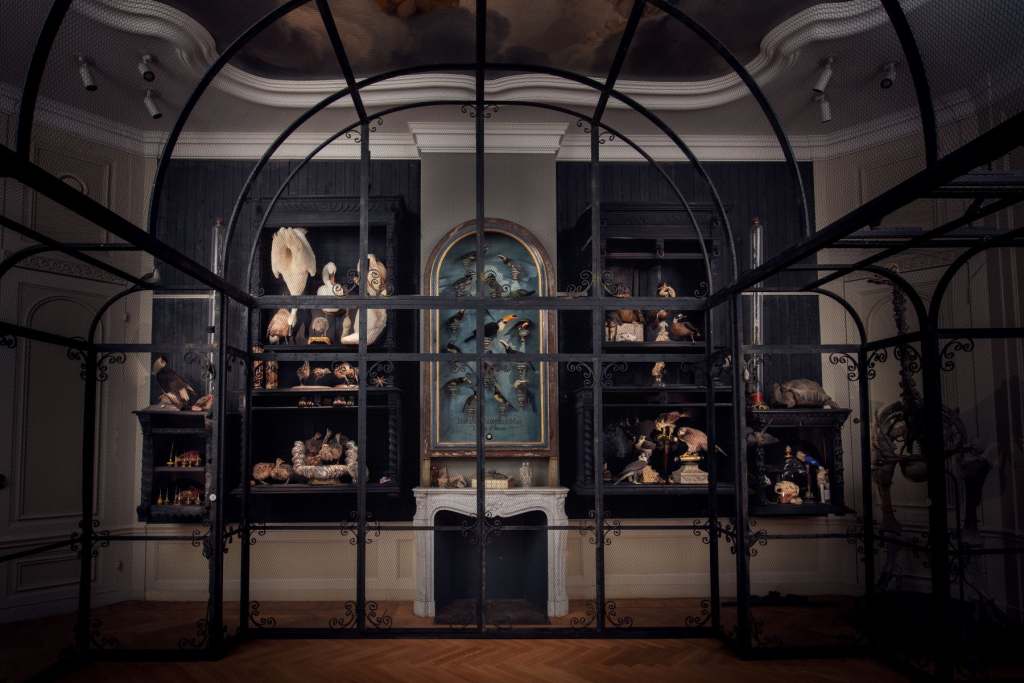
But Art Zoo is full of them. This 17th-century grachtenpand (canal-side house) in the heart of Amsterdam’s Grachtengordel district opened as a museum this year to display fantastical taxidermy and natural history. Crucially, a sign above the entrance reassures us: “None of the animals at Art Zoo were taken from the wild or bred specifically for the museum. All died of natural causes, under the care of zoos and breeders.”
My visit to the Dutch capital coincides with a birthday hangover. Amsterdam turned 750 on 27 October and I’ve arrived after the party to explore some new ventures coinciding with a year of celebrations – Art Zoo is the first on my little itinerary.
Art Zoo Amsterdam
Inside, there is animal exotica everywhere you look, but I can’t take my eyes off a nightmarish thing on the ceiling of the main room. Arachnid-like and around two metres in width, it crouches on some cornicing like a Norman Bates collectible in Psycho.

“It would perhaps eat you, yes?” comes a voice from behind me. It’s that of Ferry van Tongeren, who founded Art Zoo with an old partner from his former job in advertising, Jaap Sinke, and art historian and curator Peter van Duinen.
“It’s a Japanese spider crab,” says Ferry. “And not the largest actually.”
Ferry and Jaap are known as Darwin, Sinke and van Tongeren because they had to include their scientist hero. The two men describe themselves as “fine taxidermists”, and more than 200 hundred exhibits attest to this. There are ornate arrangements of snakes and birds, reptiles, shells, eggs and fossils, some of which sit in grand antique cabinets. A leopard holds a plaintive pose, and a crocodile floats from the ceiling. The largest exhibit is a replica Tyrannosaurus rex.
“It arrived from Italy without the skull, but after a few months we found it,” says Ferry. “What a headache.” The model was made from a 60-million-year-old fossil found in South Dakota. Christened Stan, it’s a wonderful, terrifying artefact.
The taxidermists are clearly inspired by Dutch and Flemish 17th-century painting, I say to Peter van Duinen. “And the Wunderkammer” he says. “Or ‘cabinet of curiosities’. So the idea goes back even further, to the Renaissance.” I agree. Amid the splendour of Art Zoo, there’s a nagging feeling that something weird will make you shriek – which for me is part of the fun. But whatever your take on the ethics or taste of this place, it is well worth a visit.
Amsterdam Light Festival

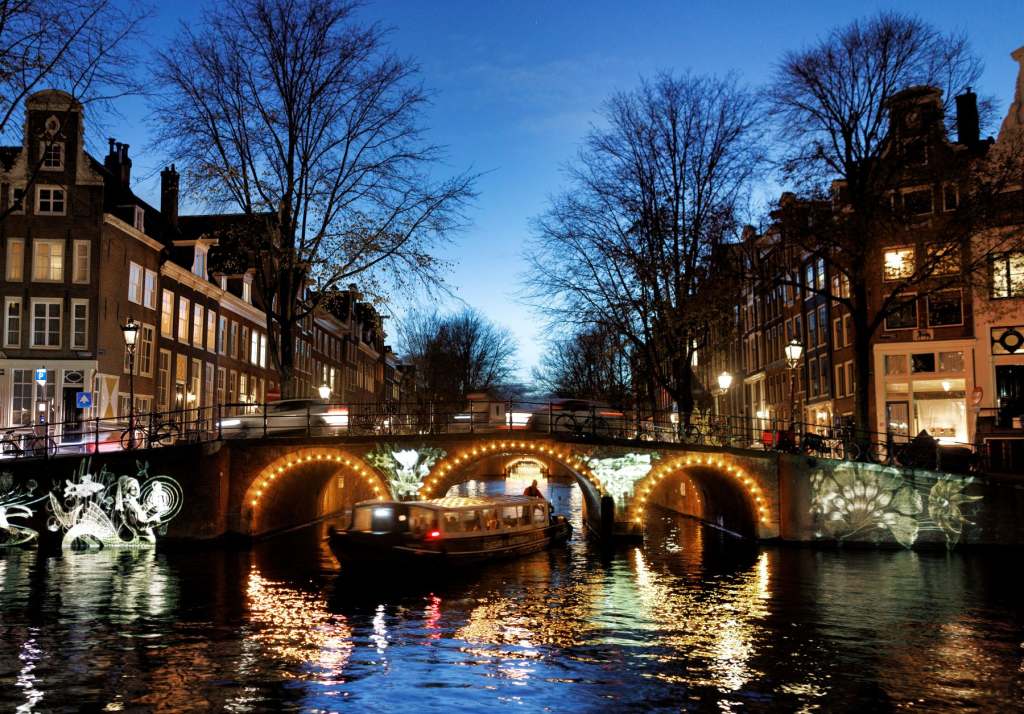
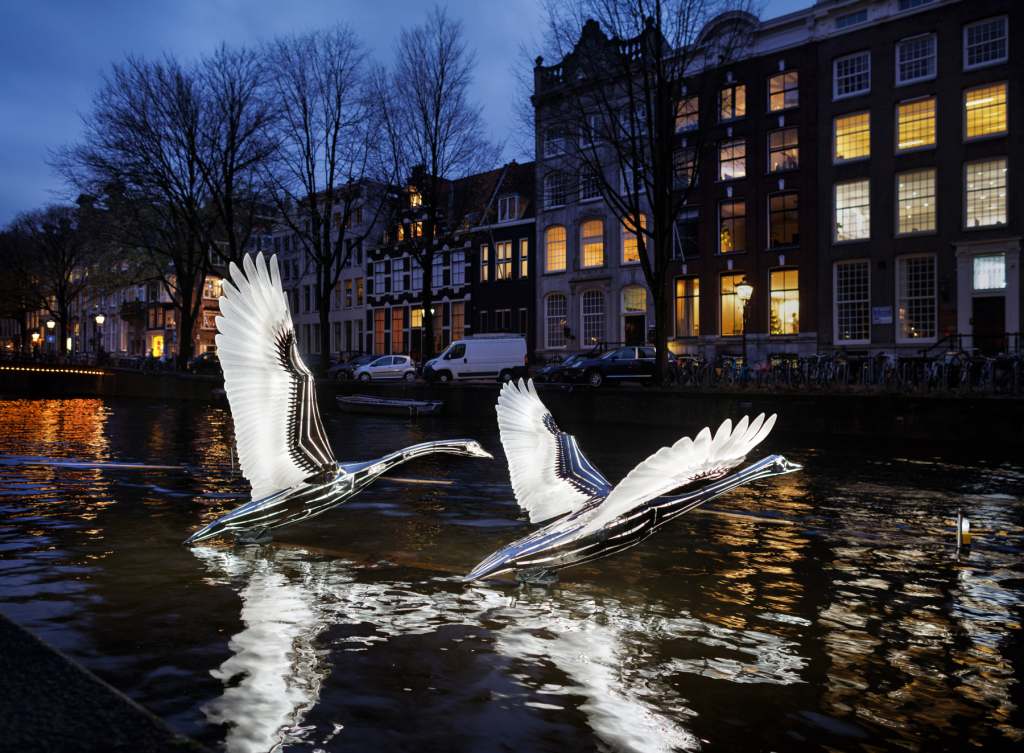
Innovation doesn’t relent in the Dutch capital and at the year’s end the Amsterdam Light Festival is staged around the canals of the Grachtengordel. Running from November 27 to 18 January, it’s a sort of night-time waterside exhibition of light-based sculptures that either sit in the water or canal-side.
Artists contribute from across the globe and 20 have made the cut for “Edition 14” where the theme is Legacy, chosen to fit with this momentous year. One can walk the 6.5-kilometre route or cycle it, but I board an old cruiser where drinks are served, and a party atmosphere builds as you glide along in the inky dark.
The theme has been widely interpreted and with varying levels of success. But there is much I love, particularly the work of Barcelona’s Filip Roca, whose Fracture Point is a map or arterial-like projection onto the NEMO science museum. The solidity of the building looks undermined by the anatomical quality of Roca’s shifting and rupturing lines of light. As he says: “That critical moment when outdated structures begin to crack and something new emerges.” It is a striking but unsettling work.
Another favourite is Michela Bonzi’s Antenna Sud, which is a collection of enlarged models of old-fashioned TV aerials, a technology she says is still seen on the rooftops of her native Rome. They evoke post-war urban jungles, although in most European cities, Amsterdam included, underground cable networks had replaced ariels by the late 70s. But not in Italy, and I feel Bonzi has teasingly brought a little southern heat to the Netherlands.
A cruise takes around 75 minutes, and good conversation and alcohol flow in equal parts.
Suriname Museum

Landmark birthdays are prone to self-reflection, and one newly opened space explores a difficult aspect of Dutch history in unblinking terms – the Suriname museum. So the next morning I head for the three-story house, which opened in September, and tells a familiar story of colonial interference in a Caribbean/South American country. After visitations from the Spanish, French and English (the latter fashioned the country’s name) in the 16th century, the country became a Dutch colony a century later until independence in 1975. Suriname’s official language is Dutch.
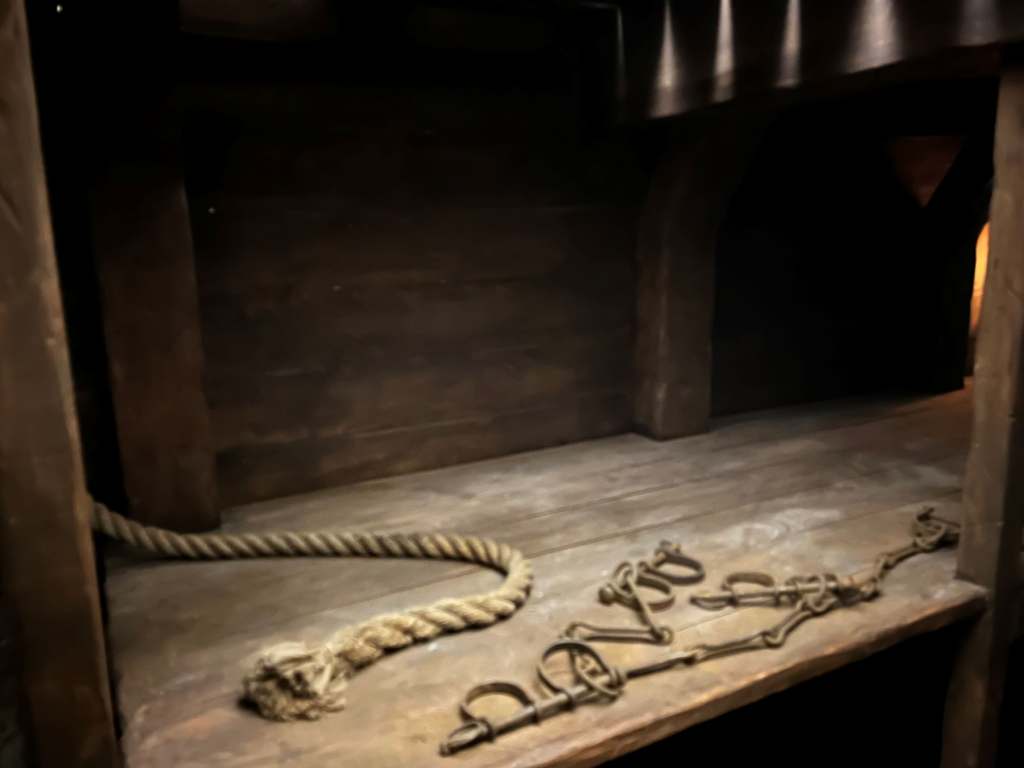
A mock-up of a middle-passage slave ship hold in the dismal basement tries to convey the horror of the enterprise but I find the actual storytelling on each floor, both textual and auditory, more acute. The positioning of archive material with modern artworks concerning identity and migration is superb.
A striking detail for me is the settling of Sephardic Jews in Suriname in 1652, after their expulsion from Portugal and Spain by the Inquisition. They quickly became prominent plantation owners… such are the ironies of history.
For lunch, before my Eurostar train back to London, I break the bread with a few companions at A Beautiful Mess, which serves Middle Eastern and North African food and is on Ousterdokskade near the train station. This restaurant-come-cafe employs and trains refugees in hospitality, and the menu reflects their origins.
All dishes are halal and we share mezze platters of hummus, falafel, cacik and kofta with everything clutched in freshly baked flatbread. The sought-after aubergine plate keeps running out before I can get to it, ditto the Iraqi chicken. It’s a great scheme and there are versions in Utrecht, Arnhem and Willinklaan.
It’s raining outside but numbed by a Beirut Mule or two I walk to Amsterdam Centraal. Before entering the station I turn to look at the trams leading back into town and all the colour looks washed from the scene to leave a sort of Cold War postcard, and I think how nice it would be to sit in Cafe Kobalt nearby, especially if it’s their jazz afternoon, but of course I mustn’t and I don’t.
Hotels in Amsterdam
I split my time between two hotels. The first, the four-star Hotel Arena, sits on the edge of a little green space called Oosterpark, in the south east of city just beyond the Grachtengordel. The building dates at 1886 and was first a Catholic orphanage for girls. My bedroom was in the eves and featured sections of the original rafters. There’s a sprawling open-plan restaurant and bar and the building’s impressive chapel hosts music events. Across the park is Bar Bukowski which attracts a cross-generational crowd and has the stock relaxed vibe.
A little further south, at the intersection of five canals, is the Hotel Apollo in the Amsterdam-Zuid district. “Art deco meets Belle Epoque” might describe the lively decor and one can dine at their high-end Japanese-Peruvian restaurant Izakaya. However, I opted for the more modest but still-delicious Living Room which serves pan-European fare. Canal views surround you.
Museums, Galleries and Transport
The cheapest and most efficient way to explore Amsterdam is with the City Card. The little red card provides access to more than 70 museums and galleries and all forms of public transport. See: iamsterdam.com/en