Could there be a better city anywhere in the world to stage a Freedom Week, dedicated to defending democracy around the world, than the German capital of Berlin?
Under the jackboot of Hitler’s goosestepping stormtroopers during the 1930s; pulverised by Allied bombers and Russian artillery during the second world war; then, once the fighting had ended, divided for almost half a century by the infamous Berlin Wall. Few places have suffered more from totalitarianism, be it by the Nazis and or the Communists.
Berlin Freedom Week A New Global Platform for Democracy
So it seemed extremely appropriate that the first Berlin Freedom Week should coincide with the 36th anniversary of the fall of the wall on November 9, 1989.
More than 130 events were held at some 80 locations throughout the city, including cultural events, film screenings, workshops and guided tours.
Key Moments from the Berlin Freedom Conference
But the highlight was undoubtedly the Berlin Freedom Conference, held at the Gasometer on the EUREF Campus.
Introduced by former world chess champion Garry Kasparov, freedom fighters, activists and dissidents from all over the world – Ukraine, Afghanistan, Iran, Venezuela, Rwanda, Tibet, among them – gathered to give rousing speeches.
An 81-year-old Israeli grandfather held hostage in abominable conditions by Hamas for 482 days spoke movingly of his ordeal.
So did a Palestinian man in his 20s who escaped the devastation of Gaza for a new life in Germany.
Masih Alinejad Defiant Stand Against Oppression
Firebrand women’s rights campaigner Masih Alinejad, president of the World Liberty Congress, angrily told how Iran’s Ayatollahs punished women for showing their hair and tried to stop seven-year-old girls singing.
“It is a crime,” she said. “They are putting people in prison for it. They think men might get aroused by hearing women singing – so we get punished.”
But Masih vowed nothing would stop showing her hair and singing – not even the two hitmen who tried to assassinate her in New York.
Then she dramatically gave the finger to the mad mullahs, before telling the conference: “Paris has its Fashion Week. Now Berlin has its Freedom Week.”
Thirty-six years after the fall of the Berlin Wall, though, things are not necessarily getting better around the globe,
A World Still Struggling for Democracy
Delegates heard that recent years have seen freedom and democracy steadily declining with the result that 70 per cent of the world’s population now lives under autocratic regimes.
Nobody thinks Freedom Week will dramatically change that. But at least it will highlight the situation.
And, with another packed calendar of events, it will be worth going along next November.
Exploring Berlin’s Legacy of Oppression and Resistance
Spend a few days exploring Berlin and you can still see the evidence of how Germany suffered during the Fascist and Communist eras.
There are Third Reich, Hitler and World War Two walking tours round the city, and you can see the site of the Bunker where Hitler committed suicide as the Soviet army moved in.
Not far away, and close the Brandenburg Gate where during the 1930s his Nazi stormtroopers paraded, is the moving Holocaust Memorial to the Murdered Jews of Europe.
Walking the Line of the Berlin Wall

Despite most of it being pulled down, parts of the 3.5m high wall that once snaked 43km across Berlin have been left standing.
Some stretches poignantly display photographs of men, women and children shot by border guards as they tried to escape over it to freedom.
At least 140 died since 1961, but the figure could be as high as 327.
The rest of the wall’s path can be traced by cobbles set in the pavement and roads.
Checkpoint Charlie From Cold War Flashpoint to Cultural Icon
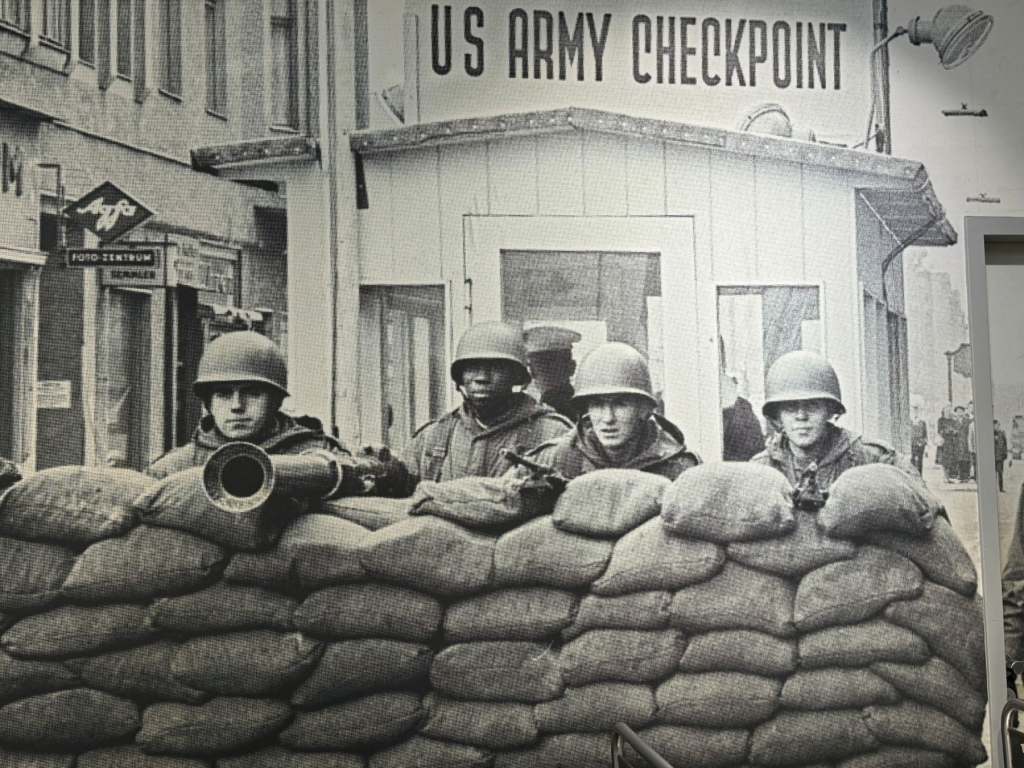
At Checkpoint Charlie, perhaps the most famous crossing point between West and East, there is a replica guardhouse.
Surrounded by sandbags, a huge sign warns in English, Russian, German and French: “You are leaving the American sector.”
Once the world teetered on the edge of a third world war as 20 Russian and American tanks faced off here, their gun barrels fully loaded and their engines revving.
Fortunately, after a tense 16 hours, the crisis was defused and the tanks trundled slowly back to barracks.
Now the spot is surrounded by museums and souvenir shops selling T-shirts and bits of stone from the wall.
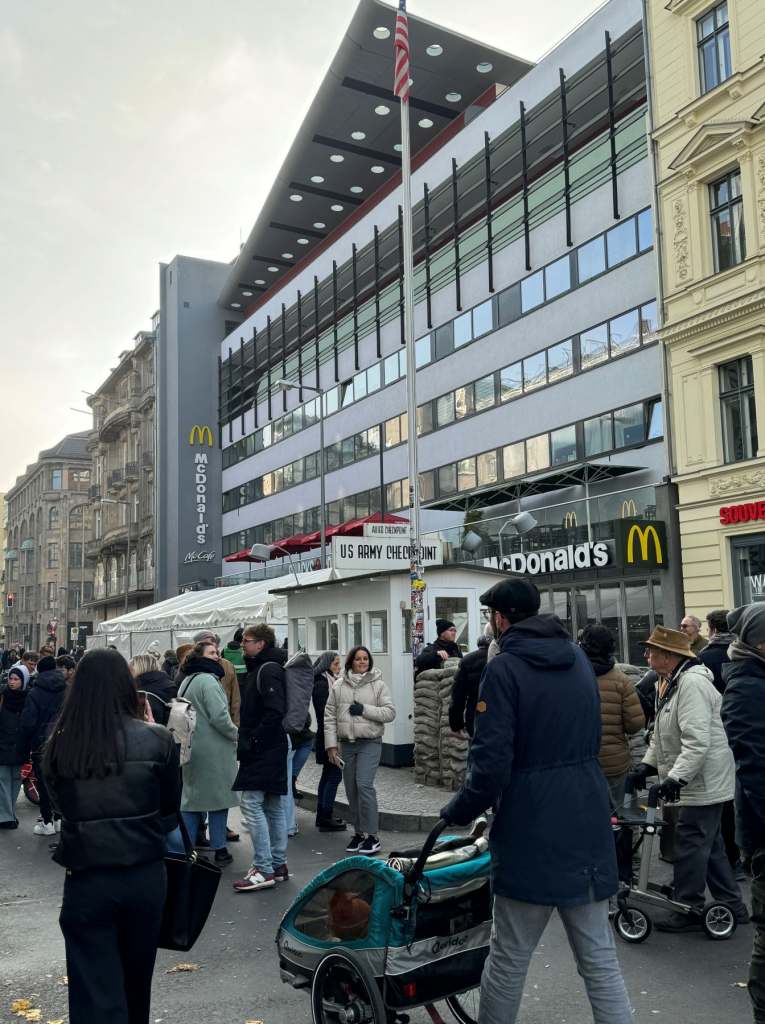
And, graphically proving how capitalism triumphed, there are neon-lit branches of KFC and McDonalds.
Inside East Germany The DDR Museum Experience
Nearby is the DDR Museum which records what life was like living under the East German regime.
Make yourself at home in a reproduction of grim, prefabricated concrete apartment, authentically-furnished with rudimentary equipment.
Or in the world’s only Trabant driving simulator, take the wheel of probably the worst car ever made.
During the Cold War, there were reckoned to be more spies lurking round Berlin than anywhere in the world.
Berlin’s Espionage History Revealed
The hands-on Espionage Museum, just off Potsdamer Platz, traces the history of spying back to Biblical times.
Many of the exhibits are hands on and fun. And it’s not just governments who spy on us.
So, as one display reveals, do supermarkets with their loyalty schemes.
“In essence,” it explains, “the shopper is selling personal data regarding their purchasing habits in return for discounts on their shopping.
“Analysis provides an insight into the life of consumers, for instance a pregnancy or preparations for travel. Retailers use this information in their pricing strategy and also sell this data to other organisations.”
A bipartite graph, or network diagram, then demonstrates how smart fridges, smart lighting, smart TVs and smart speakers are also logging information about us.
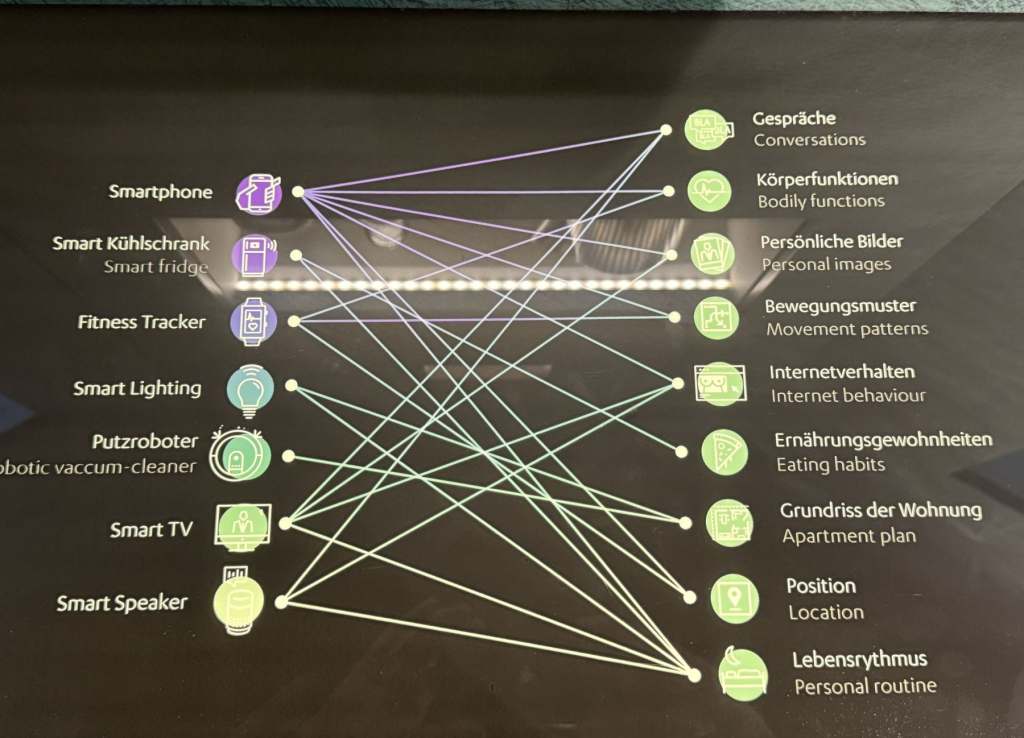
And that’s before the contribution from our smart watches, mobile phones and computers.
Scary stuff.
The Stasi Museum and Prison Chilling Lessons in Surveillance
If you want to know how that information can be used in the hands of the wrong people, check out the sinister Stasi Museum in the dreaded secret police’s former HQ.
Their huge network of informers had neighbours, workmates, friends and even family members spying on each other.
As a result, 6,000 citizens found themselves held without trial in the dreaded Stasi Prison, just outside the city, where they would be psychologically tortured until they confessed to real or imagined crimes.
It is now a museum, with many of the former inmates acting as guides to explain the horror at first hand.
Modern Berlin Rebuilt Resilient and Remarkably Fun
Fortunately, though, those grim days of Nazism and Communism are long gone.
Berlin has rebuilt and reimagined itself since the day the Wall fell in 1989.
These days it’s a fun city with an underground and overground transport system second to none, so that travelling around is a doddle.
I heartly recommend a visit.
Where to Stay and What to Eat During Freedom Week
For more information about Berlin, check out www.visitberlin.de/en.
For details of Berlin Freedom Week, see www.berlin-freedom-week.com/en.
I stayed at the very welcoming and extremely comfortable Hotel Henri, a former mansion which is part hotel and part museum, near the Zoologischer Garten.
And if you fancy a slap-up dinner one evening, then I recommend the charismatic Clarchens Ballroom, with faded murals and tapestries on the walls recalling the elegance of a bygone era in the early 20th century. I tucked into delicious veal liver with onion jus, apple and mashed potato, followed by green jelly and spaghetti ice cream. Go on the right evening and you could even find yourself dancing the Tango!
