Mark Bibby Jackson discovers the best of food and culture in Madrid with tapas, historic restaurants, markets and the Prado Museum.
Tapas Food and Culture in Madrid
It was only a week earlier I had sampled my first vermouth, the Spanish tradition to share a drink before a meal with friends or family. I had discovered it in Sitges. Now I feel something of an expert as I sip my vermouth in Casa Labra.
What I did not expect was the incredible salt cod fish that accompanied it. However, it should not come as that much of a surprise.
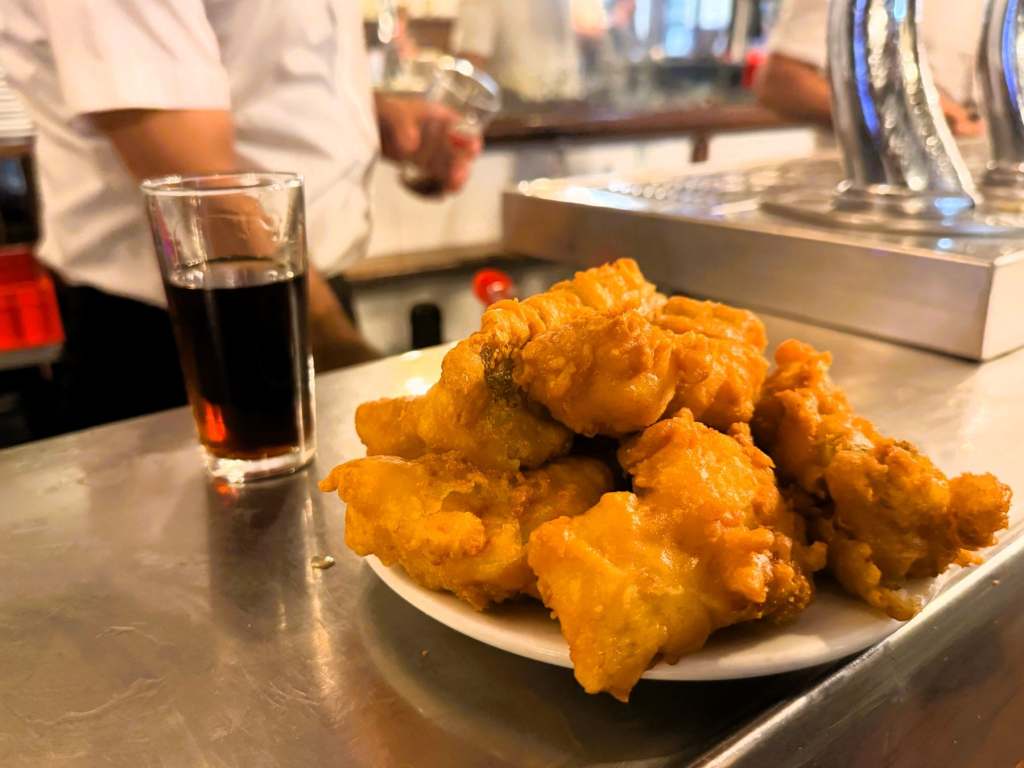
For Madrid has the fourth biggest fish market in the world, Tokyo being the first. Fish and seafood from all over Spain are transported into the capital. Though we might consider fried fish to be the British staple, is an Iberian dish. Our own fish and chips, having originated – at least the fish part – from this peninsula. But never had I tasted the cod ready salted, which was the traditional way to preserve the fish. I must say it was a hit.
Next comes a portion of Manchego cheese, which tastes nothing like the Manchego I have experienced in England. There is a softness that melts on my tongue, which is quite astonishing.
Daniel, our guide on the Devour Madrid Tapas Taverns History tour, informs us if the Manchego goes dry, you should put it in some olive oil, and it will become resurrected.
He certainly knows his food, and Casa Labra is an excellent place to start any food tour of Madrid.
Royal Palace of Madrid
We continue to taste our way through the food and culture of Madrid. Daniel explains how this is the only capital city in Europe which was founded by Muslims. The Moors came here first, then Christians invaded. The impressive royal palace is actually relatively modern, built in the mid-18th century for King Philip V after the previous royal alcázar was mysteriously burned to the ground. Daniel suggests the former palace built on a former Muslim fortress was not ground enough for the Bourbon king’s tastes.
Philip had visions of recreating Versailles. His palace has more rooms than its famed prototype, and is the largest palace in Western Europe with 3,418 rooms.
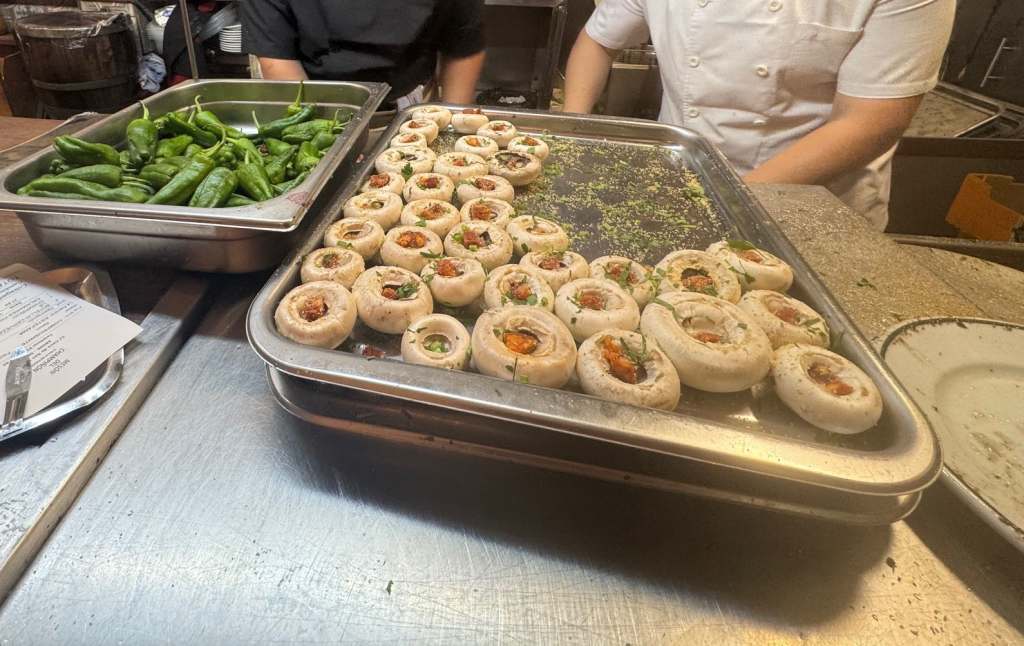
We taste our way through the food of Spain. Some Asturias cider is poured expertly, though not by me, into a jar from height. This is accompanied by a Spanish tortilla, which is filled with peas and potatoes. Proper working class food, something much like our own Cornish pasty that would keep the workers going and maximize their output. I have to admit I’m not a massive fan of the Spanish tortilla. Often so dry and heavy, but this is light and excellent Moorish, though not Moorish. We also try mushrooms at Mesón del Champiñón, a wonderful inn full of character, but also mushrooms. We wrap or tapas tour of Madrid at La Casa del Abuela where we enjoy its signature gambas tapas washed down with the restaurant’s own wine.
A Stroll in El Retiro
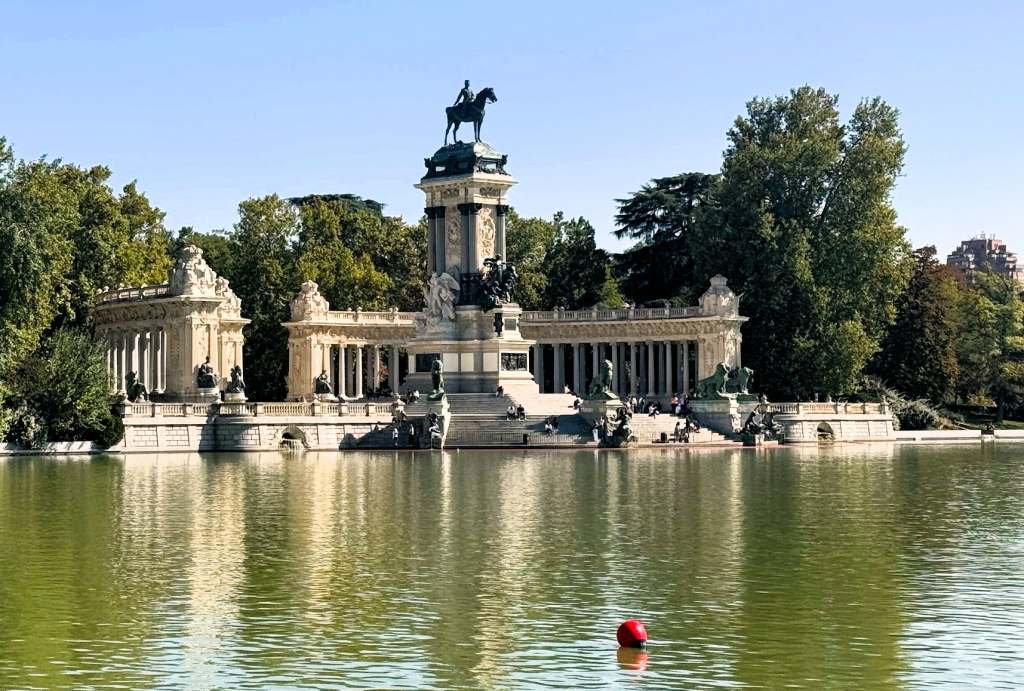
Earlier in the day with the sun out I headed for El Retiro. This royal park dates back to 1639, and is larger than Central Park in New York.
It has witnessed all that Madrid has experienced since the 17th century, and although many flock to the monument to Alfonso XII with its marble gleaming in the sun there is sufficient space to reflect or chill or read a book. You can even visit the peacocks.
After this, the sun still shining, I have another stroll, this time in the Royal Botanical Gardens, which is to the rear of the museum we will visit the following morning.
Prado Before It Opens
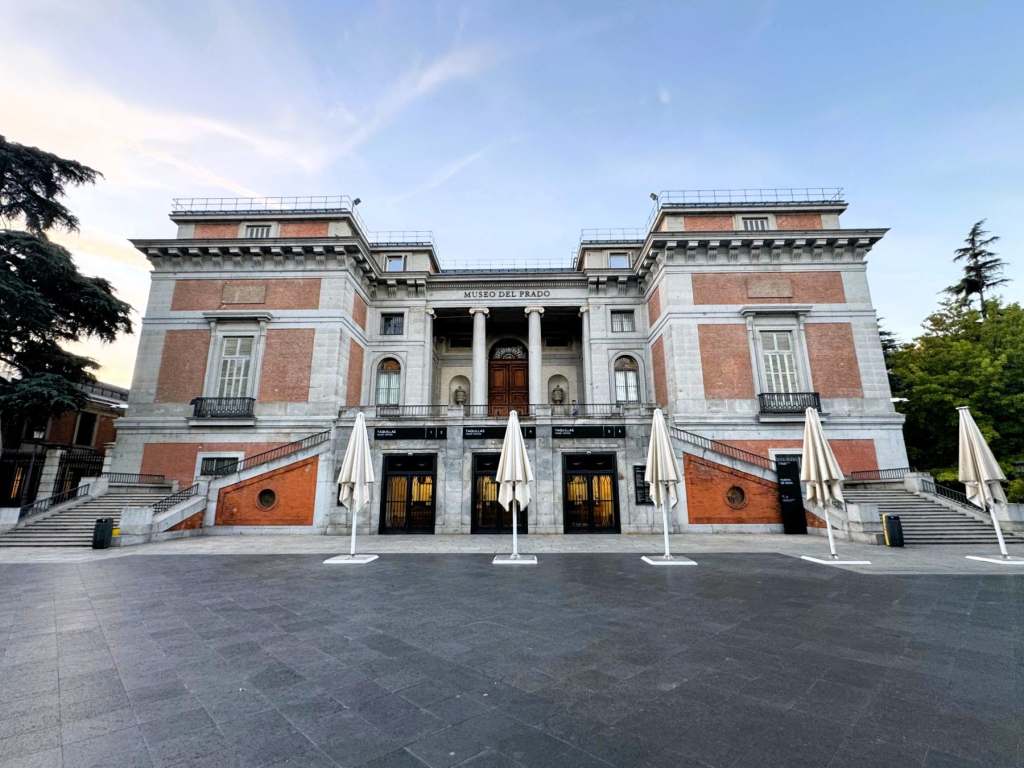
We are most fortunate to have a visit with Walks – Devour’s non-eating partner – to the Prado Museum before it officially opens. The Prado Museum is not just the most famous in Madrid, but also one of the most impressive in the world. Opened in 1819, it has one of the world’s greatest art collections or art.
I am struck immediately by Bosch’s Garden of Earthly Delights. Our excellent guide, Fernando gives an insight into this amazing work, and the way it foreshadows much more impressionist and surrealist artwork of the 20th century, such as Salvador Dali.
Our tour concludes in the room devoted to Goya’s final works, his Black Paintings. Painted in madness caused by lead poisoning in his house, they exude a dark intensity I find overwhelming. I could stay here for hours, but fortunately, for my own sanity, we have another special occasion on this tour of Madrid.
Oldest Restaurant in the World
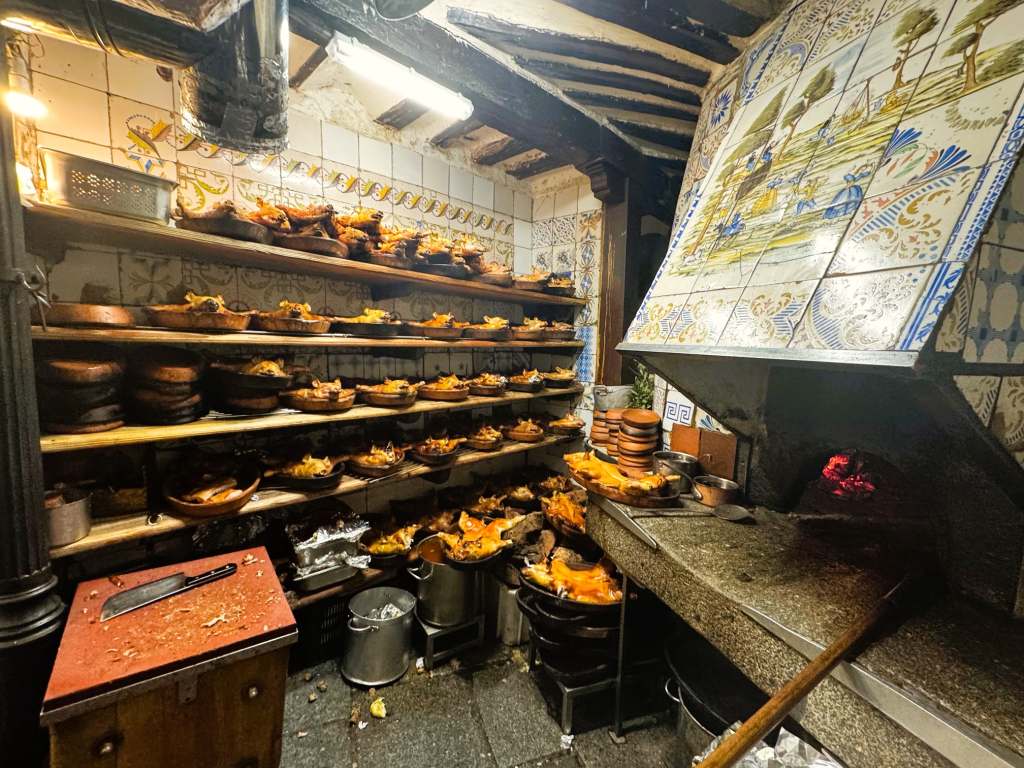
Founded in 1725, Sobrino de Botín lays the claim to be the oldest continuously operating restaurant in the world, as verified by Guinness. It also must have roasted more suckling pigs, some 50 to 60 per day than any other restaurant during its time, although Guinness has not counted them.
Hemingway used to dine here, although unfortunately, I am not allocated his table, nor do I sit where Dickens ate. Instead, we are led upstairs and have a meal which would have delighted the two illustrious writers, including a hake, which is excellent and succulent. You can combine the Prado Museum, though not exclusively with a visit to Botín.
As we have some time to spare until our next appointment. I head to the Plaza Mayor, which is next to Sobrino de Botín, and surely, one of the most remarkable squares in Europe. On previous visits I would come here to sit have a coffee or beer and watch everyone passing me by. But now the square seems perhaps too touristy for my tastes, so I pass by it and head back for a siesta in my room at the excellent Ocean Drive Madrid, which is located centrally opposite the Opera.
My room comes replete with coffee machine, and the hotel has an excellent rooftop with views of the Opera, and as I’m to discover on my final day, a small pool, which sadly is closed during my stay, the following morning.
Bar Cock
In the evening, we have no official tour, but this does not stop us from enjoying both wine and food.
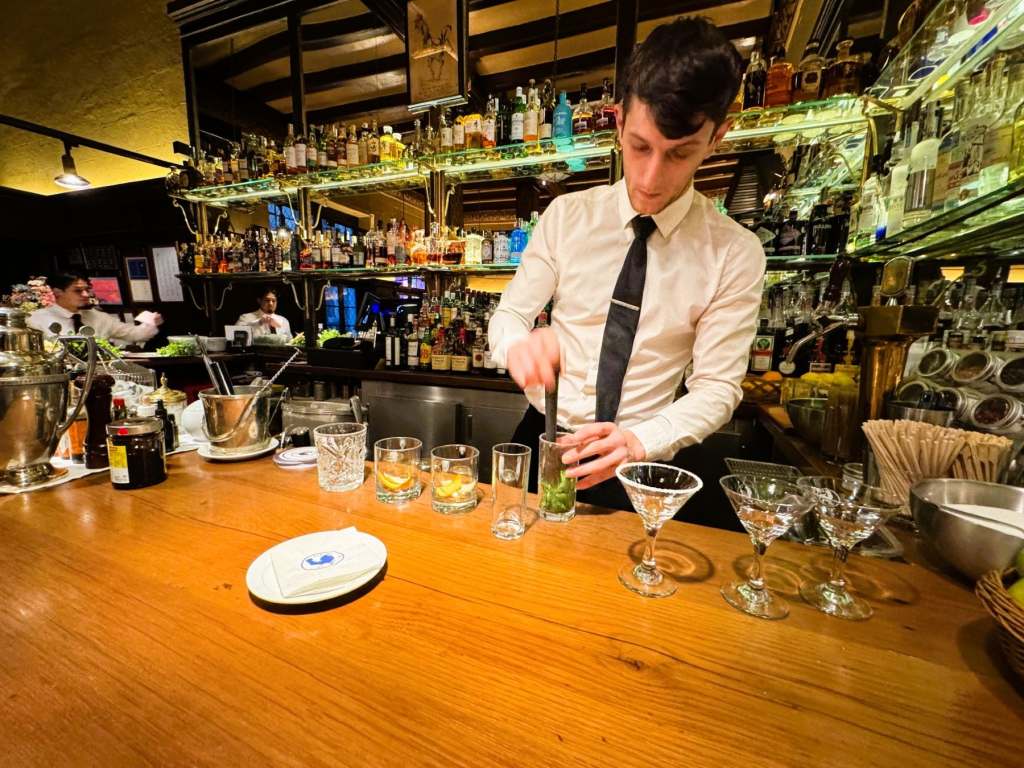
First, we go to Bar Cock one of the oldest cocktail bars in Madrid. Originally called Bar Cock, it briefly had a name change during Franco’s regime to El Gallo de oro as the dictator was not a fan of its English name. Now, once more a strutting Cock, it serves excellent cocktails, including a brilliant Manhattan.
After that, we head to Taberna La Carmencita, a beautiful restaurant with stunning blue tiles on the walls. As we had such a substantial lunch, we settle for some tapas. After all, this is how the Spanish traditionally eat.
Ultimate Spanish Cuisine
Our respite from copious quantities of food is brief. On our final morning, we are booked on the ultimate food tour of Madrid. Our guide Flo takes us to Chocolate, where we enjoy some Porras dipped a rich and velvety hot chocolate. After this light start to the day, Flo takes us to Moega, a small bakery, where we stand outside and enjoy the sourdough.
According to Flo, the fall of Franco saw the closure of many bakers in Madrid as they were not able to cope with the cheap approaches from globalized supermarkets. In recent years there has been an increase in artisan bakers such as Moega.
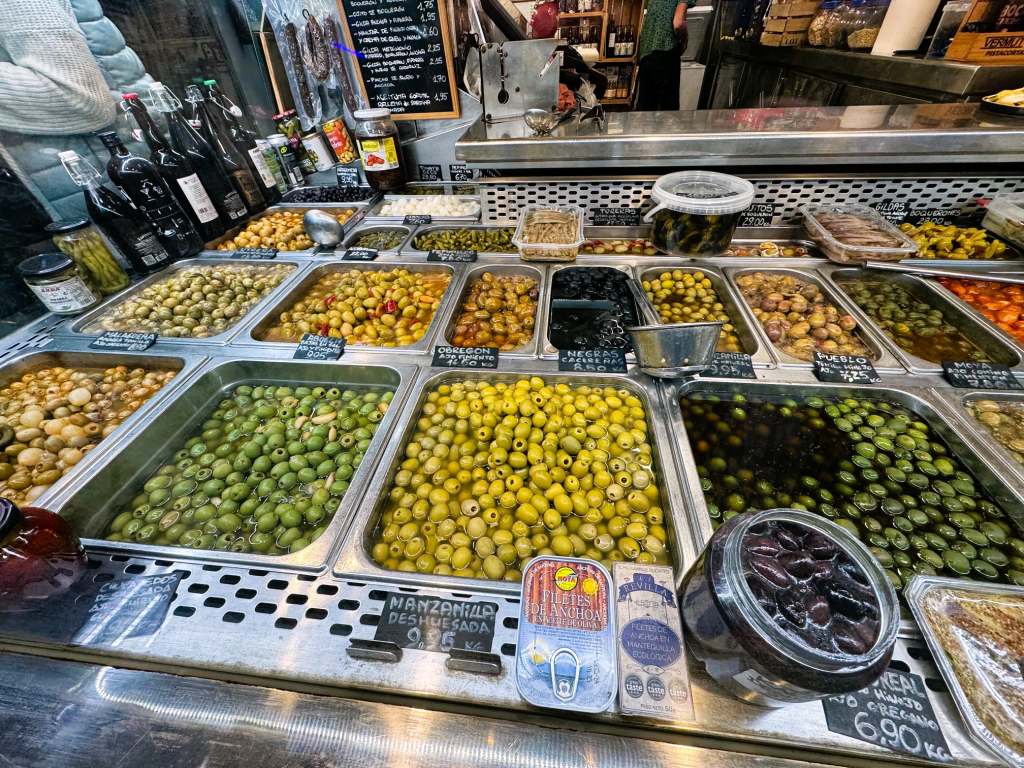
The main part of our tour revolves around the Anton Martin market, where we have our first vermouth of the day – it is almost noon – at La Queseria with an olive tasting. Spain produces 50% of the olive oil in the world. Fortunately, not all of it is turned into oil. We try several olives, the hard and spiced, the soft and sweet. It is the first time I have had a olive tasting experience. I still prefer the sweet green olive that has always been my favourite, although others in our group preferred the more the harder and more spiced olives.
We then sample some olive oil itself. Spanish olive oil is richer or thicker than Italian olive oil. Flo, who is Italian, explains that Spanish olive oil is particularly good for cooking, whereas perhaps an Italian olive oil might be better for a salad.
By now I have learned to go with the flow. After this my meat eating companions sample Iberian ham, followed by some fruit from a stall just outside the market.
Perhaps the greatest treat lies next. Casa Gonzales. The current owner is the grandson of the original Gonzales, who was strongly anti-Fascist. Arrested during Franco’s reign, he narrowly avoided execution and was sentenced to life imprisonment instead. However, the locals complained so much because the food had deteriorated in the eight years since his incarceration, that the dictator was persuaded to release the master chef early.

I cannot vouch for how much of that tale is true, but what is for sure is the quality of the wine and cheese we had in its back room.
After that we have a traditional working Madrid lunch, enjoying a boccadillo stuffed with calamari at one of the sandwich bars just off the Plaza Mayor. It tastes wonderful, but perhaps by now I have oat deed on my carbohydrates.
The Food Tour is almost over, but we have one final treat. Il Riojano is more than a century old. Adorned in Tuscan marble and mahogany wood, it serves sweets fit enough for a king and queen – the original chef use to work for the royal court. Its signature dish is a Segovian layer cake, consisting of custard, lemon curd and sponge wrapped in marzipan. This is a sweet that is truly sweet, and tastes wonderful, especially when accompanied with a bitter expresso.
It is the perfect way to conclude our journey through the food and culture of Madrid.
Where to Stay in Madrid
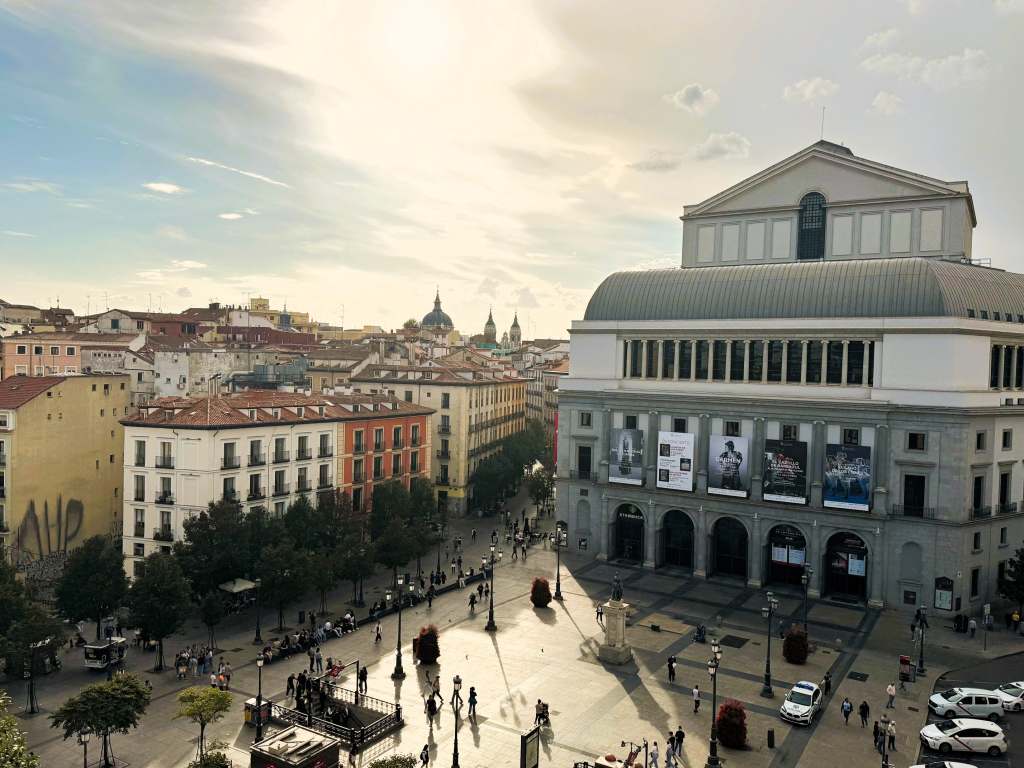
For a central base to discover the food and culture in Madrid, I recommend Ocean Drive Madrid Hotel a four-star hotel on Plaza Isabel II, opposite the Opera. It has modern rooms come with coffee machines, and although the rooftop bar and small pool were closed during my visit, the views over Madrid’s rooftops are spectacular. It also has a Mediterranean restaurant inspired by a beach bar concept.
How To Get to Madrid
For practical tips on exploring Madrid beyond food, see our Things to Do in Madrid article.
