By the second day of our trip, the number of times we had heard Edelweiss was becoming a running joke. I had made a friendly bet with one of my press colleagues that we would hear it three times at The Sound of Music gala at the Salzburg Felsenreitschule celebrating the 60th anniversary of the film. Frankly, I thought I was being conservative.
So, as I leave the gala, I start complaining to a different colleague that we had only heard it twice, and my wager was lost. An elderly woman starts to upbraid me. “No, no, it is wonderful. At last, The Sound of Music is for Salzburg.” I try explaining the misunderstanding but she is wondering off a broad smile on her face, with a contentment that no brash Englishman can destroy.
And of course she is right. Although The Sound of Music film was filmed in the Austrian city, where the story is set, it was not a success in either Salzburg or Austria. The sight of Nazi stormtroopers parading through Salzburg, the Swastika draped over the city, was a tad too much for Austrians, coming just 20 years after the end of the war.
Salzburg The Sound of Music Tour
In later years, the film has become a tourist attraction, drawing fans from across the world to see the sites where The Sound of Music was filmed. Perhaps not as many as those who come for Mozart but still a sizeable draw.
Our The Sound of Music Tour was organised by Panorama, the company that ferried Julie Andrews and co around Salzburg and its surrounding countryside in 1964, and so claims to have The Original Sound of Music Tour in Salzburg.
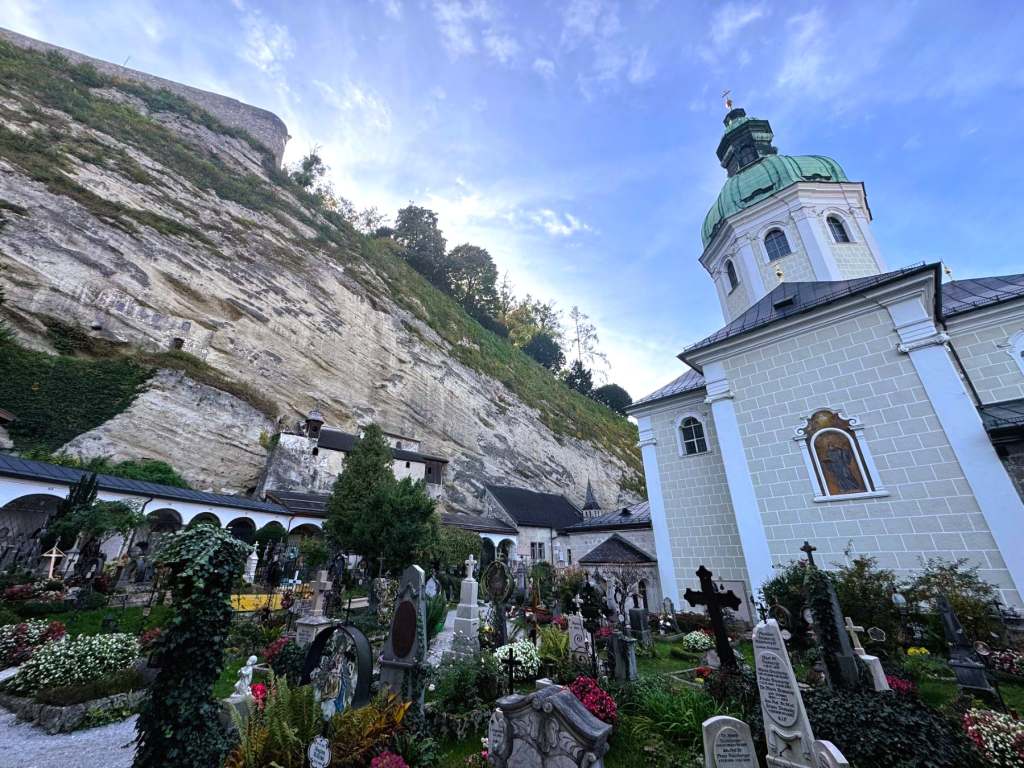
We start at the Mirabell Gardens, where Julie and the kids dance their way through Do-Re-Mi. then cross the river to see other sites, including the beautiful St Stephen’s Convent, which somehow I had missed on my previous visit to Salzburg. Next to it is the oldest bakery in Salzburg powered by a 900-year-old water mill. They also claim to have the oldest restaurant in the world, despite Guinness giving this accolade to Sobrino de Botín in Madrid.
We also pass the Horse Riding School Salzburg (Salzburg Felsenreitschule) where the gala performance is going to take place a couple of days later. This is where the family escape from the Nazis in the film. So, it is most fitting the return of so many von Trapps to Salzburg takes place at the point where the film family fled.
The Sound of Music Fact and Fiction
The film itself is not very faithful to the true story. The family do not walk over the mountains. After all, they would have reached Germany, not Switzerland. Instead, they took a train to Italy. Maria von Trapp always claimed that Georg was portrayed as far more austere than he was in reality.
However, what is true is that the seven children were performers and when the family emigrated to America, they became touring singers. This is where the story of the Von Trapp family was given birth. First, as The Story of the Trapp Family Singers written by Maria in 1949, and then a Rodgers and Hammerstein musical starring Mary Martin on Broadway a decade later.
The Hills Are Alive
In the afternoon we leave Salzburg to discover the surrounding hills which although not quite alive with music were certainly most beautiful. Over the next two days we encountered many of the sites featured in the film.
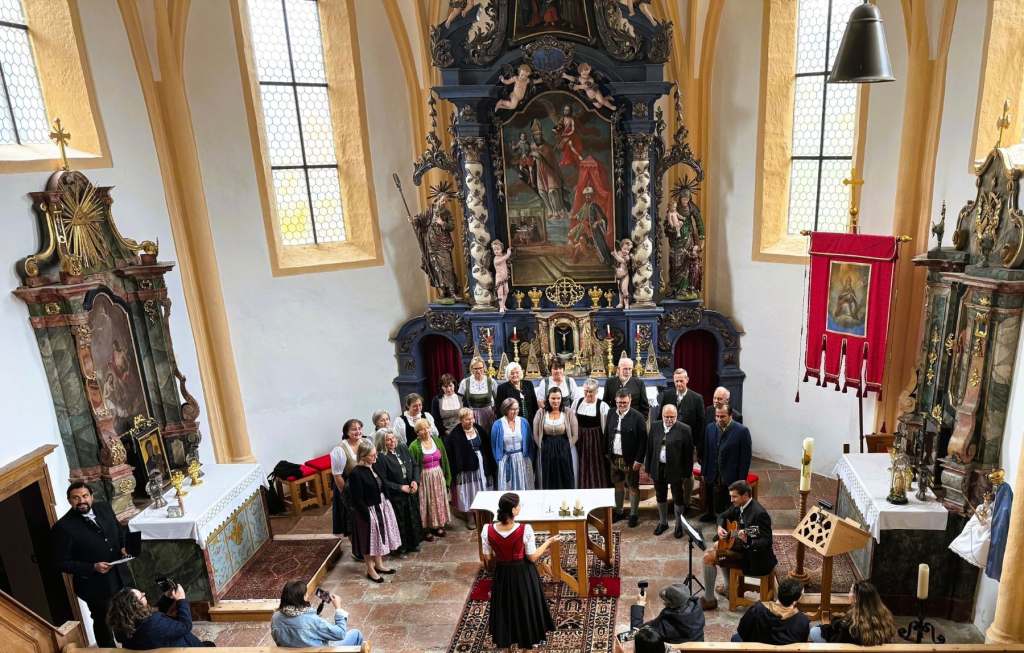
Blink and you’ll miss it, but the pilgrimage church of St. Nikolaus in Torren appears in the opening credits. Here we are entertained by the Golling church choir who sing Edelweiss not once but twice, the second time inside the church itself, renowned for his acoustics. It was a wonderful experience.
We are also treated to a folky performance of Edelweiss by Elisabeth von Trapp, granddaughter of Maria, at the Hotel Goiserer Mühle in Bad Goisern. Just looking at the enjoyment on the faces of my colleagues, most of whom were The Sound of Music fans since childhood was a highlight of the trip.
Apparently, many fans believe Edelweiss to be the national anthem of Austria, although it was created by Rodgers and Hammerstein for the musical.
You don’t have to be a great fan of the film, I confess I had never seen it before being invited on the trip, to enjoy a journey around this part of Austria. The scenery, the food the wine and the sense of community is very strong.
The Sound of Music Salzburg Gala
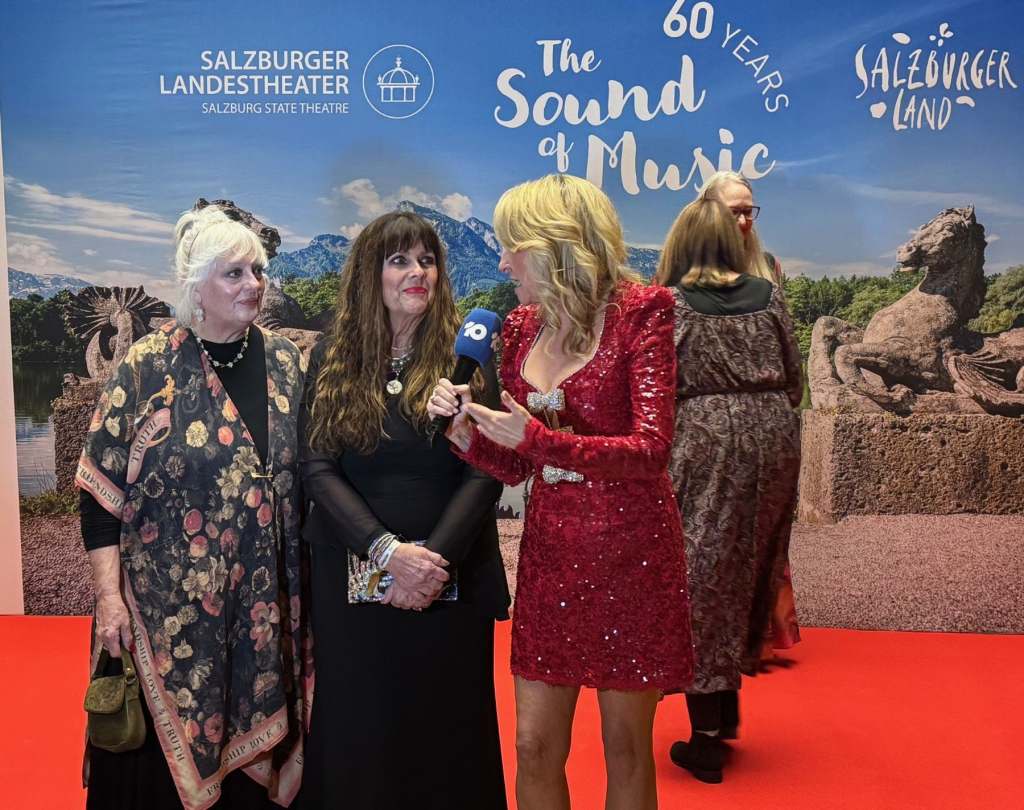
There is also a community formed around The Sound of Music, I discover at the Gala on the final night. Here are not only members of the Von Trapp family, but also actors from the film, as well as fans, such as the old woman from Salzburg, who can now celebrate The Sound of Music.
And what is this celebration? A story which, as one of the actors in the current stage version of The Sound of Music in Salzburg, emphasises is still for our time. The von Trapps were refugees. They left their native Austria when it was invaded by Nazi Germans, and found refuge in the United States.
Displacement is not something that disappeared with the Second World War. The tolerance of America towards the von Trapps stands as an example the present president and his citizens could extend to those who, through no fault of their, own have been displaced by war. And, of course, the US is not alone in its lack of compassion.
Edelweiss may not be the national anthem of Austria, but as Nicholas Hammond, who played Friedrich in the film, observes at the gala, it is a hymn for all generations about peace and tolerance. As such it is as timeless now as it was when Rogers and Hammerstein first created it.
If you wish to hear Edelweiss one more time, as performed by the Golling church choir. Click here to see Vincent Croce’s beautiful video of our trip.
