


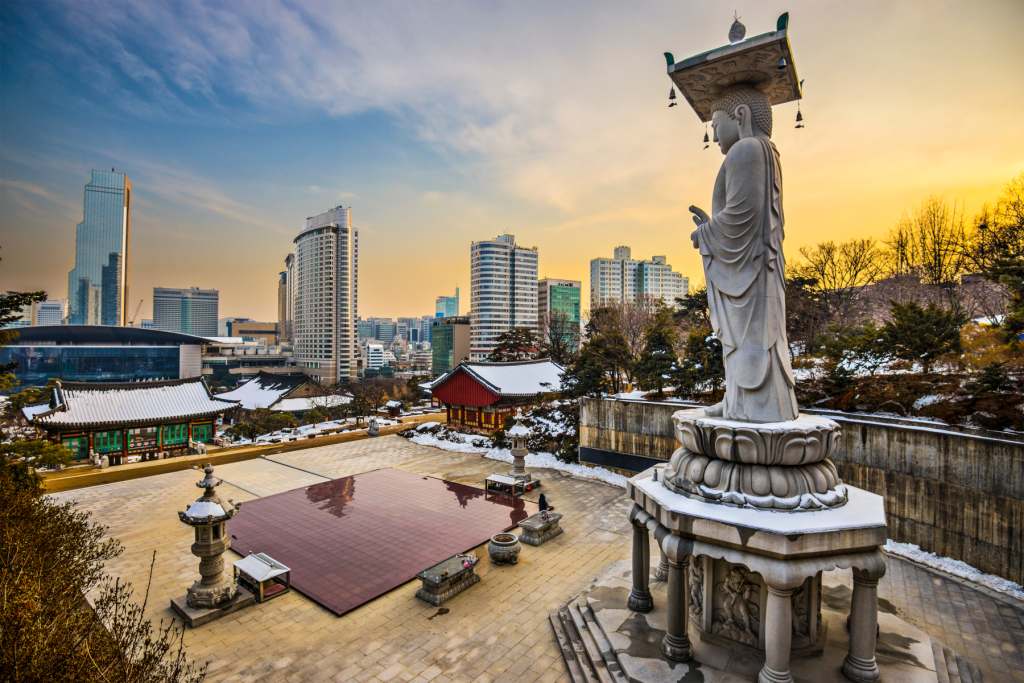
Seoul, the vibrant capital of South Korea, is a city of nearly ten million people that combines deep tradition with dazzling modernity. I found it to be one of the most fascinating and easy-to-explore capitals in Asia — a place where centuries-old palaces stand beside futuristic skyscrapers, and where every district reveals a different side of Korean culture. As this Seoul travel guide shows, getting around is effortless thanks to the city’s extensive and efficient metro system, which makes visiting its many attractions — from royal palaces and historic villages to street food markets and mountain viewpoints — simple and enjoyable.
Arriving through Incheon International Airport, I quickly discovered how well-organised Seoul is for travellers. The airport information desk provided a handy metro map, and I picked up a rechargeable travel card to use on the subway and buses. A non-stop express train runs directly into Seoul Station, while the airport bus service connects to most major districts, including Gangnam, where I stayed.
Exploring Seoul’s Royal Palaces
Seoul is home to some of Korea’s most impressive historic palaces. Gyeongbokgung Palace, built in 1395, houses the National Palace Museum and the National Folk Museum, and is an essential stop for anyone wanting to understand Korea’s royal past. Alternatively, Changdeokgung Palace, dating back to 1610, features the exquisite Secret Garden, which requires a separate ticket but rewards visitors with a serene and meticulously landscaped space. Both palaces are easily accessible via the metro, making them perfect for day visits.


Understanding Korea’s Past
To gain insight into modern Korean history, I strongly recommend a DMZ tour — it’s a fascinating way to understand the ongoing tension between North and South Korea. If you prefer to stay in the city, the Korean War Memorial in Yongsan-gu is a must-visit. Free to enter, it features extensive artifacts, a combat simulation room and peaceful grounds with a lake and fountain, offering both education and reflection.
Traditional Seoul at Bukchon Hanok Village
For a glimpse of old Seoul, head to Bukchon Hanok Village, a well-preserved residential area of traditional Korean houses known as hanok. Wander its narrow streets to discover local workshops, artisan cafés and small restaurants, all nestled among architecture that has survived centuries of change.
Walking the Seoul City Walls
Seoul also preserves its medieval heritage in the form of city walls. I recommend the City Wall Walk, starting at Heunginjimun Gate. Nearby, the City Wall Museum offers English-language insights into the structure’s history. Following the walls along the ridgeline provides panoramic views of the city, and a midway stop at Ihwa-Dong Mural Village reveals colourful sculptures and mosaics. Continue east along the Seongbukcheon Stream for a pleasant urban stroll before returning to the metro.
Gangnam Style and the Coex Mall


Seoul’s modern face is just as fascinating. The Coex Mall in Gangnam is home to the famous Gangnam Style statue, where visitors line up for photos while the music video plays beside them. Inside, the Starfield Library is an awe-inspiring space filled with towering shelves — mostly magazines, but perfect for coffee, cake and people-watching.
Where to Stay in Seoul
Accommodation in Seoul can be expensive, but I found E-Residence in Gangnam to be an ideal base. This family-run hotel is near Sinsa Metro Station, offers kitchen and laundry facilities, and provides a welcoming atmosphere. Its location makes it easy to explore both traditional and modern areas of the city.
Sampling Seoul’s Street Food at Gwangjang Market
For a true taste of Seoul, Gwangjang Market is a must. Laid out in a large X shape near Jongno 3-ga Metro Station, it offers seafood, Korean pancakes, kimbap and much more. Many stalls have English signage, though a word of caution: Korean spicy hot is spicy. Don’t miss the chance to try a local bakery, but beware the syrup dispenser — I learned that one the sticky way!

Enjoying the View from Namsan Mountain
To see the city from above, head to Namsan Mountain, a park with trails, picnic areas, and a cable car. Hike or ride to the N Seoul Tower for sweeping city views. For a different perspective, the Lotte World Tower observation deck offers another vantage point, though Namsan remains the more iconic choice.
Final Thoughts on Seoul
Seoul is a city of contrasts — ancient palaces and modern skyscrapers, tranquil alleys and bustling markets, local traditions and global pop culture. From the historic sites of Jongno to the neon-lit streets of Gangnam, this vibrant capital is endlessly fascinating, surprisingly easy to navigate, and filled with experiences that stay with you long after you leave.