Is the Demilitarised Zone between North and South Korea worth a visit? Mike East went to the Korean DMZ and found it fascinating.
The first thing to say is that there are different operators and a range of tours to the Korean DMZ, so get the right one for you. Four different types were apparent to me, though there may be more.
There is the straight DMZ tour, one that includes a conversation with a North Korean defector, another that includes the suspension bridge over Lake Majang and yet one more that includes a different suspension bridge to Mount Gamaksan.
Glorious Glosters
For British visitors and war history buffs, the latter is recommended as at the far side of the suspension bridge there is a small plaque remembering the roughly 750 men of the First Battalion of the Gloucestershire Regiment who, in a series of actions, known as the Battle of the Imjin River, faced 27,000 Chinese soldiers and held them off for three days, allowing UN forces to regroup for the successful defence of Seoul. The ‘Glorious Glosters’ sustained heavy casualties and mustered less than 70 after the fighting ended.
My DMZ Korean Tour
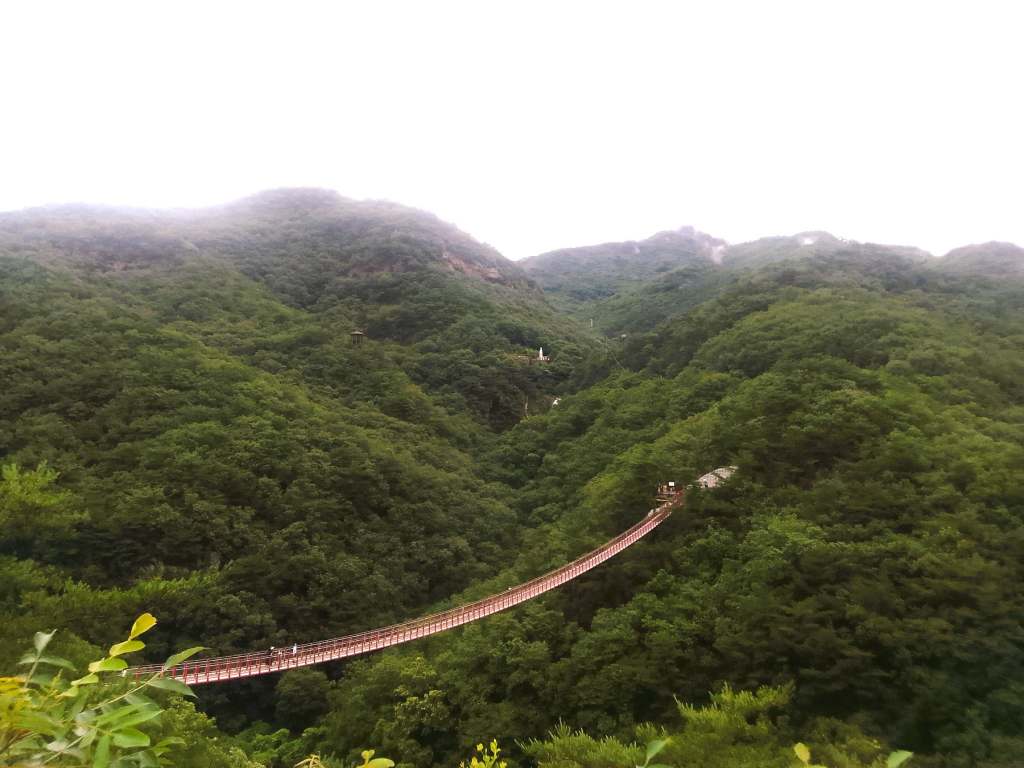
This was the tour I chose and the bridge is the first stop after a short climb through wooded hills. On the way you will see concrete Korean War era bunkers. Call me crazy, if you wish—but, to me, the bright orange plastic mushrooms and the cutsie guitar-playing squirrels, placed around the path, jar with the natural beauty and Cold War history that you see around you.
Note: there is a bigger monument to this battle called Gloster Park, which is nearby, but was not part of the tour I was on.
Between each stop our guides gave us useful information and colourful anecdotes about the DMZ and the relationship between the two Koreas.
Next, there was an exhibition centre that touches on wider themes. The statues recognising the suffering of the euphemistically-named comfort women, reveal the brutality of sexual slavery in the Japanese colonial era and the wrecked locomotive is a poignant symbol of the Korean War.
Observation Post : View to North Korean DMZ
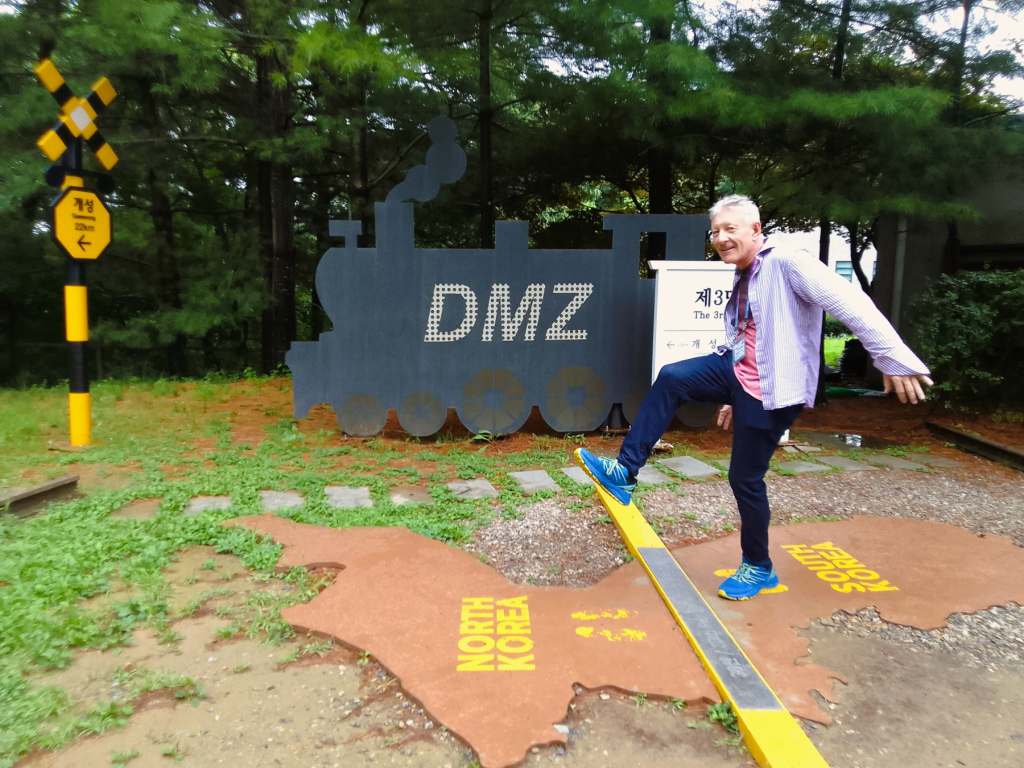
Further on, the observation post is fascinating, as through the glass front you get to see across the DMZ to the Kaesong Industrial Complex (closed in 2016 due to deteriorating relations), and on deeper into North Korea.
A model explains what you can see, though binoculars are something useful to have at this point. Do not expect to see rows of Kim Jong-un‘s tanks; it all looks very peaceful. There is an old M48 Patton tank in the parking area beside the observation post, but no other military hardware. A video presentation states that North Korean artillery hidden in the hills have the range to reach and devastate Seoul. All around, the security precautions remind us that the political tension is very real.
DMZ Tunnel
The third infiltration tunnel is just one more reminder of that atmosphere. You are given a yellow helmet then walk down a sloping passageway, specially created for these tours, until you level off at a diorama of North Korean miners in the act of blasting—the furthest point the actual North Korean tunnels under the DMZ got before discovery. After the ramp, you walk along the much smaller infiltration tunnel itself. It is damp and the ceiling is low. That’s when you are grateful for the hard hat. The end is sealed with a small window set in a strong wall, thus keeping you from straying over the border.
Can You Take Photos of the Korean DMZ?
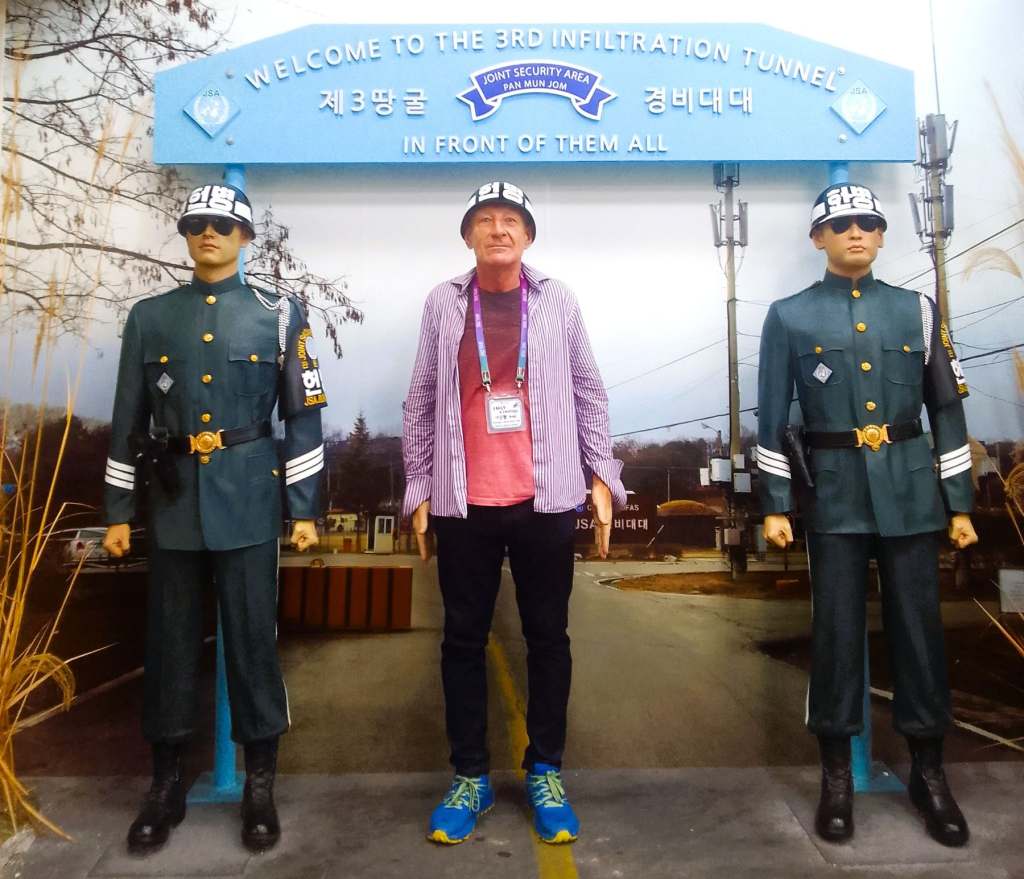
Photo rules seem to vary with the political climate. In July 2025, no photos were allowed in the infiltration tunnel and none in even the vaguest direction of North Korea, even from inside buildings. Nevertheless, there had clearly been times when photos of North Korea had been allowed, as our guides showed us ones they had taken in times of warmer relations.
There was no talk by a North Korean defector on this tour, though, given the things you find out as you go, it would certainly have been very interesting.
There are moments when the tour gets propagandistic or heavy-handed, such as in the narration of one of the videos, but the cumulative evidence of living next to a heavily-armed and unpredictable dictatorship are undeniable.
The South Koreans maintain a village in the DMZ and this is where we stopped for an optional buffet lunch, which was great and gave an opportunity to sample a range of local food.
That marked the final stop and we were duly delivered back to central Seoul by mid-afternoon.
Organising Your South Korean DMZ Tour
You must bring your passport with you. Part of this tour is in the military zone and South Korean soldiers will check your passport against the bus passenger list inventory.
I booked my tour with VIP Travel through Klook, though there are other tour operators. My tour was done in an interesting way with Emily as our guide in English, for roughly half the bus, and Tomas speaking in Spanish for the other half. Both were highly professional and very informative.
