



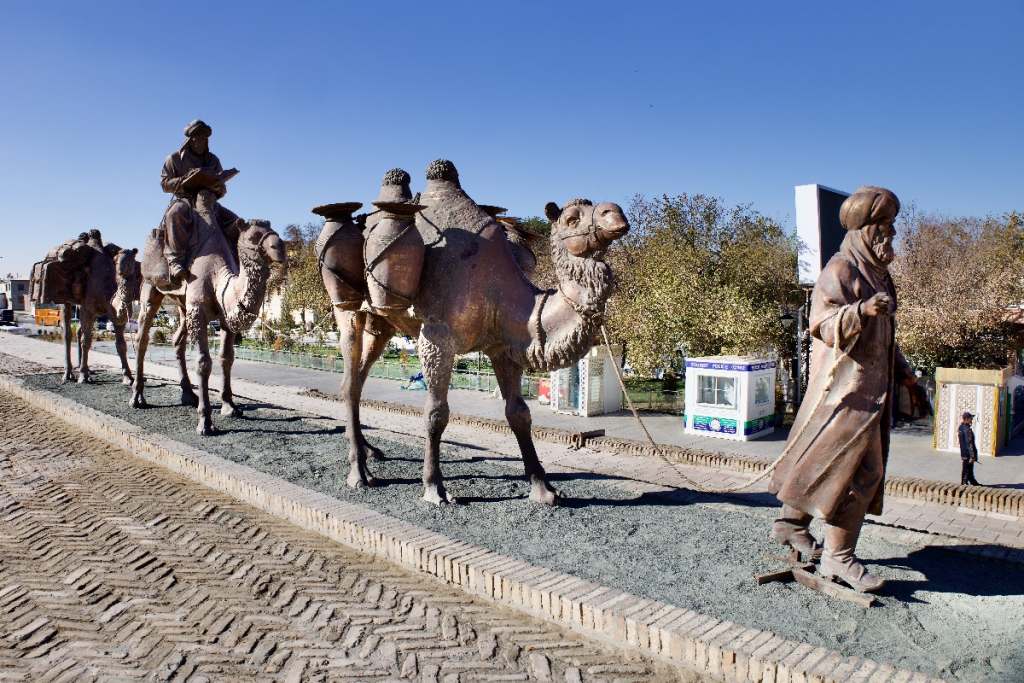
Uzbekistan, a double-land locked country, is fast becoming the must-visit destination. The main attraction is the Silk Road, an ancient network of trading routes traversed by caravans of camels across its steppe and desert landscape.
This complex network of trading routes linking China and Central Asia to the Middle East and Europe was founded during the Han Dynasty. By the Middle Ages a continuous stream of caravans flowed along it carrying not just goods to trade but also scholarly and religious philosophies – a mix of influences that was to shape all aspects of the cities on these routes including architecture, art, education and religion.
Thanks to the protection and funding of UNESCO these cities have been regenerated. Their huge madrasas, mausoleums, necropolises and trading centres have been carefully restored reflecting their creation and prosperity as a result of the constant stream of caravans along the Silk Road. Today this route is partially replicated by the high speed Afrosiab trains. So, it seemed appropriate to join a Great Rail Journeys group to explore the Silk Road in Uzbekistan. My journey began in Khiva.
Khiva Where the Journey Begins on the Silk Road
It was early morning when we arrived in Khiva and breakfast, first on the agenda, was taken in the huge, high-ceilinged elegant hall of a madrasa (Islamic place of learning), the restaurant of our hotel, the Orient Star. This hotel occupies a famous monument in Khiva, the nineteenth century Mohammed Amin Khan Madrasa.
Forty small ‘student’ rooms on two floors surround a large courtyard where, in days gone by, students would have studied in the shade of the trees. This unique accommodation was a fascinating introduction to the history of Khiva. Inspired to learn more of Khiva’s history I abandoned all thoughts of unpacking during our free time and went out to explore.
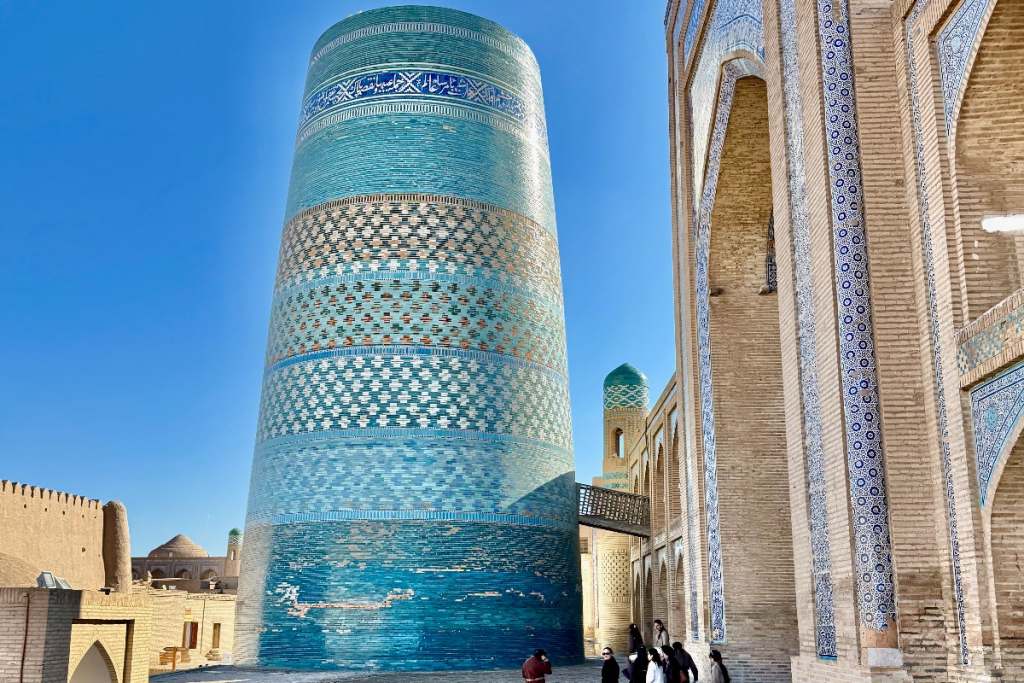
Uzbekistan is a safe country so I was happy to wander on my own. Everywhere I looked I could see buildings of interest. All impeccably restored. I was particularly interested in the elaborately decorated but truncated Kalta Minor minaret in front of our hotel. Its patron, Mohammad Amin Khan, was intent on creating a minaret that would rival those in the other Silk Road cities. But his beheading in battle brought an untimely end to these ambitions.
We spent two days exploring Khiva both with our guide Ichti, who was with us throughout our journey along the Silk road, and independently. Our central location and sympathetic starting times offered a great opportunity to explore the old town in the early morning before it exploded into a riot of colourful stalls.
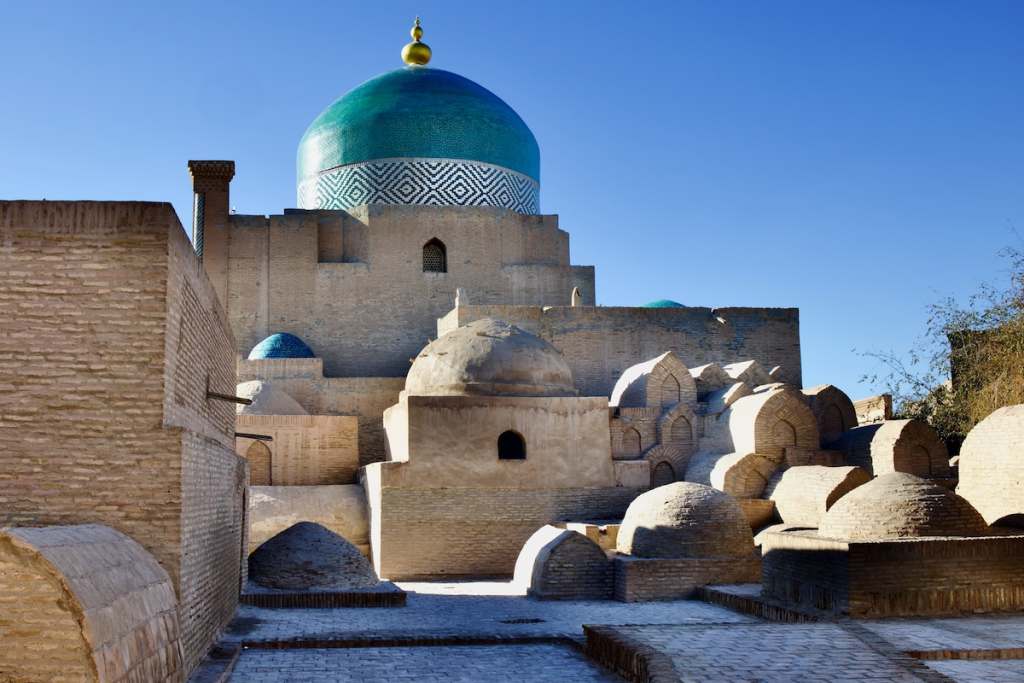
Empty streets and deserted mosques and madrasas were a joy to explore. The cleanliness was impressive, it seemed every inch of the roads and pavements received the attention of the long handled besom and dustpan. The ancient cemetery in front of the emerald green-domed mausoleum of Mahmoud Khan drew me back time and again as it does the many pilgrims who visit this holy site. Modern cafés and traditional restaurants offered a respite from our sightseeing and shopping.
Our exploration was not confined to the city as we spent a day beyond its walls visiting two forts in Khorezm, the archaeological site of Toprak-kala and the ruins of Ayaz Kala castle, both defenders of the caravans from the inevitable marauders. These ancient edifices, the oldest in Central Asia, have crumbled over the years but enough remains to appreciate their past.
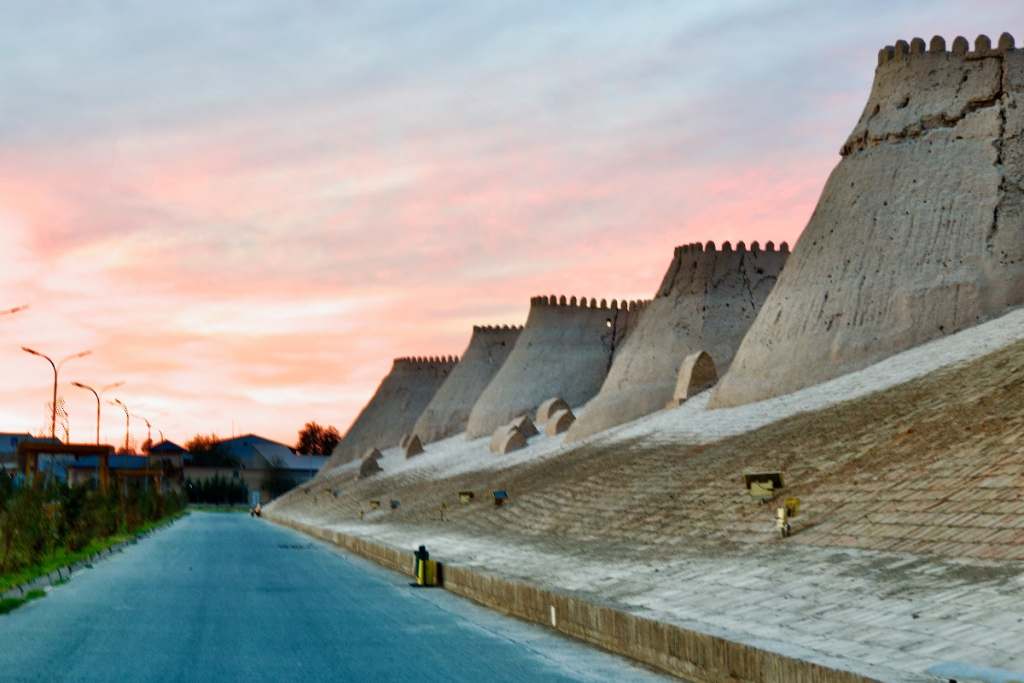
It was dusk when we returned to Khiva and as I did not want this day to end by just returning to my hotel room, I joind friends on a stroll around the city walks watching the sun set. We walked back to our hotel through the narrow streets of the old town. Lights from small shops and workshops spilled out onto uneven walkways and the noise of woodworkers hammers echoed through the empty streets.It was a memorable end to our stay in Khiva as we left the next morning for Bukhara.
Bukhara on the Silk Road in Uzbekistan
We covered the long distance between Khiva and Bukhara by coach. Although the two will be linked by the high speed Afrosiab our more leisurely journey was a great insight into the enormity of the distances travelled by the camel caravans which took several weeks across an unforgiving landscape. These caravans would take several breaks along the way and it was in Bukhara that we were introduced to the caravanserai where the traders would be accommodated and store their goods while resting, trading and exchanging news and ideas.
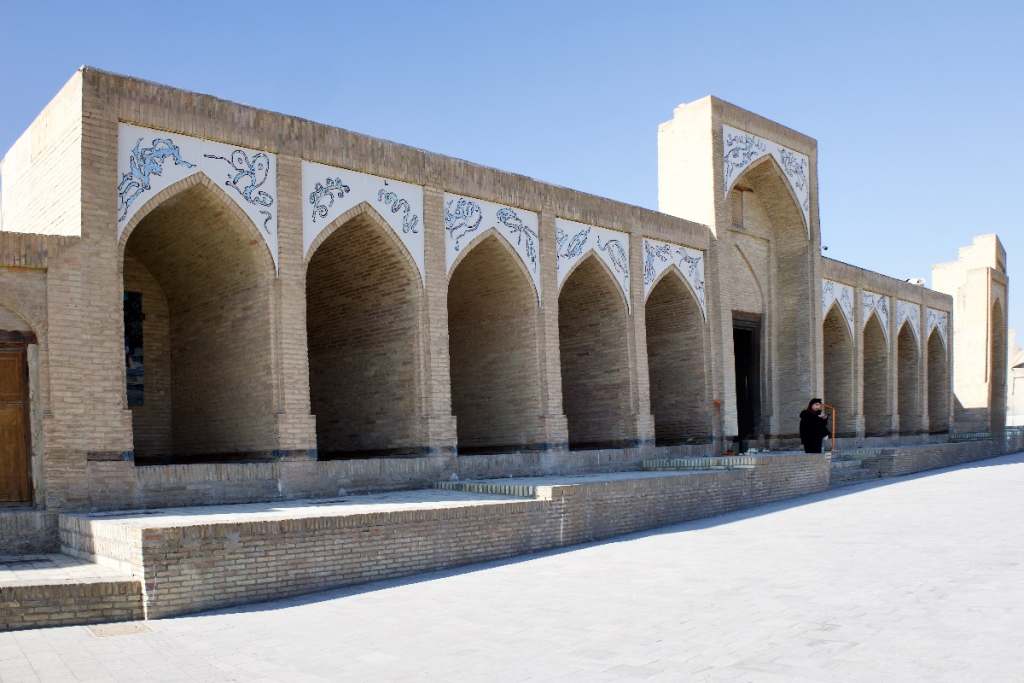
Strategically placed along the Silk Road they offered stabling for horses and designated areas for camels. Generally, caravanserai, the forerunner of the hotel, would have one entrance leading into a courtyard surrounded by rooms on two floors. Very few have survived but Bukhara does feature several including the Nugay caravanserai, now in use as an events centre.
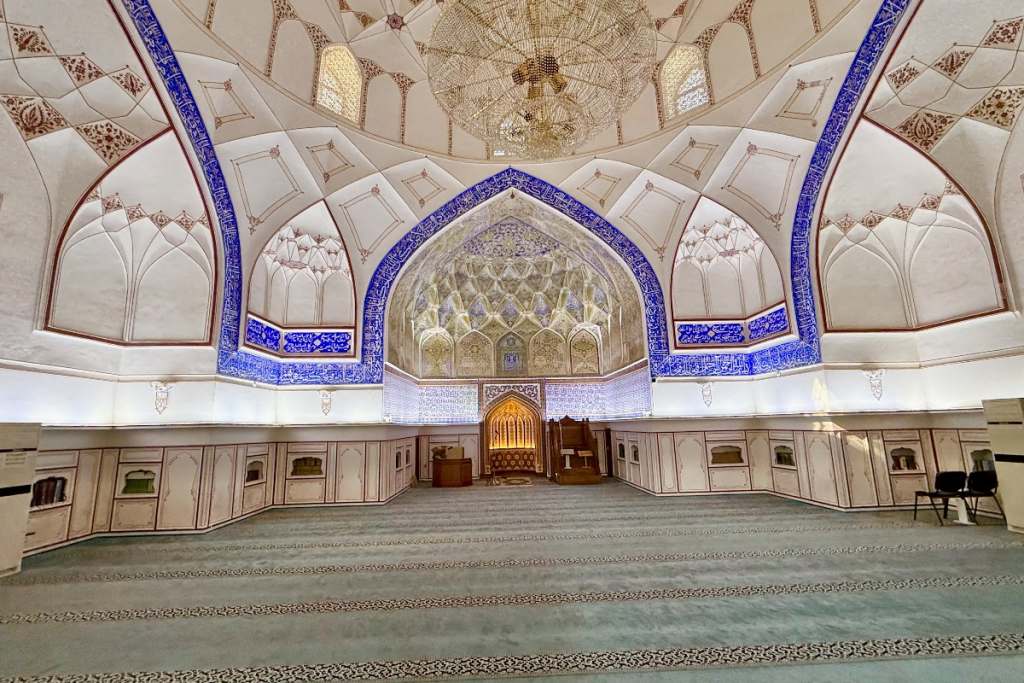
Bukhara also features a huge fortress, the Ark of Bukhara. Although it was virtually destroyed by an aerial attack from Russia in 1920 it is still worthy of a visit to appreciate the size of this citadel within a city and admire the views across the city surrounding it. Close to the fort is the Iman Bukhari Mausoleum complex. It features the most attractive mosque I have ever had the privilege to enter.
A lasting memory of Bukhara is the trading domes. Not many have survived but, in this city, there are four in a row the Toki-Sarrofon, Telpak Furushon, Tim Abdullakhan and Toki-Zargaron trading domes.
Basically, they are dome-covered cross-roads. In early morning the dome echoes with the tip tap of locals hurrying to work. By late morning they resemble small bazaars as every hand-crafted item imaginable is laid out in front of the small storage areas that line the alleyways that run through them.
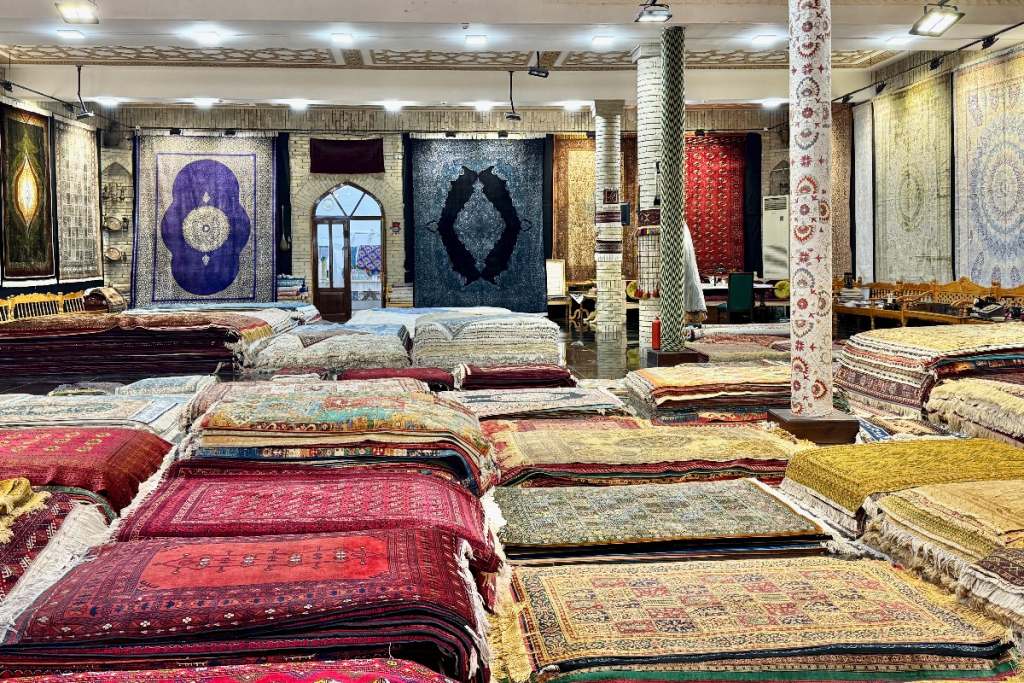
These domes are not the only place to buy locally produced goods and during our stay we were treated to a fascinating puppet-making workshop and a stunning array of hand-made carpets. I envied those in my group who had brought measurements with them and could indulge in what could be considered a savvy investment. Our stay in Bukhara ended with a glamorous folklore dance show before we moved on to Samarkand – on the Afrosiab high-speed train.
Samarkand the Sensation of the Silk Road
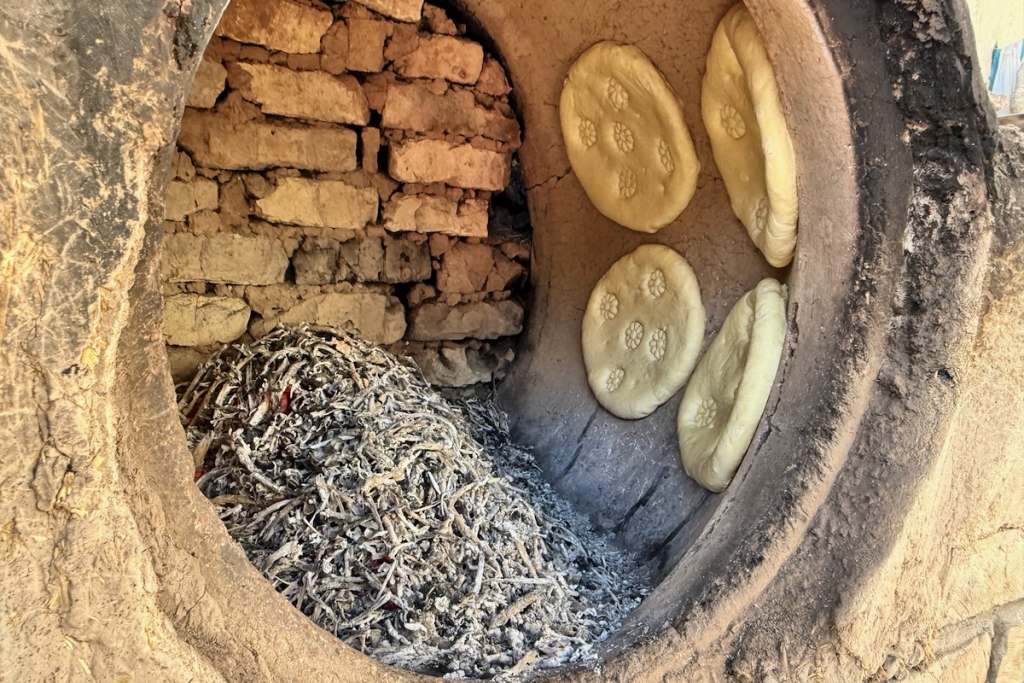
Samarkand was an exciting, sensory experience for me – the chirruping of birds in the courtyards of the massive madrasas; the shimmering of sunshine on the elegant, intricate ceramic tiled decorations that graced its massive buildings; and the scent and flavour of bread newly baked in fire-fed basic stone ovens. The latter formed part of a simple lunch in a countryside family home that also featured the ubiquitous Uzbeki plov – a vegetable and meat stew.
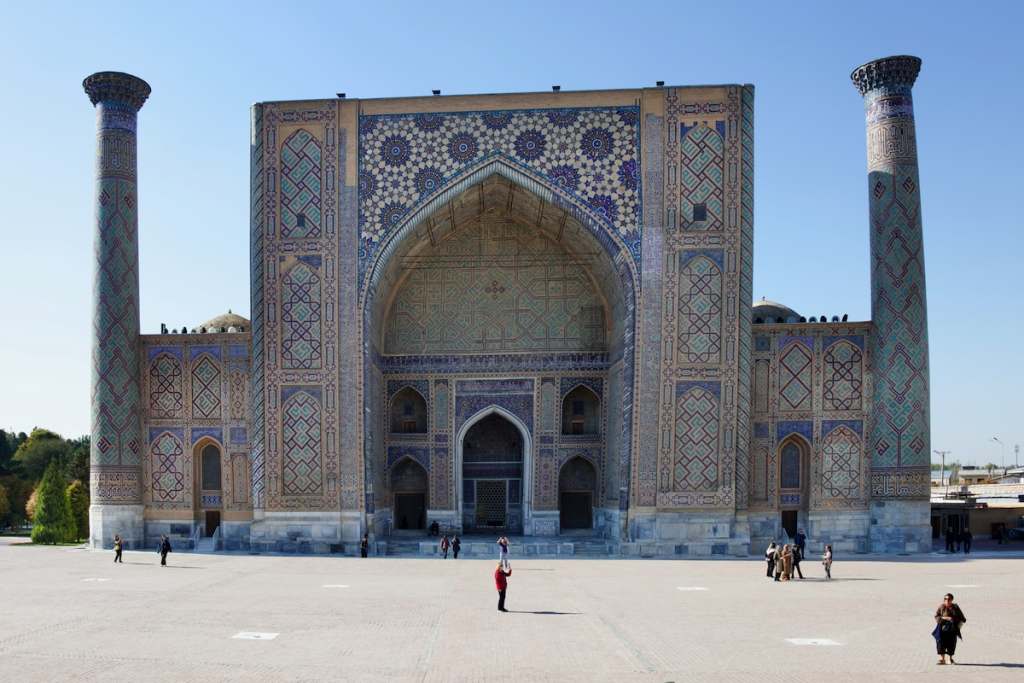
Registan Square, the heart of this ex-capital is surrounded on three sides by three madrasas. The construction of Ulugh Beg Madrasa (1420 CE), Sher-Dor Madrasa (1636 CE), and Tilya-Kori Madrasa (1660 CE) led to Samarkand becoming the centre of Islamic learning The Sher-Dor Madrasa is still being restored, and it was fascinating to see the contrast of old and new behind its impressive façade. An exposition displays photos of the madras when it was virtually in ruins prior to its complete restoration.
A visit to the Samarkand Tourism Village was a delightful experience away from the busy metropolis.
Here we learnt about the different methods of harnessing water power through the use of simple, wooden water wheels. We watched pottery and paper being made and seeds being pounded to make oil. It was a peaceful interlude wandering through the trees along the banks of artificial canals traversed by wooden bridges.
After a second day in Samarkand, we boarded the Afrosiab high-speed train for Tashkent. These comfortable conveyances actually offer ice cream for sale regardless of the temperature outside which on occasions dropped to sub-zero. But the sun shone every one of the ten days I was there.
Tashkent, the Green Capital of Uzbekistan
On arrival in Tashkent we immediately plunged into the perpetual traffic jam that crawls through the main roads converging on its city centre. Our dinner venue was a typical big-city restaurant and a delicious contrast to the simple lunch in the countryside of Samarkand we had experienced earlier.
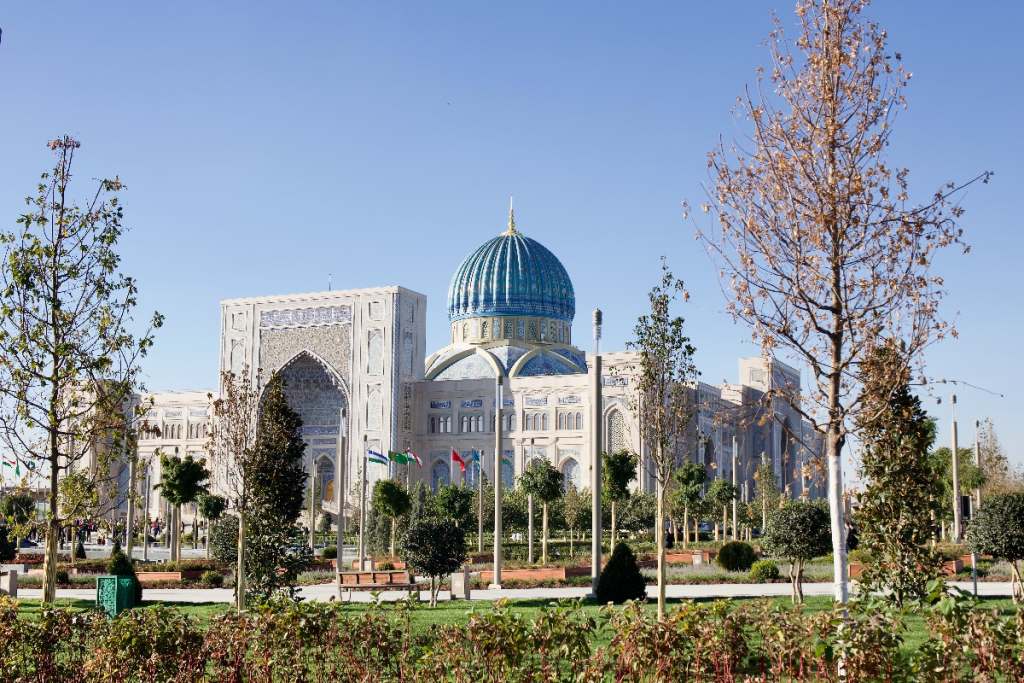
After a sumptuous breakfast at the Radisson Blu hotel the next morning we set off to explore the capital. We only had one day here and made the most of it. Just when I thought I had seen the best of the religious buildings Uzbekistan had to offer I was confronted by the splendid, newly built Khazrati Imam Mosque on the edge of the Hazrati Imam complex. It is the new administrative building of the Muslim Board of Uzbekistan. Surrounded by well-tended gardens and a small lake, it is truly amazing.
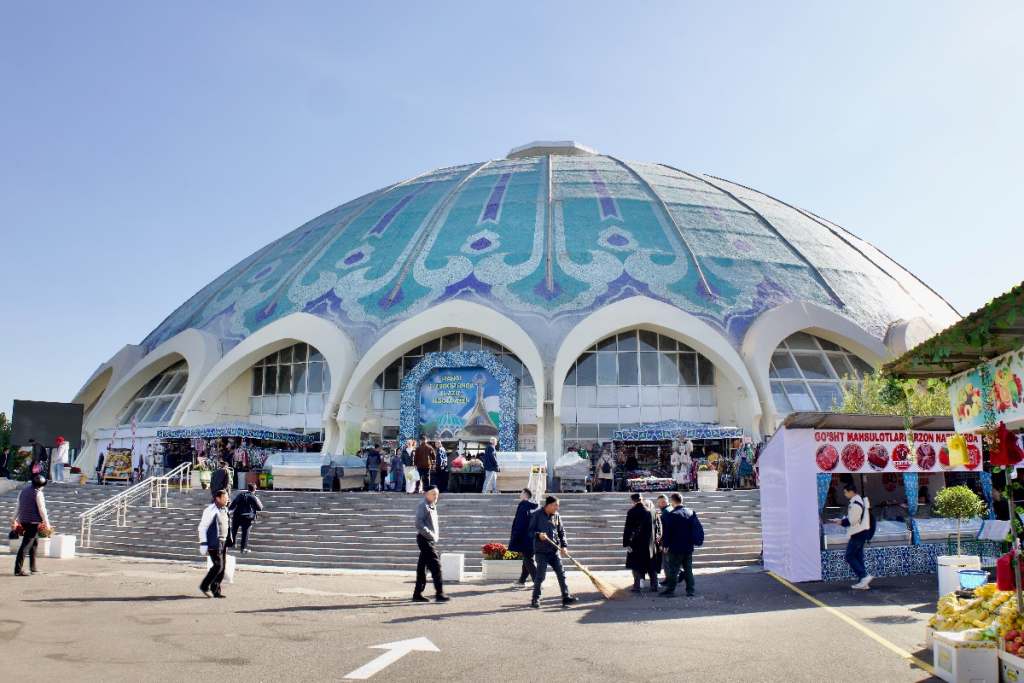
After dipping into the museums housed in the madrasas in Hazrati Imam complex we walked to the Chorsu Bazaar. It is here the locals do their daily shopping shrouded by a dome that resembles the turquoise shell of a gigantic turtle.
This bazaar has been here as long as Tashkent has existed and it is where the heart of the old city throbs. A heady scent of fresh and dried fruit, vegetables and spices entices visitors inside to explore a myriad of stalls heaped high and selling everything you can imagine. This was not the first bazaar we had visited on our journey but it was the most impressive and a last chance to haggle for a bargain – or simply wander around taking in the atmosphere, and taking photos. I had found a courteous request to take a photo was usually granted and often led to an interesting conversation. Once, it was followed up with a request to be photographed with me due to my blonde hair.
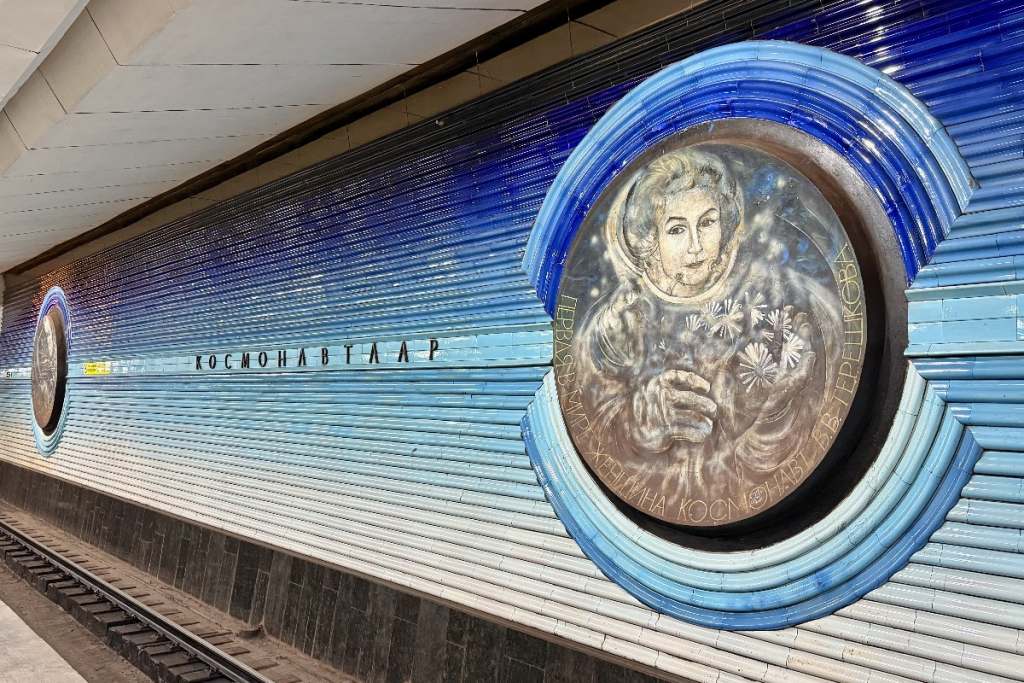
We took the Tashkent Metro to Independent Square where we were re-united with our coach. Built in 1977 and the first metro in Central Asia it is very popular. The carriages were bursting with commuters. Much like the London underground except the younger generation here will jump up to offer seats to their seniors. Spotless stations also feature some interesting décor.
Each station has a theme, the walls of one are decorated with images of astronauts. Another depicts the influence of the Silk Road on the city. It was easy (and very cheap) to buy tickets at the station and to navigate our way around the four different lines.
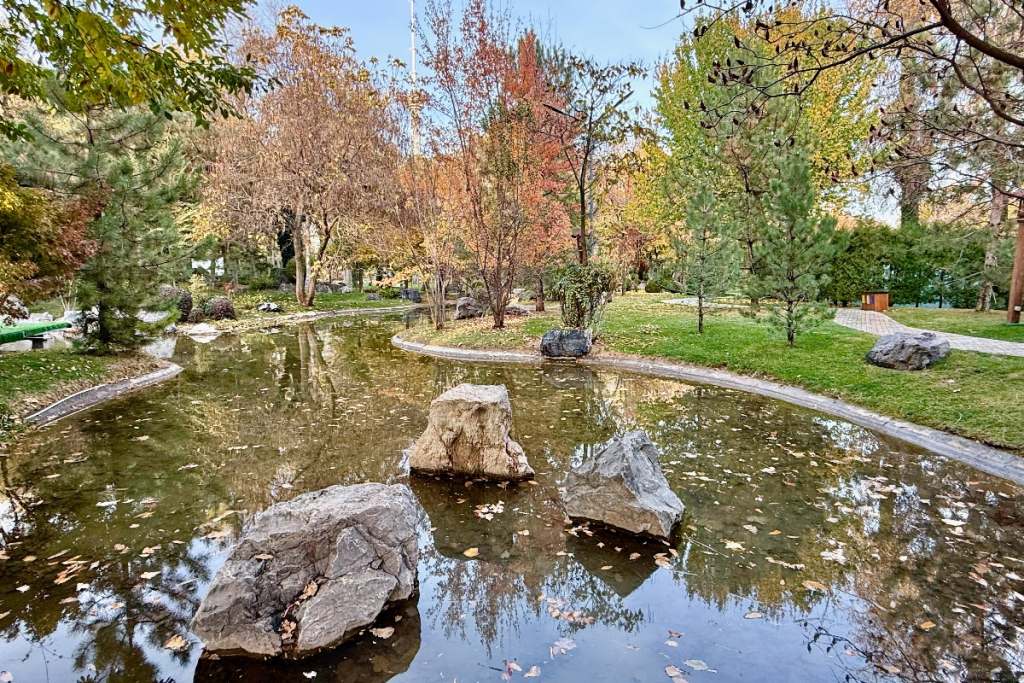
Tashkent prides itself on being a green city, boasting ten very large parks. I only had time to explore a small park close to our hotel and spent the afternoon wandering though the Japanese Park admiring the autumn colours and getting a soaking from a gardener who seemed intent on removing all the leaves from one of the trees with her jet was hose.
It was in this park that I finally met some live storks having seen plenty of replicas during my journey. The stork is the national symbol of Uzbekistan representing peace, good fortune and renewal. It was a lovely final memory of my time in Uzbekistan
Getting to Uzbekistan
My journey through Uzbekistan was organised by the tour operator Great Rail Journeys. I met my fellow travellers and our friendly, efficient Tour Manager, Debs, at London Heathrow Airport. We flew to Urgench in Uzbekistan via Istanbul. At Urgench we were joined by Ichti, our local guide who was with us throughout the tour and responsible for our guided tours and excursions. It was a real pleasure to sit back and let someone else take the (s)train.
Click here for more information about this excellent tour.