There is no single “best” long-distance walk in Britain.
That may feel slightly disappointing at first. We like rankings. We like certainty. We like to believe that somewhere out there is the definitive route — the one that delivers the most dramatic views, the most satisfying finish, the most stories to tell when we return.
But the truth is simpler, and perhaps more reassuring. The right trail for your walking holidays in the UK is the one that fits who you are, right now.
Specialists such as Mickledore, who organise well-supported walking holidays in the UK, understand this instinctively. The decision is rarely about prestige alone. It’s about alignment — with your ability, your time, your mood, and the kind of landscape you find yourself drawn to.
And that alignment matters more than reputation.
Start with your walking personality, not the map
Before comparing routes, it helps to pause.
Some walkers thrive on challenge. They enjoy ascent, exposure, and the quiet satisfaction of reaching a summit that demanded something of them. Others prefer a steadier rhythm — coastal paths, rolling countryside, days that stretch rather than strain.
Do you walk for physical achievement, or for mental space? Are you happiest in open, dramatic terrain, or do you prefer villages and cafés punctuating the miles? Does solitude restore you, or do you like the gentle sense of company that comes from crossing paths with other walkers?
These aren’t rigid categories. They shift over time. A route that suited you five years ago may feel different today. That isn’t a failure of fitness; it’s simply experience evolving.
Choosing a trail begins not with the map, but with yourself.
Matching ability to terrain — honestly
Distance on paper can be misleading.
A twelve-mile day along a relatively flat canal path bears little resemblance to twelve miles across fells in the Lake District. Elevation gain accumulates. Descents tax the knees. Consecutive days of walking can quietly magnify small aches into louder ones.
There’s also the psychological element. Exposed ridges feel different from wooded valleys. Remote sections without clear landmarks can test confidence. Even coastal paths, often perceived as gentle, can rise and fall persistently along cliffs.
Honesty here improves enjoyment. Ambition is admirable, but misjudging terrain can transform a rewarding challenge into unnecessary exhaustion.
That said, some walkers actively seek to be stretched. They enjoy that edge. The key is knowing whether that edge energises you — or drains you.
Coast-to-coast routes: commitment and contrast
Few walking experiences feel as satisfying as crossing a country on foot.
Coast-to-coast routes, and other end-to-end journeys, carry a particular romance. You begin with sea air and finish, days later, with a different horizon. The sense of progression is tangible. Landscapes shift. Accents change. You feel the passage not just of miles, but of regions.
These routes often offer extraordinary variety — moorland, valleys, upland ridges, farmland. That contrast keeps the mind engaged.
But they require commitment. Time, certainly. Physical endurance, yes. And a willingness to stay with a single narrative from beginning to end.
For some, that continuity is deeply satisfying. For others, it can feel relentless. There is no pause button. You are moving forward each day, whether the weather cooperates or not.
It’s worth asking yourself whether that sustained momentum appeals to you, or whether you’d prefer something with more natural breaks.
National parks and regional trails: immersion over mileage
Regional routes within national parks offer a different experience.
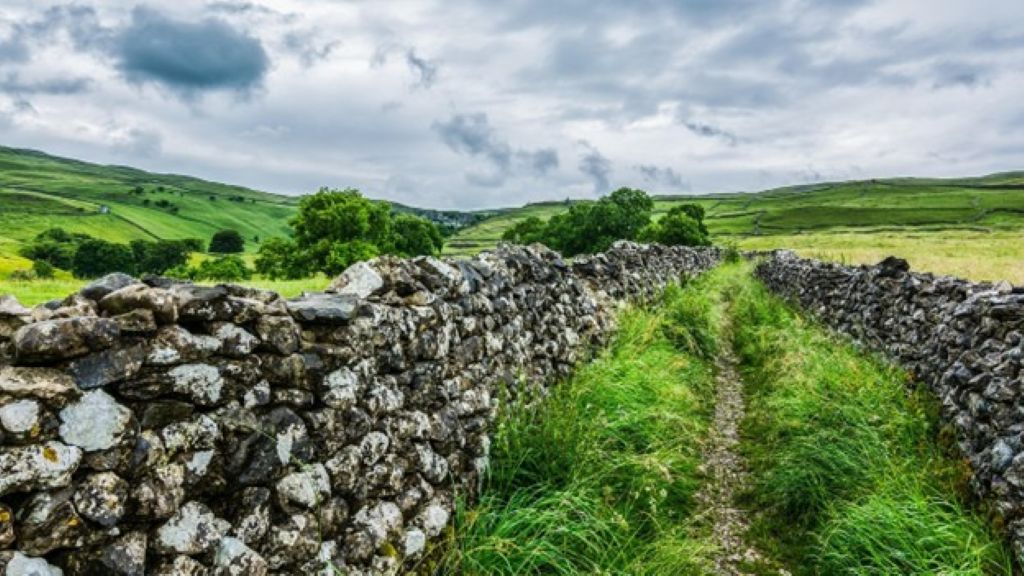
In the Lake District, for instance, days may revolve around fells and valleys, water and stone. In the Yorkshire Dales, limestone pavements and broad skies dominate. Snowdonia brings rugged peaks and a certain drama; the Scottish Highlands, a sense of scale that can feel almost elemental.
Walking within one defined landscape allows familiarity to build. By the third or fourth day, you begin to recognise patterns — the way light settles on a particular ridge, the smell of peat after rain, the character of local villages.
There’s less geographical variety than on a coast-to-coast crossing, but perhaps more depth.
Immersion suits walkers who value coherence over contrast. It allows you to inhabit a place rather than simply pass through it.
Historic paths and cultural routes: walking through story
Some trails are defined less by terrain and more by narrative.
Routes such as Hadrian’s Wall Path or Offa’s Dyke combine landscape with layers of history. You’re not only covering ground; you’re moving through centuries. Ruins appear at intervals. Ancient boundaries linger beneath your boots.
For walkers who enjoy context — who like knowing what once stood where they now stand — these routes add an intellectual dimension to the physical journey.
The terrain on historic paths is often varied but manageable. The pacing feels punctuated by landmarks, giving each day a natural structure.
There’s something quietly satisfying about finishing a section and knowing that others have traced similar lines for generations.
Shorter breaks versus full-length routes
Not every walking holiday needs to be a grand undertaking.
Five or six days can provide a rich experience without requiring the stamina of a fortnight-long crossing. Many long-distance trails lend themselves to being walked in sections. You might complete a central stretch this year and return later for another portion.
There’s a practicality here. Work schedules, family commitments, and life more broadly shape what’s feasible. Choosing a shorter route isn’t compromise; it’s alignment.
For those new to multi-day walking, shorter breaks can also build confidence. You learn how your body responds. You refine packing. You adjust pacing.
And sometimes, finishing a shorter route leaves you wanting more — which is rarely a bad thing.
The influence of season
The same trail can feel entirely different depending on when you walk it.
Spring often brings clarity and wildflowers. Streams run fuller. Paths feel newly alive. Summer offers long daylight hours and warmer evenings, though busier routes can feel more crowded.
Autumn introduces colour and a certain softness to the light. The air sharpens slightly. Trails quieten. Winter, for those prepared, brings solitude — but also demands respect for weather and shorter days.
Season shapes mood as much as scenery.
A moderate trail in early summer might feel idyllic; the same route in late autumn rain may require greater resilience. Neither is inherently better, but expectations must shift accordingly.
Choosing the right season can elevate a good route into something memorable.
Logistics and comfort: the unseen layer
It’s easy to focus solely on the path itself. Yet the structure surrounding your walk shapes the experience more than you might expect.
Reliable luggage transfers mean you can walk unburdened, carrying only what you need for the day. Good accommodation allows for proper recovery — a hot shower, a comfortable bed, a hearty meal.
Clear route notes and navigation support reduce mental strain. You spend less time worrying about wrong turns and more time noticing the landscape.
These elements operate quietly. When well organised, they fade into the background. But their absence is felt immediately.
Independence with reassurance often proves more enjoyable than pure self-sufficiency.
When to choose familiarity — and when to try something new
There’s something comforting about returning to landscapes you already love.
Revisiting the Lake District, for instance, can feel like greeting an old friend. You know what to expect. You settle in quickly.
At the same time, walking offers an opportunity to expand. Perhaps you’ve always preferred hills but find yourself curious about a coastal path. Or you’ve stuck to southern England and feel drawn north.
The “right” trail is not always the logical one. Sometimes it’s the route that quietly calls to you, even if you can’t articulate why.
Allow room for instinct. Walking, after all, is as much about internal rhythm as external scenery.
The right trail is the one that fits now
Choosing the right trail for your walking holidays in the UK isn’t about prestige or comparison. It’s about fit.
Fit with your current level of fitness. Fit with your available time. Fit with the kind of landscape that restores you. Fit with the season. Fit with your appetite for challenge or ease.
A well-chosen trail doesn’t simply deliver views. It creates a journey that feels balanced — physically satisfying without being punishing, stimulating without being overwhelming.
And when that alignment happens, something shifts. The miles feel purposeful. The days settle into rhythm. You return not only with photographs, but with a sense that the path met you exactly where you were.
That, perhaps, is the true measure of a good walking holiday.
