


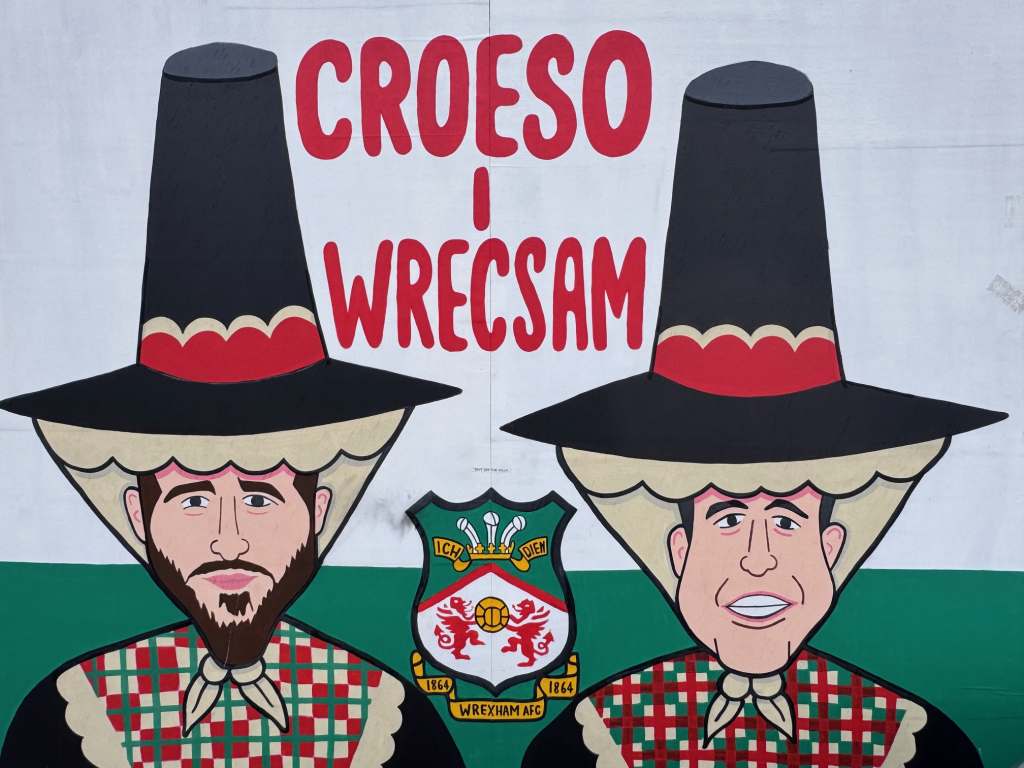
Mark Bibby Jackson returns to his native North Wales to explore Wrexham and see how the renascent football club is working closely with the local community.
I’ve always said serendipity lies at the heart of successful travel. Being in the right place at the right time quite by chance is a wonderful knack – far too often I seem to accomplish the total opposite. My recent visit to Wrexham is a wonderful example of serendipity.
We had made the short drive across the border from the village of Tattenhall just outside of Chester to Wrexham. Our plan was simple. To film the football ground and the pub just outside it – The Turf – for our Hairy Traveller YouTube channel.
We were a bit early and the weather was lousy. What my mother used to call Welsh mizzle. We did a quick shoot outside the ground talking about the club and its resurgence under its Hollywood saviours – Ryan Reynolds and Rob McElhenney. A few takes and it was in the can. The only problem was it was only 11.30 and the pub didn’t open until noon.
I walked up to a guy who clearly worked at the pub – and who amazingly was wearing shorts despite the sub-zero windchill. He explained they didn’t allow any early arrivals otherwise they would be inundated with American tourists. He suggested we grab a coffee at the Rescue Café in the Wrexham Miners Project around the corner.
Wrexham Miners Project
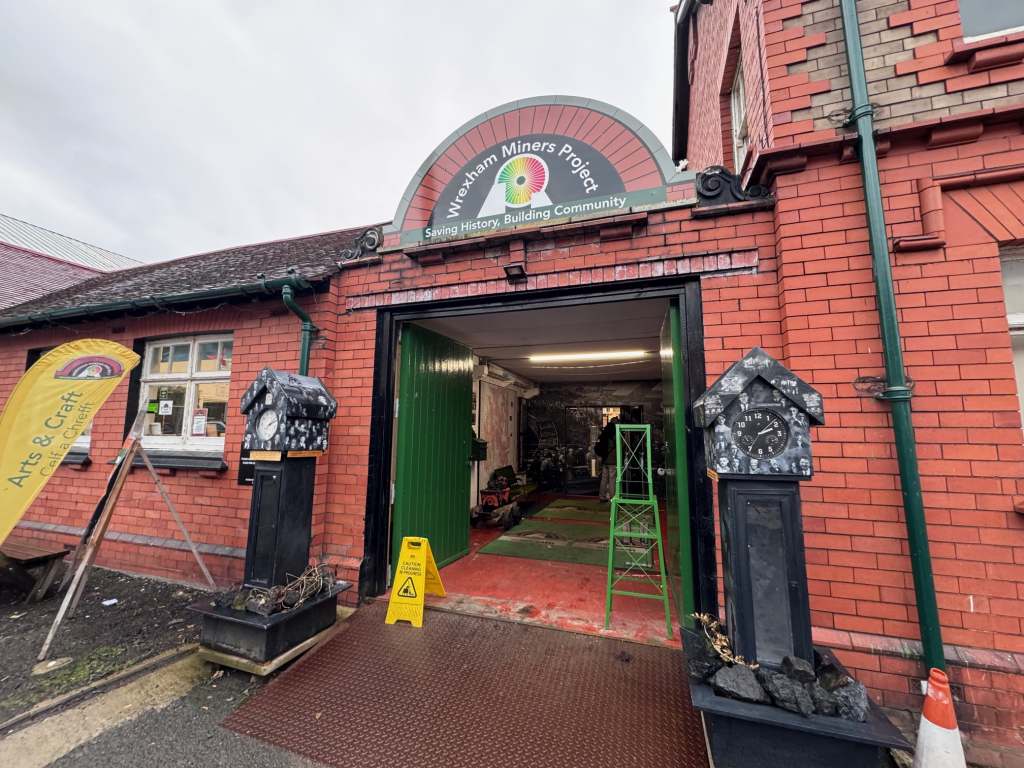
The project is one of those wonderful examples of a community working in harmony. Initially it was built as a Miners Rescue Station in 1913 as a requirement of the Coal Mines Act of 1911. Sadly, it was put to use in 1934 as men went to rescue miners during the Gresford Miners Disaster which claimed the lives of 231 men, one of the worst mining disasters in UK history.
Entering the centre, we immediately meet the wall with all the names of those who lost their lives on that day.
Despite our lack of prior notice, we were welcomed at the centre as if a BBC film crew, and were told all about the history of the centre and the disaster by Scoot.
The centre doubles up as a museum and a café, where we had a very pleasant lunch. Popular with schoolkids who learn about the history of the town in which they live, here they can experience the hot and humid room. The centre also has community-led arts projects and workshops.
The centre is now Grade II listed. There are fundraising campaigns both for its community projects and restoration projects, which are supported by Wrexham AFC.
The Turf
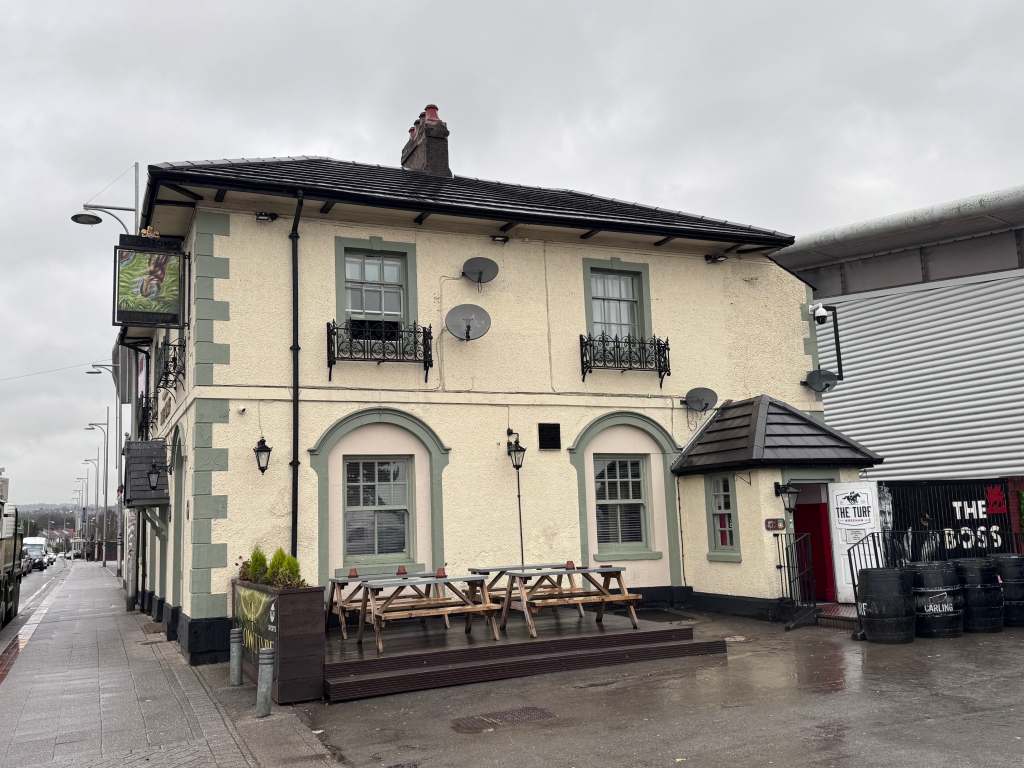
After our lunch, fortified both in body and soul, we returned to The Turf.
Many pubs are popular haunts for fans to congregate prior to the game, but few are as close to the stadium as The Turf.
Despite Wrexham being the third oldest football club in the world, the pub predates it. It was here even before the racecourse, after which the ground takes its name, was built.
Packed on match days and nights, the pub is also a popular student hang out as the university is just next door. It serves a decent pint of Wrexham lager – the beer they served on the Titanic – a beer that goes down well!
Wrexham Football Club
For many years, it seemed Wrexham AFC was going the same way as the Titanic. Formed in 1864 – needless to say in The Turf by members of the cricket club – Wrexham lost its league status in 2008, where they languished until the club was bought by Reynolds and McElhenney in 2020.
The club’s three successive promotions from non-League to Championship is an English record, and as I write there is even the chance the club could make the Premier League as they stand on the cusp of the play offs.
All this might sound like the plot of a Hollywood movie, but as I discovered on my brief visit to the north Welsh town, there is much more to the project than a dodgy Tinseltown screenplay.
The club’s owners are clearly investing in the community. The Wrexham Miners Project was made Wrexham AFC’s official charity for the 2024-5 season. It is a great example of football club and community working in harmony steeped in history. And who knows perhaps a Hollywood ending at the end of the season.