


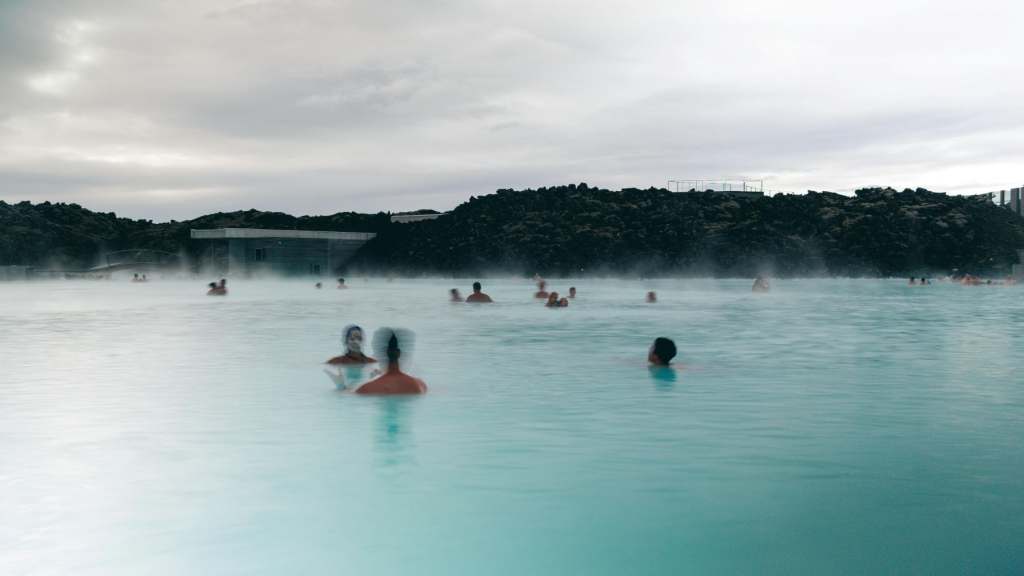
Icelandophile Julia Hammond runs through the best geothermal lagoons in Iceland for travellers.
Adjusting my bobble hat to make sure there’s no chance a gust of wind will snatch it, I slip my hiking boots back on. Bare-legged and dressed in a swimsuit, I pull a towel tightly around my shoulders and steel myself to make a dash for the steam. It rises from a small pool on the other side of a meadow, tucked up against a gnarly hillside. On closer inspection, patches of green moss shroud what’s actually the edge of a charcoal grey lava field.
The People’s Pool

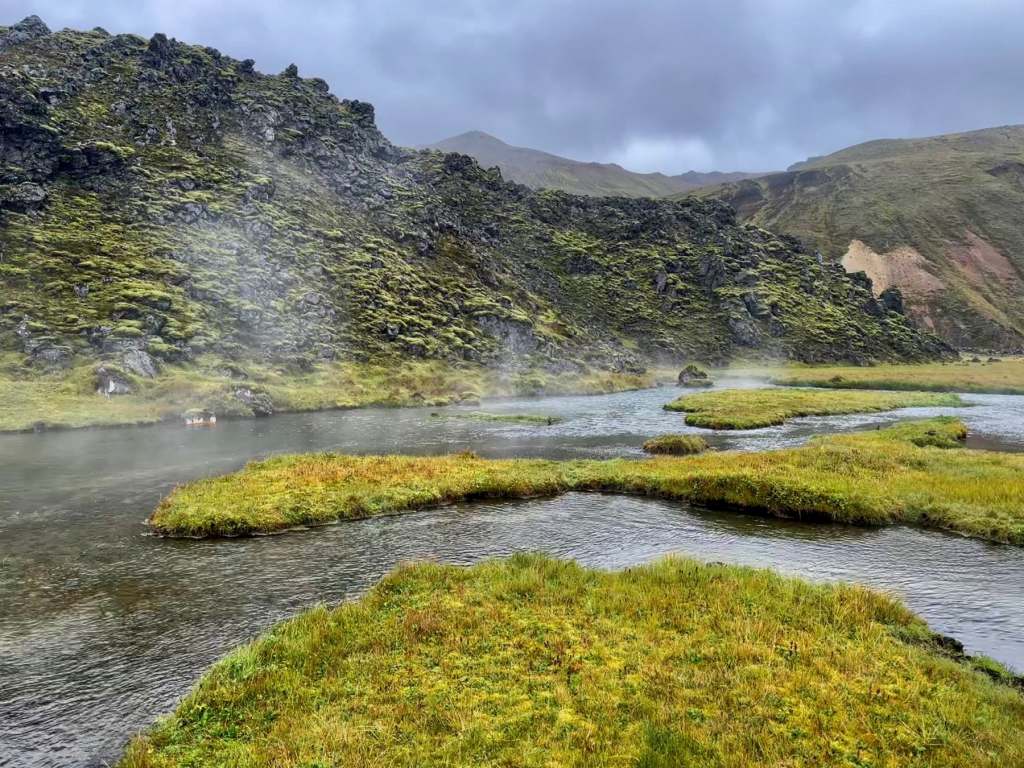
The water looks inviting, especially given the biting cold, horizontal rain and that relentless, malevolent gale. I don’t stop to think about what happens when it’s time to get out as I chuck my towel on a hook, ease myself into the delightful warm water and sink down up to my neck. For now, I just want to focus on the moment as I allow the heat to work its magic on aching joints.
The People’s Pool is a highlight of my visit to Landmannalaugar in the country’s southern highlands. It’s also a place that’s long been intertwined with Iceland’s cultural heritage. In years past, chieftains and lawmakers probably stopped at this sheltered place as they crossed the country en route to the Alþingi, Iceland’s ancient parliament. Shepherds moving their flocks between pastures would also have broken their arduous journey here in this upland oasis.
History of Iceland’s Geothermal Springs
According to the Sagas, Iceland’s tradition of soaking in a geothermal hot spring goes back even further. The oldest written record of someone bathing in geothermal water is usually attributed to a poet and politician called Snorri Sturluson, who lived in West Iceland in the early 13th century. The hot spring we now know as Snorralaug (Snorri’s Pool) sits on land that he once owned, and it’s not too much of a leap to imagine him soaking his weary muscles at the end of a long day.
These days, you can’t take a dip in Snorri’s Pool but travellers are still spoilt for choice as geothermal lagoons have sprung up across the country. The pioneer was Gamla Laugin (Secret Lagoon) at Flúðir on the Golden Circle sightseeing route. It’s the oldest swimming pool in Iceland and opened in 1891. Vaðmálahver, Básahver and Litli Geyser still supply a steady stream of geothermal water. Meanwhile, high-end newcomer Laugarás Lagoon is just twenty minutes down the road and is already making its mark with a discerning clientele.
Blue Lagoon Iceland
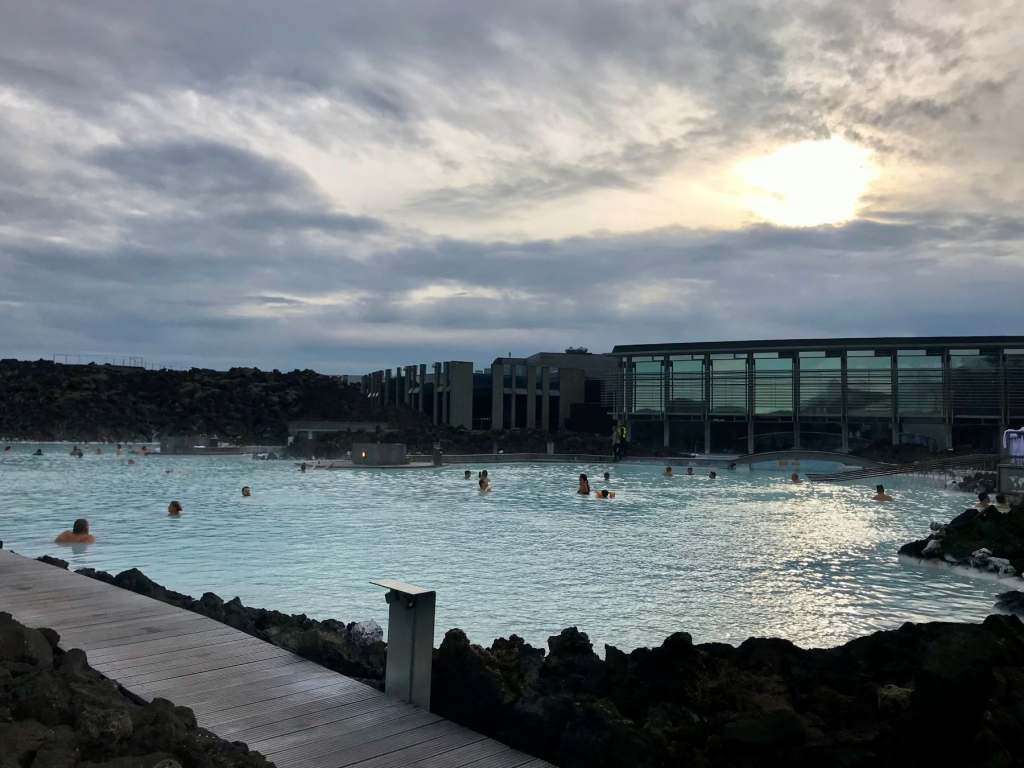
Probably the most famous geothermal bath is the perennially popular Blue Lagoon geothermal spa. Even the recent eruptions along the Sundhnúkagígar crater row which dumped lava right on its doorstep were nothing more than a temporary hiccup to operations; they simply rerouted the access road.
In fact, this upscale spa has industrial origins: its milky blue water is the by-product of the adjacent Svartsengi geothermal power plant. Don’t let that put you off; since it opened in 1987, millions of visitors have plastered the white, silica-rich mud on their skin. Whether you’re sceptical or sanguine about its properties, doing so is an essential part of the routine.
Hvammsvik Hot Springs and Sky Lagoon
Two competitors to the Blue Lagoon have emerged in recent years. The rustic chic vibe of Hvammsvik Hot Springs sets it apart from sophisticated Sky Lagoon, though both enjoy attractive water-facing locations. Hvammsvik in particular capitalises on its position on the shores of Hvalfjörður about an hour’s drive north of Reykjavik. Wooden boardwalks connect eight separate pools of varying temperatures ranging from 36°C to 40°C; if you’re hardy enough you can also take an invigorating dip in the frigid water of the fjord itself.
Forest Lagoon
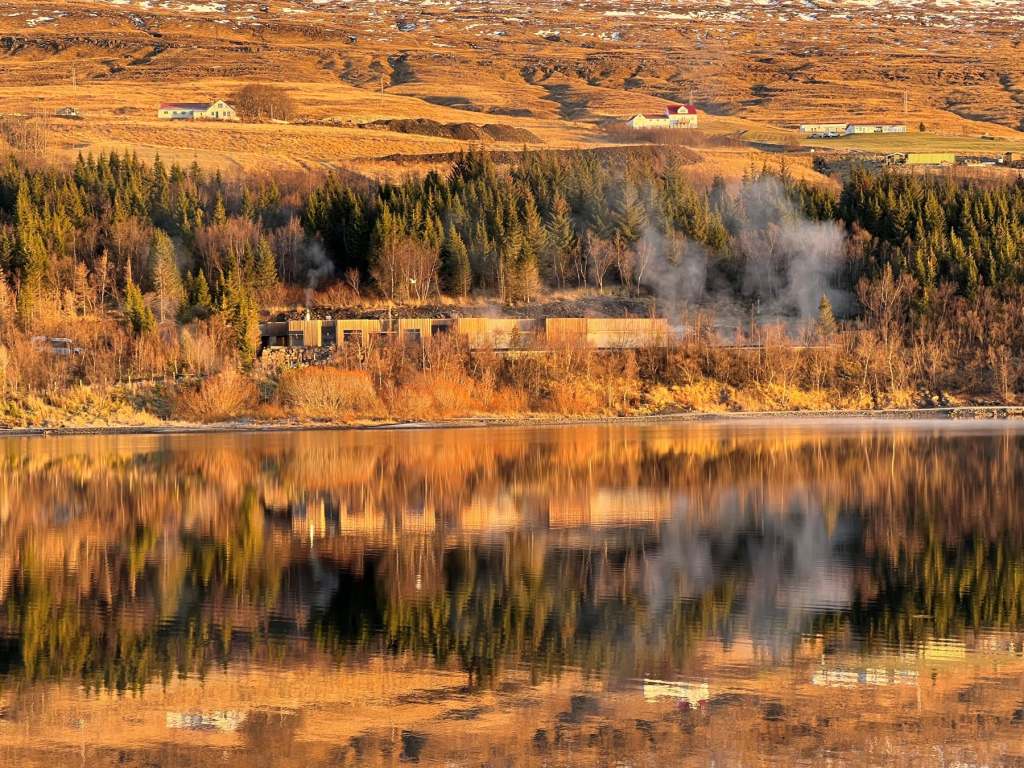
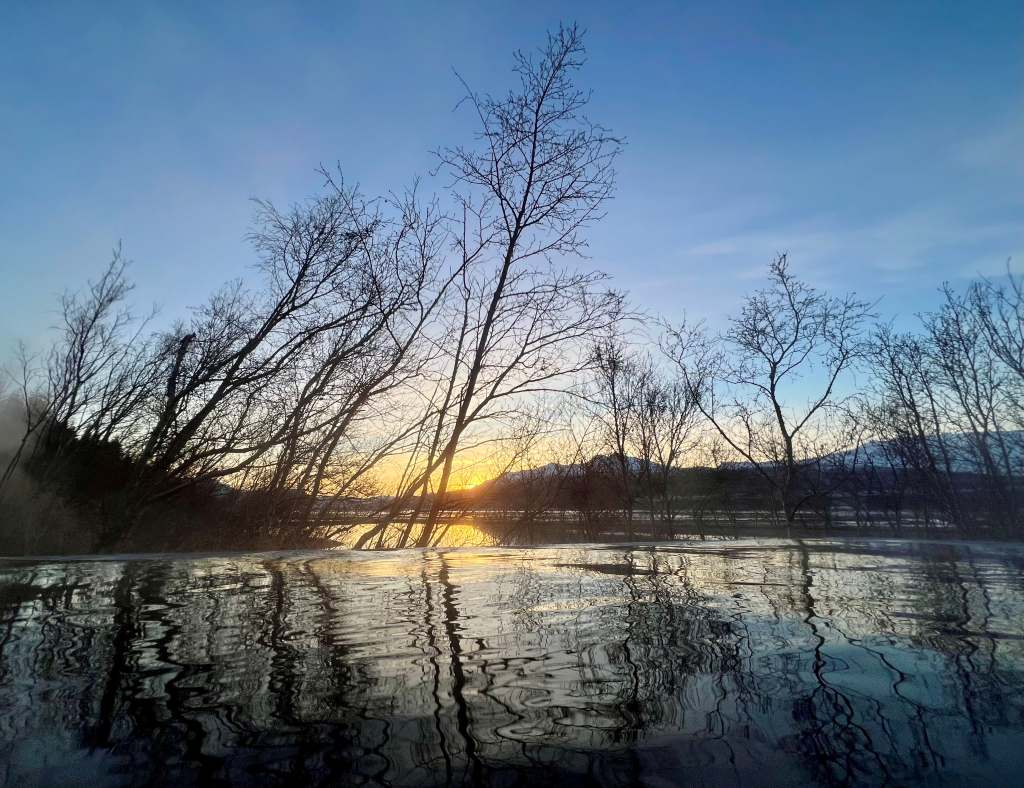
Travel further afield and you’ll find that on the outskirts of Akureyri in North Iceland, winter’s a delightful time to experience Forest Lagoon. Rid of their leaves, a row of birch trees forms a skeletal wind break that teases views of the fjord beyond. As the sun sets, the soft dappled light that results is magical, so it’s no wonder that the locals come here to socialise alongside visiting tourists.
Beer Spa
A short drive gets you to the Tröllaskagi peninsula, where you might choose to call in at Bjórböðin, aka the Beer Spa. Its indoor tubs are filled not only with geothermal water but with unfermented beer, hops and brewer’s yeast. Though it’s not drinkable, there’s draught beer on tap in each tub. Outside, two hot tubs with a view of Hrisey Island form the spa’s rather lovely outdoor waiting room.
Whale Watching and Northern Lights at GeoSea
Head east instead of west from Akureyri to reach the port of Húsavik, which markets itself as Iceland’s whale watching capital. GeoSea perches on a cliff top overlooking Skjálfandi Bay. The view from its infinity edge pools is striking, even more so if you catch sight of a humpback that’s ventured into calm waters – it happens, occasionally. In winter, book a late evening slot for the chance to witness the Northern Lights as you soak. Day or night, at GeoSea you could get two Iceland bucket list activities for the price of one.

Getting to Iceland
Icelandair operates multiple flights a day to Keflavik Airport from London Heathrow; the FlyBus is a convenient way to reach downtown Reykjavik. Low-cost carrier easyJet serves regional airports such as Bristol and Manchester as well as London; it also flies direct to Akureyri between November and March.
Getting Around Iceland
Taxis are expensive in Iceland and public transport is limited outside Reykjavik and Akureyri. Self-drive is often the most affordable option though in extreme wintry weather you may prefer to book your tickets and transfers with a tour agency.
Pool Etiquette
Most visitors bring their own swimsuit to Iceland hot springs; towel rental is usually included in the ticket price. Boots should be left outside, but most upscale places provide lockers for the rest of your gear. Showering naked before entering the pool is a must no matter where you go; some places have individual cubicles if you’re uncomfortable with stripping off in front of strangers.