Toronto in winter is often defined by its cold temperatures, but it’s also one of the best times to experience the city’s cultural institutions, food scene and public spaces without peak-season crowds. From world-class museums to historic neighbourhoods, the city offers plenty of reasons to venture out, even in February.
Here are five places that stand out not just for atmosphere, but for what makes them uniquely Toronto.
1. Royal Ontario Museum (ROM)
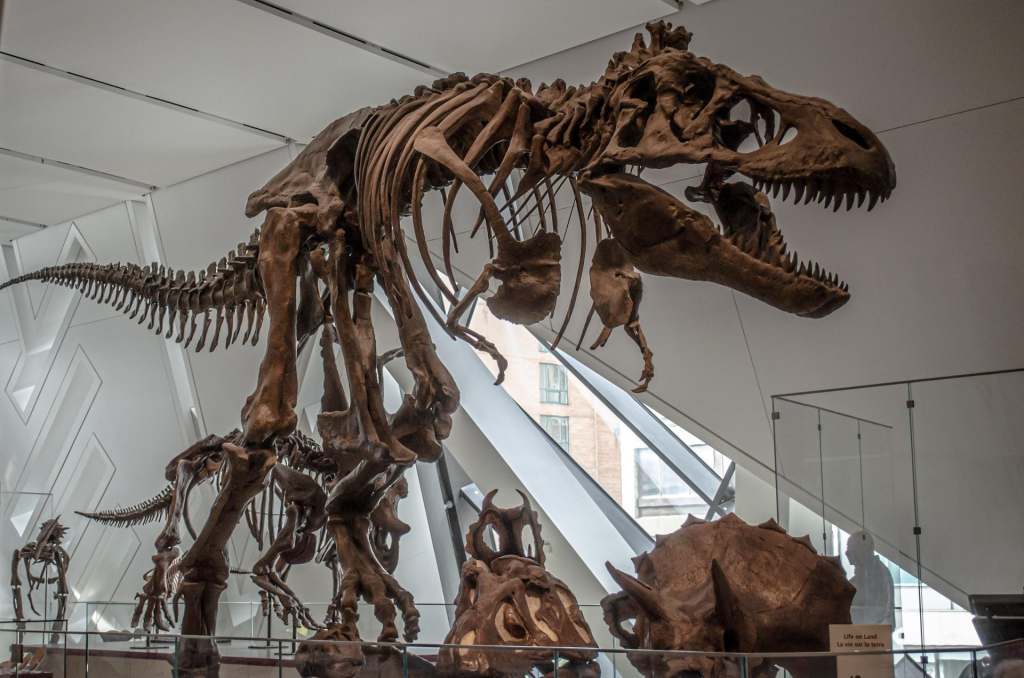
Founded in 1912, the Royal Ontario Museum is one of North America’s largest museums and Canada’s most visited. Its permanent collection includes more than six million objects spanning natural history, world cultures and art.
The museum is particularly known for its dinosaur gallery, which houses one of the most comprehensive displays of prehistoric fossils in the country, including a Tyrannosaurus rex and rare Canadian discoveries from Alberta. Beyond natural history, the ROM holds significant collections of Indigenous Canadian artifacts, East Asian art and ancient Mediterranean objects.
The Michael Lee-Chin Crystal, added in 2007, transformed the museum’s exterior and made it one of Toronto’s most recognisable architectural landmarks.
In winter, the ROM offers an ideal indoor experience: spacious galleries, rotating exhibitions and enough depth to fill several hours comfortably.
2. Distillery Historic District
The Distillery Historic District occupies the former site of the Gooderham & Worts Distillery, once one of the largest whisky producers in the British Empire. Established in 1832, the complex was redeveloped in the early 2000s into a pedestrian-only arts, culture and dining district.
Today, it contains one of the best-preserved collections of Victorian industrial architecture in North America. More than 40 heritage buildings remain, now home to galleries, independent boutiques, restaurants and performance spaces.
During the winter months, particularly from mid-November through December, the area hosts one of Toronto’s largest seasonal markets, drawing both locals and visitors. Even outside the holiday period, the district remains a popular destination for dining and cultural events, and its pedestrian layout makes it easy to explore at a relaxed pace.
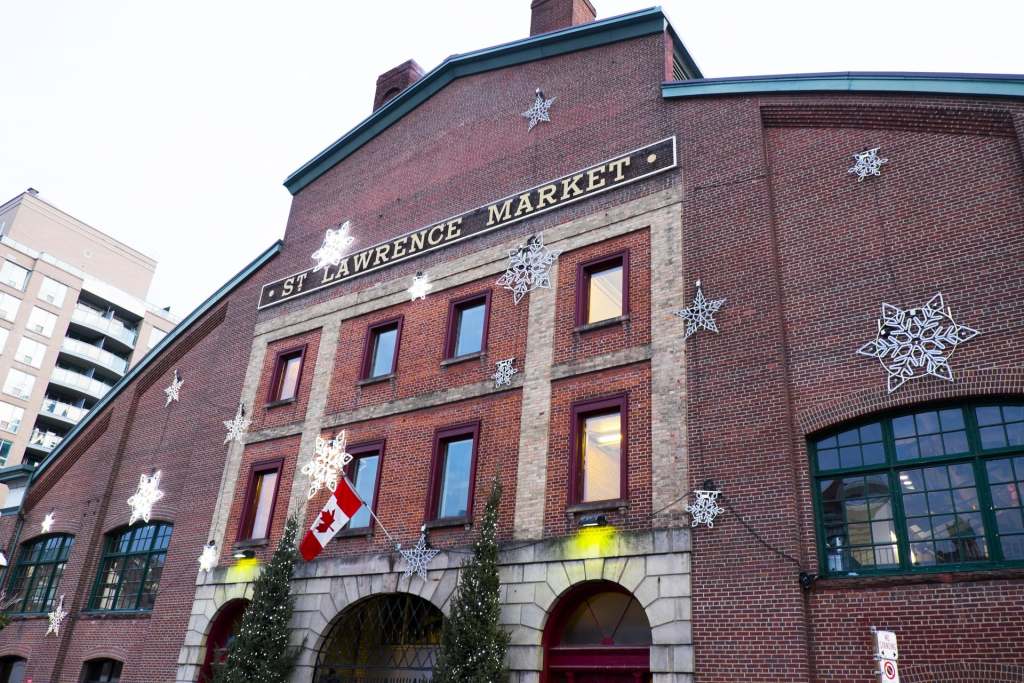
3. St. Lawrence Market
St. Lawrence Market has operated in various forms since 1803, making it one of Toronto’s oldest public institutions. The current South Market building, constructed in 1902, houses more than 100 vendors.
It has consistently ranked among the top food markets in the world, recognised for its range of local and international offerings. Signature items include the city’s famous peameal bacon sandwich, Ontario cheeses, fresh seafood and baked goods.
Unlike newer food halls, St. Lawrence Market remains deeply connected to Toronto’s history as a trading and agricultural centre. It serves both visitors and residents, particularly on weekends when the adjacent Saturday Farmers’ Market continues a tradition that dates back more than 200 years.
For winter visitors, it offers a lively indoor space that combines food, history, and local character in one stop.
4. Nathan Phillips Square
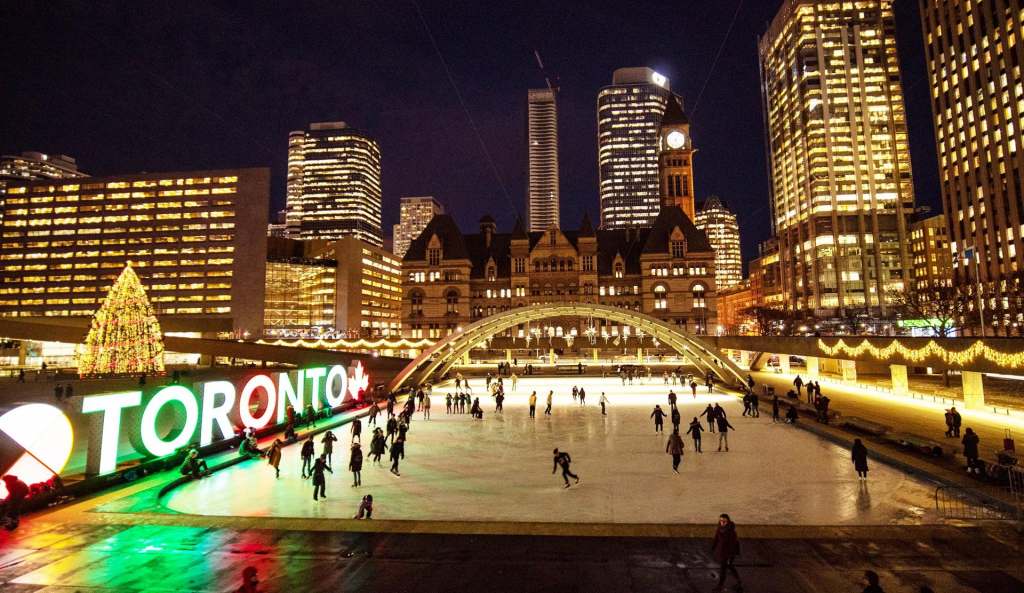
Opened in 1965, Nathan Phillips Square is Toronto’s primary civic gathering space, located in front of City Hall. The square hosts festivals, cultural events, and public celebrations throughout the year.
In winter, its outdoor skating rink becomes one of the city’s most photographed locations. The rink is open daily and free to use (skate rentals are available on site). The illuminated TORONTO sign, installed permanently in 2016 following the Pan Am Games, has become an instantly identifiable symbol of the city.
Surrounded by modernist architecture and the downtown skyline, the square provides a distinctly urban skating experience, one that blends civic history with contemporary Toronto.
5. Toronto’s Entertainment District
Toronto’s Entertainment District developed rapidly in the 1990s and 2000s, transforming a former warehouse and industrial space into one of Canada’s leading theatre and nightlife hubs.
It is home to major venues such as the Princess of Wales Theatre and the Royal Alexandra Theatre, the latter dating back to 1907 and one of the oldest continuously operating theatres in North America. The area also includes Roy Thomson Hall, the permanent home of the Toronto Symphony Orchestra.
In winter, when evenings begin early, the district becomes especially appealing. Visitors can combine dinner with a major theatrical production, concert, or live performance all within walking distance.
Where to Stay: Hyatt Regency Toronto
The Hyatt Regency Toronto is located directly in the Entertainment District on King Street West. Its central location makes it practical for winter travel, with major attractions, theatres, and transit options right there.
The hotel offers beautifully modern, spacious rooms and strong city views, along with a heated rooftop pool and fitness facilities. In colder months, having a well-positioned downtown base reduces travel time between sites and is particularly helpful when temperatures dip well below freezing.
The hotel also has very helpful staff, a great bar in the lobby with an excellent selection of top-shelf drinks, and a Starbucks for that morning (or anytime) coffee.
Ice Age
Toronto in winter rewards visitors who focus on its strengths, including established cultural institutions, historic districts and indoor experiences that reflect the city’s diversity and scale.
While the temperature may be low, the concentration of museums, markets, performance venues, and walkable neighbourhoods makes it a compelling off-season city break especially for travellers looking to explore without peak summer crowds.
