


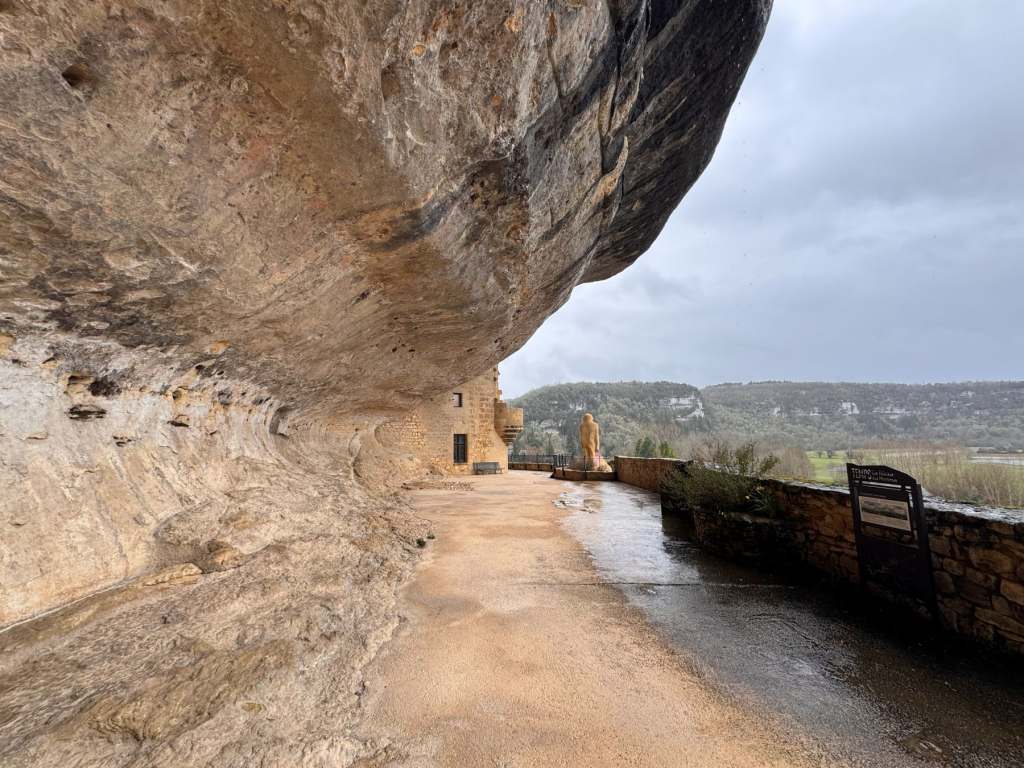
Mark Bibby Jackson drives to the Dordogne in February bypassing the floods to discover a very sustainable approach to tourism and tries to understand what joie de vivre is all about.
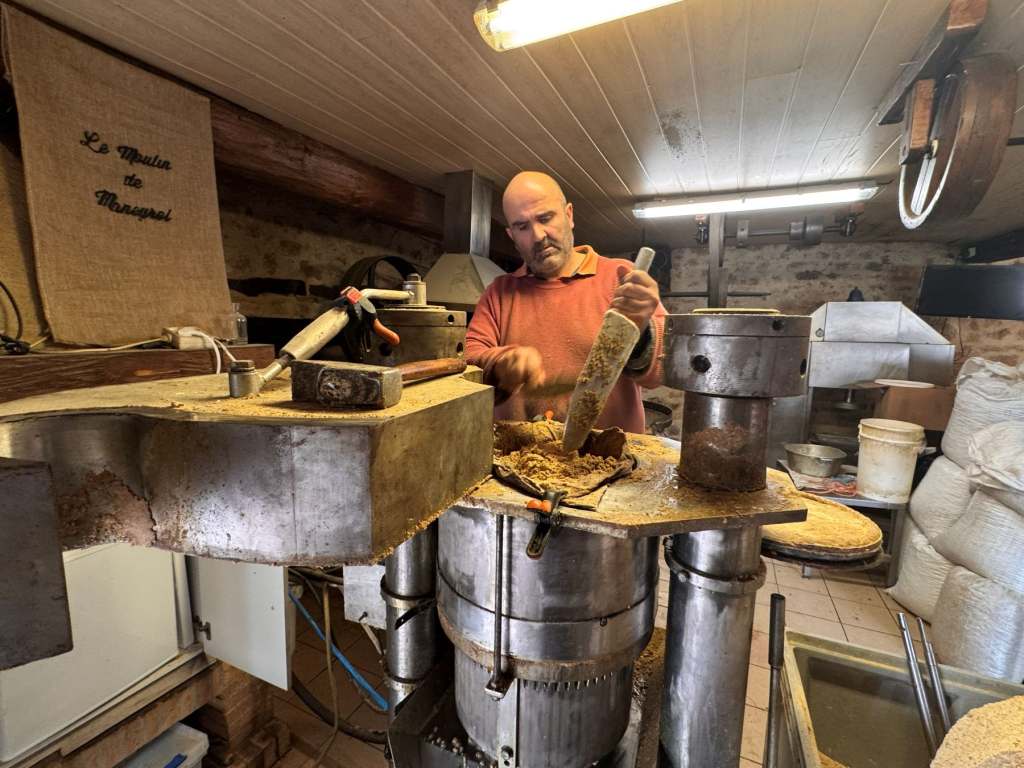
Pascal turns on his machine and the whole room reverberates. With my limited French I try to understand him as he explains the process of first crushing then mixing and finally pressing the walnuts for which the Dordogne region is famed to make walnut oil. At first it starts to trickle and then it gushes forwards much like the rivers across France that have breached their banks due to the unseasonal high rainfall. At the end I taste the oil, first in its natural form and then added to jam. It tastes pure.
Like so many artisanal producers Le Moulin de Maneyrol is not officially organic. The certification costs are prohibitive. But Pascal shrugs his shoulders as if to explain his walnut mill is as organic as they come. There certainly are no airmiles involved in the process. The fields all around are covered in walnut trees.
Tickets à Grailler in Brive
Maneyrol is typical of the small town producers I encounter while in the Dordogne Valley.
It is something the local tourism department is helping to promote.
In Brive-la-Gaillarde, they have a tickets à grailler programme, where you buy five vouchers for just under €10, which you redeem in shops run by local traders in town. Grailler translates as something like to nosh in English.
I start with a taster of some of the many cheeses in the region at Fromagerie Miane, before sampling a straw wine at Cave du Pic Vert. Straw wine is made from grapes laid out to dry on mats, traditionally made of straw, in the sun for a couple of months. The resulting wine is sweet – perhaps a bit too sweet for my taste although it does go well with the cheese I take with me from the cheese shop.
This is the great advantage of the noshing trail. You can choose things otherwise you might overlook, and if it’s not quite to your taste you can pass on to another producer, only a couple of euros poorer.
My favourite was the 100% dark chocolate I try at Chocolaterie Lamy. Previously, I have found 100% chocolate too dry to eat, but this was amazing – a real transformation, and one which makes milk chocolate very much a thing of the past for me. There is no sugar added. Like the walnut oil it is as pure as it gets.
As the sun sets, I make the final stop on my slightly haphazard grazing trail at La Banou bar where I have a small porter beer. Run by a couple who love craft beer, this place that proves that France is no longer purely about wine. If I ate meat no doubt, I would have tried one of the couple of duck options on the trail – for this region is renowned for its duck and particularly foie gras.
Discovering Joie de Vivre in Brive
Brive is a beautiful town with many smally producers, cafés, bars and restaurants. I dine at Aux Embruns, an excellent restaurant which specialises in seafood.
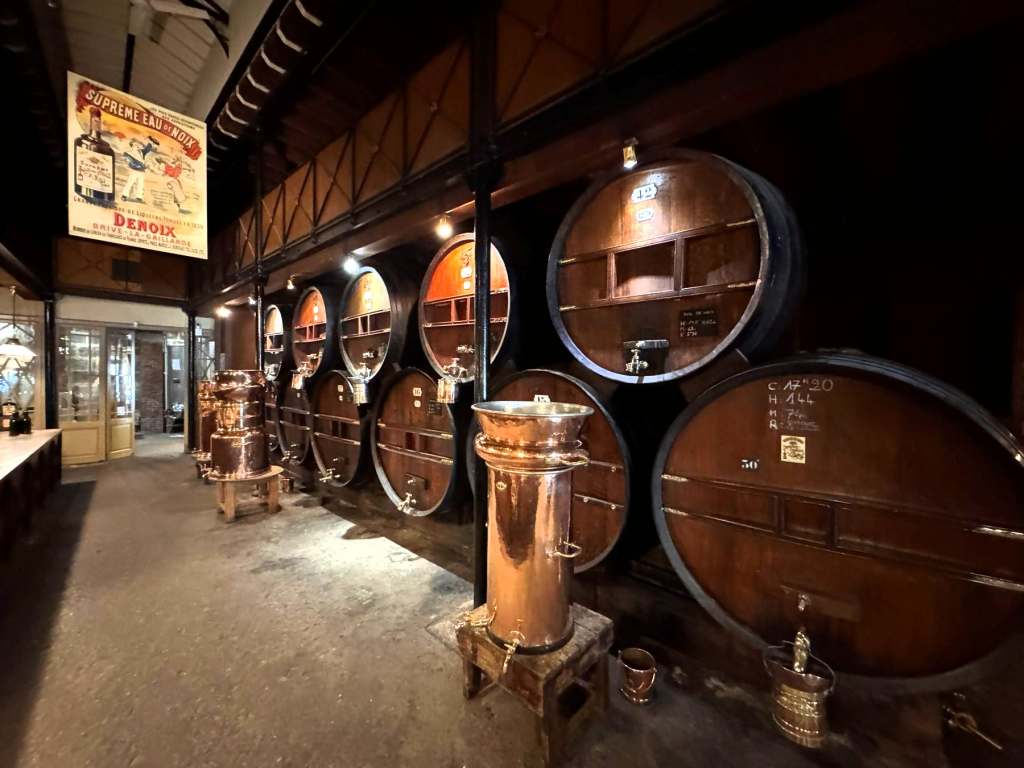
The following day, I wander around the market hall before dipping into Denoix distillery in Brive, which has been making walnut liquors since the mid-19th century.
Denoix offers a free tour of the distillery, which was founded in 1839 before an equally complimentary tasting. I learn all about the process, which has largely left unchanged over the ages.
Local producers, great food and wine, and a beautiful town, the many attractions of Brive are clear.
Is this what joie de vivre signifies? Certainly, the local people have a lot to be joyous about. And in February the town is devoid of other tourists, although the same cannot be said of the summer months. It really is a great time to visit. There is so much to be said for visiting popular destinations off-season, and not just in terms of sustainable tourism.
Avoiding the Floods in the Dordogne
That is, it’s a great time to visit so long as you can avoid the floods. I follow the course of the Vézère river towards the medieval town of Terrason-Laviledieu. It is hard to distinguish where river finishes and fields start. Trees appear out of the water without warning.
The river has broken its banks beside the old bridge in town, but life seems to continue as normal.
I stay the night just outside of town in La Maison de Léopold, an old farm building where I have the most enormous suite all to myself. Well, in reality I have the whole building to myself as I am the only guest. I go for a stroll around the surrounding countryside before settling down for the might with hearty local food and a carafe of wine. I sleep soundly.
The essence of joie de vivre is slowly emerging – an understanding and enjoyment of the fine things in life, in a simple way.
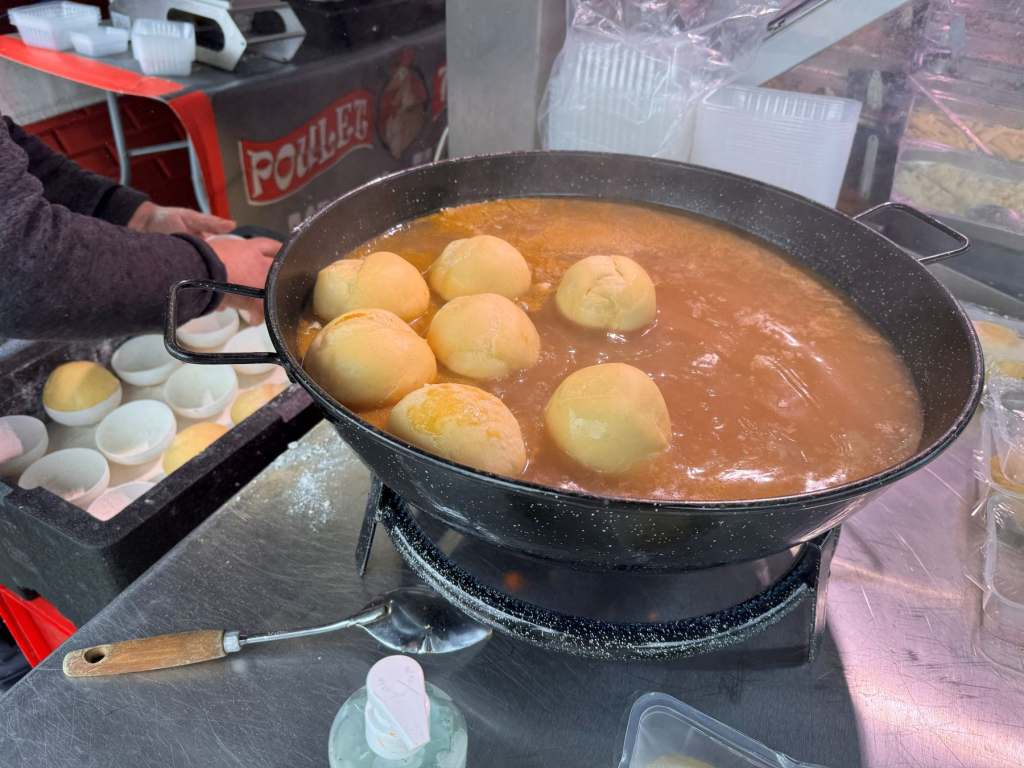
The following day I drive down to the town for its weekly market. Here a store holder gives me some miquet, a traditional fresh bread made with egg, which is soaked in a vegetable broth. He refuses to accept any payment.
Grotte de Maxange
That evening, I check into La Tuilipe Péreigourdine, which is to be my home for the next few nights as I explore the region. I say home because Sophie makes me feel most welcome.
It is here I discover the final two components of joie de vivre. The first is a love of the surroundings. Dordogne much like the Cotswolds is blessed with the most wonderful sandstone. Driving through the region I am struck by how much the buildings resemble those in the Cotswolds, albeit a brief glance at the estate agents’ windows confirms its prices here are a fraction of its English doppelganger.
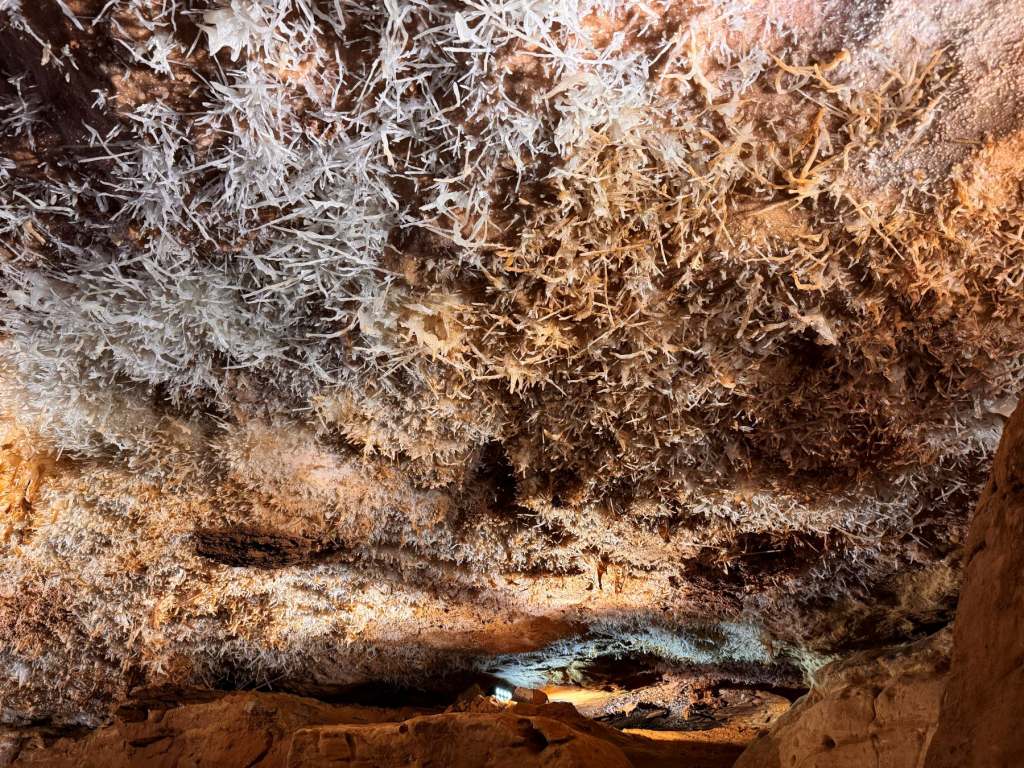
The rock lends itself to the most beautiful cities, castles and caves. I visit the Gouffre de Proumeyssac as part of the Février Gourmand month that encourages people to explore nature, culture and food of the region off-season. The Grotte de Maxange I visit on a normal guided tour.
The cave was only discovered by Angela Canallero 15 August 2000. He named it after his father Maximillian and himself – Maxange. Inside are thousands of eccentrics, dangling from the ceiling and glimmering in the artificial light. It is very beautiful. There is also the claw mark from a prehistoric bear that was stranded here.
National Museum of Prehistory
Indeed, the region is rich with prehistoric sights. It is claimed the science of prehistoric archaeology was born in the Vézère valley 180 years ago. There are lots of Neanderthal burial sites. I discover more about this in the National Museum of Prehistory in Les Eyzies, which makes for an excellent and illuminating break especially when the elements turn prehistoric.
Discovering Joie de Vivre in Monpazier
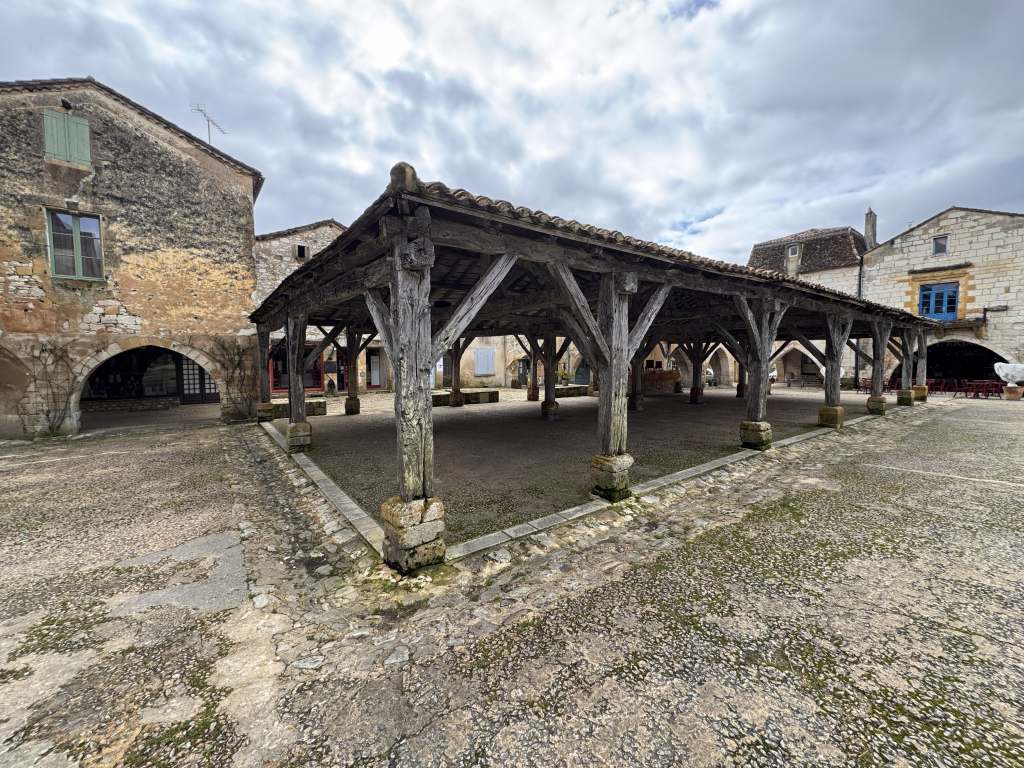
Much more recent is the bastide or fortified town of Monpazier established by Edward I in 1285 when he was Duke of Burgundy.
Apparently, the region has more castles than any other part of France. I visit two of them – Château de Biron and Château de Puymartin – as part of Février Gourmand. However, it is Monpazier which steals more heart. On a Saturday afternoon I have the cobbled streets formed in a grid pattern around the central market all to myself, apart from a group of bikers, who parade their Harleys into the city.
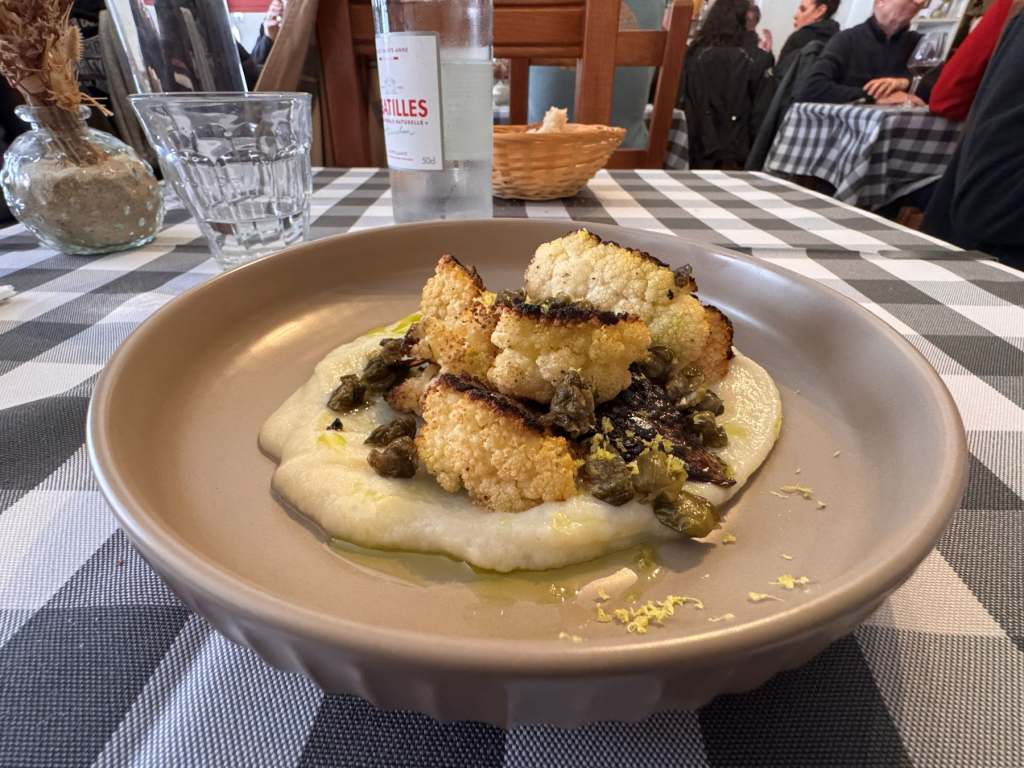
I have lunch at Le Croquant, a wonderful traditional restaurant, where the owner Benoit serves a menu with two options, one meat the other vegetarian. He only uses seasonal and local produce, opting for local over organic. As he explains, he would prefer to use local produce that is not certified than something which is but has to be transported from miles away.
It is here as I enjoy some roasted cauliflower followed by pain perdu, a traditional French form of bread and butter pudding, I finally discover the true secret of joie de vivre. It is understanding the value of the good things in life, be that wine, food, nature or culture and to share this with others. It is as timeless as it is timely in this over-consumerised world in which we live.
More Information about the Dordogne Valley
To discovery the many interesting things to do in the Dordogne Valley off-season, go to the local tourism website.
Mark’s Road-trip through France
Mark travelled through France in February 2026 on his own, taking the ferry from Dover to Calais and then driving through Pas-de-Calais to Chartres, on to the Dordogne Valley, across to Burgundy, and then up through Burgundy back to Calais. He took the DFDS ferry using their excellent priority boarding and premium lounge service.