


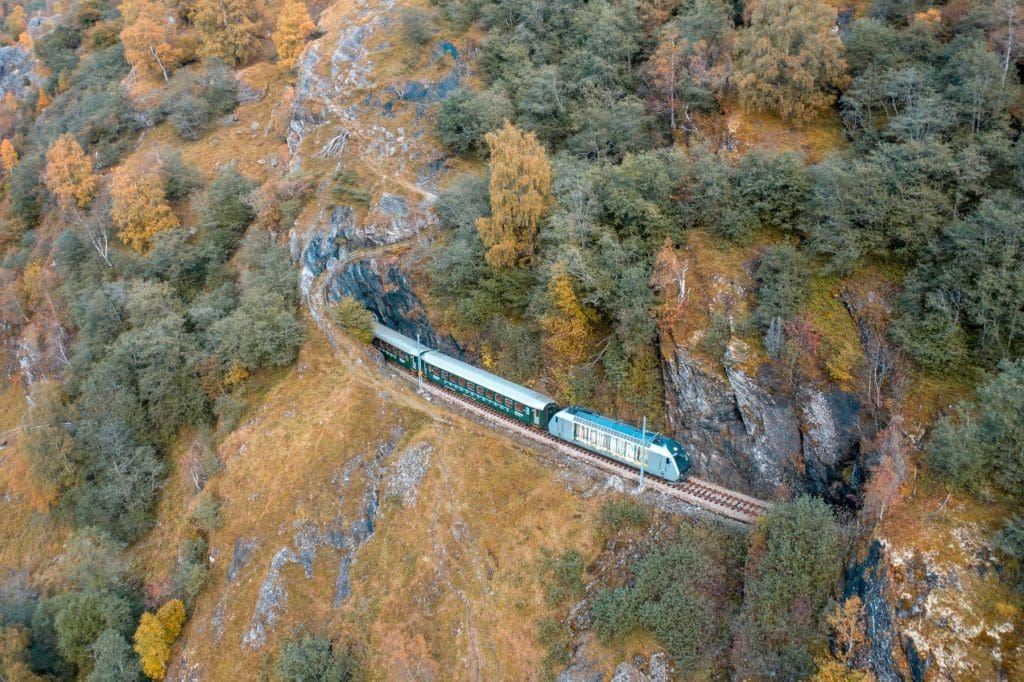
Some journeys stay with travellers not because of the destination, but because of everything seen along the way. Railways that cross mountain passes, coastal roads that weave past fishing villages, and highland routes cutting through tea fields all reveal landscapes gradually, kilometre by kilometre. These routes reward curiosity more than speed. They invite people to stop in small towns, walk through local markets, and follow streets that aren’t always marked on a typical itinerary.
From the cultural corridors of Spain to Iceland’s volcanic highways, these rail and road trips show how travel can feel richer when the journey itself becomes the main event.
Tailor-Made Cultural Journeys Through Spain
Travelling through Spain by rail and road reveals how closely the country’s landscapes connect with its regional culture. A journey might begin in Madrid around the historic Plaza Mayor, where narrow streets such as Calle Mayor lead toward the Royal Palace and the long arcades of the Mercado de San Miguel. From there, trains run south to Córdoba or Seville, while the AVE high-speed line connects Madrid with Barcelona in under three hours.
Many travellers choose to plan with a Spanish travel agency when designing routes that link together Spain’s distinct regions. Specialists familiar with the country’s transport networks can organise itineraries that combine high-speed rail with scenic drives through areas such as Andalucía or Catalonia. Agencies like this also help travellers navigate regional differences in transport schedules, cultural sites, and historic districts, ensuring visits to places like Granada’s Albaicín quarter or Valencia’s Central Market are integrated naturally into the journey.
Once in Barcelona, neighbourhoods unfold easily on foot. Travellers often walk from the Gothic Quarter along Carrer del Bisbe toward Plaça de Catalunya, then continue through the wide avenues of the Eixample district. From there, regional trains and highways open up the Costa Brava coastline, where small harbour towns sit just a few hours north of the city.
The Dramatic Coastal Routes of the Wild Atlantic Way
Ireland’s Wild Atlantic Way stretches for more than 2,500 kilometres along the country’s western coast. While many visitors start in Galway, the route feels most interesting once it moves beyond the city. Leaving Galway via the N59 quickly leads toward Connemara, where roads pass through villages such as Clifden before reaching the quiet bays around Roundstone.
Further south, the route winds through County Clare toward the Burren. This limestone landscape looks almost lunar in places, yet small roads lead to sites such as Poulnabrone Dolmen and the coastal paths near Fanore. Travellers usually continue along the R478 toward the Cliffs of Moher, where walking trails follow the edge of the Atlantic.
County Kerry offers another highlight. Driving the Ring of Kerry reveals fishing towns like Portmagee and Cahersiveen, where colourful shopfronts line the main streets. A short ferry from Portmagee reaches Skellig Michael, though many visitors simply walk along Valentia Island’s Bray Head loop to see the same stretch of ocean. It’s a route where the sea is rarely out of sight for long.
Grand Alpine Railways and Lakeside Vistas in Switzerland
Switzerland’s railways turn mountain travel into something remarkably straightforward. One of the most well-known routes is the Glacier Express, which runs between Zermatt and St. Moritz. The train crosses the Oberalp Pass, passes through the Rhine Gorge near Disentis, and moves slowly enough for travellers to watch alpine villages appear and disappear between tunnels.
Those who discover Switzerland tour packages often choose itineraries that combine several of the country’s scenic rail lines. Packages frequently include journeys on the Bernina Express or GoldenPass Line, linking lakeside towns such as Interlaken and Lucerne with high mountain valleys. Because the Swiss rail network connects smoothly with local buses and lake ferries, travellers can reach smaller communities like Wengen or Mürren without needing a car.
In Lucerne, most visitors begin near the Kapellbrücke before walking along the Reuss River toward the old town squares around Weinmarkt. From the nearby station, trains head south through the Gotthard Base Tunnel toward Lugano, where palm-lined promenades run along Lake Lugano and Italian-speaking Switzerland begins to feel like a different country entirely.
Exploring the Misty Tea Plantations of the Sri Lankan Highlands
Sri Lanka’s hill country is best explored by train. The line running from Kandy to Ella climbs steadily through forested valleys and tea plantations that cover the hillsides in neat rows. The journey begins near Kandy’s Temple of the Sacred Tooth Relic, where travellers usually spend a day walking around Kandy Lake before boarding the morning train.
As the railway climbs toward Nuwara Eliya, the scenery shifts. Tea estates appear around towns such as Hatton and Talawakele, while cooler air settles over the plateau. Many travellers leave the train at Nanu Oya and drive the short distance into Nuwara Eliya itself, where streets around Victoria Park still show traces of the town’s colonial past.
The line continues through Haputale before reaching Ella. Walks from the small town centre lead toward the Nine Arch Bridge or the trail up Little Adam’s Peak. Local buses and tuk-tuks make it easy to move between viewpoints, tea factories, and nearby villages without needing long drives. It’s a route where the train ride itself becomes the main attraction.
The Ethereal Volcanic Vistas of Iceland’s Ring Road
Iceland’s Ring Road circles the entire island, linking volcanic landscapes, waterfalls, and coastal towns in a single loop of roughly 1,300 kilometres. Many journeys begin in Reykjavík near Laugavegur Street, where the road heading east quickly leads toward Þingvellir National Park. The park sits within a rift valley where the Eurasian and North American tectonic plates slowly drift apart.
Continuing south brings travellers to the waterfalls of Seljalandsfoss and Skógafoss. Small gravel roads branch off the main highway toward the black sand shoreline at Reynisfjara near the village of Vík. From there, the road curves around lava fields toward Skaftafell in Vatnajökull National Park.
Further east, the fishing town of Seyðisfjörður appears at the end of a steep mountain pass. The colourful wooden houses sit beside a narrow fjord, connected by a single road that eventually rejoins the Ring Road near Egilsstaðir. The route continues through geothermal valleys and lava plains before returning west toward the Snæfellsnes Peninsula and, eventually, Reykjavík again.
Which horizon will you chase next?
Scenic railways and road journeys reveal places in a way short flights rarely can. Spain’s historic cities link easily by train and highway, Ireland’s coastal routes trace the Atlantic past small villages, and Switzerland’s railways cut through alpine valleys and lakeside towns. In Sri Lanka, trains wind through tea plantations, while Iceland’s Ring Road loops around a landscape shaped by volcanoes and glaciers.
These routes shift attention to what happens between major stops. Small streets, markets, ferry crossings, and mountain passes often end up defining the journey far more than the headline attractions.