


Couples who travel often tend to look for destinations where the setting itself shapes the experience, from historic streets worth wandering to landscapes suited to long walks and accommodation that feels thoughtfully designed rather than simply luxurious.
Across Europe and the Caribbean, a handful of places continue to appeal to couples who enjoy culture, scenery and a certain level of refinement. Champagne’s vineyard villages, Bruges’ canals, Caribbean islands scattered across clear water, Santorini’s caldera villages and Florence’s historic streets each offer something slightly different.
Effervescent Luxury in the Heart of Champagne
The Champagne region sits about 90 minutes east of Paris, and most visitors base themselves in either Reims or Épernay before exploring the surrounding vineyards. Reims feels more like a small city. The Gothic towers of Cathédrale Notre-Dame de Reims dominate the centre, and the surrounding streets around Place Royale and Rue de Vesle are easy to navigate on foot. From there, couples can walk south toward the elegant boulevards where many historic champagne houses have their headquarters.
Épernay offers a different atmosphere. Avenue de Champagne runs straight through the town, lined with grand mansions and underground chalk cellars carved deep beneath the street. Visitors often spend time here touring the caves before heading into the surrounding countryside, where vineyard roads link villages like Hautvillers and Aÿ. Hautvillers in particular is worth stopping for; the abbey where Dom Pérignon once worked sits above the valley with a wide view across the vines.
Travellers planning beautiful Champagne region holidays often follow a route that connects these villages by car or bicycle, moving between vineyard slopes and small market towns. The Montagne de Reims Natural Park lies between Reims and Épernay, and the winding forest roads through the park make the journey itself part of the experience.
Fairytale Canals and Medieval Charm in Bruges
Bruges is compact enough that most of the historic centre can be explored on foot in a day or two. The Markt square sits at the heart of the city, with the Belfry tower rising above the surrounding gabled houses. From here, narrow streets branch outward toward quieter corners of the old town. Couples often walk west along Steenstraat before drifting toward the canals that run behind Burg Square.
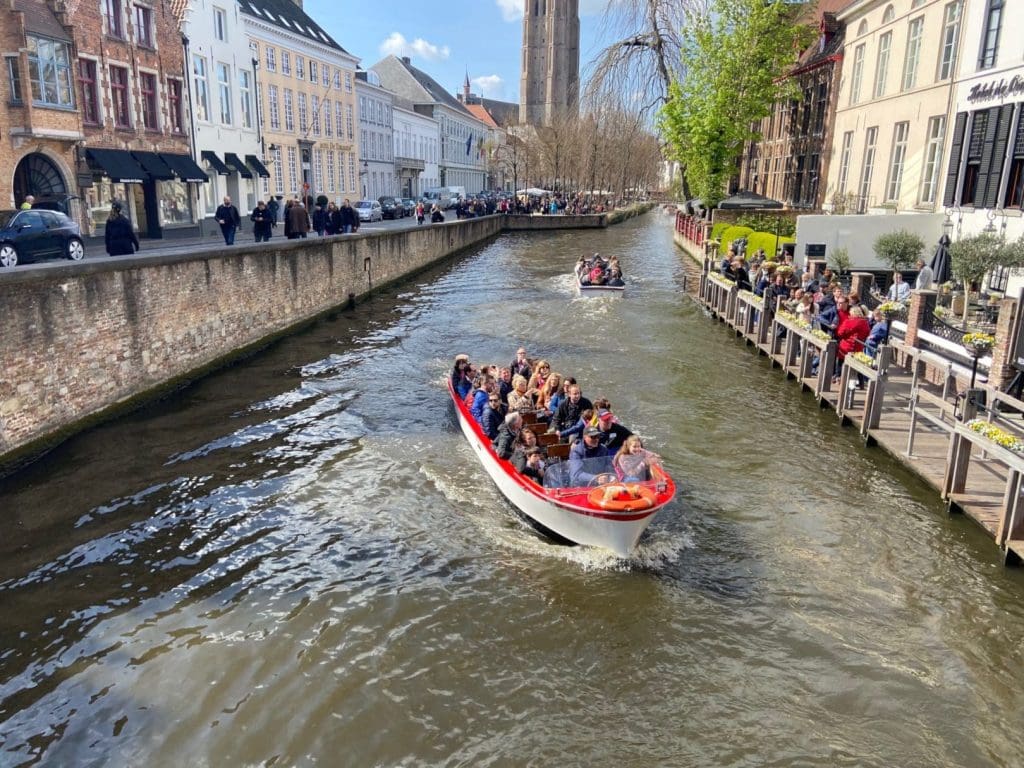
The canals define the city’s layout. Walking along Dijver and Rozenhoedkaai gives some of the best views of Bruges’ historic skyline, especially in the early evening when the water reflects the stepped rooftops. Just a few minutes away, the streets around Groeninge Museum and the Church of Our Lady feel calmer than the busier squares, yet still hold many of the city’s important landmarks.
Moving south leads to Minnewater Park, where a small lake and surrounding greenery offer a break from the medieval streets. The Begijnhof sits nearby, a quiet courtyard of white houses that once sheltered a community of religious women. From there it’s an easy walk back into the centre through Katelijnestraat, passing stone bridges and narrow lanes that reveal how little Bruges’ layout has changed over the centuries.
Azure Horizons and Island Hopping in the Caribbean
The Caribbean stretches across thousands of kilometres, but cruise routes make it possible to see several islands within a single journey. Ports often sit directly beside historic districts or harbour promenades, which means couples can step off the ship and begin exploring immediately. In places like San Juan, the cobbled streets of Old San Juan climb uphill from the harbour toward the blue walls of Castillo San Felipe del Morro.
Further south, islands such as St. Lucia and Barbados offer very different landscapes. St. Lucia’s port town of Castries sits between steep green hills, while coastal roads wind south toward the volcanic Pitons near Soufrière. Barbados feels flatter and more developed, but the historic streets of Bridgetown and the boardwalk along Carlisle Bay show how the island’s harbour shaped its growth.
Travellers considering a stunning luxury Caribbean cruise often choose itineraries that include a mix of larger islands and smaller stops such as Antigua or St. Kitts. Antigua alone has hundreds of beaches, but the old naval harbour at English Harbour gives the island historical depth beyond the shoreline. Moving between these islands by sea offers a perspective that flights rarely provide – the approach to each harbour gradually reveals the island’s shape before the ship even docks.
Boutique Hideaways and Sunset Vistas in Santorini
Santorini’s dramatic cliffs come from a volcanic eruption that shaped the island thousands of years ago. Most visitors stay along the caldera rim on the western side of the island, where villages such as Fira, Imerovigli and Oia sit high above the sea. Fira acts as the island’s main hub, with narrow pedestrian lanes filled with small shops and terraces overlooking the water.
The walking path from Fira to Oia remains one of the island’s most rewarding routes. The trail runs roughly 10 kilometres along the edge of the caldera, passing through Imerovigli and the small village of Firostefani. Along the way, the ruins of Skaros Rock appear just below the ridge, a reminder that this area once held one of the island’s main fortified settlements.
Oia sits at the northern tip of Santorini and draws crowds in the evening, but its maze of white lanes and stairways still rewards wandering earlier in the day. From the castle ruins at the edge of the village, couples can look back across the caldera toward the volcanic islands in the centre of the bay.
Intimate Heritage and Riverside Walks in Florence
Florence opens up once visitors move beyond the main piazzas. Most travellers start around Piazza del Duomo, where the cathedral, Giotto’s bell tower and the Baptistery stand within a few minutes of each other. From there, Via dei Calzaiuoli leads south toward Piazza della Signoria, where the Palazzo Vecchio anchors the square beside a row of historic sculptures.
Crossing Ponte Vecchio brings couples into the Oltrarno district on the southern side of the Arno River. The streets here feel more residential. Artisan workshops still operate along Via dei Serragli and Via Maggio, and the walk up to Piazzale Michelangelo provides one of the best panoramic views over Florence’s rooftops and domes.
Closer to the river, couples often wander along Lungarno Torrigiani in the late afternoon. The walkway follows the Arno’s edge and connects several bridges that link both sides of the city. From here, the sandstone façades of Florence’s historic buildings reflect softly in the water. It’s a simple walk, but it captures the atmosphere of the city better than many of the larger attractions.
Which destination calls to you?
Travel between two people often becomes less about ticking off landmarks and more about how places feel when explored together. Champagne’s vineyard roads reveal centuries of winemaking tradition, Bruges’ canals show how waterways shape medieval cities, and Caribbean islands present very different landscapes depending on where the ship docks. Santorini’s caldera villages and Florence’s Renaissance streets add another layer of history and architecture.
None of these destinations requires complicated itineraries to appreciate them; simply walking through neighbourhoods, crossing bridges, or driving between small villages reveals more than a guidebook ever could.