


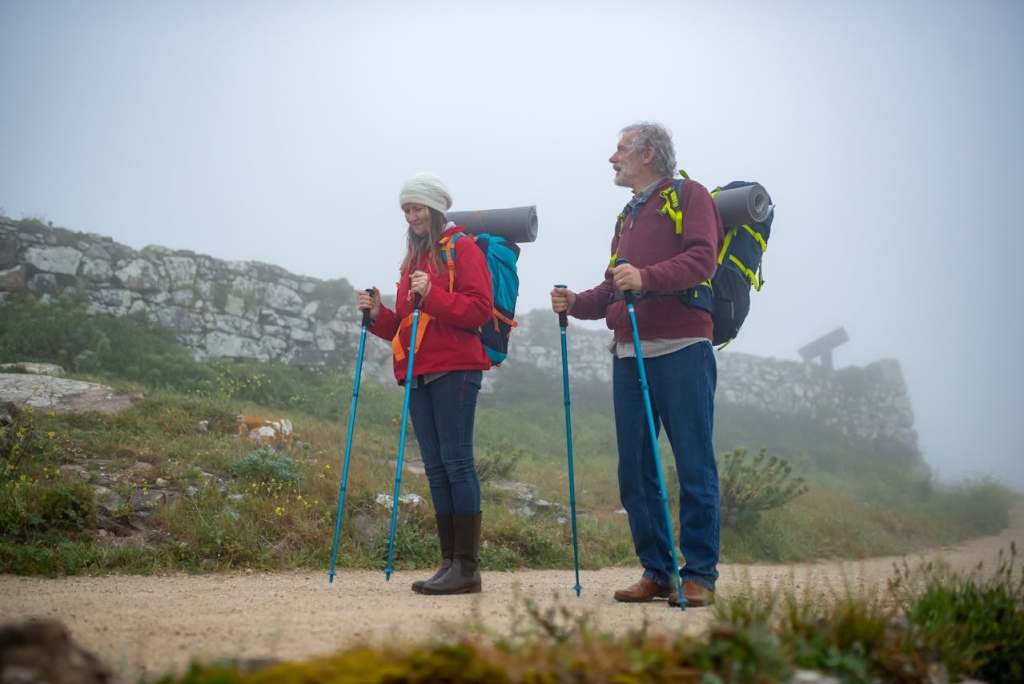
The Camino de Santiago is one of the most popular pilgrimage and long-distance hikes in the world; its several paths have been called upon by people for ages, and nowadays it’s being walked not only for religious purposes but also by millions of people who are looking for the experience and adventure it offers, but at the same time, several other hesitate when hearing “walk 800 kilometers across Spain”, especially if they are 40+ years old.
Most people in this age range usually think, “Is this even realistic for me anymore?”. The truth is that the Camino de Santiago is not about being young, and it’s definitely not a survival challenge. It’s about being ready, ready to slow down, to reflect, to do something just for you.
And for many people over 40, that’s exactly what’s been missing. So, let’s start with the basics.
Choosing the Right Route (Without Overthinking It)
This is where people get stuck. The Camino de Santiago is not actually just a trail, it’s a network of paths that all lead to Santiago de Compostela in Spain, and the first thing you need to know is that you don’t need the perfect route. You just need your route.
Here are the simplest options:
- Camino Francés: The most popular. Well-marked. Social. Great for first-timers.
- Camino Portugués: Slightly quieter. Flatter. A favorite for beginners.
- Camino del Norte: Stunning views, but more challenging.
If this is your first time and you’re over 40, there are no better options than the Camino Frances (especially if you go for the shorter version from Sarria) and Camino Portugues; all services work well, there are a lot of helpful points across the trails, and those are well-marked.
Go where support is easy. Where infrastructure is strong.
Comfort Matters (and a lot)
Remember that you do NOT have to “rough it” to walk the Camino. Most people have this way of thinking when it comes to this; it’s a myth, you don’t have to give up comforts to do the Camino. And yes, there are basic hostels (called albergues), but you can also find guesthouses, private rooms with bathrooms, and even boutique hotels.
And if you’re worried about your luggage, specialized agencies like SantiagoWays offer full Camino packages that include luggage transfer services (as well as a ton of other amenities) that move your bag from one stop to the next.
This way, you can focus on carrying just a small backpack for the day with water, snacks, a first aid kit, and maybe a jacket.
That’s it.
Safety and What You Actually Need to Know
Safety is probably one of the biggest concerns people over 40 have when it comes to walking the Camino, especially if you’re considering going solo, but in fact, the Camino is one of the safest travel experiences in the world.
Why? Because you’re never really alone, there are always other pilgrims, cafés, small towns, and a lot of helpful people, as well as support systems built along the route. For some reason, it’s usually called the “Camino community”.
And even if you still need that extra step to feel safer, Santiago Way’s packages offer 24-hour telephone assistance and a vehicle to assist you in case of emergency.
Of course, you still need to apply basic travel awareness, those that are useful anywhere and for many is “common sense”, like locking your valuables, and trust your instincts, avoiding shady places, and not wandering around super late at night.
But overall? People don’t just feel safe on the Camino; most feel taken care of.
The Cultural Experience
This is one of the biggest pros of walking the Camino over 40, and to many, it’s its main appeal to the point where the walking feels like just the doorway. Spain is an ancient country, it’s packed with history, and being a melting pot of cultures makes it even better. You see it reflected in its buildings, villages, people, and food.
You get to visit medieval villages and cities, try local wine as well as food, fresh bread in a tiny village, a glass of wine after a long day, and spot amazing landscapes.
The Camino is slow travel at its best; you don’t rush through places. You experience them, and this lets you truly immerse yourself in the local culture.
Conclusion
So, the first thing you need to do is a change of mind, walking the Camino de Santiago after 40 isn’t crazy, it’s not too late, and it’s definitely not too hard. All you need to do is take a well-planned journey with comforts and amenities on a route that has a strong infrastructure as well as support.
You don’t need to be the fittest. You don’t need to be fearless. All you need to do is start, one step after another. This way, before you know it… You’re already walking across Spain.