When people think about a safari in Kenya’s Maasai Mara, they often imagine something that takes weeks to plan and costs a small fortune. Luxury lodges, carefully mapped itineraries and days upon days of game drives.
My trip wasn’t like that at all.
On a Thursday afternoon, slightly on impulse, I decided I was going to Kenya.
There was no long planning process, no spreadsheets nor carefully organised itinerary. Realising I had a few days free, I opened my laptop and booked a flight. By Monday morning I was on a nine-hour journey from the UK to Nairobi, wondering whether this might be one of those ideas that seemed brilliant in theory but slightly questionable in reality.
Less than 48 hours later I was in the Maasai Mara.
Like many people, I had always assumed that a safari in Kenya’s Maasai Mara was something that required a week or more. The images we tend to see are all sprawling lodges and long itineraries, suggesting a once-in-a-lifetime expedition that demands both time and money.
But it turns out you can experience an extraordinary amount in just a few days.
My safari lasted only two nights and three days. I travelled alone, joining a small group tour from Nairobi, hoping mainly to see a few animals and experience one of Africa’s most famous wildlife landscapes.
What I didn’t expect was just how much those three days would deliver.
The Road to the Mara
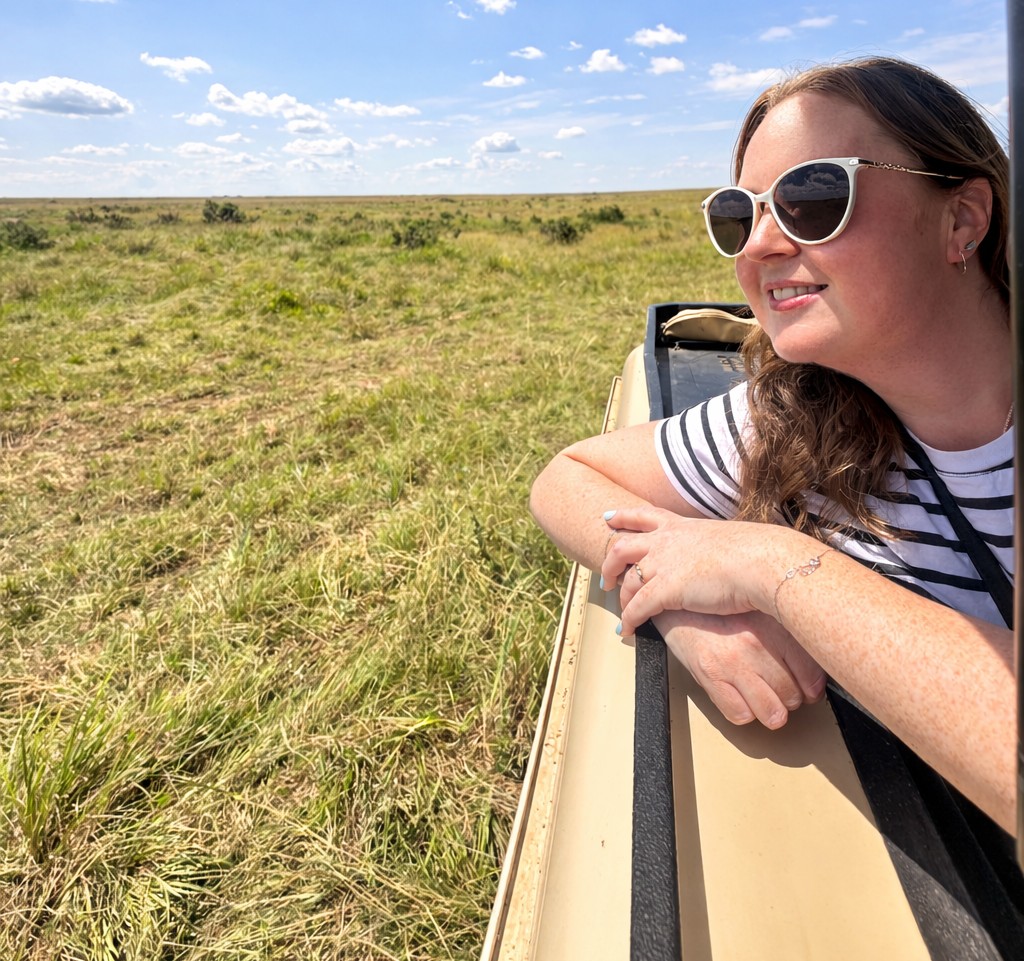
The journey from Nairobi to the Maasai Mara takes around six or seven hours depending on the roads, which means the adventure begins long before you reach the reserve itself.
Leaving the city behind, the scenery gradually shifts from busy streets and traffic to open countryside dotted with roadside markets and small towns. Eventually the road climbs to the edge of the Great Rift Valley, where the views stretch for miles across dramatic escarpments and vast plains below.
From there the drive becomes progressively rougher. The tarmac disappears, the roads turn to dust tracks and every bump in the Land Cruiser serves as a reminder that you are heading somewhere remote.
As we entered the Maasai Mara Nature Reserve the landscape opened into sweeping grasslands that stretch endlessly towards the horizon, broken only by the occasional acacia tree and the distant movement of animals grazing across the plains.
I was under no illusion that safaris come with no guarantees. Wildlife doesn’t operate on a schedule and animals move where they please, so every sighting feels like a small stroke of luck.
The Maasai Mara, however, didn’t keep us waiting long.
Within minutes we were rewarded with passing zebras grazing beside the track while a tower of giraffes wandered slowly across the grasslands while a warthog trotted across the path behind us.
One of the things I quickly learned about safari guides in the Maasai Mara is that they take their wildlife spotting very seriously.
At one point our guide heard that rhinos had been seen somewhere across the reserve. Black rhinos are notoriously difficult to find because they hide deep in dense, dark bushes, and spook easily at the sound of vehicles, so spotting them requires a combination of patience, luck and occasionally a rather enthusiastic drive across very uneven terrain.
Our guide chose the enthusiastic option. As we bounced across the tracks and over the grasslands in determined pursuit, the Land Cruiser was rattling so violently that at one point someone’s camera swung straight into my face, leaving me with a rather impressive bruise for the rest of the trip.
It was slightly chaotic, undeniably bumpy and completely worth it, because eventually, hidden deep among the thick bushes, we saw two rhinos moving slowly through the scrub, enormous and prehistoric looking, perfectly camouflaged in the landscape.
A few hours earlier I had been sitting in Nairobi traffic, and now I was watching one of the rarest animals in Africa in the wild, slightly bruised but absolutely delighted to be there.
When the Circle of Life Gets Real
The most unforgettable wildlife encounters came far earlier than expected when driving 4am in the dark on the way to the hot air balloon launch site. The only light came from the vehicle’s headlights cutting through the darkness, and there just off the track, two lions were feeding on a giraffe they had clearly killed only moments earlier. Even in the dim light you could see the sheer size of the animal and hear the tearing sounds as the lions ate.
It was brutal, raw and impossible to look away from.
Later that same day we witnessed another moment that felt equally intense. A group of four lions spotted a warthog and the hunt happened so quickly it was difficult to process what was unfolding.
Within seconds there was dust, chaos and the unmistakable squeals of the animal as the pride chased it into a hole, dug it out and began tearing it apart.
It was shocking and, if I’m honest, slightly traumatising to witness, but it was also a powerful reminder that the Maasai Mara is not a staged wildlife park. This is a living ecosystem where predators hunt, animals die and the cycle of life continues exactly as nature intended.
The circle of life isn’t just something from The Lion King. It happens right in front of you.
Floating above the Maasai Mara
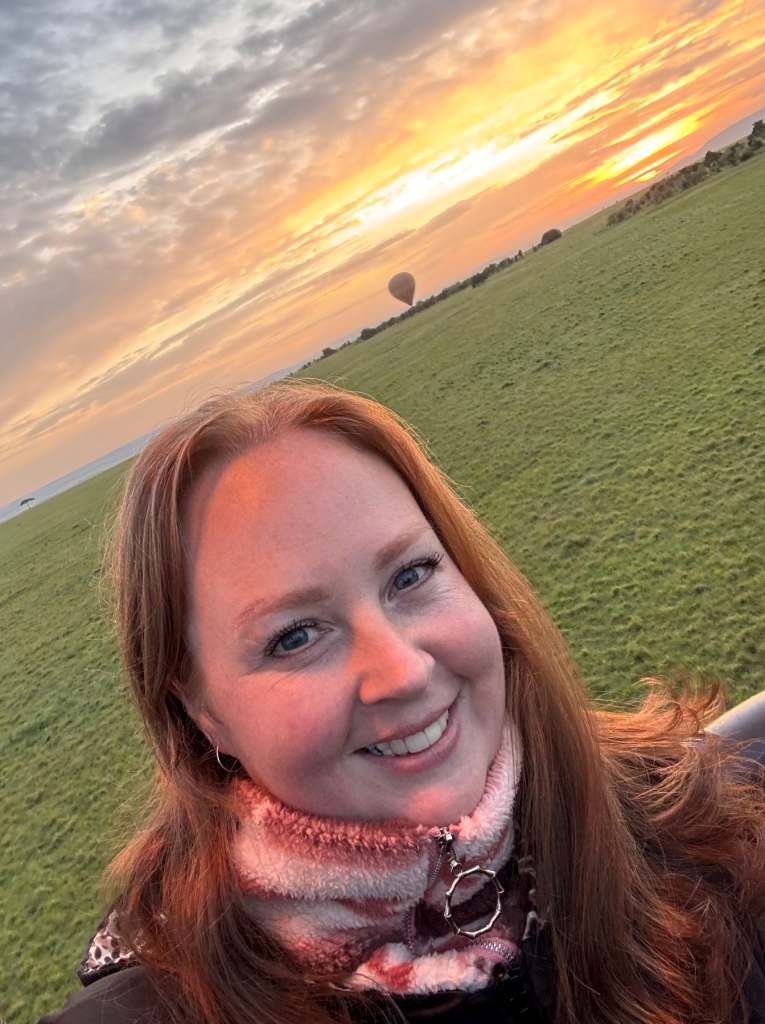
The hot air balloon flight, which happened to fall between two of the most intense wildlife moments of the trip, felt like the Maasai Mara gently resetting the balance.
As the balloon eased into the sky at sunrise, the landscape stretched endlessly in every direction beneath us. From above, the sheer scale of the reserve becomes almost impossible to grasp, with animals moving quietly across the grasslands and the Mara River winding through the landscape like a ribbon.
For a while we simply drifted, carried by the breeze.
Below us a herd of elephants moved steadily across the plains, their shadows stretching long in the early morning light. A little later we spotted a baby giraffe feeding from its mother, wobbling slightly on impossibly long legs. Then we floated across a river where four hippos surfaced almost at the same moment, their enormous heads appearing above the water as if they had popped up purely to inspect the strange object drifting above them.
After the dust, noise and drama of lions hunting on the ground, seeing the Maasai Mara from the air felt strangely peaceful. Up there everything seemed slower, quieter and perfectly in balance again.
Suspended in the air with nothing but the occasional roar of the burner breaking the silence, it felt completely surreal.
It was easily one of the most extraordinary things I have ever experienced,
Afterwards, sitting down to a champagne breakfast in the Maasai Mara, with a chef somehow cooking the best omelette of my life, only added to the surreal feeling that none of this was quite real.
A Solo Trip that Didn’t Feel Solo
Although I had booked the safari alone, I was far from the only solo traveller.
In fact, most of the people in our group had arrived on their own, many of them younger travellers in their twenties and thirties exploring Kenya independently from various parts of the world.
What could easily have felt awkward turned out to be one of the best parts of the trip.
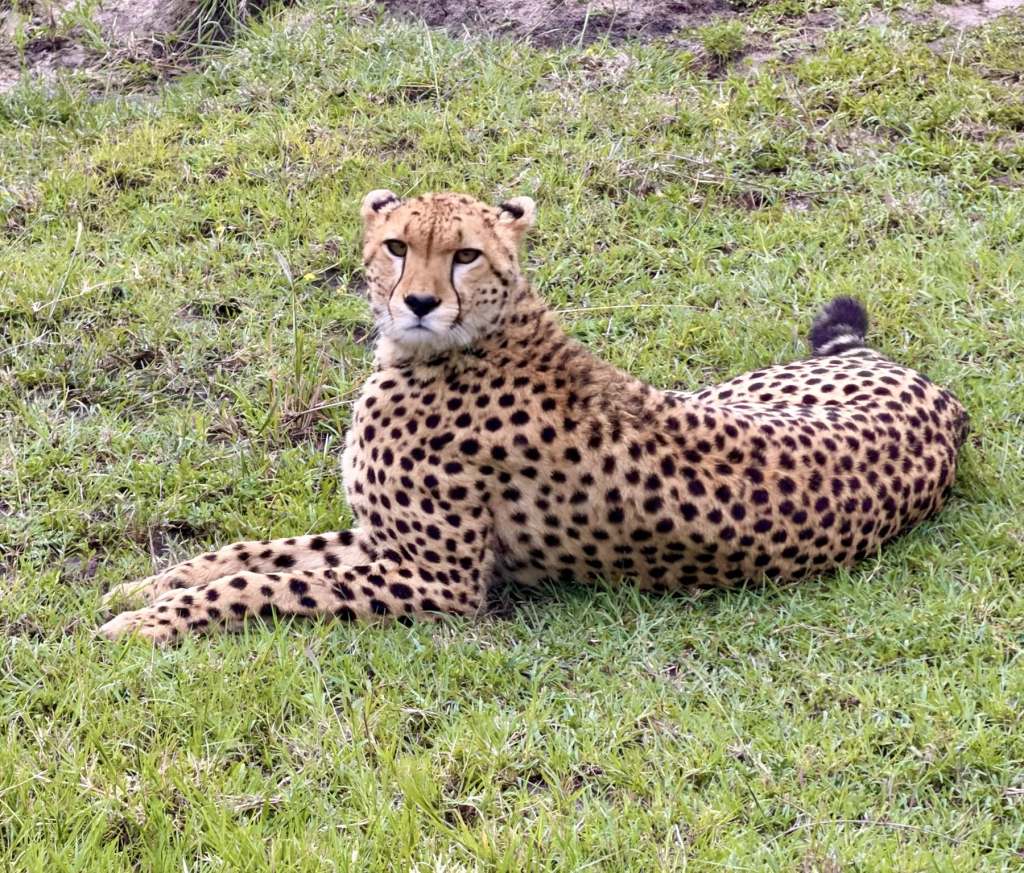
Safari vehicles have a way of creating instant camaraderie. When everyone is leaning over the side of the same Land Cruiser trying to photograph a cheetah or watching elephants cross the grasslands, conversation happens naturally.
Within hours we were swapping travel stories, comparing photos and laughing about the early morning wake-up calls required for dawn game drives. Age didn’t seem to matter in the slightest, we were simply travellers sharing something extraordinary.
A Visit to a Maasai Village
As we left the reserve on our final morning to return to Nairobi, we visited a nearby Maasai village. I wasn’t entirely sure what to expect.
The Maasai are one of Kenya’s most recognisable communities, known for their distinctive red shukas, intricate beadwork and long history as pastoralist cattle herders. The village itself consisted of small huts made from wood, mud and cow dung, arranged in a circle and enclosed by a fence of thick thorny branches.
Our hosts welcomed us with traditional jumping dances, where young men take turns leaping into the air in an impressive display of strength and stamina. Watching them bounce seemingly effortlessly off the ground made most of us feel mildly inadequate.
The chief’s son showed me inside his hut, where he explained how families live and cook. I learned about the importance of cattle in Maasai culture, where livestock represent wealth, status and security.
At one point he looked at me thoughtfully before announcing that he would be willing to offer ten cows to marry me. I’m still not entirely sure whether he was joking.
Either way, it was probably the most unusual proposal I’ve ever received.
Why Three Days Was Enough?
Over the course of those two nights in the Maasai Mara we saw an incredible range of wildlife: lions, cheetahs, elephants, hippos and endless herds of zebra and wildebeest scattered across the landscape.
Every drive revealed something new.
Of course you could spend far longer here. The Maasai Mara is vast and endlessly fascinating, but what surprised me most was how complete the experience felt even in such a short time.
In just three days I had watched predators hunt, floated above the reserve in a hot air balloon and eaten a champagne breakfast in the middle of one of the world’s most famous wildlife landscapes.
Not bad for a trip that had begun as a slightly impulsive decision on a Thursday afternoon.
Sometimes travel does not need months of planning or weeks of time off work, sometimes all it takes is a moment of spontaneity and the courage to book the flight.
And occasionally, if you are lucky, those last-minute decisions turn into the kind of adventure you will never forget.
