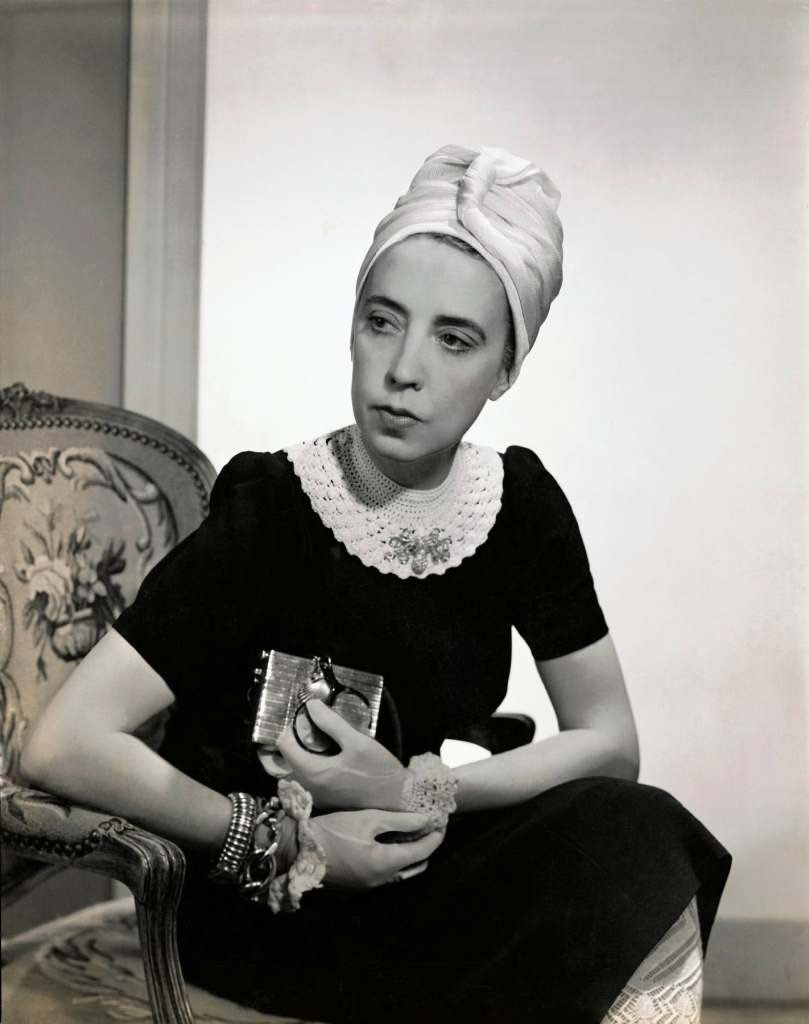
Elsa Schiaparelli (1890-1973) was one of the 20th century’s most innovative and successful fashion designers.
In 1934, she became the first female designer to blaze the cover of Time Magazine, which declared “she’s madder and more original than most of her contemporaries…and one to whom genius is applied most often”. Her collaborations with famous artists of the time were renowned. She designed wardrobes for stars of stage and screen. She pioneered the use of unconventional materials in clothing design– plastics, zippers, fur, glass, even insects. Yet somehow Schiaparelli never reached the household name status of contemporaries like Christian Dior and Coco Chanel.
Now, with the opening of the Victoria & Albert Museum’s new show and first ever UK exhibition devoted to ‘Schiap’, that may well change. Schiaparelli: Fashion Becomes Art is a dazzling multi-gallery display celebrating the designer’s fascinating life, creativity and legacy.
Beginnings and Maison Schiaparelli
Although Roman by birth, Elsa Schiaparelli was a resident Parisienne for most of her life. No doubt serendipity played a part in her life-changing exit, aged 23, from the conservative confines of Rome to the vibrant, creative and avant-garde Paris of the 1920s and the premier of her first fashion collection in 1927. By 1935, Maison Schiaparelli, her 98-room couture house at 21 Place Vendôme, employed hundreds of staff creating more than 7000 haute couture garments each year.
Amongst over 400 items displayed in the V&A show are a selection of day, sports and evening wear, perfumes and accessories, plus an intriguing array of Schiaparelli-connected photographs, artwork and memorabilia.
Surrealist Suits, Shocking Scents and Controversial Culottes
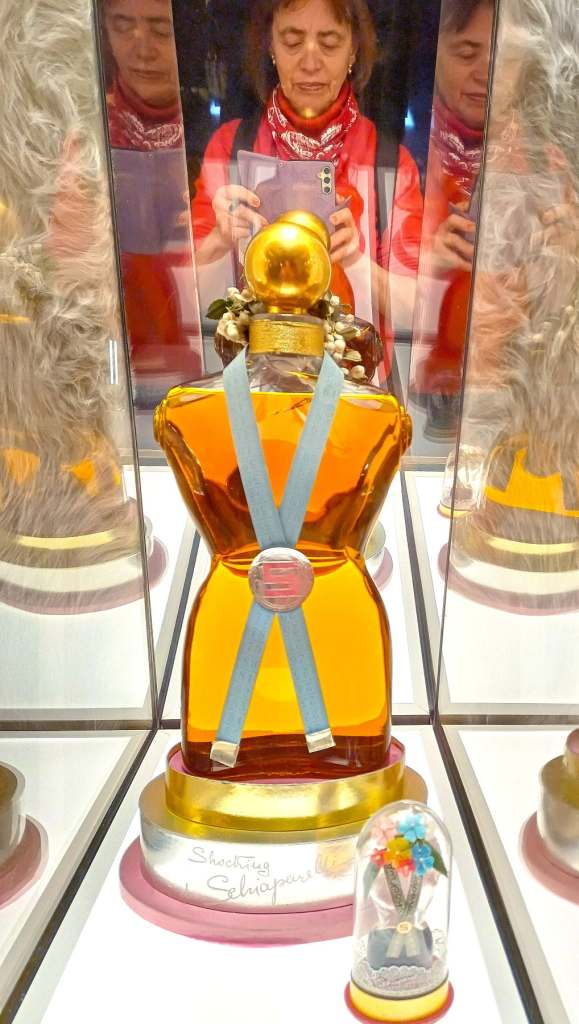
Highlights include Schiaparelli’s colourful, bejewelled and figure-hugging jackets, glorious gloves and hilarious hats. You’ll see outfits she designed for stars of stage and screen like Marlene Dietrich, Mae West and Zsa Zsa Gabor. You’ll find examples of her stylish but practical, comfortable women’s clothing, such as the first ‘wrap’ dress, a backless swimsuit with a built-in bra and a see-through raincoat. There’s an entire gallery dedicated to her trailblazing, massively successful perfume range, most notably Shocking by Schiaparelli, its curvaceous bottle designed in honour of Mae West.
Not on display but worth a mention is her ‘Speakeasy Dress’, with hidden pockets designed to carry alcohol during the U.S. Prohibition era.
Look out for the photograph of Spanish tennis champion Lilí d’Álvarez, famously wearing Schiaparelli’s “divided skirt”– a women’s culotte dress– to Wimbledon in 1931. This caused a major stir as it was considered quite daring for women to wear anything resembling shorts on the court at the time. Schiaparelli also designed the practical but stylish wardrobe for aviator Amy Johnson’s solo flight to Cape Town, South Africa, in 1936.
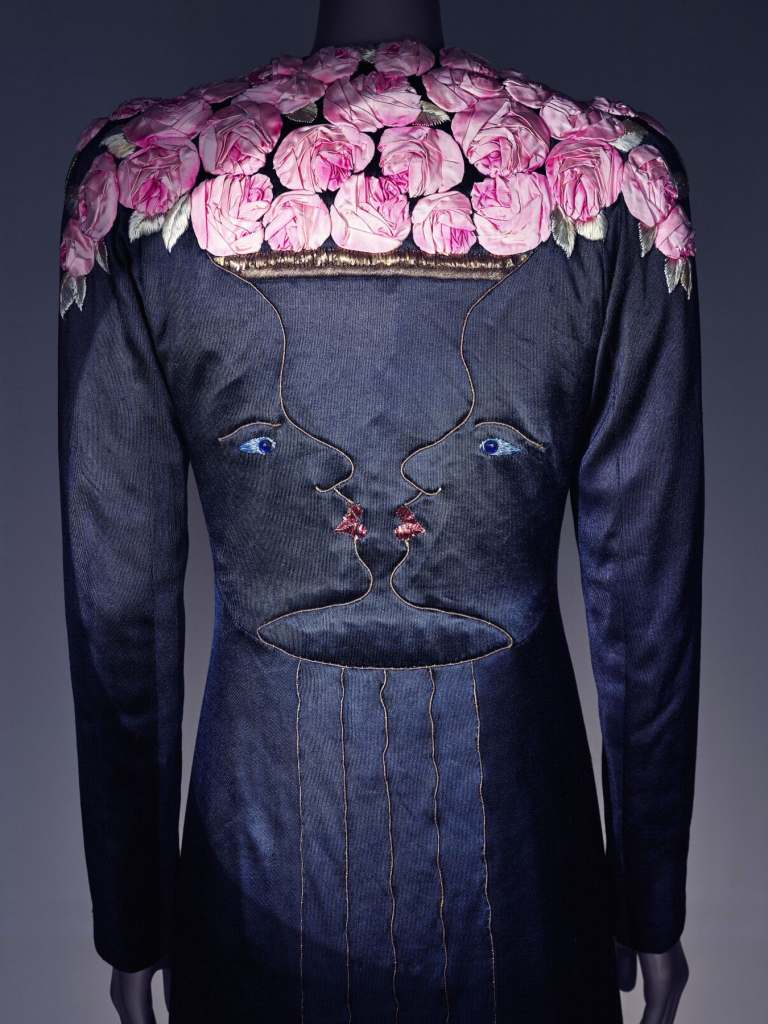
The exhibition particularly showcases Schiaparelli’s collaborations with surrealist icons Salvador Dali, Jean Cocteau and Man Ray, including the famous lobster dress, upside-down shoe hat and glitzy mosaic-mirrored lamb chop jacket. These perfectly illustrate Schiaparelli’s reputation for “elevating the everyday to the extraordinary,” as well as a key exhibition theme– that she created not just fashion but works of art and imagination.
My personal favourite is the show’s fabulous display of Schiaparelli’s irreverent, provocative, witty and wildly original buttons – from plumed hats, vegetables, giant insects and acrobats to eyes, ears, bellybuttons and sensual pouting lips.
Call it by its Name
Affectionately called ‘Schiap’ by friends, she was called many things by others: “Outrageous”, “Disobedient”, “Subversive”, “An untrained outsider who became the most discussed designer of Paris between the wars.” She was once told that she “would do better to plant potatoes” than make dresses, and her rival Chanel dismissed her as “that Italian artist who makes clothes”.
But perhaps it was her friend Salvador Dalí who said it best: “No one knows how to say Schiaparelli, but everyone knows what it means.”**
Renewal and Re-invention
Although Schiaparelli decided to close her fashion house and retire in 1954, the exhibition gives special focus to the remarkable 2012 re-opening, reinvention and renewed success of Maison Schiaparelli in Paris, now under the creative directorship of Daniel Roseberry.
Whether this is the first you’ve heard of Elsa Schiaparelli or you’re a lifelong ‘Schiap’ fan who (like me) grew up with the distinctive scent of ‘Shocking’ emanating from your mother and grandmother’s neck and lingerie drawer, this exhibition is an unmissable treat. Beg, borrow or become a V&A member to gain entry, but see it while you can.
(**PS, it’s pronounced “Skap-a-rel-ee”)
Schiaparelli: Fashion Becomes Art
Where & When
V&A South Kensington, Cromwell Road, London, SW7 2RL
28 March 2026 – 8 November 2026
Tickets
Tickets from £28 (concessions available), booking essential. V&A members free, no booking needed.
For more information and tickets click here
Cover image: Schiaparelli, Fashion Becomes Art at V&A South Kensington © Victoria and Albert Museum, London
