


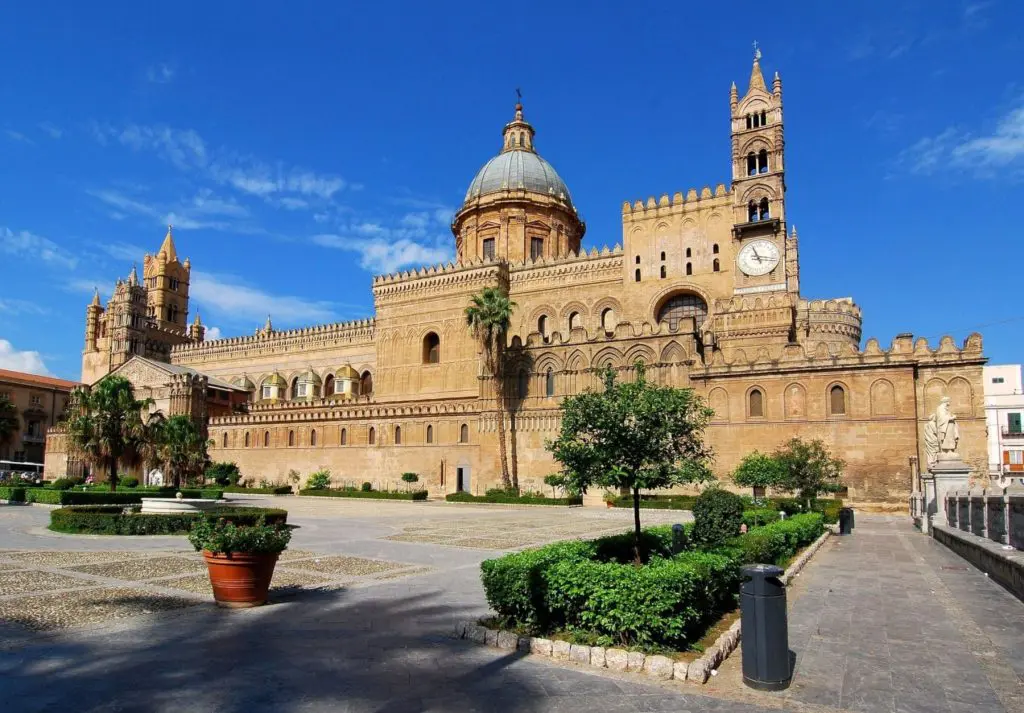
Sicily’s history sits out in the open, without much need for explanation. Streets shift from Baroque façades to Greek ruins within a short walk, and local markets still shape how neighbourhoods function day to day. In Palermo, Ballarò Market starts early, with vendors calling out prices over stacks of citrus and fresh fish, while in smaller towns, daily life revolves around piazzas that haven’t changed much in decades. Travellers who spend time here tend to notice the details first, from stone steps worn down by years of use to narrow alleys opening onto sea views and regional dishes that vary from one town to the next.
Expertly Guided Cultural Tours Across Sicily
To understand Sicily properly, you need some knowledge of its history. Temples, Norman cathedrals, and Arab-influenced architecture sit close together, and a guide can explain what connects them.
In places like Agrigento’s Valley of the Temples, guides often point out details that are easy to miss, such as how the Temple of Concordia has remained so intact due to its later use as a Christian church. In Palermo, walking through Quattro Canti or along Via Maqueda becomes clearer once you understand how Spanish rule shaped the city’s layout.
For this reason, more visitors are booking exciting Sicily group tours. These tours cover multiple regions without missing key sites, combining major stops like Palermo, Cefalù, and Mount Etna with smaller places that aren’t as obvious on a map. Depending on the itinerary, tours can include guided access to historic landmarks, transport between cities, and local insight that ties everything together. This is especially useful in places like Monreale Cathedral, where mosaics cover every surface and benefit from explanation beyond their visual impact.
Volcanic Vineyards and Ancient History in Catania
Catania sits at the foot of Mount Etna, and the volcano influences almost everything here. Buildings across the city centre are made from dark lava stone, especially around Piazza del Duomo, where the Elephant Fountain stands as a symbol of the city. Via Etnea runs straight through the centre, lined with shops and older buildings that lead towards views of the volcano on clear days. Fish markets near Piazza Alonzo di Benedetto start early, with stalls laid out along the street and locals moving through quickly before midday.
Etna’s slopes are dotted with vineyards that benefit from the mineral-rich soil. Wineries around towns like Linguaglossa and Randazzo produce wines that reflect the changing terrain, with some vines growing at surprisingly high elevations. Visits often include a walk through the vineyard itself. Many still use low stone walls to mark out plots, a practical detail that also shows how long these landscapes have been worked.
Back in Catania, the Roman Theatre sits partially below street level, tucked behind modern buildings. Not far from here, sections of the old lava flows are still visible along certain streets, especially after recent restoration work.
Private Villa Escapes for Relaxed Stays in Sicily
Staying in a villa changes how each day in Sicily unfolds. In areas like Noto and the Val di Noto countryside, properties are often set among olive groves or low stone walls, with views stretching toward the coast.
Mornings usually start outdoors, with local produce picked up from nearby towns, and markets in places like Avola or Modica are easy to reach and stocked with regional staples. The property becomes part of the experience, especially in villas that retain original features such as tiled floors or thick stone walls.
When it comes to the most beautiful holiday rentals in Sicily, there’s a wide range to choose from. Restored farmhouses inland and coastal properties near San Vito Lo Capo or the outskirts of Taormina are among the most popular. Many include outdoor kitchens, shaded terraces, and access to quieter stretches of coastline. It’s a practical option for longer stays, especially when exploring nearby towns while having a consistent base to return to each day.
Medieval Streets and Panoramic Sea Views in Erice
Erice sits above Trapani, reached by a winding road or a cable car that climbs steadily up the hillside. Once at the top, the layout feels compact, with cobbled streets leading between stone buildings and small courtyards. Via Vittorio Emanuele runs through the centre, passing churches and quiet squares, while Castello di Venere stands at the edge, overlooking the coastline below. On clear days, you can see the Egadi Islands in the distance.
The town has a slightly cooler climate than the coast, which makes walking more comfortable, especially in the afternoon. Shops along the main streets focus on traditional crafts, including ceramics and woven goods that reflect long-standing local techniques. It doesn’t take long to see the main sights, but the appeal lies in its preserved layout, with narrow passages and stone archways that remain largely unchanged.
Baroque Architecture and Island Tradition in Ortygia, Syracuse
Ortygia forms the historic centre of Syracuse, connected to the mainland by a short bridge. The streets are narrow and uneven in places, opening onto small squares and waterfront views. Piazza del Duomo is the focal point, where the cathedral incorporates columns from an ancient Greek temple, still visible along the exterior walls. Walking along Via Roma or Via Cavour, you pass residential buildings and small shops, with balconies that overlook the street below.
Near the seafront, the Fonte Aretusa sits just beside the water, with papyrus plants growing around a freshwater spring. It’s one of those places people tend to circle back to more than once. The market area along Via Emmanuele de Benedictis picks up in the morning, with vendors selling seafood, vegetables, and local ingredients that reflect the surrounding region.
Ready to explore the heart of Sicily?
Sicily doesn’t present itself as one single experience. Palermo’s markets, Catania’s volcanic backdrop, and Ortygia’s compact streets each offer something different, while places like Erice add a quieter perspective from higher ground. Villa stays in the countryside or along the coast show how daily life works beyond the main cities.
Choosing where to spend time in Sicily depends on what draws your interest. Is it the history, food, culture, or coastal scenery? Many travellers combine a few regions in one trip, then return later to see what they missed. Sicily often leaves that kind of impression, where one visit doesn’t feel like enough.