


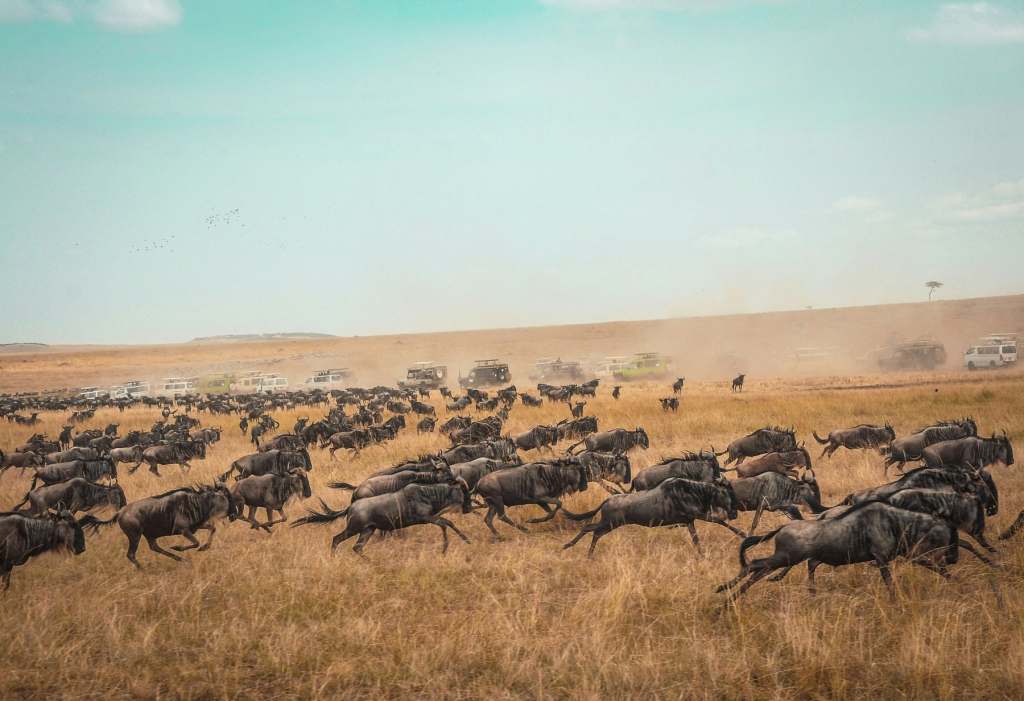
There are few experiences on earth that rival the raw, heart-stopping thrill of a Kenya safari. The moment you step onto the vast golden plains of the Maasai Mara and watch a pride of lions stretch lazily in the morning sun, or witness thousands of wildebeest thundering across the Mara River in a cloud of dust and roar, you understand immediately why Kenya has captivated adventurers, naturalists, and dreamers for generations. This is not just a holiday. It is a collision with something ancient, wild, and magnificently alive.
What Makes Kenya So Extraordinary
Kenya is the birthplace of the safari, and it remains the gold standard. Home to some of Africa’s most iconic landscapes, from the sweeping Maasai Mara to the snow-capped peak of Mount Kenya, the flamingo-draped shores of Lake Nakuru to the dramatic Amboseli plains with Kilimanjaro as a backdrop — the country offers breathtaking diversity in a single trip.
Wildlife here is staggering in both variety and sheer density. Kenya is one of the few places where you can realistically see the Big Five — lion, leopard, elephant, buffalo, and rhino — in a single day. Add cheetah sprinting across open grassland, giraffe silhouetted against fiery sunsets, and hippos wallowing in river shallows, and you begin to understand why visitors return year after year, each time discovering something new.
Beyond the animals, a Kenya safari immerses you in rich Maasai culture, spectacular birding, and night skies so clear they feel personal. Morning game drives in open 4×4 vehicles, afternoon bush walks, sundowner drinks as the horizon bleeds orange — every moment is cinematic.
How to Book a Kenya Safari
Booking a Kenya safari is more straightforward than many travellers expect, but doing it right requires a little planning.
Step 1: Decide on your timing. The Great Migration through the Maasai Mara typically peaks between July and October, making this the most popular (and pricier) season. The dry seasons — January to March and June to October — generally offer the best wildlife viewing as animals cluster around water sources.
Step 2: Choose your parks and regions. First-timers often combine the Maasai Mara with Amboseli or Samburu for variety. A typical itinerary runs five to ten days.
Step 3: Set your budget. Kenya safaris range from budget camping options at around $150–$250 per person per day, to ultra-luxury tented camps at $1,000 or more per night. Mid-range lodges offering excellent game drives and full board typically fall between $300–$600 per day.
Step 4: Book well in advance. Peak season camps, especially in the Mara, can sell out six to twelve months ahead.
Finding a Reputable Kenya Safari Operator
Choosing the right Safari Company in Kenya is the single most important decision you will make. A great company transforms a good trip into an unforgettable one; a poor one can ruin it entirely.
Look for operators that are registered with the Kenya Tourism Board (KTB) and members of the Kenya Association of Tour Operators (KATO) — these memberships signal accountability and professionalism. Read independent reviews on platforms like TripAdvisor, and Travel Africa forums. Ask specifically about the experience and qualifications of your guides. Examples of reliable Safari companies include A&K, Pollmans, Southern Cross Safaris and Shoor Safaris Kenya.
Seek out companies that are long standing with an extended record of operating in the industry, those that practise responsible, low-impact tourism and partner with conservation projects. Ethical operators often carry certifications from bodies like Ecotourism Kenya.
Finally, communicate directly with your operator before booking. A responsive, knowledgeable team that answers your questions thoroughly is a very good sign. A vague or pushy one is a red flag.
Kenya is waiting. And trust us, the wild does not disappoint.