There is a version of New York City that exists in the memory of everyone who visited in their twenties. It was loud and relentless, a blur of late nights, overpriced drinks, and days spent standing in lines for things that turned out to be marginally worth it. You walked until your feet gave out, ate whenever you found a spare moment, and came home exhausted in a way that took a week to recover from.
That trip was fine. This one is better.
New York after 40 is a fundamentally different experience, not because the city has changed, but because you have. You know what you want, you’re willing to pay for it, and you have no interest in spending three hours of a precious travel day waiting on a sidewalk because someone on the internet said a particular brunch spot was unmissable. The city rewards this approach more than almost any destination in the world. Its best experiences are not the ones with the longest lines. They are the ones you find when you stop trying to see everything and start being selective about what actually matters to you.
Stay Somewhere That Understands You
The hotel decision shapes everything else. In your twenties, a hotel was a place to sleep between activities. After 40, it’s part of the trip itself. New York has no shortage of large, efficient midtown hotels that process guests like a well-run machine. They are fine. They are also not particularly interesting.
The hotels worth staying in tend to be smaller and positioned slightly outside the obvious center. A boutique property in the West Village puts you on some of the most beautiful streets in the city with good restaurants and wine bars within a few minutes’ walk in any direction. A well-chosen hotel in the Flatiron or NoMad area gives you quieter surroundings and easy access to both Midtown and Lower Manhattan without the relentless noise of Times Square bleeding into your mornings.
Spend the extra money on the room. Not necessarily on a suite, but on a property where the lobby doesn’t feel like a transit hub and the staff actually knows the neighborhood. That local knowledge is worth more than any travel app on a trip where your time is genuinely limited.
Pace the Days Differently
The instinct carried over from younger travel is to start early and go hard. Resist it. The best version of a New York trip after 40 is built around two or three meaningful things per day with actual recovery time between them, rather than six things done at a sprint.
Mornings belong to the neighborhood. Before the city fully wakes up, the streets have a quality they lose by 9am. Walk to a proper coffee shop, sit at a real table, and let the day arrive gradually. The West Village at 7:30 on a weekday morning, the Lower East Side on a Saturday before the crowds, these are experiences that the people rushing past on their way to the first item on their itinerary never get.
Late mornings are for museums and galleries, when the rooms are quietest. The Met on a weekday morning, arriving when it opens, gives you the European paintings in something close to solitude. The Frick Collection on the Upper East Side is one of the most civilized experiences New York offers, small enough to do properly, beautiful enough to warrant a second visit. Check the current location before you go, as the collection has been operating from a temporary space during its main building renovation. The MoMA on a weekday afternoon, after the school groups have left, is a different museum entirely than the weekend version.
Afternoons are for neighborhoods. Not ticking them off a list, but actually being in one. The High Line is worth doing once, preferably in the late afternoon when the Hudson light comes in low and amber over the water. SoHo rewards slow walking and looking above the ground floor, where the cast-iron architecture is extraordinary and almost nobody looks at it. The Tenement Museum on the Lower East Side is one of the best museums in the city regardless of your interest in history. The storytelling is specific and human in a way that most institutions never manage.
Eat at the Right Time
New York dining after 40 means eating dinner at 7pm rather than 9pm, which turns out to be the correct time to eat in New York anyway. The early rush clears by 7:30, the room settles into its actual rhythm, and you’re back at the hotel by 10pm without having sacrificed anything.
Make reservations. Not for every meal, but for the ones that matter. The city’s best restaurants book weeks in advance, and walking in without one means either a long wait or a second-choice table. Decide the two or three meals that are worth planning around and sort those before you arrive. Everything else can be spontaneous.
The neighborhood restaurant over the famous one, almost always. New York has more excellent, uncelebrated restaurants per block than anywhere else in the country. A small Italian place in the West Village with twelve tables and a handwritten menu will outlast the memory of any overhyped destination restaurant you waited six weeks to book.
Cross the River
First-time visitors to New York rarely make it to the Hudson County waterfront. Experienced travelers know it’s one of the best things you can do with a half-day.
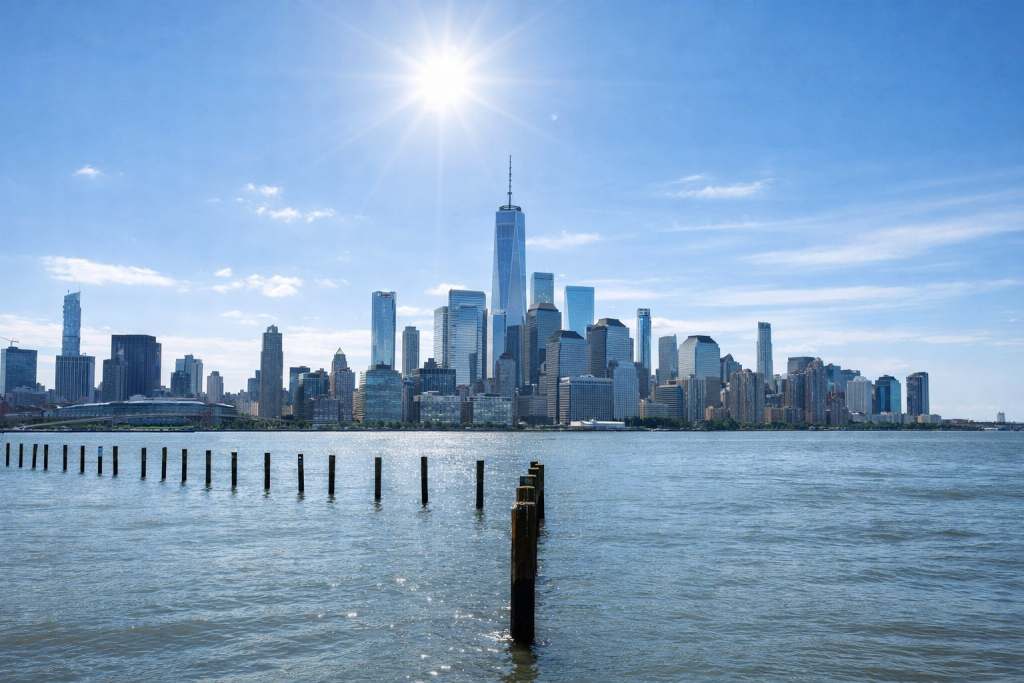
Jersey City and Hoboken are a ten-minute PATH train ride from the World Trade Center station. One practical note: the PATH doesn’t yet accept tap-to-pay as seamlessly as the subway, so pick up a MetroCard or a PATH-specific card before you go. Service also runs less frequently on weekends, so check the schedule before you head to the platform.
The skyline view from the Exchange Place waterfront in Jersey City is the one photographers mean when they photograph New York. You can see the entire Manhattan skyline at once, which is something you can never do from within the city itself. The Hamilton Park neighborhood nearby has a residential calm, good coffee, proper brunch spots, and a greenmarket feel that makes it easy to spend an entire morning without consulting a map.
Hoboken has its own character, quieter and more residential than Jersey City, with a waterfront promenade that runs the length of the town and a collection of restaurants and bars that serve a local crowd rather than a tourist one. The Maxwell Place Park at the northern end gives you a view of the GWB that most visitors never see.
Both are worth half a day. Neither will feel like a compromise.
Arrive Unhurried. Leave the Same Way.
Everything about a well-planned New York trip can come undone in the last two hours if departure hasn’t been sorted in advance. The unhurried quality you’ve built into the whole trip, the slow mornings, the long lunches, the afternoons without a schedule, deserves to carry all the way to the gate. That only happens if the car is already arranged.
Newark Liberty is the airport of choice for most New York metro visitors, and the question of how to get there on departure morning deserves more thought than a last-minute rideshare request. Surge pricing, low driver availability, and the general unpredictability of on-demand transport at 5am are problems with a simple solution: book before you leave home.
Travelers staying in Brooklyn, which has become one of the better bases for a New York trip with its combination of good hotels, excellent restaurants, and genuine neighborhood character, consistently find that pre-booking a black car service from Brooklyn to Newark Airport removes the one variable that can turn a smooth trip into a stressful one. A confirmed pickup, a fixed rate, a driver who is there because they were scheduled to be. The last morning stays exactly as deliberate as the rest of the trip was designed to be.
The same applies to travelers ending the trip on the Jersey City waterfront. A pre-arranged Jersey City EWR transportation means no app-refreshing, no surge calculation, no hoping a driver accepts at 5:45am. Just a confirmed car and a clean ending to a well-planned trip.
Book it the same night you book the hotel. Think about it just as briefly afterward.
Why New York Still Wins
There are other great cities. London, Paris, Tokyo, cities that reward the experienced traveler in ways that are harder to articulate but equally real. New York wins for a specific reason: density. There is nowhere else on earth where this much of what makes urban life genuinely good is compressed into this small a space. Great restaurants on every block. World-class museums within walking distance of each other. Neighborhoods that each feel like a distinct city with their own character and pace. The Hudson waterfront twenty minutes from Midtown by subway.
After 40, with the patience to slow down and the resources to do it properly, New York stops being something to survive and becomes something to actually inhabit for a few days. That version of the city, the one that opens up when you stop racing through it, is one of the best travel experiences available to anyone, at any age.
It just takes a few trips to find it.
