


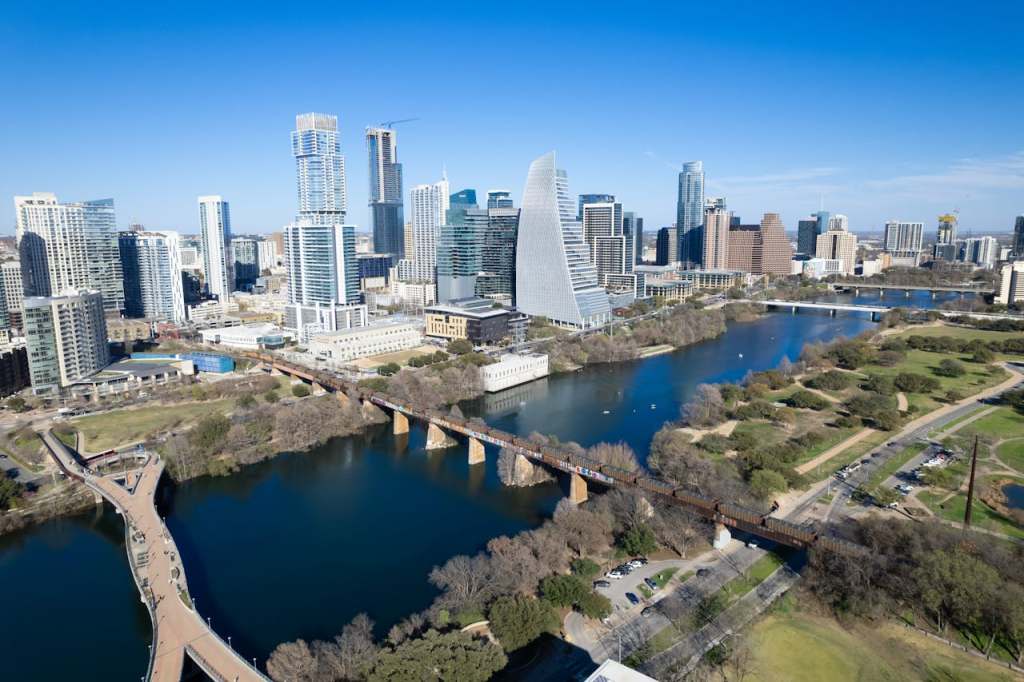
If you are keen to see Texas, there is a lot to love about this particular travel destination. Texas has a way of feeling like several different countries stitched together under one flag. For a first visit, the scale is usually the first surprise: distances between cities are large, neighbourhoods shift character quickly, and even the idea of “downtown” changes depending on where you are. Where you stay ends up shaping the whole experience, so choosing hotels isn’t just logistics. Most first-time visitors end up moving through a triangle of Austin, Houston, and Dallas, with San Antonio or the Gulf Coast added if there’s time. Each city has its own hotel personality, and leaning into that makes the trip feel less like a checklist and more like a set of distinct chapters.
Driving Around
First impressions tend to come through movement. Texas is built for driving. Distances are longer than they look on a map, and what feels like “just down the road” can turn into an hour without much warning. That doesn’t mean you can’t travel it without a car, but it does change the rhythm of things. You end up planning your days around stretches of space rather than clusters of walkable streets, especially outside the major cities. Even within cities, sprawl is part of the character rather than a design flaw.
Food & Music
Houston, for example, is dense in population but spread out in layout. It’s a place where food culture quietly dominates the experience. You’ll find some of the best Vietnamese food in the United States there, along with barbecue that people argue about with near-religious intensity. Dallas leans more polished, with a business-forward energy that shows up in its skyline and shopping districts. Austin, meanwhile, has a looser feel – music venues, lakes, and a sense that things are allowed to stay a little unfinished as long as they’re interesting.
Hotels
Now, hotels. They matter more in Texas than in some other destinations simply because where you stay shapes how you experience the distance between things. A boutique hotel like hotel ZaZa is always a great choice, of course. In cities like Austin or Dallas, choosing the right area can make the difference between feeling connected or feeling like you’re constantly commuting inside your own trip. In Austin, staying near downtown or South Congress gives you walkable access to music venues, food trucks, and nightlife. Hotels there tend to range from boutique stays with personality-heavy design to larger, more standard high-rise options. There’s a noticeable emphasis on character in the boutique end of the market, as if even the hotels are trying to reflect the city’s creative identity.
Travelling Around
Transport between hotels and attractions also shapes the experience. Ride-sharing is widely available in cities, but distances can still make planning important. A centrally located hotel can save more time than a luxury upgrade on the outskirts. In Texas, convenience is often more valuable than novelty when it comes to accommodation.