We were just hours from taking our flight to Costa Rica when we learned the findings of the latest United Nations World Happiness Report. The Latin American nation had jumped from 23rd to 4th in the report’s world league table, surpassed only by a clutch of Nordic countries.
Buoyed by that excellent news, we settled back in the No 1 Lounge at Gatwick Airport, full of eager anticipation for our trip. A gruelling flight awaited us, but away from the busy airport terminal the No 1 Lounge, with its varied food and drink, nice quiet areas and a great view of the planes and the airfield, was the ideal place to relax and contemplate adventures that lay ahead.
Twelve hours later we were relishing a scenic descent into San Jose, as the Costa Rican capital is surrounded by green hills and rugged mountains. Leaving the clean, tidy and efficient international airport at rush hour, it proved a slow journey into the centre of the city. But it gave our guide, Roberto, the opportunity to point out the industrial parks that tell a different success story about Costa Rica – because the country is not just a biodiverse haven, but is also recognised as a global hub for medical devices, with items such as prosthetics and catheters accounting for nearly half of its total goods exports.
Hotel Grano de Oro
Excited but tired, we checked into Hotel Grano de Oro (it means ‘Golden Bean’, a nod to the country’s famous coffee industry), situated in a quiet neighbourhood close to the city centre. The hotel’s grand lobby is enhanced by a series of impressive paintings in the magical realist style by the Costa Rican artist Rodolfo Stanley, lively scenes of daily life that incorporate humour, irreverence, eroticism and sensuality.
On the way to our bedroom we discovered the hotel’s charming lush, mini garden, and the potted palm and other plants and bubbling fountains that are dotted elsewhere around this former early 20th century mansion house. Along the walls of the corridors hang numerous historic black-and-white photographs of San Jose which stir the imagination.
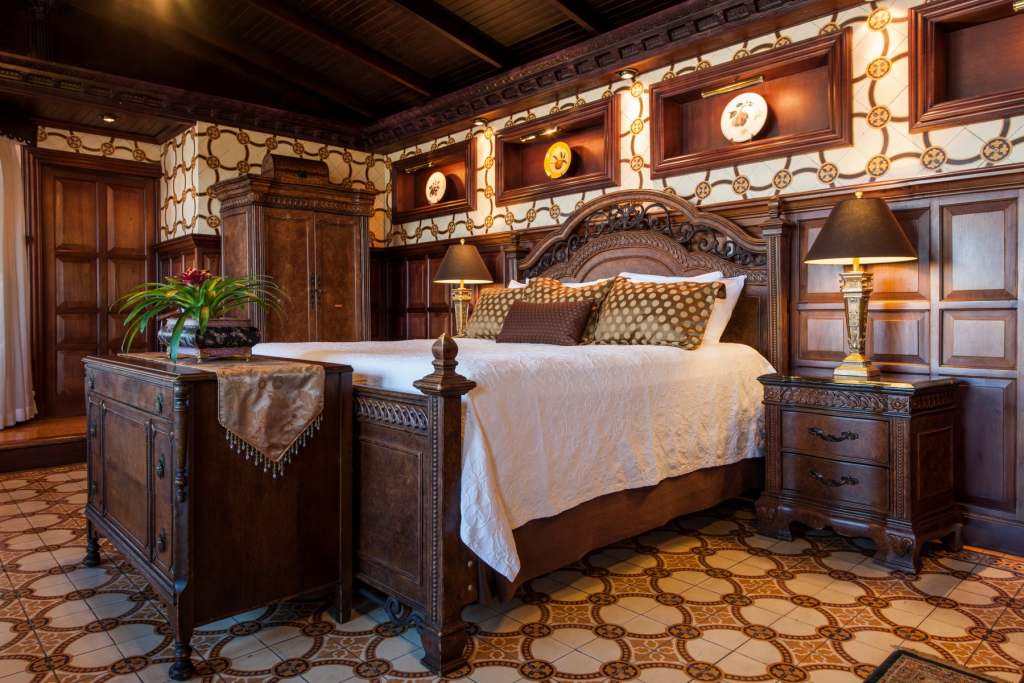
Our comfortable deluxe two-bedded room was furnished and decorated in an attractive Victorian style, with wrought-iron beds and wood-beamed ceiling, but also with all the mod cons. Although jet lagged we were glad we could summon up the energy to make it to the Grano de Oro’s restaurant, which has a stellar reputation in the city, for a late dinner.
That reputation certainly seems justified. In its romantic, courtyard setting we enjoyed a delicious meal of black bean soup followed by sautéed seabass with jumbo prawns, wilted spinach and cardamom essence, and homemade ravioli filled with buffalo mozzarella and ricotta.
San Jose City Tour
Fortified by a good night’s sleep, we set off early the following morning in the company of our guide Roberto and driver James, both residents of San Jose, who would be with us for the next five days until we reached the Caribbean coast. Roberto’s 32 years of experience was of enormous benefit; in addition to guiding us through the main sites of interest, regaling us with valuable history and amusing anecdotes, he was adept at finding us stories off the beaten track. James was an absolute master in steering our vehicle through San Jose’s often chaotic streets.
Founded in 1737 when it was little more than a muddy village, San Jose today seems a vibrant, civilised city, with a surprising number of parks and open spaces. After a quick visit to the splendid Jose Luis Cavallini jewellery store (established 1891) to repair a broken watch, we headed for the Mercado Central, which is as good an introduction as any to the food and culture of the country.
This market seemed so much more orderly than many others we’ve encountered in Asia and Europe. Its narrow passageways are thronged with food stalls, the senses assailed and the appetite awoken by a remarkable abundance of spices, fruits and vegetables. Trays of silvery fish proliferate, and sides of beef dangle from the ceilings.
There seems a widespread belief among Costa Ricans that much of the country’s extensive flora can be harnessed for medicinal purposes, and we stopped to chat to a lady whose stall featured a host of plants and spices with accompanying literature telling you which ailment they could potentially cure.
We admired the soda shops, basic, popular family-run cafés serving the staple rice and beans based dishes. A simple tortilla with cheese costs a mere 1,500 colons in the local currency, or £2.40. We also stopped at the famous artisan ice cream store, La Sorbetera de Lolo Mora, which has been in existence since 1910. Locals flock here to sample its vanilla and cinnamon ice cream, so of course we had to try it, and very good it was too.
San Jose Statues
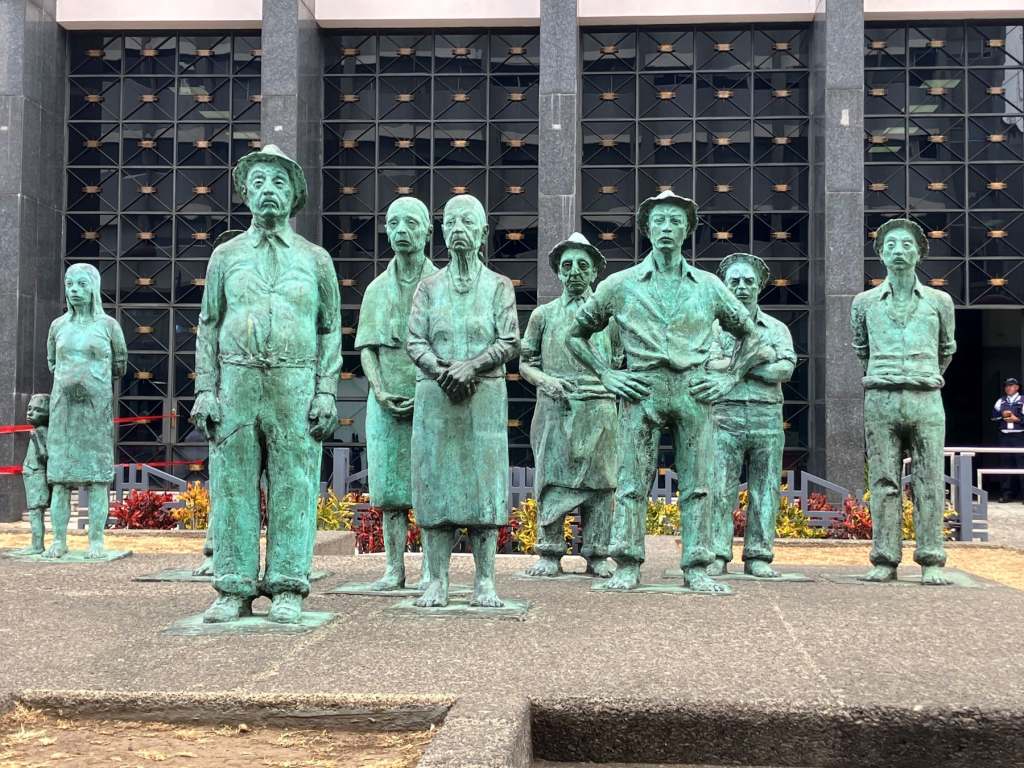
As you wander around San Jose you realise this is a city of statues, but not the kind you would necessarily find in most capital cities. There are statues of the great and good, for example Jose Figures Ferrer, victor of the ‘Revolution’ of 1948, outside the Museo Nacional, but there are also numerous ones of ordinary people, the backbone of a nation which prides itself on social justice.
For example, there’s a striking bronze statue on Avenida Central, named ‘La Chola’, of a large, bare breasted woman in full stride. Apparently she represents the hardworking women of the Guanacaste region, renowned for their strength and tireless labour. Then there’s ‘Los Presentes’, a dramatic group of nine, green-tinted life size sculptures situated outside the Central Bank, who embody the Costa Rican peasant. These are refreshing sights.
Still on statues, there are two outside the Catedral Metropolitana, on the eastern side of the Parque Central. One, understandably, is a 25-ton, four metre tall marble representation of Pope John Paul II, whose 1983 visit so thrilled this overwhelmingly Catholic nation. Intriguingly, on the south side, on the pedestrian mall, is a poignant statue of Anne Frank donated by the Dutch embassy in 2008 (and briefly stolen in 2020), the fifteen-year-old depicted with hands bound as she is about to be led away by the Gestapo to a concentration camp.
Catedral Metropolitana and Teatro Nacional
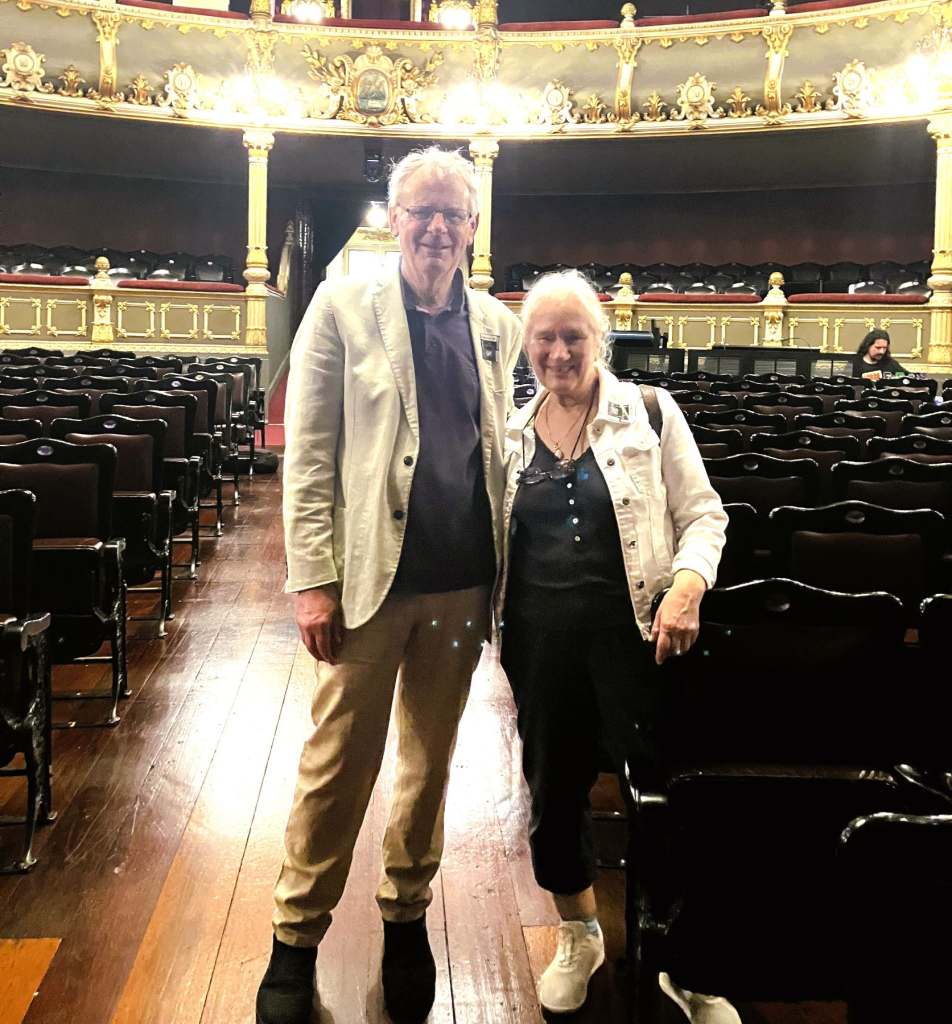
The Catedral Metropolitana, dating from the 1870s, is a fine neo-classical building with fabulous frescoes and stained-glass windows; a haven of peace from the hustle and bustle of the city. From there it was but a 300-yard walk to San Jose’s most opulent building, the Teatro Nacional, all gold, marble, gilt and red plush carpet inside, and arguably on a level with La Scala in Milan and the Palais Garnier in Paris, on which it was reputedly modelled.
The story goes that in 1890 the world-famous Italian prima donna Adelina Patti was on a tour of the Americas, but refused to come to Costa Rica as there was no suitable theatre in which she felt able to perform. Chastened, the Costa Rican government vowed to build a national theatre, and to raise funds for the project it took the drastic step of levying a tax on every bag of coffee exported.
The funds rolled in, the very best French and Belgian architects and craftsmen were employed, and in 1897 the theatre duly opened, an opulent masterpiece with detailed frescoes and marble statues. On our private tour we craned our necks and marvelled at the mural on the ceiling, ‘Alegoria del Café y al Banano’, a harvest scene that acknowledges the role coffee played in the existence of the building. Outside, the hawkers sell you a reproduction of the five-colon note which once featured this scene.
Museo Nacional
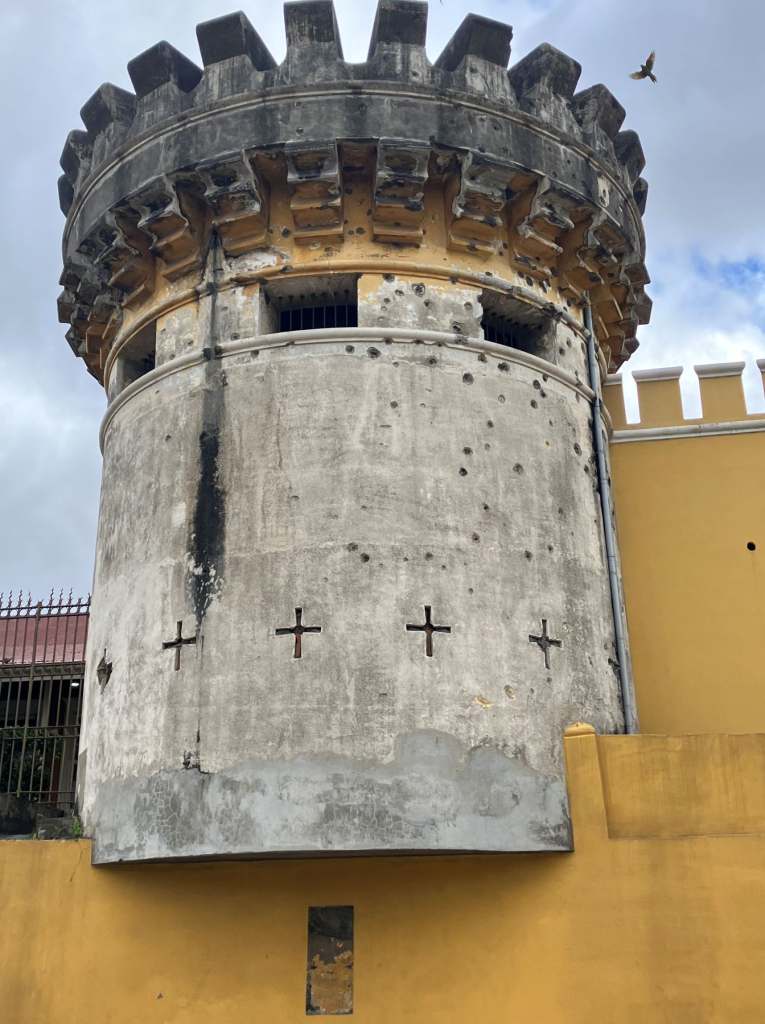
For lunch we enjoyed the most enormous tortilla at a quiet restaurant removed from the city centre. On the way Roberto had asked us to marvel at the President’s office, which although gated had the minimum of protection, with just one police officer on duty. This is a peaceable nation which possesses no army.
It did once have an army, but only 300 men. The soldiers were stationed in Bellavista Barracks, which has now become the mango-coloured Museo Nacional. It was here after a disputed election in 1948 that a revolution of sorts played out, with the rebel forces of Jose Figueres Ferrer (quite probably aided by the CIA) attacking and defeating the militia of President Picado. The bullet holes from the fire by Ferrer’s men can still be seen clearly on the thick walls of the building.
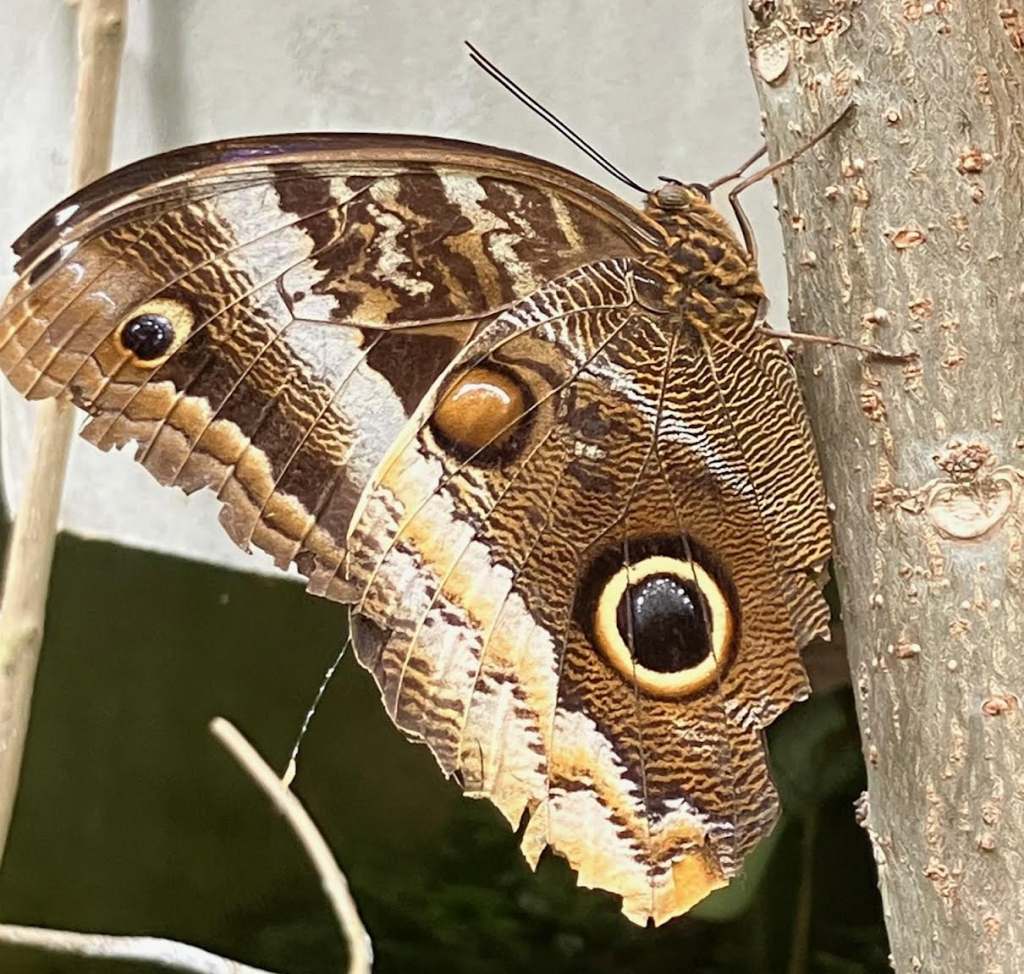
This museum provides a comprehensive and satisfying run through Costa Rica’s history, with the best exhibits the superbly carved rock sculptures from pre-Colombian times, some combining animal and human characteristics. The other joy of this museum is to be found outside in the Jardin de Mariposas, where there is a lovely butterfly garden featuring the brilliant giant Blue Morphos.
It should also be pointed out that opposite the Museo Nacional is possibly one of the ugliest and sinister looking buildings we have ever seen, the Brutalist-style new legislative assembly (Congress), built in 2021. This massive multi-storey concrete block, with very few (and very narrow) windows, may be spacious and luxurious inside. But from the outside it looks like something out of Orwell’s 1984!
On the way back to our hotel Roberto guided us to our final museum of the day, one dedicated to Dr Rafael Calderon, and set in the elegant, white mansion that used to be his home. Calderon, President from 1940-44, was the architect of modern Costa Rica, ushering in social security and universal healthcare, the national university and rights for workers. Somewhat off the beaten track, this is a great little museum with space to look and absorb, taking you through the life and times of one of the giants of this country.
It had been a fascinating day, full of social and cultural interest.
