An old Spanish proverb goes, “Quien no ha visto Sevilla, no ha visto maravilla” (He who has not seen Seville, has not seen a wonder), so I’ve come to the legendary capital of Andalusia in southern Spain to find out for myself if there’s any truth to this. It doesn’t take me long to fall under the spell of the city and its special kind of magic in early spring.
In Seville, spring doesn’t just arrive, it takes over. The sweet, intoxicating scent of orange trees in bloom. Savoury bites of fresh tapas and sips of ice cold sherry. Flamenco beats late into the night. Stunning art and architecture wherever the eye takes you, whether that’s to an extravagant Moorish palace, a magnificent garden or a tiny medieval church covered in ornate tile. A feast for the senses, a kaleidoscope of colour and light— this could only be springtime in Seville.
Wake up and Smell the Flowers
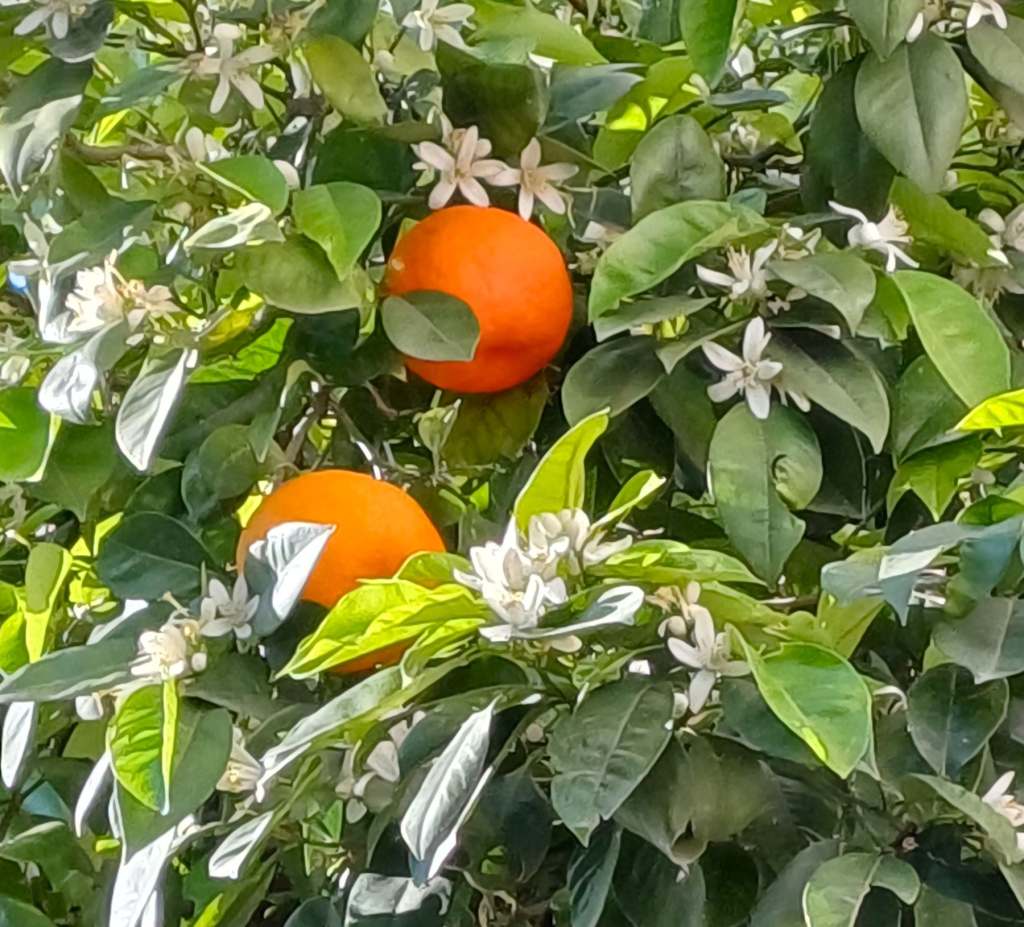
There are many reasons to make your visit to Seville an early spring one, not least that while chillier climes are still defrosting, Seville gives you warm, bright, sunny days. But the biggest bonus of visiting this time of year is the unique chance to wake up and, literally, smell the flowers.
On my first morning here, I open the door of my charming neighbourhood Airbnb, step into the sunshine and am instantly surrounded by a rich and powerful scent. It’s the seductive aroma of azahar— the white blossoms of bitter orange trees (Citrus aurantium) which line city streets, parks and patios, filling Seville with its signature scent. From March through April, some 40,000 orange trees burst into bloom and the fragrance of their flowers hangs thick and delicious over the city. Spring also brings generous wafts of wisteria, fat white roses and purple-flowered jacarandas.
Sevillians are proud to tell you they have more orange trees than anywhere in the world. But be warned– those plump, juicy, low hanging fruits may look tempting but they are shockingly bitter. I was surprised to learn that orange trees are not native to Seville although they do have deep roots here, brought over from Asia in the 10th century by the ruling Moors as well as by Genoese ships a few centuries later. Some say their crews spread the idea that orange trees cause happiness, so Sevillians began to plant them in their courtyards and streets.
It wasn’t long before Scottish sailors, en route to Africa, discovered that oranges from Seville were a lifesaver in their fight against deadly scurvy, killer of so many during long sea voyages. Then, British kings and queens discovered those same oranges were perfect for making a certain bittersweet marmalade. It’s been a royal love story ever since. Even the late Queen Elizabeth II was a loyal Seville Marmalade fan, reportedly spreading it on her breakfast toast daily to the end of her life.
Sights to Delight
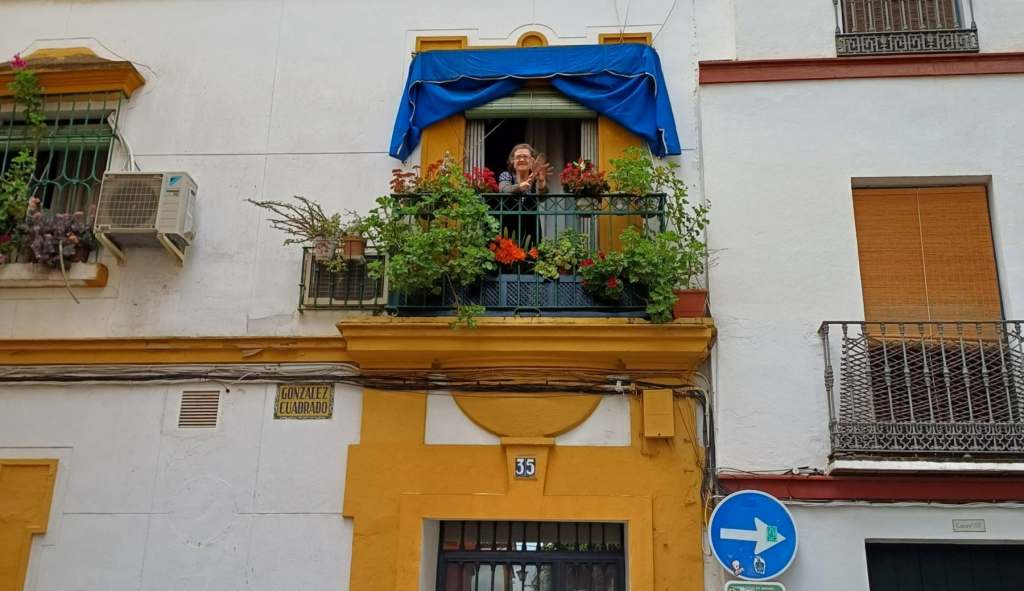
Seville isn’t a huge city but it’s one packed with fascinating, gorgeous, showstopping and historic sights. It’s also flat, safe and eminently walkable, so the best way to see Seville is simply to wander and let yourself get lost in the criss-cross of its lively neighbourhoods. There’s Santa Cruz with its maze-like alleys and secret gardens, Barrio de Feria with its weekly street market, vintage clothing shops and small family eateries, Triana with its riverside views and ceramics, and many more. Take time out in the exquisite Murillo Gardens or the vast Plaza de España, home to frescos and mosaics illustrating the history of Spain, huge fountains and a 515-meter-long Venice-style canal you can explore by boat. Stop by the Cathedral to see the burial place of Christopher Columbus— or at least part of him. As the day ends, catch the sunset and a multicoloured light show atop the futuristic Setas de Sevilla, an eyepopping wooden structure resembling giant mushrooms and a nice contrast with the surrounding old city.
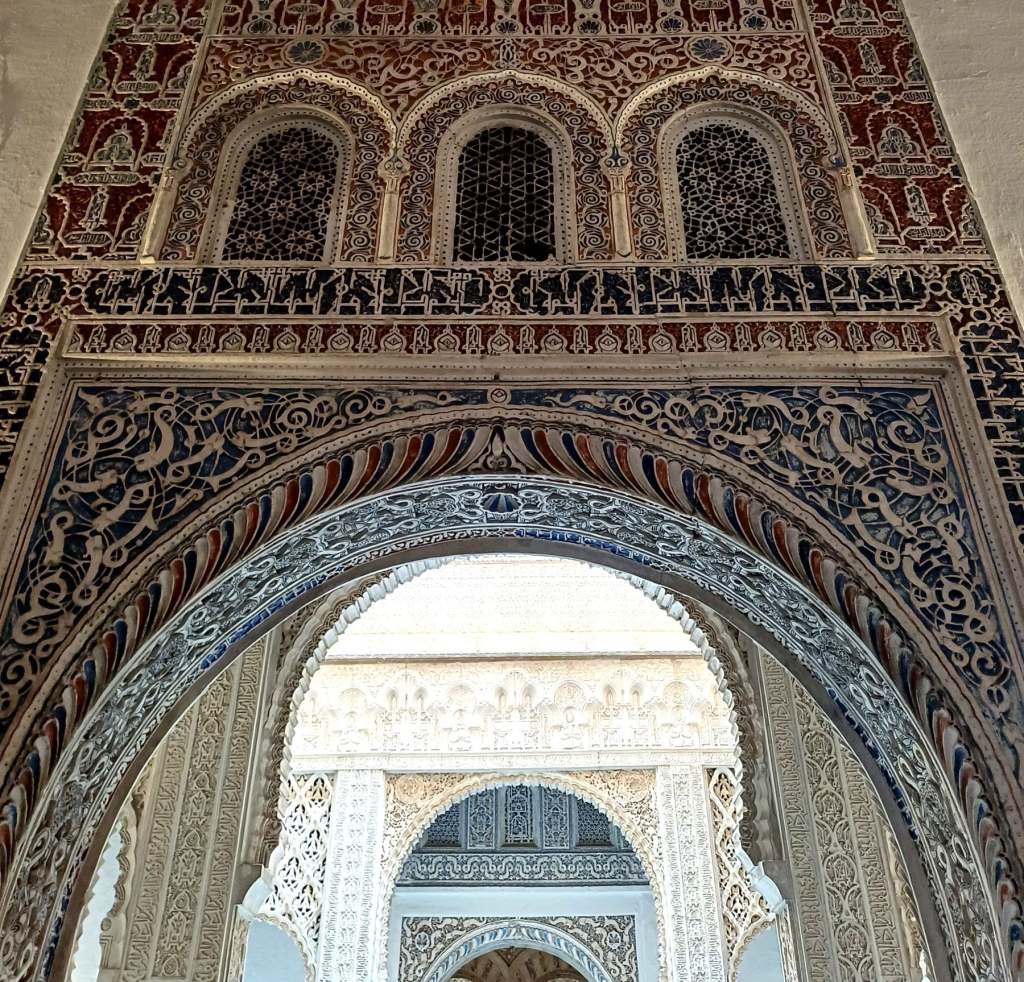
But if you’ve only time to visit one of Seville’s ‘crown jewels,’ make that Real Alcázar de Sevilla— the Royal Alcázar.
The Alcázar is a spectacular 1,000 year old palace, UNESCO World Heritage Site and home to the Spanish Royal Family when in Seville. Its overlap of Roman, Islamic, Gothic and Renaissance architecture, flush with gold, intricate tilework, gardens, reflecting pools and wandering peacocks, is simply breathtaking. It’s also the moste visited spot in Andalusia, so even off-peak I strongly recommend going with a skip-the-line guided tour, like the excellent and reasonably priced one I was invited on by SUE, (short for Seville Unique Experiences). SUE offers a range of small group cultural tours, guided with deep knowledge, personality and flair.
The Alcázar is also a popular film and TV location, most famously the setting for Game of Thrones. There are even dedicated Game of Thrones Tours if you are so-minded.
Feel Seville on Two Wheels
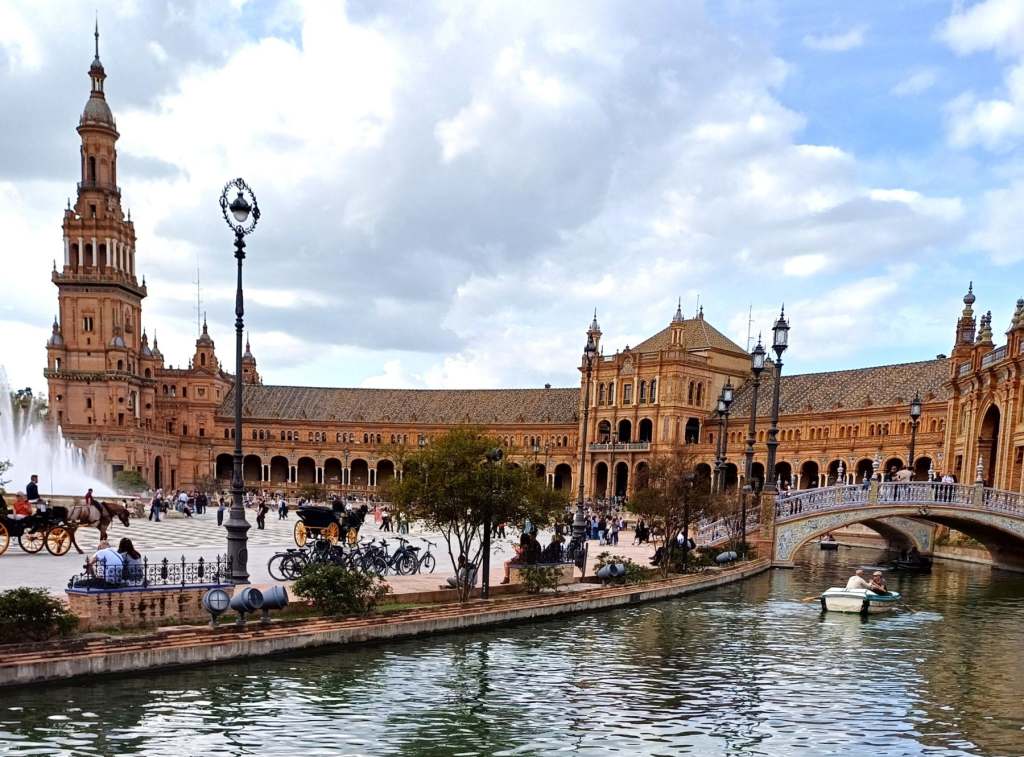
With its labyrinth of narrow passageways and ancient neighbourhoods where cars and buses fear to tread, getting to know Seville on two wheels is a sure winner. Not only is the city outstandingly cycle-friendly, on warm days a little pedalling rewards you with instant personal breeze.
In fact, Seville has become a model city for cyclists thanks to its massive investment in cycle infrastructure. Over the past 15+ years, it’s transformed from a place of near zero bums-on-bikes to cycling heaven, with more than 200 km of protected cycle lanes and hundreds of public bikes.
That’s inspired me to sign up for the daily city bike tour with ATD (short for Andalucia Tours and Discovery). This turns out to be a highlight of my visit, a perfect way to discover the charms and secrets of this city, work off several hundred tapas calories, meet new people and have a whole lot of fun.
At ATD’s storefront I’m greeted by the ebullient Teun, a trim, bike-fit Dutchman and self-described ‘cyclopath’. He runs ATD with co-partner Carlos and a super-friendly team. I ask Teun what brought him to Seville and why he’s stayed. This, he replies, was the most beautiful place he’d ever been as well as home to his equally beautiful Spanish fiancée. “Now, I get to spend every day just doing what I love with the city and the company I love.” I see by the eager queues snaking out the door that the project is thriving. More than 80% of customers are Dutch, including everyone on our tour— 12 members of an extended family from North Holland who are cycling Seville to celebrate their matriarch’s 60th birthday.
Our hours together go remarkably quickly, including stops for storytelling, refreshment breaks and a swing-by buffet of the city’s best: the Cathedral, Porte des Indies and the Royal Alcázar, a whizz round Murillo gardens, Plaza de España and the Old Tobacco Factory, inspiration for Bizet’s opera Carmen.
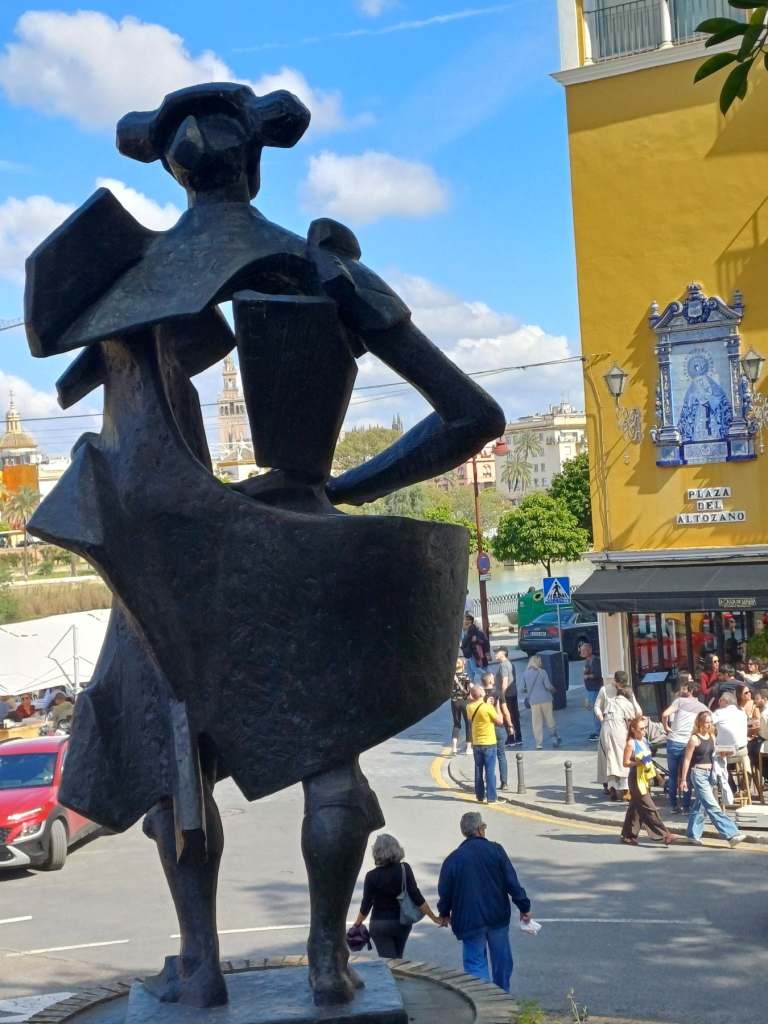
There’s a detour to one of the most famous bullrings in the world and the oldest in Spain, Plaza de Toros. Dating from the 18th century, it holds 13,000 people. As well as its regular season of bullfights, wildly popular and always oversubscribed, Plaza de Toros hosts Seville’s annual bullfighting festival. But you don’t need to see a fight to join one of its daily tours of this amazing space. Whatever your views of the controversial sport, bullfighting has clearly been an integral part of Seville’s culture for centuries.
As well as city tours, ATD offers other guided rides, including e-bike excursions to the Roman ruins of Itálica, visiting villages along the way. It also rents bikes by the hour/day/week.
Flavours of Seville
Seville is a must for food lovers. “He whom the gods favour will eat in Seville,” is a favourite Spanish saying, highlighting the city’s long-held reputation as a gastronomic paradise. It would be easy to spend an entire visit tasting your way from market to market, bar to bodega; from churrería, turronería and freiduría to convents selling sweet treats baked by cloistered nuns.
Whether you’re a dedicated foodie or just like to eat, the best way to get straight to Seville’s eating heart is to join a walking food tour. I’d heard good things about Spain Food Sherpas, with its motto ‘eat like you live here’ and tempting off-the-beaten-track taste tours, so I booked a place on its Tapas, History & Traditions walk.
The much-loved tradition of tapas— small snacks served with drinks— originated in Seville. There are many legends as to the ‘why’. I like the one that goes back to the age-old bar custom of serving drinks covered with a tiny plate— just the right size to hold a small snack and protect the drink from dirt and flies. Today there are hundreds of tapas bars in Seville, perhaps 4,000 or more.
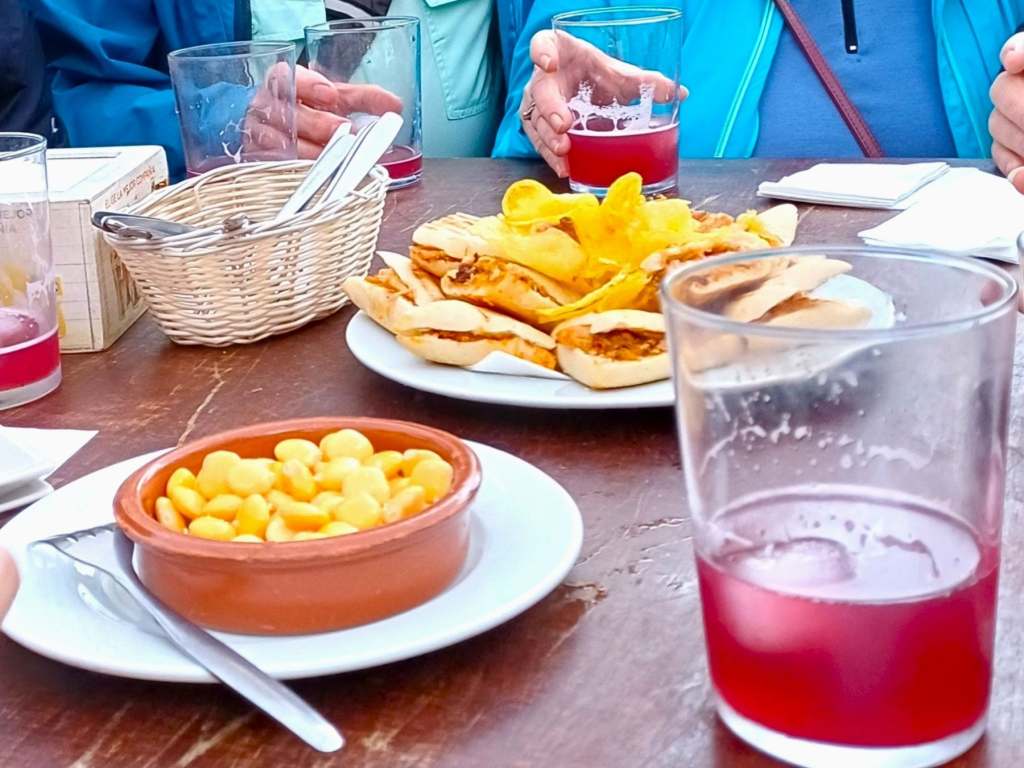
Sherpas’ guides are all food-passionate locals, like ours, native Sevillana, Pilar. Her tour begins on the sun-drenched terrace of Los Soportales with goblets of sparkling lemon soda infused with red wine, platters of chicharrones, mojama, altramuces, and two basic lessons. First, tapas can be anything as long as it’s small— ideally washed down with wine. Second, only tourists ask for sangria; locals drink what we’re having— Tinto de Verano. One refreshing sip and we understand why.
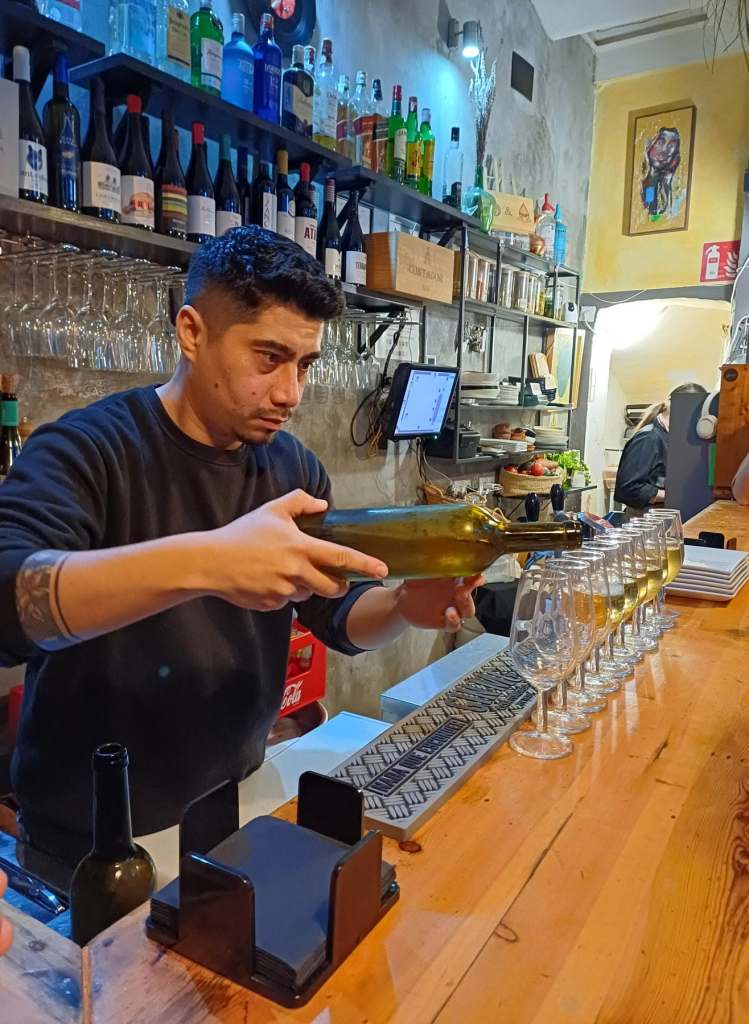
That’s followed by 3½ delicious hours wandering hidden alleyways, charming back streets and cool neighbourhoods, with plenty of tastings along the way. We sample spinacas con garbanzos (spinach and chickpeas) at Peña Bética La Decana, a lively, green-themed space devoted to Seville’s adored football team, Real Betis. We squeeze into a tiny sherry and tapas bar, Ajo and Agua. Translating as ‘garlic and water,’ its name sounds harmless but it is in fact a cover for a well-known Spanish vulgarism. Meanwhile, the sherry served here is definitely no cover. In contrast to the dark, sweet version more familiar to us visitors, real Andalusian sherry is strong, pale, bone-dry, 15% alcohol, aged under a layer of yeast and served ice cold. It’s not for everyone, but by the second glass, served alongside the Andalusian classic montadito de pringá, it’s happily grown on us.
Feeling lightheaded and with a bounce in our step we progress to Entrecalles, in the historic cobbled lanes of Santa Cruz, to feast on carrillada de cerdo, a melt-in-the-mouth, meaty pork-cheek stew served over potatoes, and a sweet finish of pestiños and vino de naranja.
Sounds of the City
For all its energy, vibrancy and morn-to-night bustle, I did not find Seville a noisy city. It does however play host to some unique sounds— the bells of Giralda Tower marking time; the rhythmic hand-clapping and soulful strains of Flamenco; the clip-clop of horsedrawn carriages on cobbles; the chatter, laughter and clinking glass of neighbourhood nightspots.
As well as the day-to-day, a culture of sound runs deep here. There are top music events like Bienal de Flamenco, the world’s largest Flamenco festival, Summer Nights in the Gardens of the Royal Alcázar, and Candlelight, a popular music series featuring stages lit by thousands of candles. There’s also a thriving jazz scene and a deeply rooted early music culture.
FeMÀS, Seville’s prestigious Early Music Festival, takes place annually in venues across the city. It was in high gear at the time of my visit so I had the good luck to enjoy not one but two incredible concerts, one given by the world-renowned Concentus Musicus Wien and the other by top harpsichordist Mohan Esfahani, both in the intimate surroundings of Espacia Turina.
My five days in Seville turns out to be not nearly enough. I’m already plotting a return next year, same time, if only for the chance to smell those astonishing orange blossoms once again.
Getting to Seville:
There are daily direct flights to Seville from the UK and major European cities.
When to Go to Seville:
To get the most from your visit to Seville, come in spring and or autumn. As well as the everyday wonders that make this city so special, spring is the season for two major festivals– Semana Santa (Holy Week) and Feria de Abril (April Fair). It’s also wise to avoid visiting July-August when over-tourism and heat can be intense.
For more information on Seville click here.
All images by Judith Schrut unless marked otherwise.
