Mark Bibby Jackson goes glamping in Northumberland, where he takes in the region’s stellar attractions Lindisfarne, the Farne Islands and Bamburgh Castle
Northumberland is one of my favourite parts of England. I love the rugged nature of its coastline, and have been fortunate to have visited here on numerous occasions. I took my American friends to Holy Island last year and they were amazed by its beauty and otherworldliness. So, as I drove across the familiar causeway separating the island from the mainland when the tide allows, I felt there was little new for me to explore here. How wrong I was.
Lindisfarne Castle
Initially I planned to start at the 7th Century Abbey founded by Saint Aiden, but I had timed my trip more for the tides than museum opening hours, so discovered I was half-an-hour early.
In the distance Lindisfarne Castle stood at the end of the promontory. As much to kill time as inquisitiveness I decided to walk there, arriving shortly before it opened.
A quiet word with the helpful staff, who had been forewarned of my arrival, and I was allowed to enter shortly before members of the public. It was my first time inside.
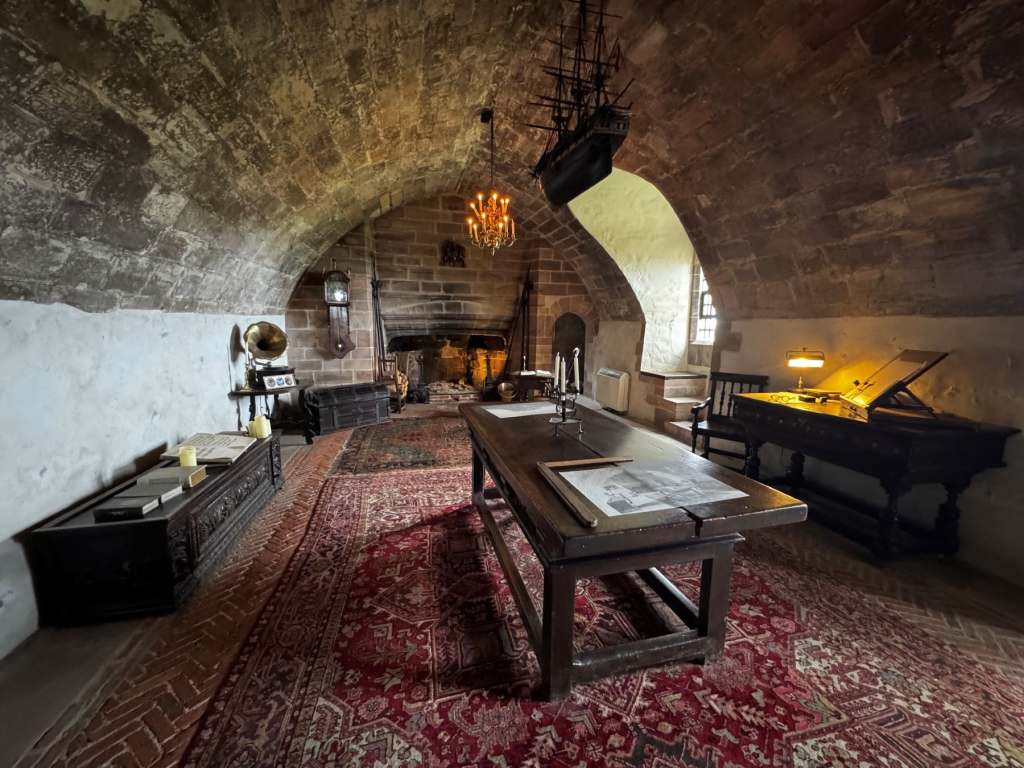
Simply put, Lindisfarne Castle is a garrison built to keep out the Scots which was given a makeover at the start of the last century. But what a makeover!
The story goes that Edward Hudson, who founded Country Life magazine, scaled the castle walls while travelling to Holy Island at the beginning of the last century. He was so taken with the ruined castle that not only did he decide to buy it but to employ a young Edwin Lutyens, who was to become one of England’s leading architects in the last century, to redesign the interior.
The result is as close to perfection as any reader of Country Life could imagine. The rooms are impeccably designed, with beautiful attention to detail from the kitchen to the bedrooms. I particularly like the weather chart.
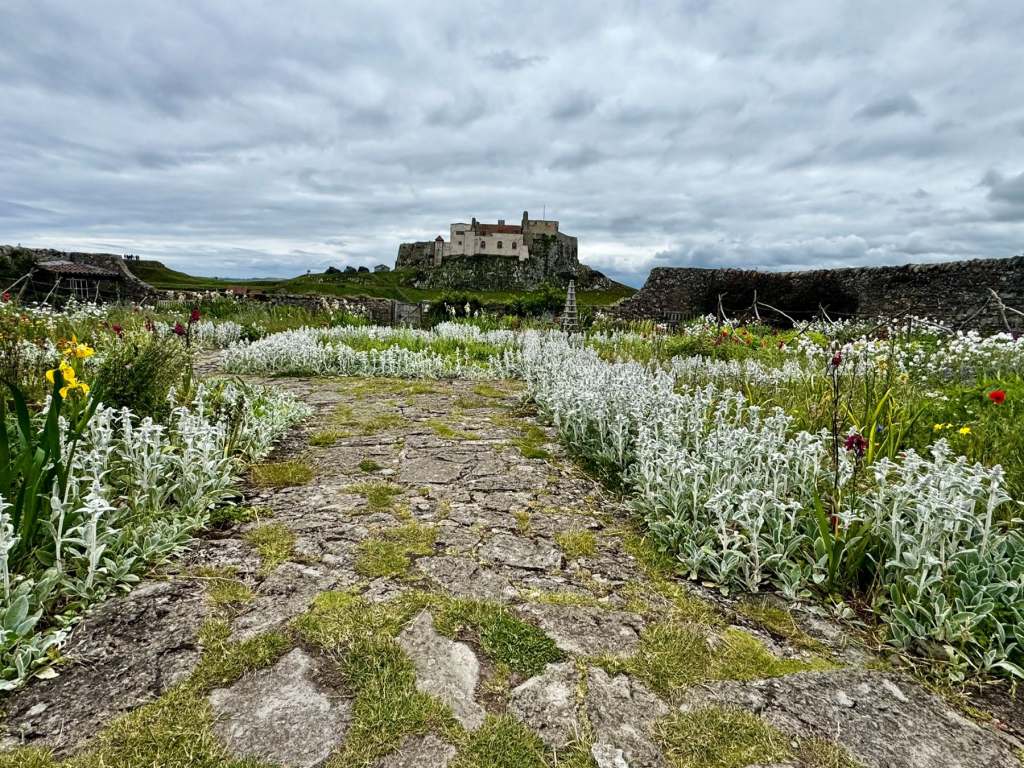
From its ramparts you can see exactly why the Tudors decided to build a fortress here, as it dominates the coastline. The incredibly helpful Ged had set up a binocular from which you can see across the harbour to the mainland where a colony of seals have settled.
Apparently. the cost of renovating the castle exceeded Hudson’s budget and he sold the property. It was taken over by the National Trust in 1944.
However, before he sold the property Hudson appointed Gertrude Jekyll in 1911 to convert the old walled vegetable plot into a beautiful garden which is still preserved. If you do not wish to pay to enter Lindisfarne Castle then you can wander freely here as well as admire the beautiful wildflowers.
Lindisfarne Abbey and Museum
A short walk takes you back into the heart of the village.
An hour later than expected I eventually entered Lindisfarne Abbey, although in reality there is not much to see here that you cannot view from outside.
The Abbey was founded in the 7th century by Saint Aiden, and became a popular place for pilgrimage in the middle ages, especially due to the Lindisfarne Gospels. The adjoining museum provides an interesting history of the place, although do not expect to see the gospels themselves, as they are safely stored in the British Library. There is a copy of them in the church next to the abbey, but I was not able to glimpse it as a service was underway during my visit.
Initially modelled on Durham Cathedral, the abbey was dissolved along with so many others by Henry VIII in 1537, just five years before the castle was built.
Farne Island
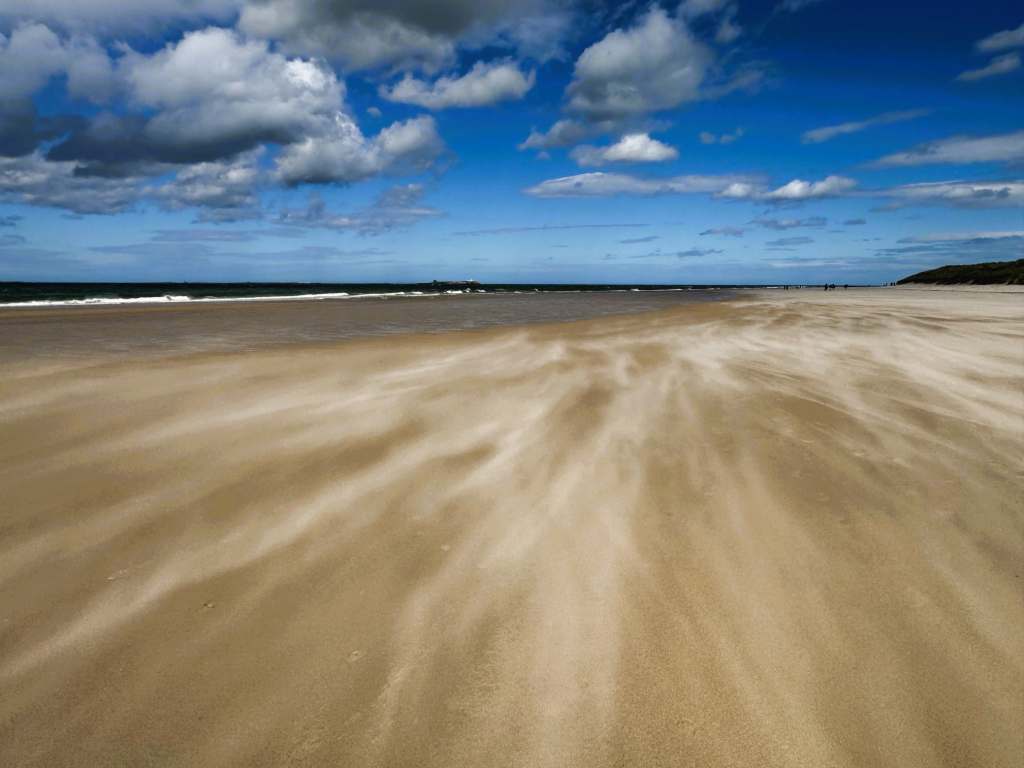
I had just enough time to stroll to the beach and have a crab sandwich before the turning tides would prevent me crossing back to the mainland. Details of high and low tides are well-signposted on both sides of the causeway.
The town of Seahouses is only a half-hour or so drive from Holy Island. In truth there is little attraction in the town itself, but its harbour has regular boat trips to the Farne Islands.
The previous day as I arrived at my shepherd’s hut at Lucker Mill House, I wondered whether the boats would be sailing. The wind was blowing a gale that made even walking along Bamburgh Beach a struggle.
So, as I arrived at the small harbour in Seahouses I was glad to see the boats were sailing.
There are several ways you can visit the Farne Islands. You can either go on a seal watching trip, or go on a tour of the main inner Farne Island and learn about Grace Darling and how she saved the lives of eight sailors and one passenger in 1838 while she lived at the lighthouse with her father. Or like me you can go on an hour-and-a-half boat ride to the islands with Billy Shiel’s.
As this was not my first rodeo, or even boat trip, I avoided sitting at the front of the boat, secreting myself near the rear for most protection from the wind.
The main reason for taking the boat trip, apart from getting a wind-tan is to see the amazing birdlife on them, in particular the puffins.
A few years ago, there were fears the whole of the puffin population might be wiped out by bird flu. Fortunately, these have proved unfounded. According to Ged at Lindisfarne Castle, last year there were 80,000 puffins on the islands.
As our boat bounces its way out to the islands, I stand binoculars in hand to catch the amazing birds as they fly like missiles just above the water. Most of my fellow passengers just stay sitting and carry on their conversation. My enthusiasm for these magnificent birds is only matched by a young girl to whom I offer my binoculars.
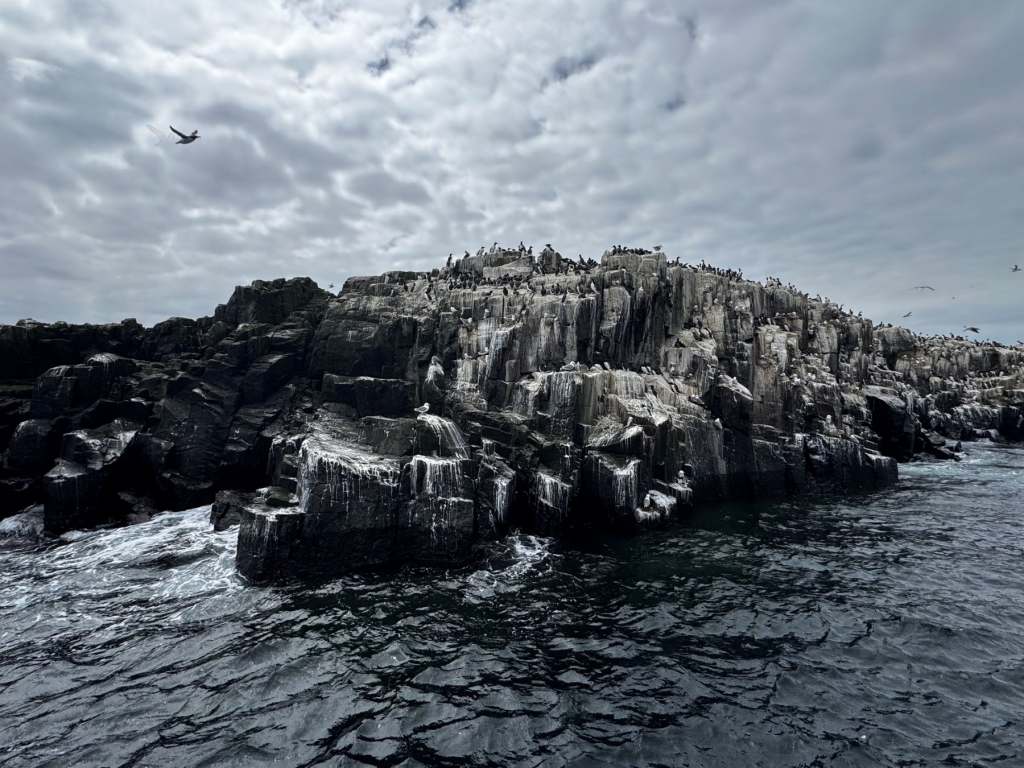
Before long we reach the innermost of the islands, and the cause for my fellow passengers’ earlier nonchalance becomes all too-apparent. The rocks are teaming with an amazing abundance of birdlife.
Not only are there puffins, but guillemots, razorbills and kittyhawks. At first, it is the almost deafening noise that strikes me, then it is the strong smell of the guano.
According to our guide, the birds arrive on the islands for their breeding season in March staying to August, and then fly off in the winter. Apparently, the puffins only have their colourful, parrot-like beaks in the mating season. I don’t think I have seen (or smelt) so many birds up so close beforehand.
The ride continues to the outer islands where there is a colony of seals. As it was high tide, we did not see many of the seals, but apparently the best time to visit is during the winter. Recently orcas have been spotted in these waters from May to June, although they were elsewhere during my visit.
There is only one island you can land on. This is also where Saint Cuthbert, who practiced at Lindisfarne Abbey, lived and died.
Glamping in Northumberland with Laura
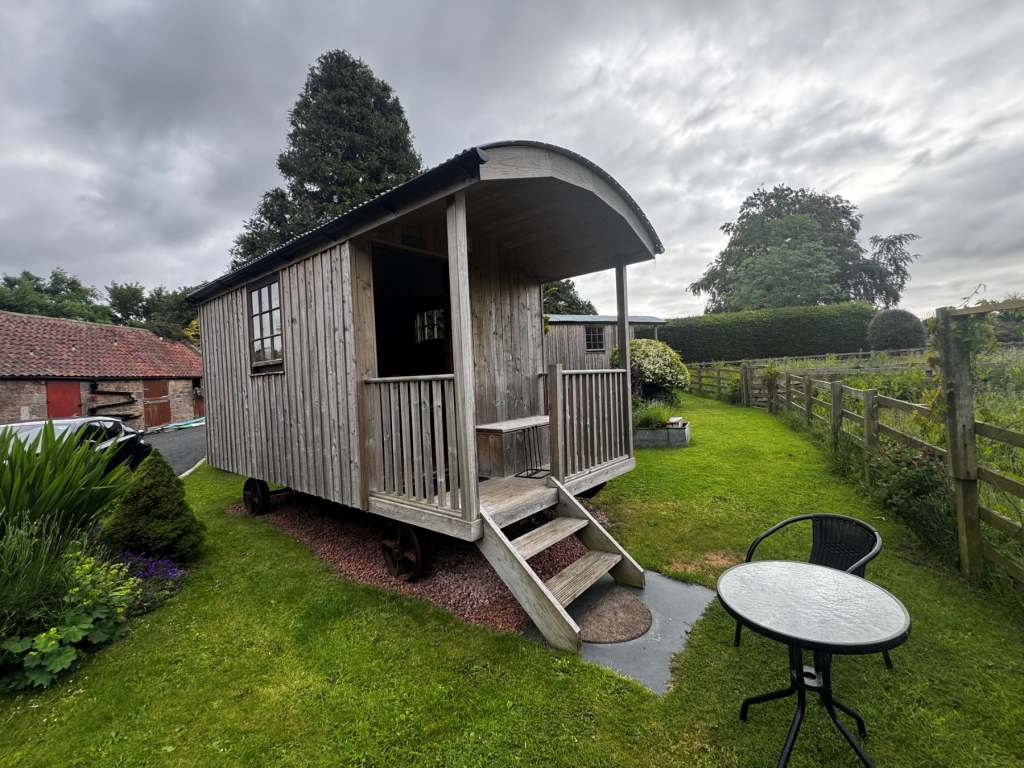
Although I have visited this part of coastal Northumberland on several occasions, I have never previously glamped here.
Laura has a couple of shepherd’s huts she lets out at the bottom of the old mill in the village of Lucker close to Bamburgh.
The huts themselves are off-grid, making a great place to get away from it all. However, there is a kitchen-cum-bathroom nearby where you can freshen up and charge your mobile.
In the morning Laura appears with a basket laden with goodies including strong coffee, excellent croissant and fresh juice.
On my final afternoon, I chat with her as she is pruning her garden. She bemoans how others are copying her model and how outsiders are moving into the area, driving locals to the village of Amble. I feel good that I am staying with someone local to the area and helping to boost the local economy, especially at The Apple Inn just down the road, which serves excellent food as well as a decent pint. The sacrifices we make.
Bamburgh Castle
On my first afternoon I had walked along Bamburgh Beach, or rather had been blown along the beach by the strong winds.
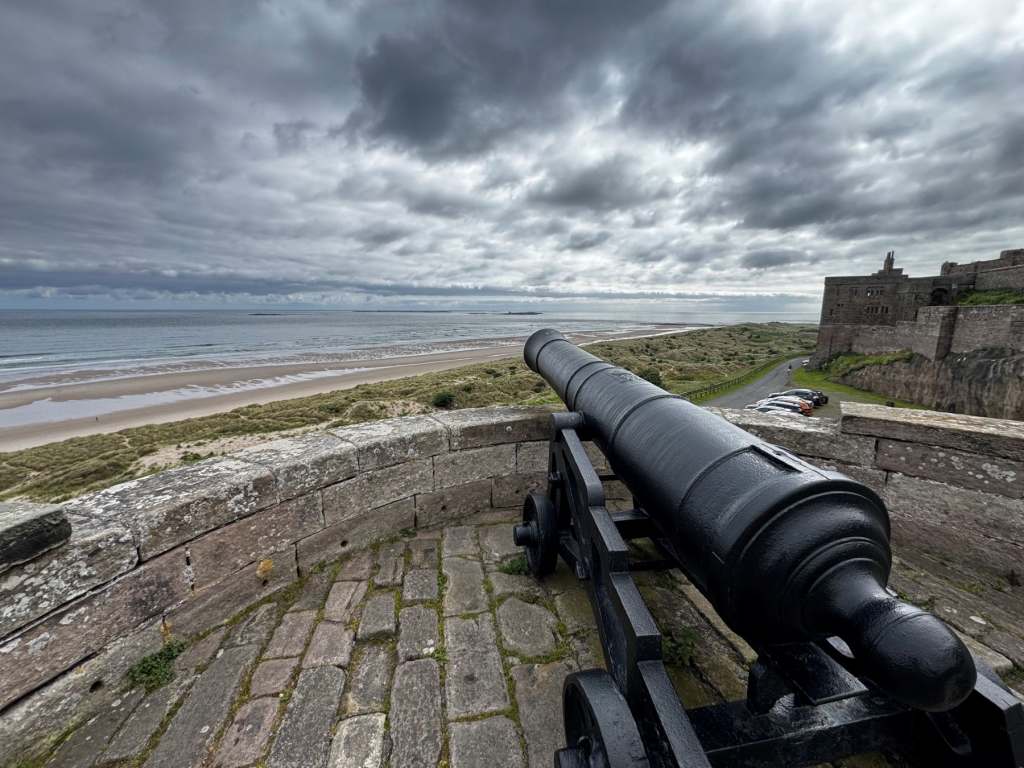
On my final morning, I return here for the final stop on my journey to visit Bamburgh Castle.
This is one of the most spectacular castles in Northumberland if not in the country. It stands quite majestically overlooking the long beach as it has since the 12th Century.
Vikings used to raid these shores. Apparently in 1464 it became the first castle to fall to cannon fire, when it was heavily damaged. Since 1894 it has been owned by the Armstrong family. Indeed, some of the rooms are occupied, and you can even stay here.
As with Lindisfarne Castle I ensured I was the first to arrive, and thus entered the Great Kitchen, which is one of the oldest parts of the castle alone.
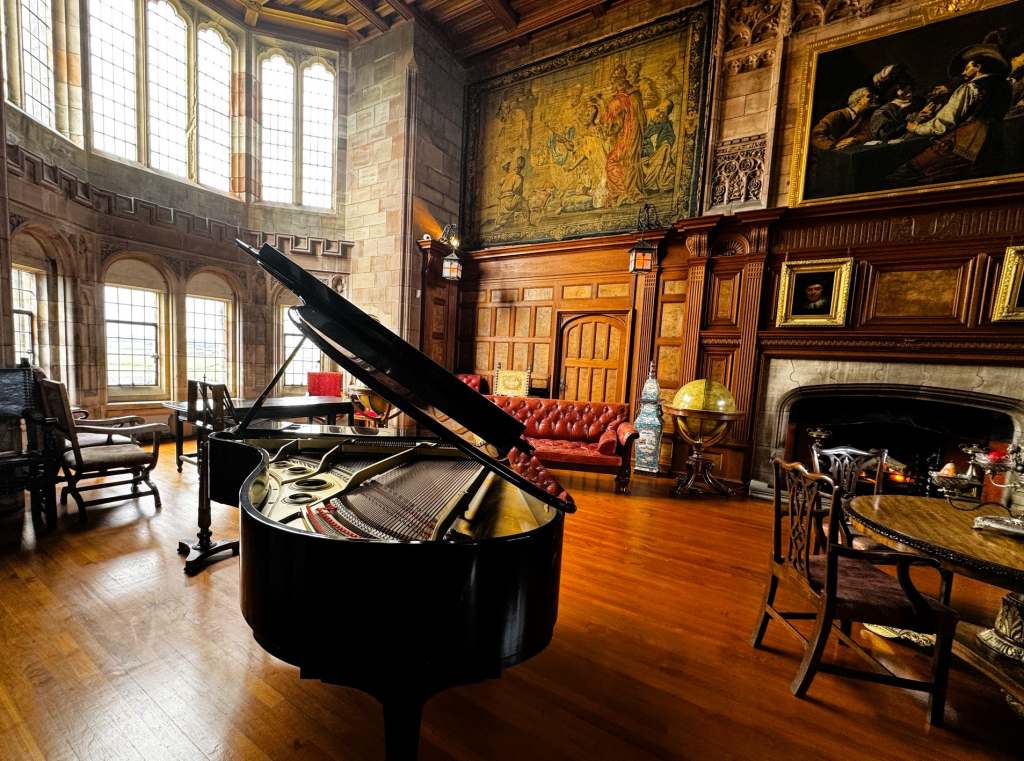
The most beautiful room in Bamburgh Castle is unquestionably The Great Hall. The guide in the room explains it is about a tenth medieval, as the castle was heavily damaged in the 1464 siege, and the rest Victorian. Some of the paintings here, such as the first Lord Armstrong, and Dr John Sharp who left his fortune for the castle to be restored, have a connection to the castle, others are just placed to “fill the space”. It works.
What is really striking is how light the rooms are. Apparently, this is due to the heavy use of Burmese teak in the restoration, which creates a wonderful warmth.
However impressive the interior this is nothing compared to the castle’s exterior. From the ramparts you get spectacular views down to and along the enormous stretch of sands.
As I walk along the ramparts, I say ‘hi’ to one of the tourists visiting here. “It’s paradise,” he says. “Yes, it is,” I reply. “When there’s no wind.”
Things to Do in Northumberland
Mark was hosted by Visit Northumberland. You can discover more about what to do in this glorious part of the UK, here.
Glamping in Northumberland
To go glamping in Northumberland at Lucker Mill House, click here.
