


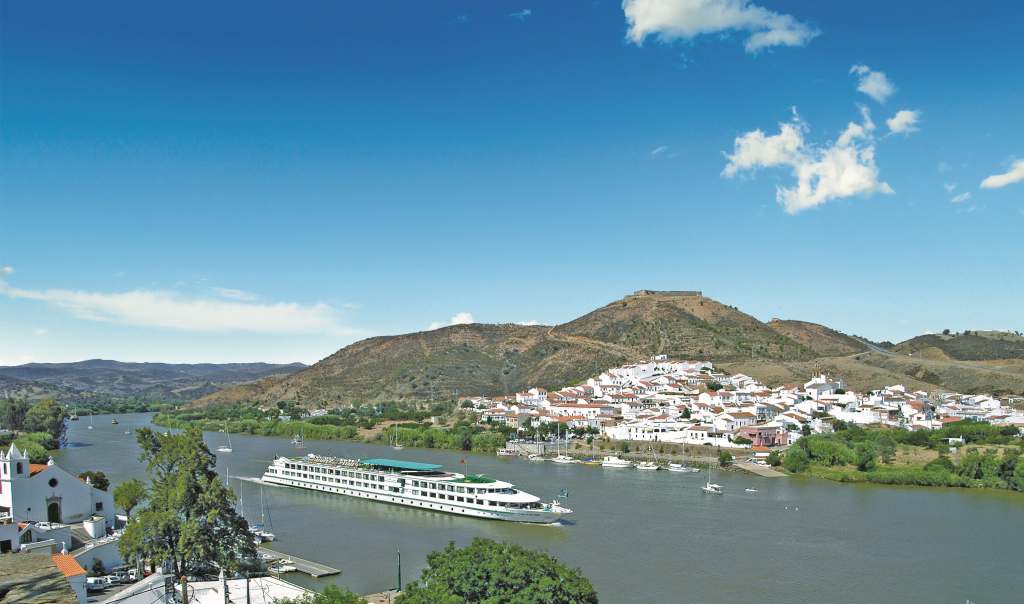
It was an unusual choice of an Andalusian cruise : going down the “Guadalquivir” one of the few navigable rivers in the country. We started and stayed in Seville, took coach trips to Cordoba and Granada and went on by boat to Cadiz and Jerez, where of course we sampled the sherry in the excellent Osborne wine cellar.
Our ship was “MS La Belle de Cadix” (176 passengers; 39 crew) part of the CroisiEurope fleet, the largest river boat company in France and a family-owned company. All our tours were in English, as although most of the passengers were French speaking, there were 30 of us Brits, travelling in our own English coach with an English-speaking guide.
Andalusian Cruise : Seville, Córdoba and Cadiz
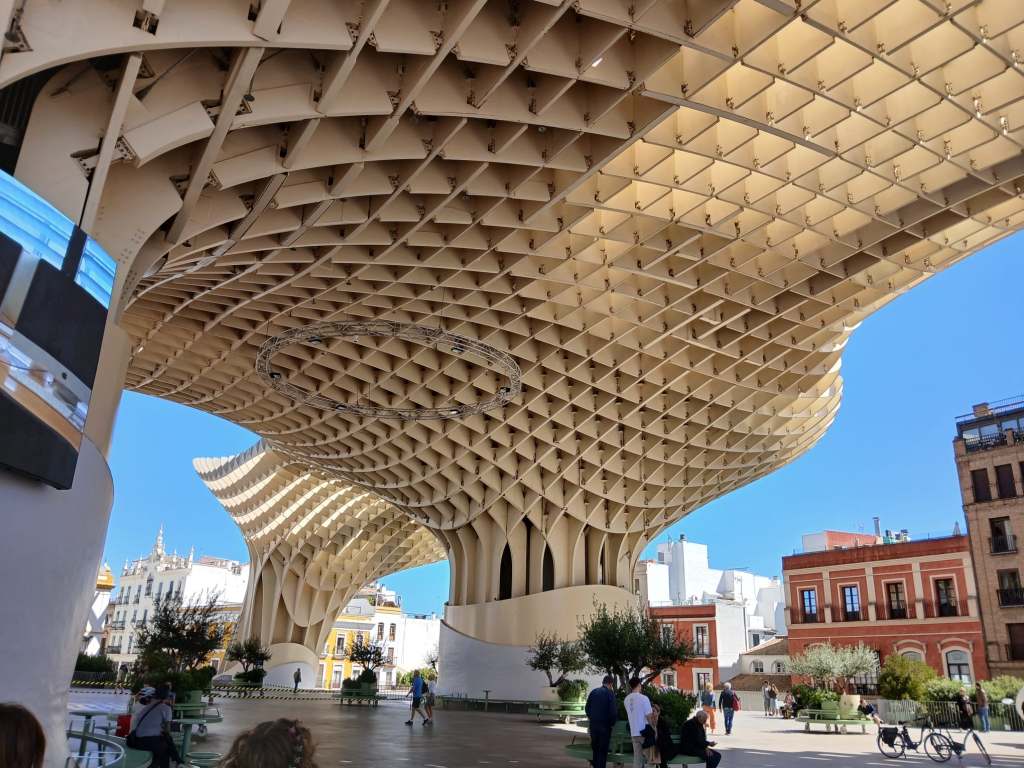
There was much to see on this seven-night voyage that started in Seville. The magnificent Sevillian cathedral – the third largest in the world, containing the tomb of Christoper Colombus, the inspiring Royal Palace and the new “Mushroom”, the world’s largest wooden structure, located in in the old quarter and completed in 2011. It is extraordinary to look at, and inside there is a panoramic rooftop walkway, and a central market.

On our second day we took a two-hour coach journey to Córdoba, once the premier city of the Western World, and the seat of Europe’s first university. Today, there’s a modern commercial centre but it’s the town’s cobblestone streets which lead to the main gem, the unique and magnificent Mezquita-Cathedral, where rows of red-and-white arches give way, to a Renaissance cathedral at its heart. A visual reminder of the city’s complex past.
Then there was Cadiz, one of Europe’s oldest continuously inhabited cities and very different from the other places visited. Situated on a narrow peninsula, it extends into the Atlantic Ocean connected to the mainland by a narrow isthmus. It’s a seaside city with an attractive faded grandeur, stemming from the fact it is the home of the Spanish navy, and the port boomed in the 16th-century as a base for exploration and trade.
Croisi Sustainability
When I first boarded “La Belle de Cadix” my main thoughts were about the week’s itinerary ahead, certainly not sustainability, but Croisi takes this aspect seriously. The fleet uses cleaner GTL fuel, reduces water consumption through onboard systems, treats wastewater before discharge, and sorts and compacts waste for recycling. Any food surplus is sent to be converted into biogas, and single-use plastics are largely removed. Added to this, nearly all the Croisi fleet are small enough to anchor near the centre of the cities, which means they can plug into shore power in ports, such as Seville, to cut emissions while docked.
Individually, these are operational decisions. But as a passenger, you are drawn into them almost without noticing. The first example was water. In our cabin, there were no disposable plastic bottles, instead there were refilling water stations on all three of the decks. Towels were only changed when wanted and that small decision – whether to leave one on the floor or hang it up again – suddenly felt like a choice rather than a default. You become aware, quite quickly, that your habits matter within a closed environment like a ship.
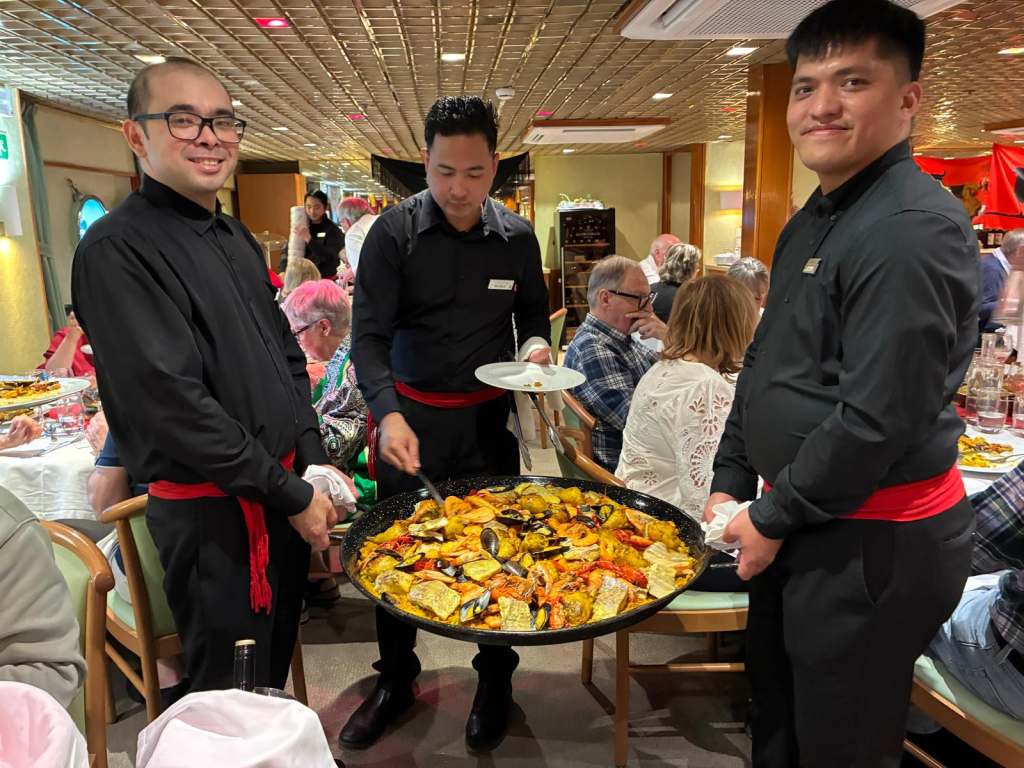
Food of course plays a massive role in the sustainability policy. The emphasis is on regional ingredients rather than excess variety, making mealtime feel more considered. There is no printed menu as such, as there are no alternatives to each meal. Our dietary choices were requested when we booked the trip and taken into consideration from there on. This hugely cuts down on food-and paper, and we felt there was no negative, as the French meals were all of a really top quality, in both taste and appearance. Excellent wines are offered at each sitting. Especially tempting when all drinks on board are included in the competitive pricing of the cruise (apart from spirits). Plus, it was always good to try the cocktail of the day.
As our ship anchored in the centre of the cities we visited, stepping straight off the ship, meant walking became the obvious choice. There was no need for transport, no waiting for transfers.
Limitations and Lessons
That said, the itinerary isn’t entirely without impact. The excursions to Córdoba and Granada involved coach journeys, and that’s unavoidable given the geography but, being part of a small, organised group – rather than a constant stream of independent passengers arguably reduces overall strain on the destination.
What stood out most to me was that CroisiEurope doesn’t present sustainability as an optional extra. It is embedded in how the trip operates. You are not asked to opt in; you are already participating. That, in turn, altered my mindset. I become more conscious of small decisions: how long to spend in the shower, whether I needed a fresh towel. Every day the printed next day’s itinerary was put in our cabin, and I was told that even these leaflets use vegetable-based inks on unbleached paper.
There is a limit to how far this can go. A cruise, by definition, consumes fuel and resources. CroisiEurope’s measures, reduce that impact, but they don’t eliminate it. The trip is still a form of consumption. But what it does do (and this is where it feels meaningful) is it make the traveller more conscious of their role within that system.
I left the ship in Seville more aware than when I arrived. I had spent a week making small, repeated choices that reduced waste and resource use, because the environment made those choices easy. That, perhaps, is the most effective form of sustainable travel. Not telling people to behave differently but designing an experience where responsible behaviour becomes the natural option.
CroisiEurope doesn’t claim to have solved the problem of sustainable cruising. But on this route through Andalucía, it did something more subtle and arguably more useful: it quietly trains passengers to travel better.
Andalusian Cruise Fact Box
Lucy started her trip by booking a Lounge at Gatwick Airport through HolidayExtras.com 0800 316 5678.
A six-day Andalusia cruise on the Guadalquivir costs from £1,139 per person departing 20 November 2026. Price includes all meals and drinks, excursions, Flamenco evening and port fees. www.croisieurope.co.uk