In this most glorious of British summers, why go abroad when the golden Suffolk countryside and its historic towns are on your doorstep waiting to be explored and enjoyed? For a midweek adventure, we drove just forty minutes to one of the county’s newest and brightest boutique hotels, Marquis Suffolk, a mile or so from the historical town of Hadleigh.
Marquis Suffolk
Set in the rolling hills of the Brett Valley, the Marquis Suffolk was formerly a 16th century pub named the Marquis of Cornwallis, a very popular watering hole in these parts. We arrived almost to the day as the United States celebrated America’s 250th anniversary of independence; an amusing coincidence as the pub was named after the British general whose surrender at Yorktown in 1781 hastened the loss of those American colonies!
The pub closed in 2008, and the building then stood empty until Steven O’Leary, a successful entrepreneur from Hadleigh, acquired the site in 2014. Extensive renovation work on the original building enabled it to re-open as a hotel in 2016, and then a £15 million investment expanded it into the luxury 15-room hotel, spa and restaurant it is today, which opened in 2024.
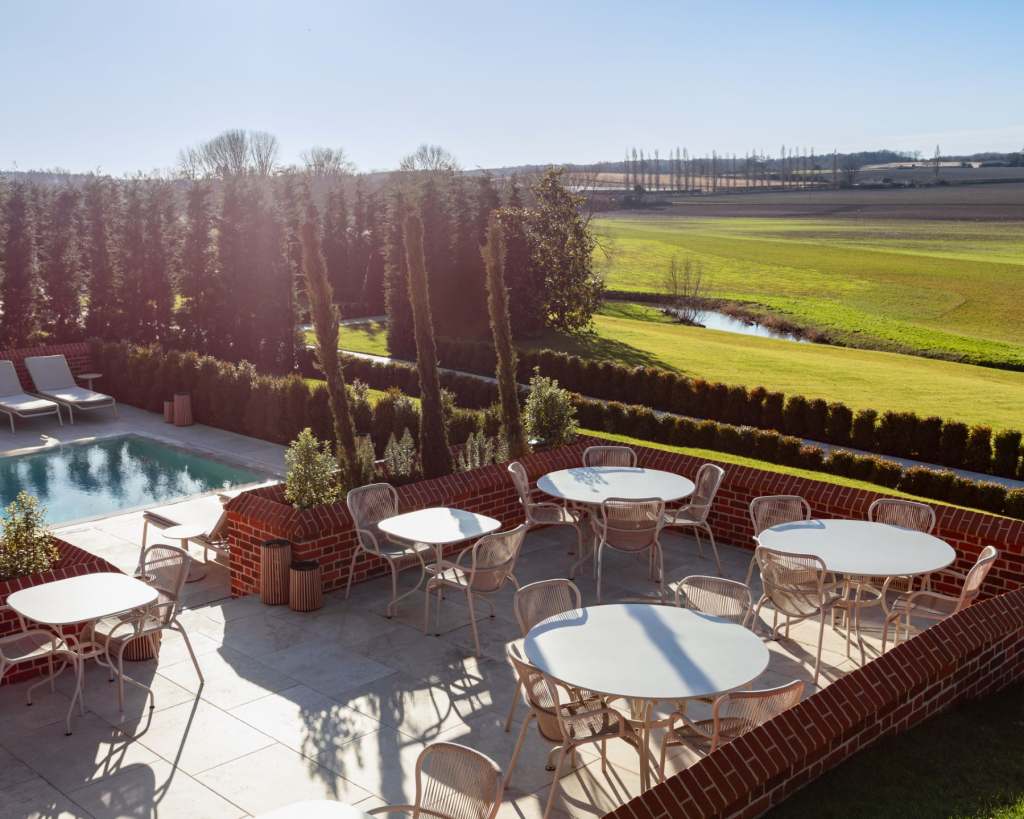
It’s become a major wedding venue, and there had been two such events back to back in the days before our arrival. No wonder really, with the Marquis’s impressive Victorian-style Orangery, and expansive gardens laid out in attractive Italian style. From the veranda there’s a lovely, scenic walk down to the banks of the River Brett, passing a magnificent, ancient oak tree on the way.
The unfortunate Marquis of Cornwallis has the best suite named after him (to be fair it seems that he was a capable and benevolent colonial administrator, especially in India), which has its own private entrance, sumptuous floor to ceiling window views over the Brett Valley, and its own private balcony.
Our Room at the Marquis Suffolk
We were more than happy with our deluxe room, also with great views. It had an extremely comfortable king-sized double bed and a bathroom that contained one of the best (and easiest to operate) waterfall showers we have encountered.
The muted pastel colours in our room were reflected in much of the rest of the hotel, where original beams and fireplaces have been retained where possible. All in all, KLH Architects and interior designers Rendall and Wright have done an excellent job in turning Marquis Suffolk into an elegant, stylish environment. The young, enthusiastic and engaging staff certainly helped to enhance the experience.
The Spa
The subterranean spa houses three treatment rooms, hot tub and sauna, and indoor and outdoor infinity swimming pools. Only 12 guests are admitted at any one time so it never gets crowded. After a light lunch, on a boiling hot afternoon, we settled down to read on loungers in the shade by the side of the outdoor pool, into which we plunged from time to time.
Dining at the Marquis Suffolk
In the evening we enjoyed a splendid meal on the terrace of the restaurant, the highlight of which was one of the hotel’s signature dishes, the old-fashioned Beef Wellington with hash brown, roast shallot marmalade, and fine beans wrapped in pancetta, washed down with a delightful glass of white wine from the New Hall vineyard in neighbouring Essex.
Exploring Hadleigh
Dedham Valley and Constable country is not far away, but we were keen to explore the royal and ancient town of Hadleigh just down the road. Built off the back of Suffolk’s great age of wealth derived from the 15th century woolen cloth trade, on its mile-long attractive High Street ninety per cent of the 137 buildings are listed properties. In this day and age of identical high streets with all the same chains and brands, it’s refreshing to be plunged into a world of colourful independent shops of varying shapes and styles.
After a stroll we made a beeline for the magnificent St Mary’s Church, yards off the High Street in the very centre of town, for we had a historical quest to pursue. We had come in search of the forgotten king of East Anglia. Through the extraordinary site at Sutton Hoo and its iconic helmet, many in Suffolk (and beyond) know of King Raedwald, one of the first Anglo-Saxon kings of this region in the seventh century. Many more will also know of another king a couple of centuries later, Edmund, vanquished and killed by the invading Vikings and later raised to sainthood.
King Guthrum of East Anglia
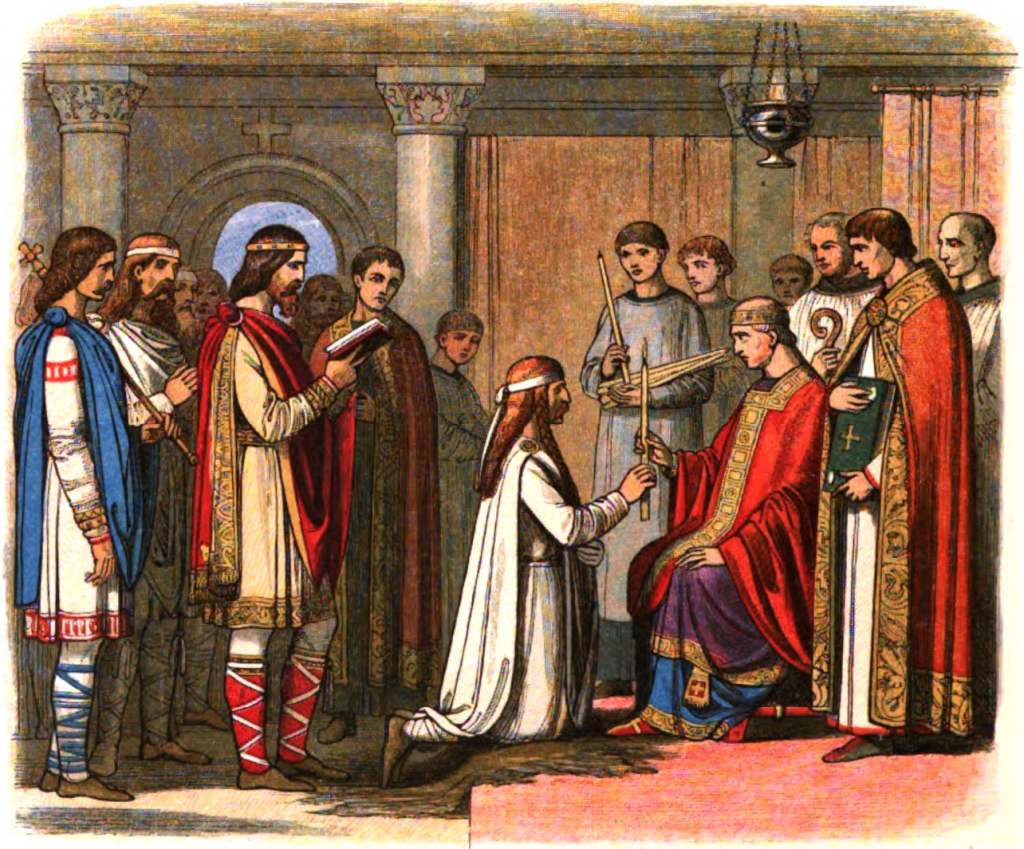
But what of King Guthrum of East Anglia? His story is a remarkable one, but unless you’re an enthusiast of Anglo-Saxon history, or caught the first few episodes of the Netflix drama The Last Kingdom, the chances are you won’t have heard of him.
He was a Viking raider, one of the leaders of the so-called ‘Great Summer Army’ who landed in England in 871 and then proceeded to conquer huge swathes of England including East Anglia. However, this time the English fought back, and Alfred the Great defeated Guthrum and his colleagues at the Battle of Edington, then in Wessex. In the peace treaty that followed, a chastened Guthrum was allowed to rule the territory of East Anglia on condition he converted to Christianity, taking the name Athelstan.
And so he reigned (benignly or not we don’t know) over these parts from 878 until his death in 890; and here the mystery begins. According to the great medieval chronicle the Annals of St Neots, Guthrum was buried ‘at a royal town called Headleaga’, universally accepted by historians to be Hadleigh.
St Mary’s Church
To find the last resting place of this Viking chieftain, all roads have led to St Mary’s Church. Here myth and reality collide. One story has been that a tomb recess in the wall on the south aisle is where Guthrum resides, but no-one believes that, especially as the exquisite stone carving here clearly dates from the 14th century.
Aileen, one of the helpers, had guided us through the church, regaling us with fascinating tales of its past, including one about Cromwell’s visit in the English Civil War, when he is said to have stabled his horses within these walls.
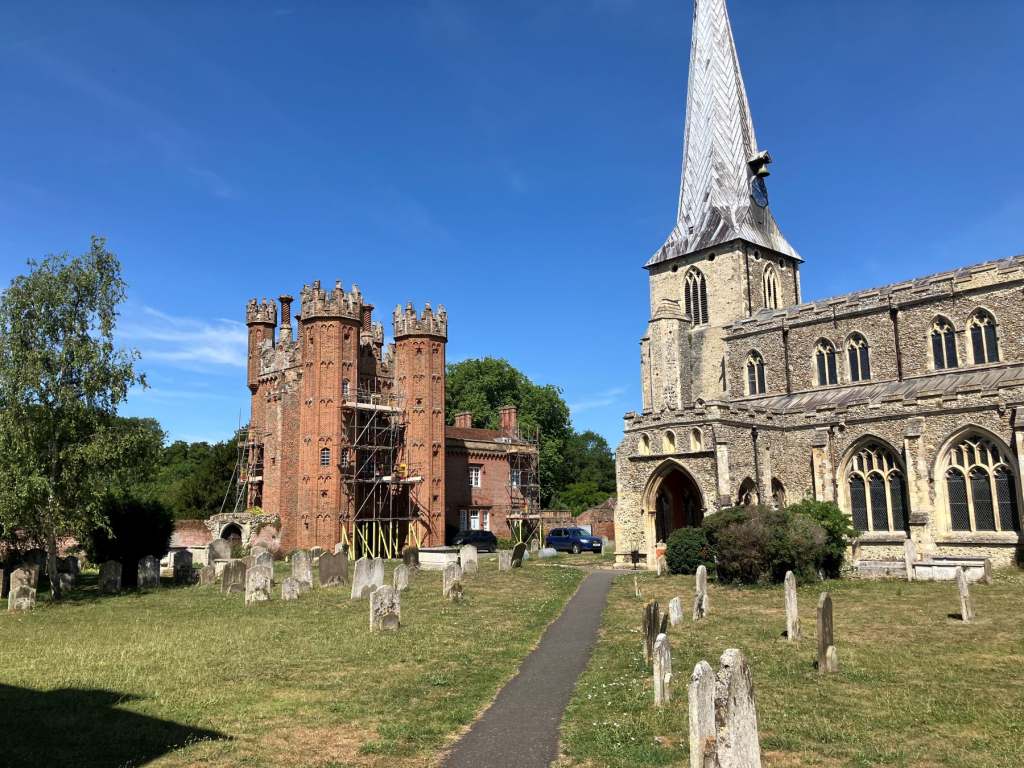
Now she led us into the graveyard where the trail for Guthrum becomes much hotter. Two hundred years ago the remains of an Anglo-Saxon church were discovered here, with the distinct possibility that it was built by Guthrum in the first flush of his new-found faith. Then in 1984 the great Suffolk archaeologist Stanley West led a dig at the churchyard, uncovering more structural remains of the Saxon church, but running out of money and time before any trace of Guthrum’s tomb could be found.
There is no certainty Guthrum was buried at St Mary’s. But there is plenty of evidence he could well have been, and what a project that would be, to find his tomb; a discovery in Suffolk to rival that of Richard III in Leicester. Meanwhile, a Guthrum Road in Hadleigh commemorates the ruler, and the King Guthrum Group in the town seeks to keep his memory alive.
And so, as the mystery continues, we made the short journey home, our minds stirred but our bodies rested after our Suffolk staycation.
Marquis Suffolk
For more information, click here.
