


For many, a trip to Rome becomes a frantic race to cross iconic items off a bucket list, navigating chaotic streets, confusing public transportation, and endless ticket lines under the warm Mediterranean sun. However, a growing number of mindful travelers are embracing a completely different philosophy when visiting Italy: the art of slow travel.
Choosing to explore Rome slowly means prioritizing meaningful, deep cultural connections over a packed, breathless itinerary. It is about lingering over a morning espresso in a quiet, cobblestone piazza, observing the golden afternoon light hit ancient travertine stone, and engaging deeply with the city’s profound historical narrative. By shifting your mindset from quantity to quality, you unlock a version of Rome that is authentic, remarkably relaxing, and infinitely more rewarding.
Redefining Your Roman Holiday: Quality Over Quantity
The foundation of a stress-free Roman holiday lies in smart planning and knowing exactly when to rely on expert local guidance. Wandering aimlessly certainly has its romantic charm, especially in a city filled with ivy-draped alleyways and hidden courtyards. But when it comes to the city’s premier historical landmarks, a lack of structured preparation often leads to immense frustration, wasted hours, and physical fatigue.
For travelers who want to immerse themselves deeply without the headaches of navigating complex entry requirements, deciphering historical contexts on their own, or battling vast crowds at peak hours, opting for guided tours in Rome by Doooing offers the perfect balance of structure and freedom.
An expert guide not only handles the navigation and timing seamlessly but also provides the rich, captivating storytelling that brings ancient ruins back to life. This curated approach allows you to step back, breathe, and absorb the unique atmosphere without constantly checking your phone map or flipping through a heavy guidebook.
Essential Principles of Mindful Exploration
To truly adopt a relaxed pace during your stay in Italy, consider incorporating these simple but highly effective habits into your daily routine:
- Limit your daily milestones: Focus on only one major historical landmark or museum per day. Allow the rest of your schedule to remain flexible and completely open to spontaneous discoveries.
- Walk whenever possible: Rome’s historic center is surprisingly compact and walkable. Walking reveals hidden bakeries, artisan workshops, and quiet baroque chapels that you would completely miss from a taxi window.
- Embrace the local daily rhythm: Adopt Italian dining and resting hours to avoid burnout. Enjoy a leisurely lunch around 1:30 PM, take a late afternoon rest during the heat, and head out for a traditional aperitivo at sunset.
Navigating the Heart of Antiquity Mindfully
No visit to Rome is complete without standing in the shadow of its most formidable ancient structures. However, the archaeological zone surrounding the ancient amphitheater is notoriously the most crowded, loud, and hectic part of the city. Approaching this area with a slow travel mindset requires a strategic approach. You want to feel the immense weight of history and human achievement, not the physical push of modern tourist crowds trying to snap quick photos.
Instead of battling the masses at the ticket booth or feeling rushed through sacred historic grounds, securing guided tours at the Colosseum in Rome ensures you can step right into the ancient world with complete peace of mind. With direct priority entry, you bypass the frustrating queues and immediately engage with the complex, dramatic, and monumental history of gladiators, emperors, and Roman engineering. A knowledgeable guide helps filter out the ambient distraction of the modern city, allowing you to focus completely on the spectacular architecture and the centuries of history embedded in the travertine stone.
Walking Where Emperors Once Walked
Adjacent to the great amphitheater lie the Roman Forum and the Palatine Hill. This sprawling archaeological park is the ideal environment for slow, reflective exploration. Unlike the enclosed layout of a standard museum, the Forum is a vast open-air landscape of ruined temples, ancient basilicas, and triumphal arches stretching across the valley between Rome’s historic hills.
Here, taking your time is not just recommended; it is essential to understanding the space. Find a weathered stone bench in the shade of a tall umbrella pine, sit back, listen to the warm breeze, and look down upon the very stone pathways where historical figures shaped western civilization. Understanding the political, religious, and social epicenter of the Roman Empire requires imagination, and imagination flourishes best when you are unhurried and relaxed.
Embracing Architectural Mastery in the Historic Center
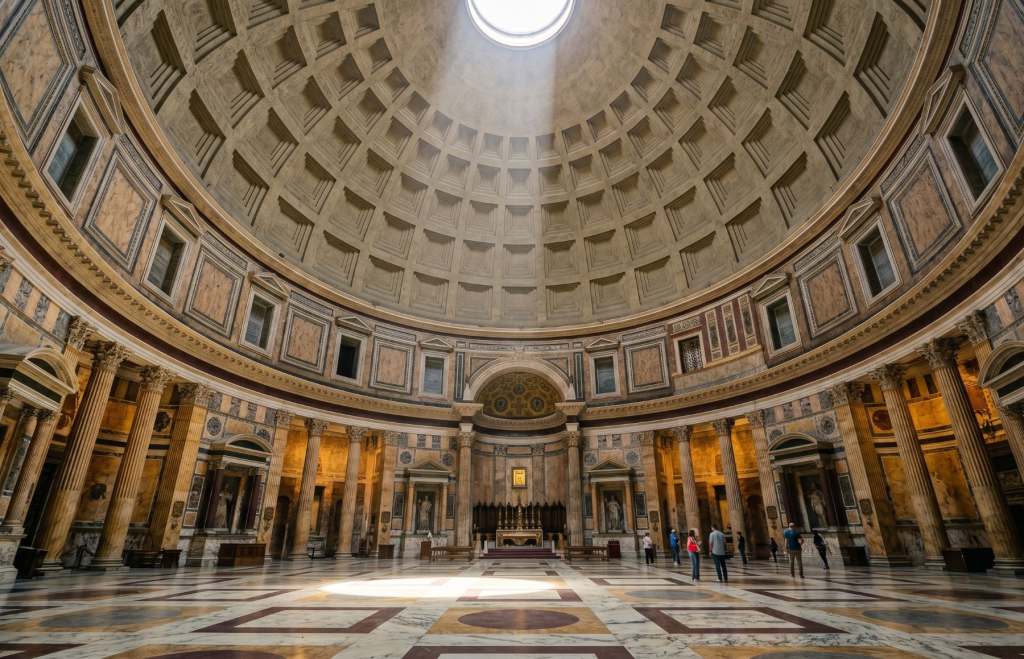
As you move away from the ancient archaeological zone and wander deeper into the Centro Storico (the historic center), the vibe of the city shifts dramatically from imperial ruins to elegant Renaissance palazzos and magnificent Baroque fountains. Yet, right in the middle of these later architectural eras, standing proudly in a vibrant square, sits one of the most perfectly preserved monuments of classical antiquity.
Its massive monolithic granite columns and mysterious, unreinforced concrete dome have inspired architects, artists, and engineers for nearly two millennia. Today, entry to this legendary sanctuary requires careful scheduling and advance planning due to its global popularity. To fully appreciate its structural genius and the mesmerizing beam of sunlight that pours through the central oculus without spending your valuable afternoon standing in a stagnant queue, booking a dedicated tour of Pantheon with priority entry is a smart decision that fits seamlessly into a calm itinerary. Step directly inside to experience the breathtaking scale and peaceful interior atmosphere designed by ancient master builders.
Discovering Authentic Neighborhood Life
Beyond the monumental landmarks, slow travel invites you to explore Rome’s living, breathing residential neighborhoods. Neighborhoods like Monti, with its bohemian cafes and artisan boutiques, or Trastevere, famous for its labyrinth of cobblestone lanes and ivy-covered facades, offer a glimpse into contemporary Roman culture.
Spend your late afternoons simply observing life unfold around you. Watch neighborhood residents greeting each other outside local bakeries, observe leather craftsmen at work in traditional workshops, and savor the rich aromas of roasting garlic, basil, and fresh pasta coming from family-run kitchens. These unscripted, organic moments often end up being the most cherished memories of an Italian journey.
Letting the Magic of the Eternal City Unfold
The true magic of Rome rarely reveals itself when you are rushing frantically from one tourist attraction to the next with a strict checklist. It happens in the quiet, unscripted moments between the major sights. It occurs when you pause to listen to an acoustic musician near Piazza Navona as the sky turns a deep violet, or when you discover a hidden gelato shop serving seasonal flavors away from the main thoroughfares.
By prioritizing curated, high-quality guided experiences over a frantic sightseeing pace, and by giving yourself the luxury of time, you transform an ordinary vacation into a deeply enriching journey. Rome has endured for thousands of years, and its timeless wonders are not going anywhere. By moving through the city at a mindful, deliberate pace, you guarantee that the memories you take home are filled with beauty, inspiration, and the unforgettable elegance of the Italian capital.