


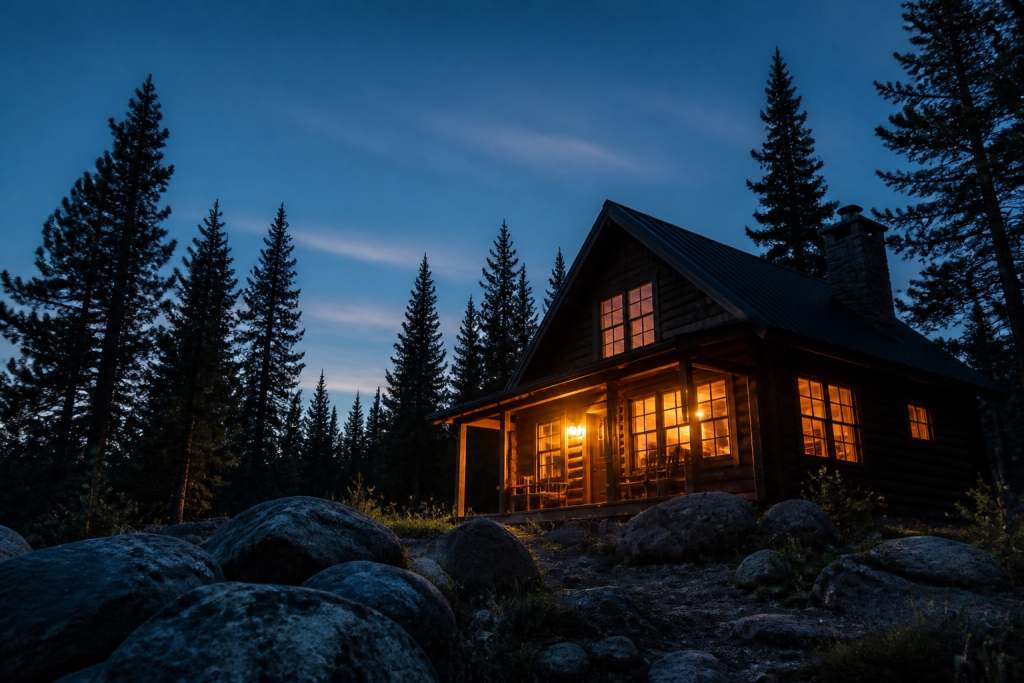
The best eco-friendly cabin upgrades prevent maintenance surprises between visits rather than just looking good on arrival day. A rural property can sit idle for weeks at a stretch, and every system keeps running or failing unmonitored.
The seven upgrades below are sequenced from highest operational risk to lowest visibility to build a stable foundation.
1. Start With an Honest Audit
Before spending money, pull utility bills and walk the property with a checklist covering energy, water, and grounds.
Vacant cabins show different failure patterns than ones used heavily during the summer. Manual meter checks before and after empty stretches reveal exactly where energy disappears.
These baseline numbers make subsequent upgrade decisions concrete rather than reactive. A water pressure test at the main entry point confirms whether a slow loss is present before it becomes a massive repair bill.
2. Assess Solar Paired With Battery Storage
Rural properties on long grid spurs face frequent outage exposure since a single downed line affects miles of infrastructure. A solar-plus-battery system keeps water pumps running during grid failures while drawing stored energy during peak-rate periods.
Homeowners researching residential load management can consult Sunrun solar battery storage for a vacation home for practical deployment details.
System design depends heavily on roof orientation, energy draw, and grid conditions. Local utility programmes provide excellent starting points for sizing these setups.
3. Fit Water-Saving Fixtures and Remote Leak Monitoring
Low-flow showerheads reduce consumption during high-occupancy weekends. However, an undetected slow leak causes far more damage than an inefficient fixture, since the average household’s leaks account for nearly 10,000 gallons of water wasted every year.
A chronic service line leak losing one gallon per minute would result in the loss of 525,000 gallons annually. Smart sensors placed at the main supply entry let owners respond remotely.
Remote shut-off valves take that security measure further by cutting supply automatically when a sensor triggers.
4. Plan Circulation and Aeration for a Large Pond
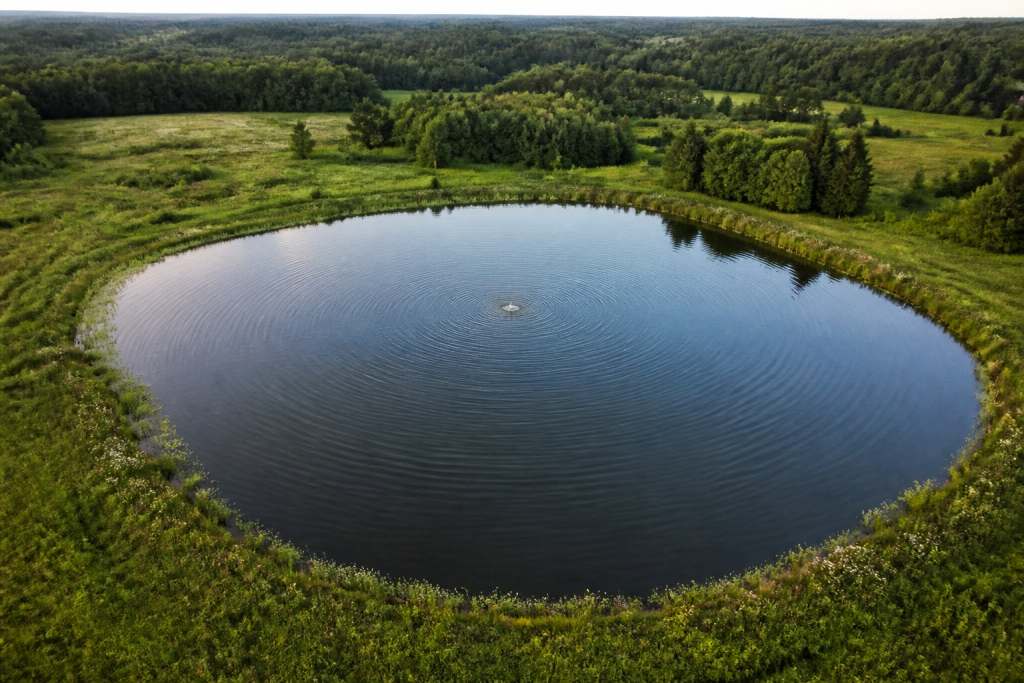
This section applies specifically to ponds of a quarter acre or larger. Small garden water features operate at a different scale and require entirely distinct equipment categories.
For expansive rural water features, stagnant vacancy periods represent the highest management risk. Owners comparing heavy-duty circulation systems often consult Everblue Pond fountains for large rural properties to review sizing requirements.
A properly sized fountain or aeration system runs continuously to maintain water quality between visits.
Stable oxygen levels support fish health, reduced muck limits odour, and consistent circulation slows the algae conditions that thrive in stagnant pools. Equipment selection relies entirely on pond depth, surface area, and local climate factors.
5. Plant Native Species and Address Erosion
Native plants are calibrated to local rainfall patterns, meaning they require less supplemental irrigation and recover reliably after seasons without attention.
Deciduous trees planted on south and west exposures reduce summer cooling loads while allowing winter light through once leaves drop. Choosing indigenous groundcover over ornamental turf grass keeps the property resilient during extended dry periods.
Erosion control deserves equal priority since an access route washout can physically block arrival after a wet season.
Gravel reinforcement on unpaved driveways, native plants on bare slopes, and simple check dams on drainage channels protect the ability to reach the cabin. Owners save significant money by stabilising soil before replacing damaged driveways.
6. Choose Durable, Repairable Furnishings and Low-Maintenance Finishes
A holiday cabin cycles through multiple guests, seasonal humidity swings, and extended gaps between deep cleaning sessions.
Solid wood or metal frames, performance upholstery fabrics that wipe clean, and modular storage pieces extend usable life without requiring a specialist to fix them.
Sturdy materials handle fluctuating temperatures far better than delicate synthetic weaves.
For floors and walls, sealed concrete, tile, or hardwood outperform carpet in high-traffic zones by a significant margin. Wipeable paint in kitchens and corridors prevents a single scuff from triggering a full wall repaint.
Prioritising repairability keeps the cabin operational mid-season rather than waiting on a two-week shipping window for a discontinued part.
7. Build an Arrival-and-Departure Checklist
A written checklist makes arrival and departure the same routine whoever is caretaking, so keep it in a shared cloud doc so everyone has the current version. Upon arrival, reset the thermostat, check battery charge, restore water, and inspect for pests.
At departure, switch energy systems to vacancy mode, shut off non-essential water, and store loose outdoor equipment. Seasonally, winterise pipes before the first freeze and confirm cold-weather pond provisions .
The Path Forward
Fix the highest-risk systems first, the ones that strand guests and trigger emergency call-outs: solar-plus-battery continuity and remote leak monitoring in year one. Pond aeration and erosion control follow, then furnishings and finishes complete the low-impact retreat.