


There is a difference between visiting a city and actually living in it, and Toronto is one of those places where the distinction matters.
Beyond the CN Tower and the usual downtown sights lies a collection of neighbourhoods, parks, restaurants, and family experiences that can make Canada’s largest city feel surprisingly intimate. So, on our latest family trip to Toronto we decided to approach it differently by swapping the traditional hotel stay for a real home. This allowed us to experience Toronto less like tourists and more like the people who live there.
Our home bases, both the Toronto Beaches in the East end and the Junction in the West end came courtesy of HomeExchange, a platform that turns the traditional idea of accommodation on its head. Rather than booking a hotel or holiday rental, members stay in one another’s homes, either through a direct swap or by using GuestPoints earned by hosting other travellers. We have been members for years and it has saved us thousands in travel costs.
Exploring The 6ix
Toronto is affectionately known as “The 6ix,” a nickname popularised by hometown rapper Drake and commonly linked to the six former municipalities that were amalgamated to create the modern City of Toronto. The metropolis is often defined by its distinctive skyline, but much of its real personality comes from its remarkably diverse population. Cultures from around the world have established communities here, and nowhere is that diversity more deliciously apparent than in the seemingly endless selection of restaurants scattered throughout the city.
Some of the more notable restaurants we experienced included Bevi Birra, a small but spectacular Italian place that makes delicious panini sandwiches.
We also enjoyed The Keg Mansion, a Canadian steakhouse chain, but this particular location is in a very old heritage house that is widely reported to be haunted, and they keep an atmosphere to reflect that. It’s a good idea to make a reservation for this one as they are always packed, and ask the staff when you get there about all the ghost stories related to the building as they are well-versed in these haunted tales.
If you have never had a Tibetan momo, head over to Loga’s Corner on Queen St. for some hand-folded dumplings. Their menu is simple and everything on it is flavourful and made-to-order.
Hot Black Coffee will satisfy any java lover morning or afternoon, and Ed’s Real Scoop is absolutely worth the visit to Leslieville because of their unique flavours and generous portions.
Finally, we had some excellent noodles at a restaurant called Hokubu Ramen that is also worth checking out.
Thrills at Canada’s Wonderland

Living like a local doesn’t mean avoiding the tourist attractions, especially when one of Canada’s biggest amusement parks is sitting just north of the city.
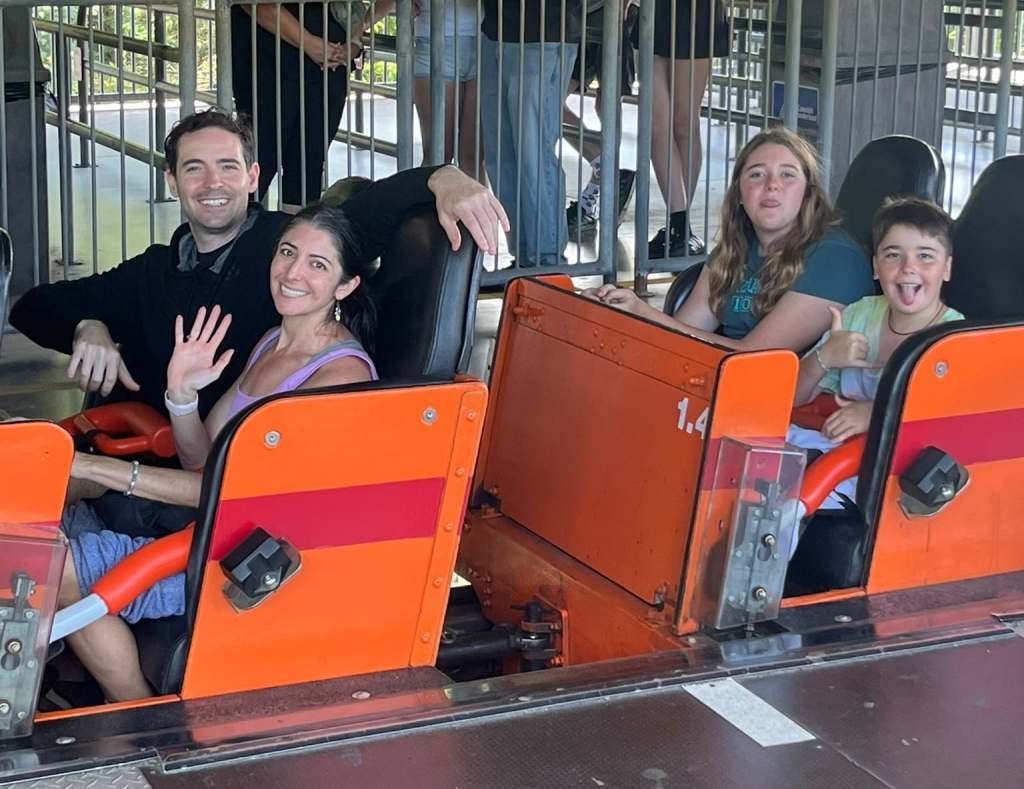
Canada’s Wonderland has been a fixture of summers in the Greater Toronto Area since opening in 1981, and for families with older kids in particular, it can easily consume an entire day. The park combines the nostalgia of the amusement parks many parents grew up visiting with some genuinely intimidating modern roller coasters, alongside water rides, live entertainment and plenty for younger visitors.
For us, however, the roller coasters were the main event and there is certainly no shortage to choose from.
Canada’s Wonderland is home to 18 roller coasters, giving it one of the largest collections of any amusement park in the world. The headline attraction is Leviathan, which climbs 93 metres before sending riders hurtling around the track at speeds of up to 148 km/h, making it the tallest and fastest roller coaster in Canada. Then there is Yukon Striker, where riders are suspended for three agonising seconds over the edge of a 90-degree drop before plunging 75 metres into an underwater tunnel. For something marginally less terrifying there is Behemoth, although with a 70-metre climb and speeds of 125 km/h, “less terrifying” is very much a relative term.
There are more than 200 attractions across the park, including two dedicated children’s areas, live entertainment and Splash Works, a 20-acre water park that is included with admission. On a hot Toronto summer day, the latter is particularly appealing, with a lazy river, wave pool, water playgrounds and slides ranging from relatively tame family options to the 18-metre freefall of Muskoka Plunge.
An Immersive Journey Through Planet Earth
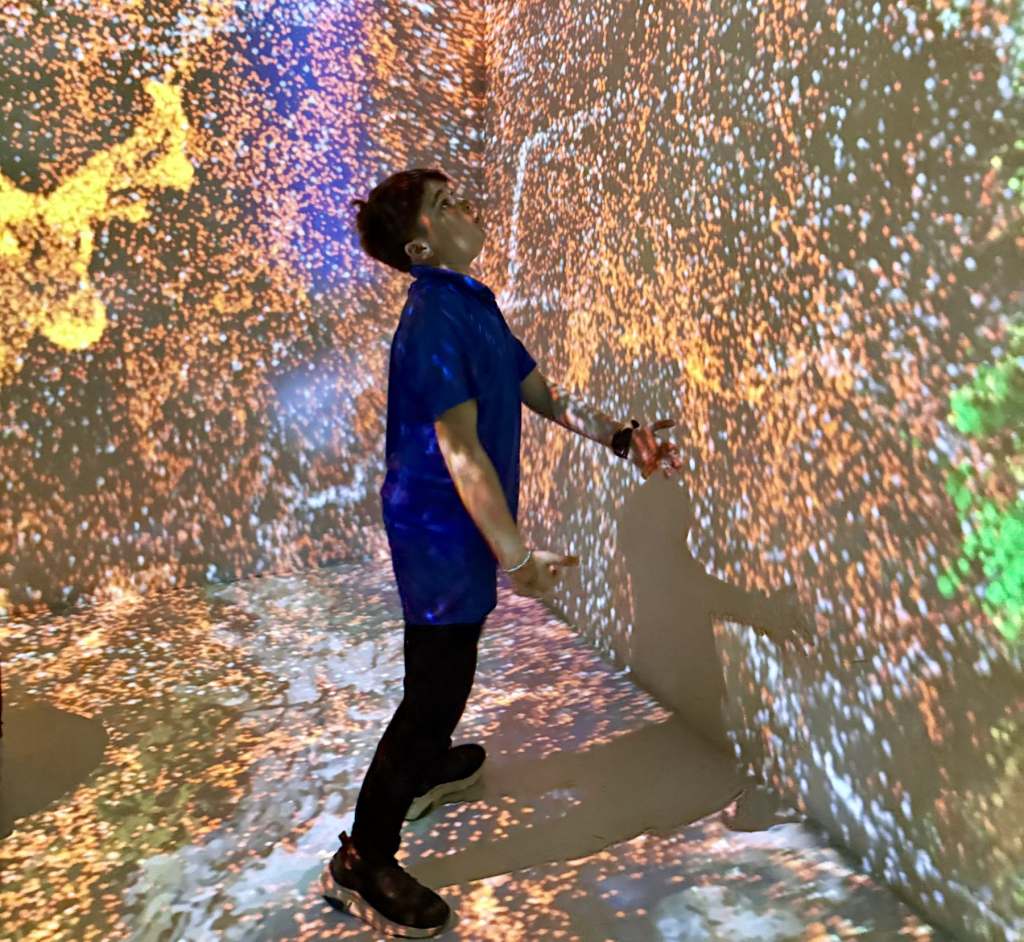
Back downtown, we traded roller coasters for a very different kind of adventure at Arcadia Earth, located inside The Well at Front and Spadina. The multi-sensory experience blends art and technology, using augmented and virtual reality, projection mapping and interactive installations to explore some of the environmental challenges facing our planet. Rather than feeling like a traditional museum, visitors move through a series of imaginative rooms and environments that are designed to entertain while quietly getting you to think about how the choices we make affect the world around us.
Arcadia Earth is also a good excuse to explore The Well, which turned out to be a destination in its own right. Spanning 7.7 acres, this massive mixed-use development combines shops, restaurants, residences and public spaces beneath an impressive glass canopy. We particularly enjoyed wandering through Wellington Market, a 70,000-square-foot food hall with more than 50 merchants, making The Well an easy place to spend a few hours before or after visiting Arcadia Earth.

Not far from The Well is one of Toronto’s newest outdoor attractions, Biidaasige Park, part of the massive transformation of the city’s former industrial Port Lands. Pronounced “bee-daw-si-geh” and meaning “sunlight shining toward us” in Anishinaabemowin, the waterfront park sits alongside the newly naturalised mouth of the Don River and combines trails and green spaces with some seriously impressive areas for kids. There are giant animal-inspired play structures, Toronto’s first public ziplines, water play, picnic areas and places to launch a canoe or kayak. With more than 5,000 trees and views across the water towards the Toronto skyline, it is also a fascinating glimpse at how a once heavily industrial part of the city is being reinvented.
Getting Competitive at Activate
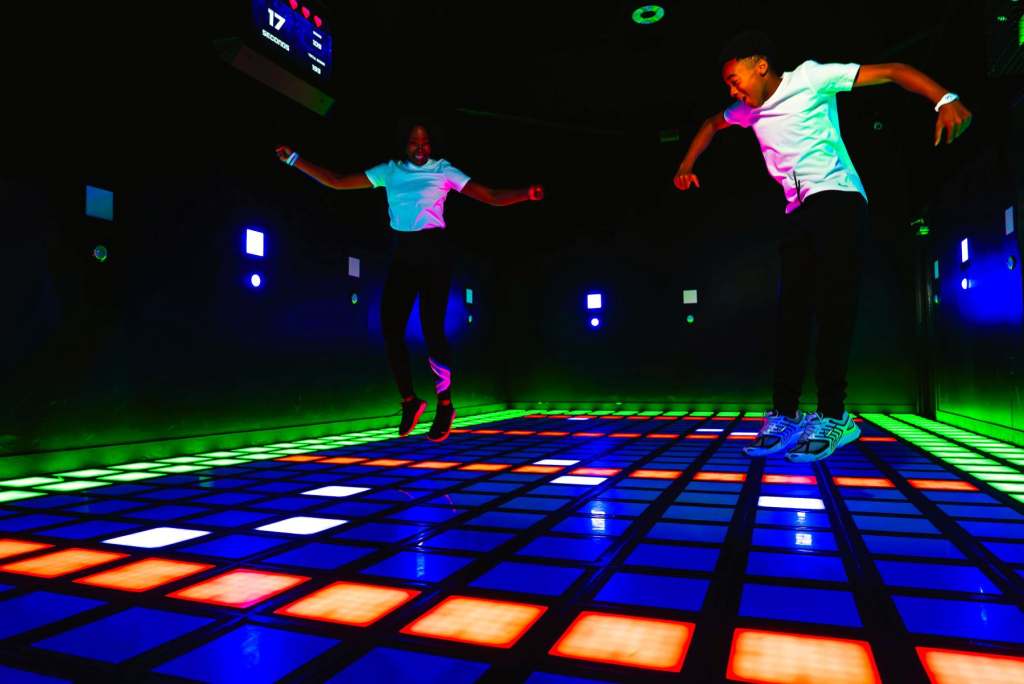
For one final family challenge, we headed to Activate, an interactive gaming facility where the entire room becomes part of the game. Instead of standing in front of a screen, players run, jump, dodge and climb their way through a series of fast-paced challenges involving lights, lasers, basketball hoops and other physical obstacles. Games can be played cooperatively or competitively, based on your family’s temperament.
Each room presents a different challenge, testing everything from speed and coordination to memory and problem-solving, and you can choose the difficulty level as you go. Some games require teamwork, while others inevitably reveal just how competitive certain members of the family really are. The beauty of Activate is that you aren’t simply watching or controlling a game, you are physically inside it, jumping over illuminated tiles, dodging lasers and racing against the clock. Wear comfortable clothes and shoes because, despite being indoors, this is definitely not a sedentary afternoon.
Getting Here
Toronto is one of the easiest Canadian cities to reach, with Porter Airlines offering flights from numerous destinations into both Toronto Pearson International Airport and Billy Bishop Toronto City Airport. The latter is particularly convenient for a city break, sitting just minutes from downtown Toronto and connected to the mainland by a pedestrian tunnel and ferry. Porter’s rapidly expanding network from Pearson also connects Toronto with destinations in Mexico, the Caribbean and Costa Rica, making the city increasingly accessible to international visitors as well.
By the end of our stay, it was the moments between the attractions that made Toronto feel most like home. Staying in the Beaches and the Junction meant experiencing two very different sides of the city, walking neighbourhood streets, discovering local restaurants, and returning each evening to a home rather than a hotel room. It is exactly the kind of travel that HomeExchange makes possible.
Toronto certainly has its blockbuster attractions, and there is nothing wrong with embracing them. But Canada’s largest city becomes far more interesting when you venture beyond the familiar skyline and allow yourself to settle into its neighbourhoods. From roller coasters and immersive art to Tibetan dumplings, waterfront parks and everything in between, we discovered that sometimes the best way to visit Toronto is to stop feeling quite so much like a visitor.