


Tired of crowded bucket list beauty spots? Julia Hammond visits the African islands of São Tomé and Principe and finds that it’s still possible to claim your own personal slice of paradise.
Much has been reported about the perils of overtourism. But while some places are doing their best to dissuade travellers from showing up, one tiny African nation is trying to achieve the exact opposite. However, the tourism ministry of São Tomé and Principe has its work cut out. Despite 2025 being a record-breaking year, only around 42,000 visitors made it to these delightful islands tucked up in the crook of the Gulf of Guinea.
Where Is São Tomé and Principe?
Without exception, when I told friends and family I was going to São Tomé, the response was the same: “Where’s that?” Yet the Equator runs through the offshore island of Ilhéu das Rolas, while Longitude 0° lies just to the west. It’s the closest you’ll get on land to being at the centre of the world, so to speak.
A Slow Travel Paradise
São Tomé’s a real treat to visit independently, thanks to its leve leve (slowly, slowly) mantra and friendly vibe. Travellers who do make the effort will be greeted warmly with broad smiles and cheery hellos. But this place flies under the radar, despite being home to pristine sandy beaches and the kind of lush countryside that could easily make it the darling of the glossies. Tourism is in its infancy, with only a handful of luxury resorts and air-conditioned guesthouses aimed at travellers from abroad. Luring the package holidaymaker is going to have to wait until infrastructure and transport catch up, but there’s much to be said for experiencing São Tomé and Principe before that happens.

The Legacy of São Tomé’s Roças
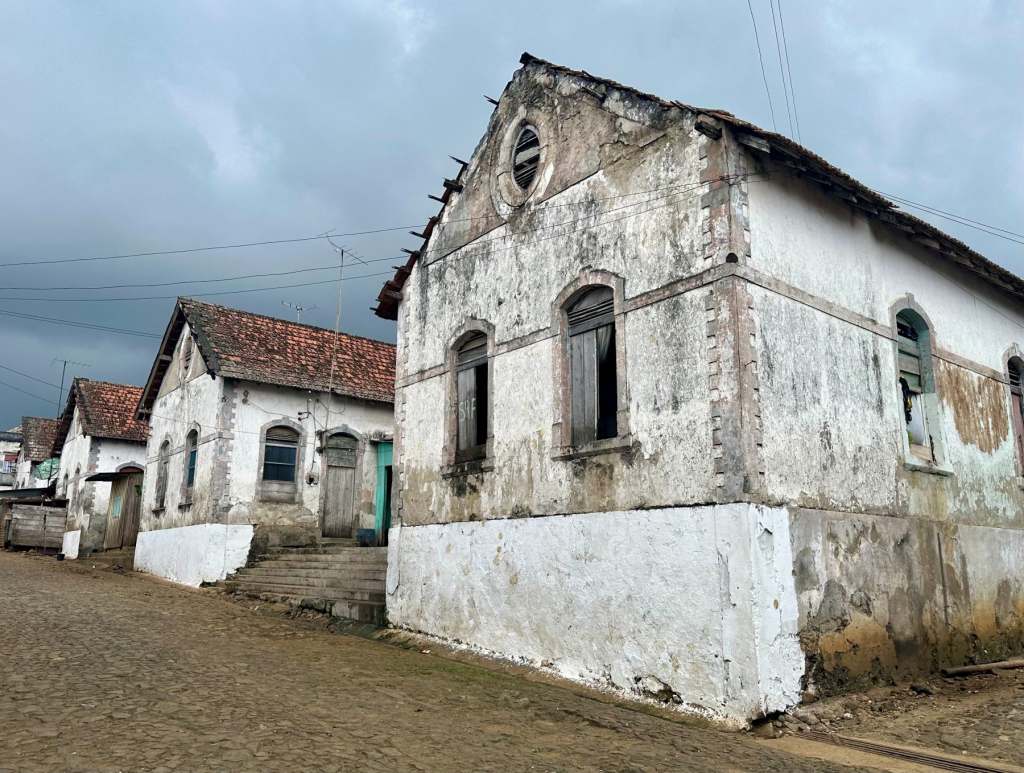
The islands of São Tomé and Principe were uninhabited when the Portuguese discovered them in 1470. Their potential for agriculture was quickly exploited, with slavery providing the now-unpalatable solution to the labour issue. Today, more than a hundred roças (plantations that almost universally grew coffee or cacao) litter the country, a legacy of Portuguese colonial rule. A few still produce a marketable crop, while others have been repurposed as local villages.
Staying at a Historic Plantation
A handful, like Roça São João dos Angolares on São Tomé’s east coast, have been converted into hotels. I arrived during a downpour; dry season was overdue and thick cloud hung over the hills. The roça’s ground floor had bags of character, with colourful art on the walls and a huge covered veranda which doubled as a restaurant and hangout space. Upstairs was a little shabbier. The shutters of my room, swollen by rain and age, resolutely refused to close and the mattress was the wrong side of firm, but the view down to the coast was more than adequate compensation.
Pico Cão Grande and Southern São Tomé
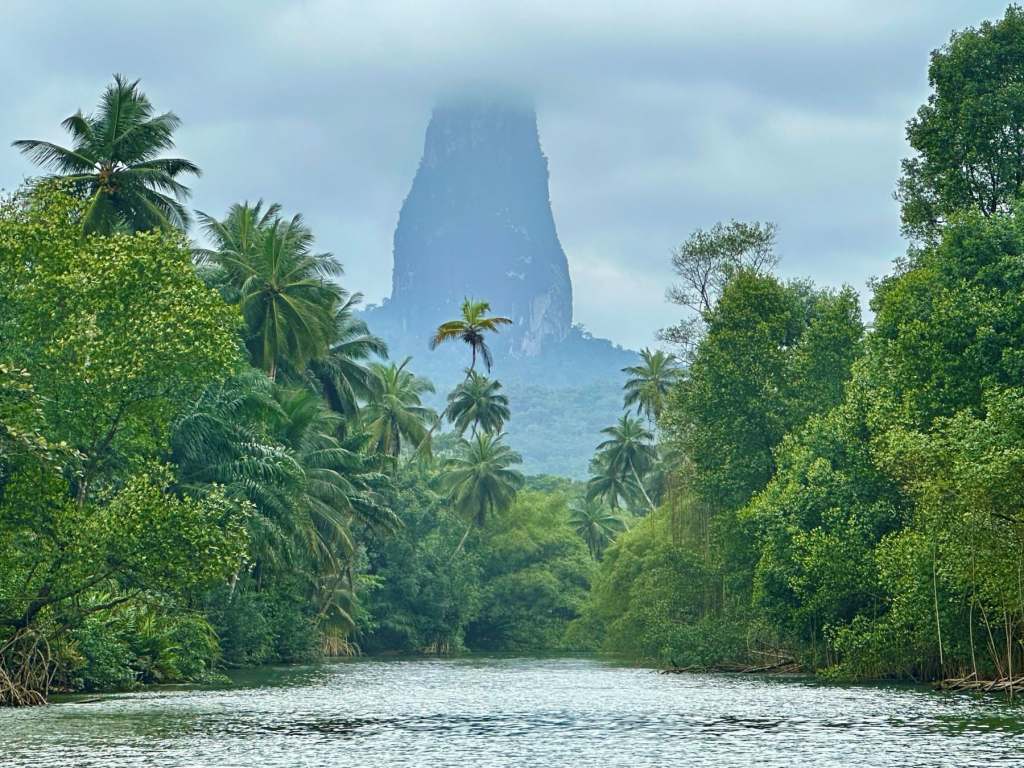
The following day, I awoke to overcast skies but my guide brought the sunshine. Josias was good-humoured and a joy to travel with. As we ventured south he chattered away as we homed in on what’s perhaps São Tomé’s most famous landmark: Pico Cão Grande. This spindly volcanic plug, formed more than three million years ago, rises above a palm oil plantation. Even with the top shrouded by cloud it was an impressive sight.
Praia Grande and the Road South
“Let’s carry on to Praia Grande,” Josias said. “Maybe by the time we come back the cloud will have lifted.” We bounced our way south on an increasingly potholed road before pulling off onto a heavily rutted dirt track. For a brief moment the wheels spun and I thought I might have to get out and walk (or worse, push) but Josias managed to free us from the mud. From the beach, there was an even better view of Pico Cão Grande upriver, though the cloud still hadn’t budged.
Boca do Inferno and São Tomé’s Wild Coast
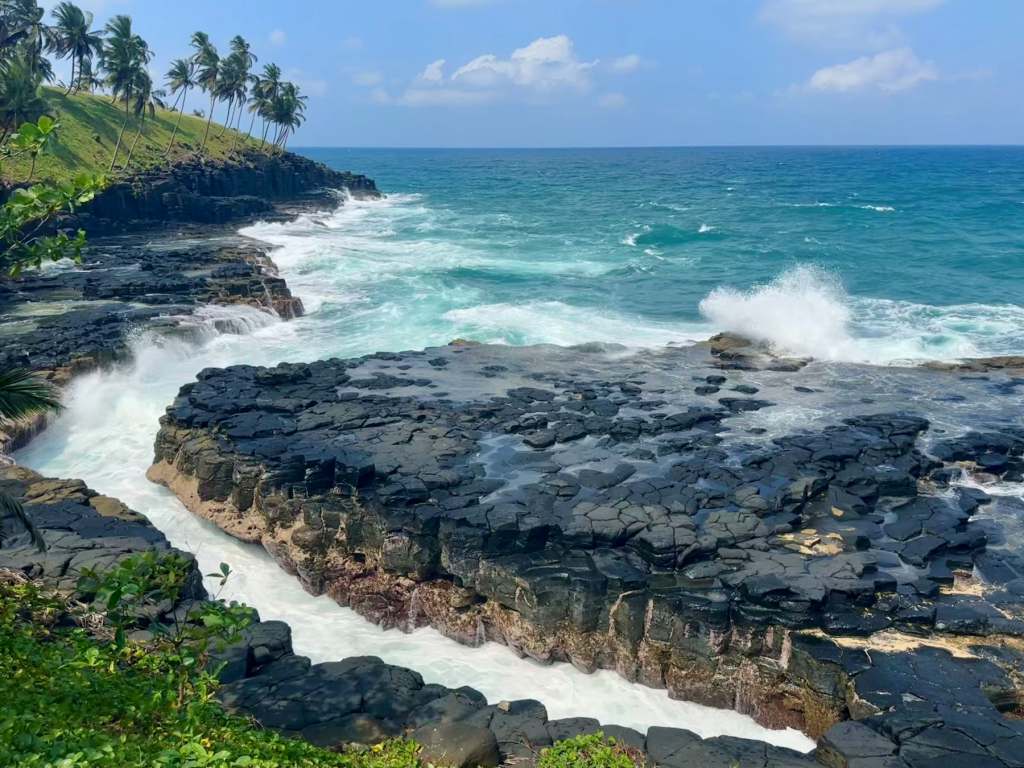
The gusty conditions made a boat crossing to Ilhéu das Rolas inadvisable, so instead of continuing south we u-turned and set our sights on the wildly-named Boca do Inferno (the Mouth of Hell). Finally, the wind had worked its magic to reveal blue skies above this dramatic blowhole. Legend has it that the current was strong enough to sweep the Baron of Água-Izé and his horse all the way to Portugal and back; fiction or otherwise, white-tipped breakers pounded the coast relentlessly. This was no place for a swim.
A Taste of São Tomé
Undaunted, we drove to the centre of the island to sample arguably the best tasting menu in São Tomé before they cleared away the last plates of the day. The exquisitely-presented dishes at the Casa Museu Almada Negreiros championed local staples such as seared tuna and crispy breadfruit fries. The setting, a terrace surrounded by cloud forest, was just as remarkable. We rounded out the day at nearby Roça Monte Café, where museum staff explained the ins and outs of coffee production.

Exploring São Tomé’s North and West Coast
After a couple of nights, I switched hotels. Roça Vale dos Prazeres was a step up from Angolares in both comfort and service. My secluded bungalow was the ideal place to catch the breeze in a hammock, but I knew I wanted to see more of the island. This time, Sipson was my guide, tasked with introducing me to São Tomé’s scenic north and west coast.
Empty Beaches and Volcanic Coastlines
Had it been in the Caribbean, Praia dos Tamarindos would have been packed, but on a weekday morning I had this broad crescent of caramel sand backed by swaying palms to myself. We beach-hopped south; weathered basalt columns and strips of black sand were a dead giveaway to the island’s ancient volcanic past. A small tunnel (the only one in the country) punctured a headland that supposedly looked like a face in profile.
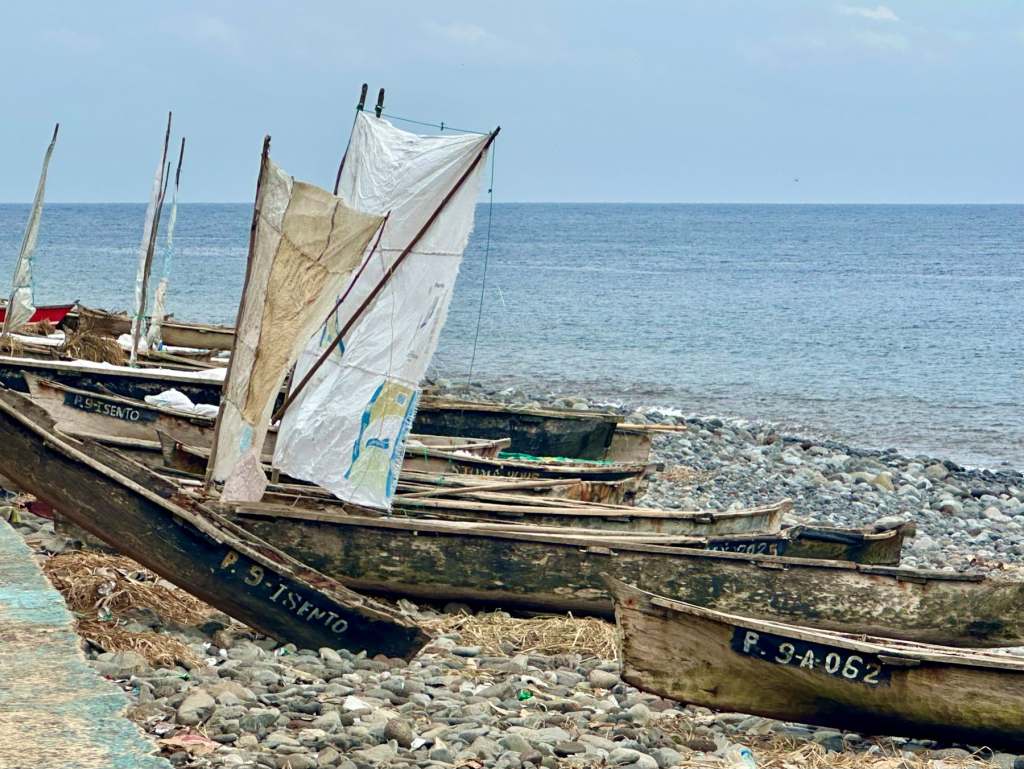
The road ran out just beyond Santa Catarina, a simple fishing village whose river estuary was a hive of activity, not with nets or rods but with laundry spread over the rocks to dry.
Seafood and Local Flavours
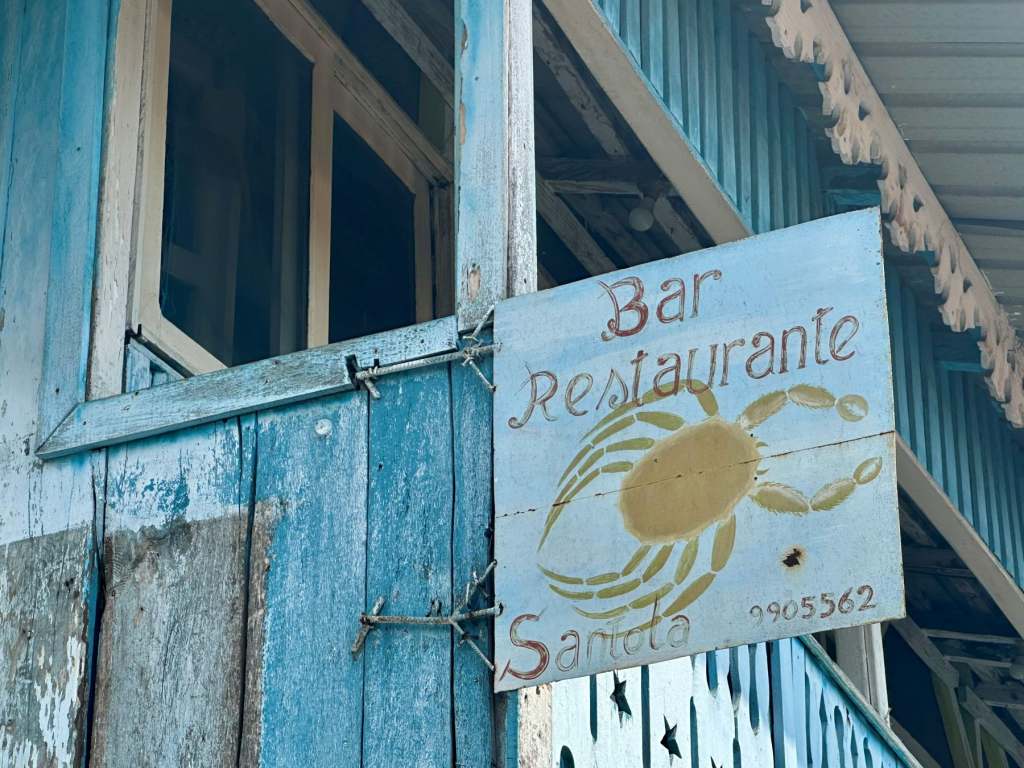
We backtracked to Neves, where I’d been tipped off about a local crab restaurant. Petisqueira Santola was a simple place, its brightly painted timbers barely disguising how ramshackle it was. But all of that was forgotten when lunch was served. There was only one thing on the menu: succulent and picante, its signature dish of steamed spider crab came with a wooden mallet, but needed no other accompaniment.
Coffee, Cacao and Plantation Heritage
Afterwards, Sipson showed me around some other prominent roças. Agostinho Neto boasted a staircase overlooked by a grand plantation house that was impressive at a distance. A local resident offered to show me around but Sipson cautioned against it. “Look at that crack, Julia!” he exclaimed. Closer inspection revealed that a good portion of the building had fallen down, leaving the roça in a lamentable state of repair. At Roça Diogo Vaz, a working cacao plantation, restoration had left at least some of the colonial-era architecture in a better state.
I couldn’t tell you whether the same could be said for Roça Generosa as I was too engrossed in its million dollar view; a mash-up of banana trees, forested hills and distant ocean. The best on the island, Sipson said, and I wasn’t going to argue.
Getting to São Tomé and Principe
Daily flights to and from Lisbon are limited, so book well ahead as prices soar last minute. Stopovers in Accra, Ghana and the Angolan capital Luanda are also possible. National carrier STP Airways shuttles back and forth between São Tomé and neighbouring Principe a couple of times a day.
How to Get Around São Tomé
On both islands, visitors typically move around with private drivers, though battered yellow minibuses (referred to by locals as Hiaces) ply major routes on São Tomé for a dirt cheap fare. Ask your hotel to recommend a driver (expect to pay around 100 euros per day). I used Sipson Tours, an established company which is reviewed favourably on TripAdvisor and Viator.