Debbie North explores accessible travel in Northumberland and Newcastle from the beaches and castles to Greggs.
There are some short breaks where you return home wondering whether you actually had a holiday at all. You know the sort: six attractions, four restaurants, three museums and 25,000 steps before lunch.
Northumberland and Newcastle offered me something rather different. This was a break of two halves: first, the wide-open beaches and big skies of the Northumberland coast, followed by the bustle, food and history of Newcastle. Countryside met city, sand met street food, castles met Greggs – although, as I discovered, there is considerably more to Newcastle cuisine than a sausage roll.
And, travelling as a wheelchair user, I was interested in another question: just how accessible would it all be?
Sand, Sea and Space to Breathe : Accessible Beaches in Northumberland
Northumberland has some of the most beautiful coastline in England. It doesn’t shout about itself. It simply stretches out before you, with huge beaches, dunes, castles and enough fresh North Sea air to blow away the cobwebs – and possibly your hat.
Beadnell Bay was a lovely surprise. For wheelchair users, beaches can be frustrating places. You can see the sea, hear the waves and smell the salt air, but sometimes that final stretch between the car park and the beach might as well be the Sahara.
At Beadnell, there is parking, refreshments nearby and a surfaced path taking you towards the beach, making it possible to get much closer to the sand and sea. There’s something wonderfully liberating about being able to enjoy the coastline rather than simply viewing it from a distant car park.
Alnmouth was another winner. With parking close to the beach and straightforward access down towards the shore, it makes a beautiful stop. The colourful village sits behind the sweeping estuary and beach, while the North Sea provides the soundtrack.
Sometimes accessibility isn’t about bells and whistles. It’s about being able to park, get out of the car and actually join in.
Naturally, all this sea air called for fish and chips, so Seahouses obliged. I’m fairly certain eating fish and chips by the Northumberland coast counts as cultural research. If anyone asks, I’m sticking to that story.
Accessible Travel Northumberland : Castles and Books
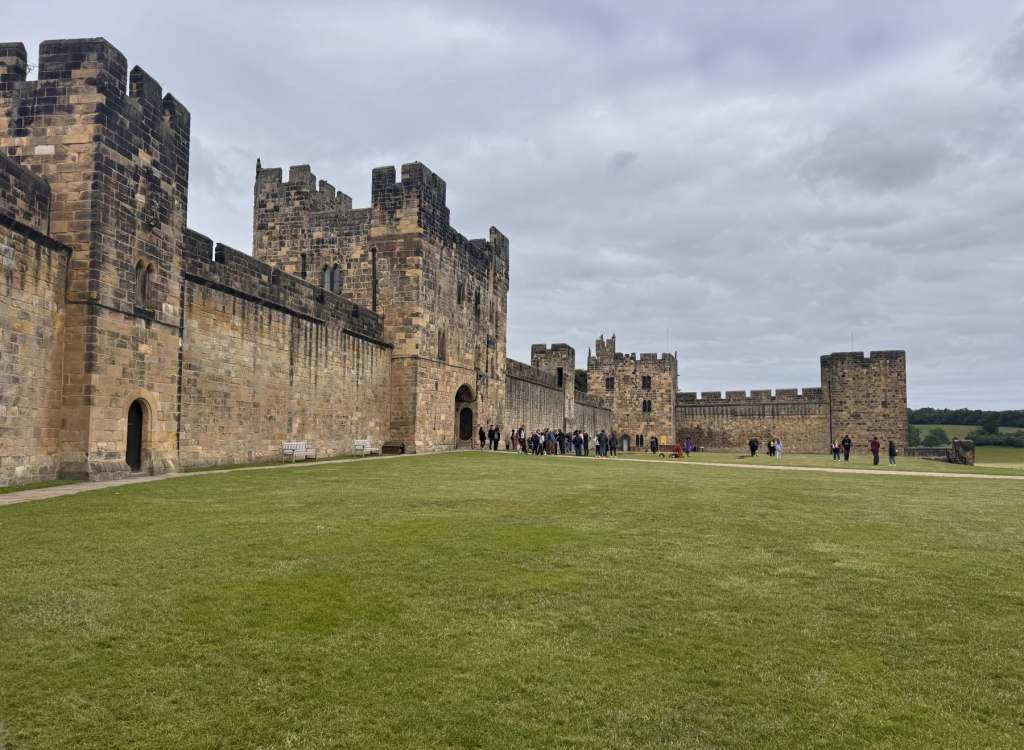
Next came Alnwick Castle. Historic buildings and wheelchairs don’t always make comfortable companions – medieval architects were notoriously inconsiderate when it came to step-free access – but I found plenty to explore.
I was able to borrow a wheelchair at the castle, which was particularly useful for conserving my energy. That’s something attractions sometimes underestimate: providing mobility equipment doesn’t just help someone who cannot walk. It can mean the difference between enjoying a full day and running out of steam halfway through the morning.
Then came one of my favourite places: Barter Books.
Housed in Alnwick’s magnificent former railway station, this is the sort of bookshop where popping in for half an hour is a ridiculous concept. You could lose entire days in here.
Books fill the old station rooms, trains run overhead, fires crackle in winter and the building retains wonderful reminders of its railway past. I happily disappeared amongst the shelves before resurfacing for refreshments in the café.
Books and cake. Another important piece of travel research completed.
From Beaches to the Toon
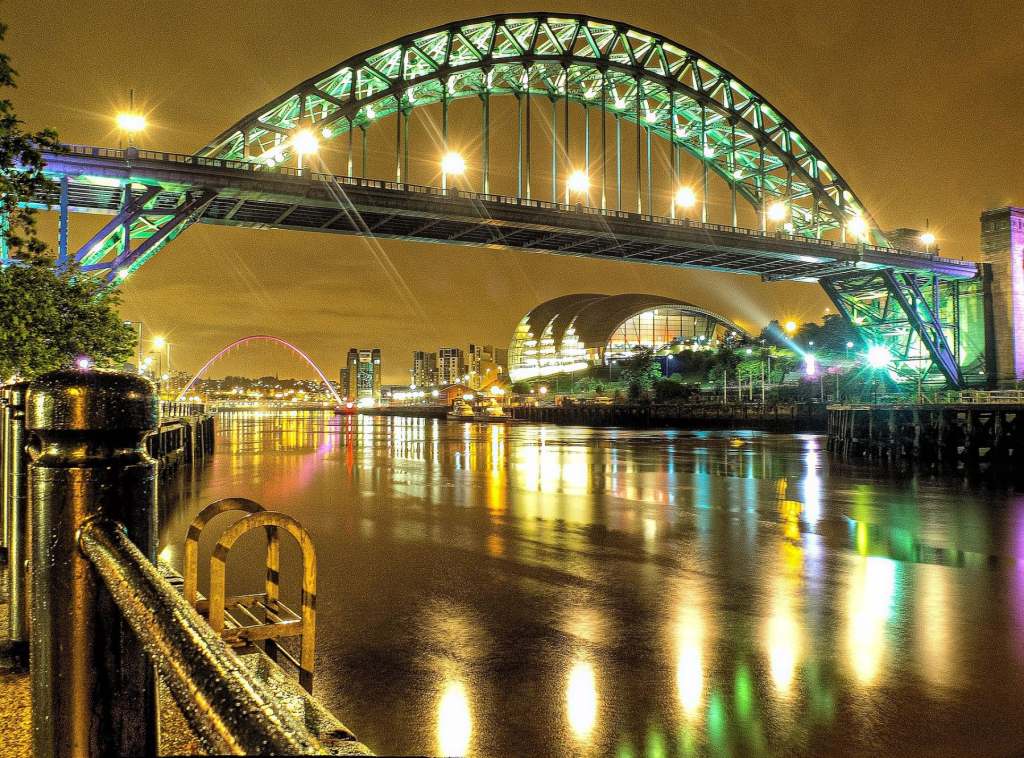
Then it was time for the second half of the trip.
Newcastle.
For two nights, I stayed at the Maldron Hotel in an accessible room, giving me a convenient base for exploring the city.
And where better to begin than with food?
Newcastle might be the birthplace of Greggs, but I discovered very quickly that the city’s food story doesn’t begin and end with sausage rolls.
A street-food tour took us through a much more varied Newcastle: Mexican flavours, local specialities and bao buns at STACK, one of the city’s lively modern food and entertainment spaces.
Then there was the Bigg Market, historically one of Newcastle’s important trading areas and, in more recent decades, rather better known as somewhere generations of Geordies have gone for a night out.
One of its more curious features is an old drinking fountain, installed in the hope of encouraging Newcastle’s citizens to drink more water.
It was an admirable ambition.
I’m not entirely convinced Newcastle listened.
The magnificent Grainger Market provided another glimpse into the city’s history. It was here that Michael Marks opened his Penny Bazaar, part of the story that eventually became Marks & Spencer. Today the market is still packed with independent traders, food and everyday Newcastle life.
Rolling Along the Tyne
One of the simplest pleasures was a wheelchair wander along Newcastle’s Quayside.
The River Tyne opens up beside you, crossed by the city’s famous bridges, while cafés, restaurants and historic buildings line the route. It’s a great place to slow down and simply watch Newcastle go by.
That contrast was becoming the theme of the trip. A couple of days earlier I’d been looking across an almost empty Northumberland beach; now I was beside the Tyne with the city humming around me.
Both, in their own way, gave me room to breathe.
A Journey Through Time
From Newcastle, I headed to Beamish Museum, where accessibility has clearly been considered as part of the visitor experience rather than added as an afterthought.
Accessible transport helps visitors travel around the enormous open-air site, which is important because Beamish is not somewhere you simply nip around in an hour. There are accessible facilities, including a Changing Places toilet, and plenty to experience even where the historic nature of individual buildings inevitably creates challenges.
Beamish is wonderfully immersive. One minute you’re wandering through a historic street, the next you’re peering into shops or watching everyday life from another era being recreated around you.
It is history with its sleeves rolled up.
Ending on an Epic Scale
There was only one way to finish a short break that had already included beaches, castles, bao buns, books and historic buses.
With 2,000 years of English history, obviously.
Kynren – An Epic Tale of England, near Bishop Auckland, is an enormous outdoor production bringing history galloping, fighting, dancing and occasionally flying across the stage.
Before the main performance, I experienced the bird show, with more than 150 birds involved. Sitting within the specially designed viewing area known as the Nest gave me a close-up perspective as birds swept overhead.
It was spectacular, slightly bonkers and completely unforgettable.
And perhaps that sums up the whole trip.
Northumberland and Newcastle make surprisingly good travelling companions. One gives you beaches, castles, villages and huge horizons; the other offers markets, bridges, street food, history and an unmistakable energy.
For me, accessibility made the difference. A path towards a beach. Parking in the right place. A wheelchair available to borrow. An accessible hotel room. Transport around a museum. A Changing Places facility.
None of these things sounds particularly glamorous.
But put them together and they create something incredibly valuable: choice.
They allowed me to spend one morning breathing in North Sea air and another hunting down bao buns. I could browse books in an old railway station, roll beside the Tyne and watch birds swooping overhead.
That’s what accessible travel should be about.
Not simply being able to get through the door, but being able to have the adventure once you’re through it.
And if that adventure happens to include fish and chips, books, cake and the occasional sausage roll?
Well, I’m certainly not complaining.
