


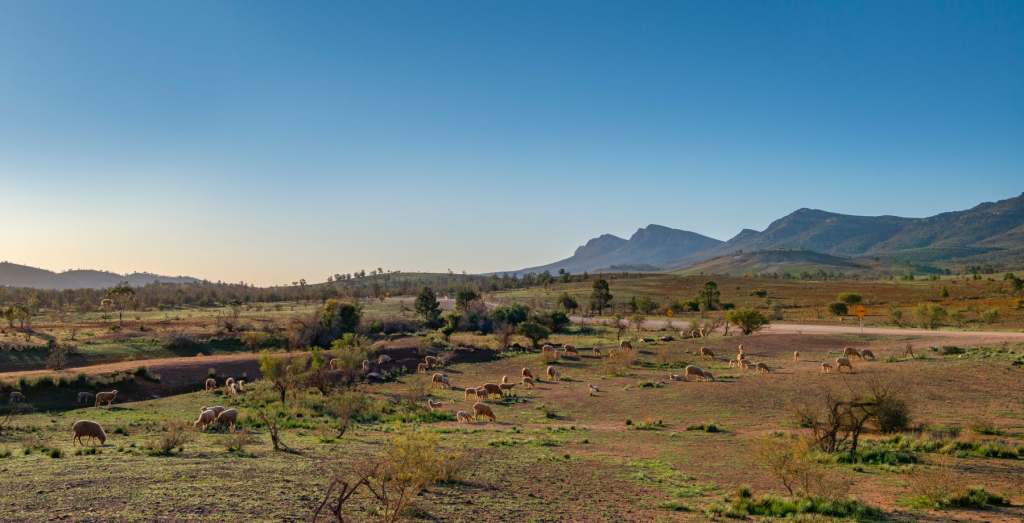
Like the glorious sunsets, silence is golden in the Flinders Ranges Australia. Black eagles wheel over 600-million-year-old landscapes, patrolling the skies where pioneering tourism families and traditional owners preserve this special part of South Australia for the future, writes Renate Ruge.
As renowned Australian artist Hans Heysen once said of the Flinders Ranges, “you’ll find the bones of the earth laid bare.” An evocative description illustrated in his paintings in the 1920s and still true when you behold this vast, rust-hued wilderness, known as ‘the land where time began’ for yourself.
Botanic Garden Adelaide
Before setting off on the five-hour-drive north from Adelaide, our journey begins in the city itself and in preparation for our bush adventure, we take a walk through the Botanic Garden with Aboriginal guide Tjimari Sanderson-Milera.
Strolling through fragrant native grasses, releasing their lemon-y scent beneath our feet, he speaks of his heritage, of the Adnyamathanha people, meaning ‘rock people’, the traditional owners of South Australia’s Flinders Ranges, whose connection stretches back beyond memory. “This place isn’t just land,” he said quietly. “It’s story. It’s family.”
Tjimari speaks of the healing properties of native plants, reveals how bottle trees store precious water and paperbark serves as plates. We discover a trove of native edible treasures including sacred lotus, witchetty grubs and macadamias in what he calls his, “bush shopping centre.”
A glimpse into a way of life shaped by deep understanding and respect for country gives us valuable intel for the adventure ahead.
“You’ll see my mob, when you get there,” he smiles cheerfully as we wave goodbye.
Leaving the city’s fringes, we pass vineyards and drive through bush, the road getting dustier as we go, giving way to otherworldly desert landscapes peppered by gum trees. We see the odd farmer or truck driver then no one for miles.
Flinders Ranges Rawnsley Park

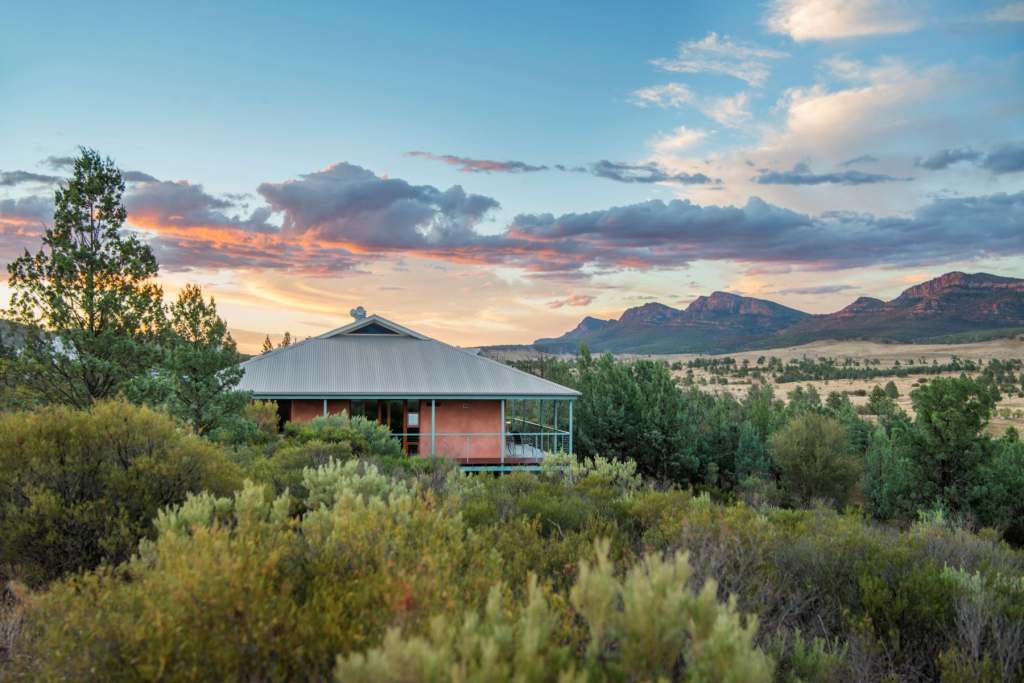
By late afternoon, the Ikara-Flinders Ranges loom large, eucalyptus trees creating a blue haze, parrots flit across the road as we reach Rawnsley Park Station, a working sheep station turned eco-conscious retreat at the edge of the National Park.
Our eco-villa, built from straw bale designed for thermal efficiency, strikes a balance between luxury and sustainable practices such as solar power and natural ventilation for a softer impact on the environment. Wide verandas frame jaw-dropping views of Rawnsley Bluff.
“Looking after this place is a labour of love,” says owner Tony Smith, who whose family has lived here for four generations. From grain farming in the late 19th century to sheep grazing and, eventually, tourism, the Smiths have adapted to the land. Ever respectful, he and partner Julie have won many awards for their conservation work, which extended recently with a heritage agreement protecting around 1,000 hectares of Rawnsley Bluff. Introduced pests are controlled, grazing carefully managed, erosion monitored; all part of a long-term vision to preserve what makes their homeland, so extraordinary.
“It’s the space, the colour, the night sky and the wildlife that visitors remember,” Tony reflects.
And it’s true, once seen this place leaves indelible prints in your memory.

Sunset Safari in the Flinders Ranges
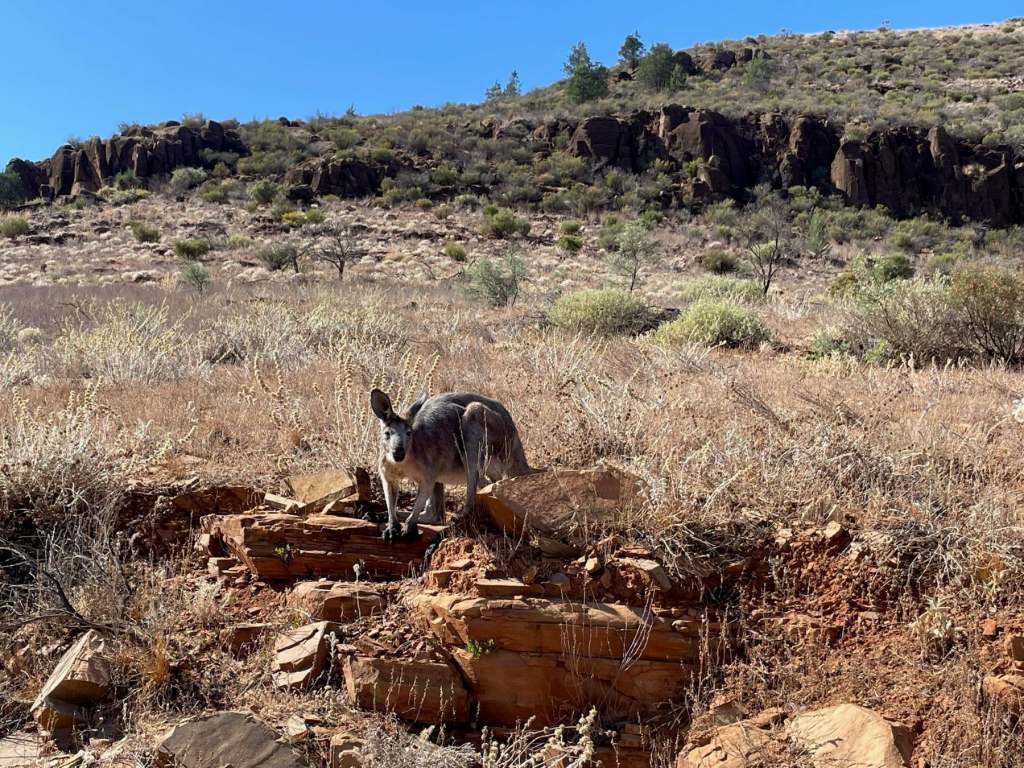
As the sun starts to melt into the horizon, we head out on a sunset safari in a 4WD Jeep with local guide, Beth. The air cools, shadows stretch, and the landscape’s colour palette transforms into deep reds and burnt oranges. Wedge-tailed eagles glide on thermal currents, scanning for prey, while wallabies emerge nervously from the scrub.
Atop Yaltaordla Hill, we pause for a pitstop. Glasses are raised, but words unnecessary. We simply smile instead at 360-degree views stretching endlessly in every direction: ridges and plains, the Chace Range and Wilpena Pound bathed in golden light. It’s magical. We feel as small as the green ants in Timerji’s Botanic Garden.
Back at the villa, we stretch out in bed beneath the villa’s large skylight, gazing up at a galaxy of brightly shining stars. There’s no artificial glow, just the vast, unbroken night sky.
Morning Flight over Wilpena Pound
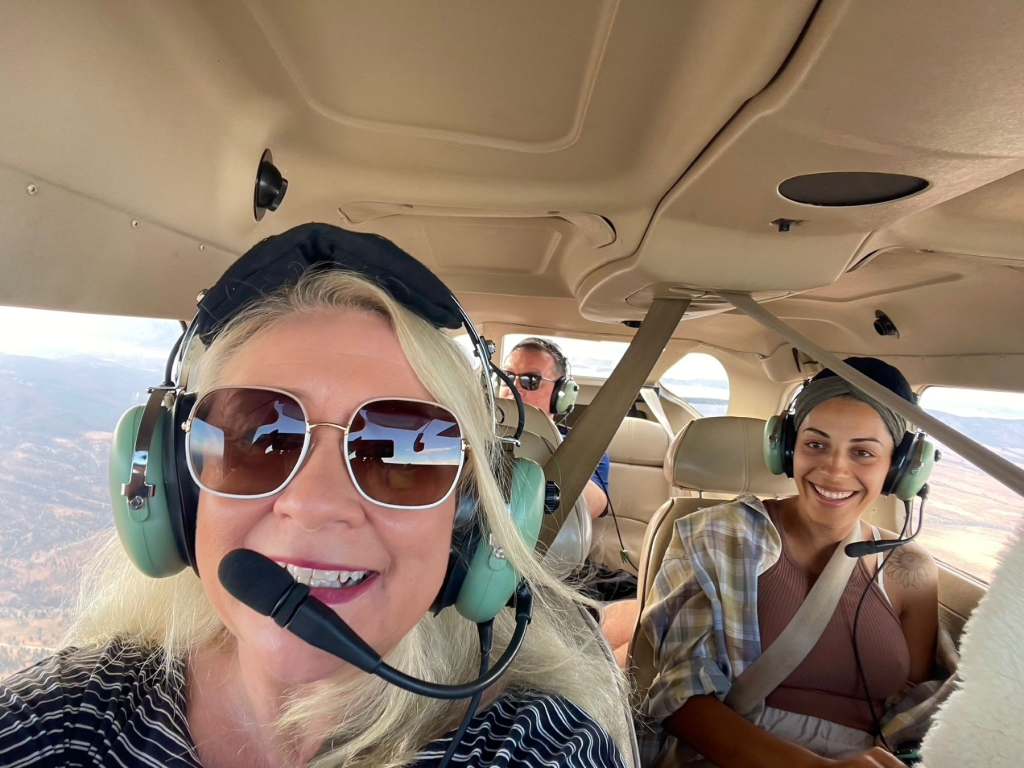
Dawn arrives with the raucous calls of cockatoos from the treetops. The desert light is just dawning as we make our way to the station’s air strip and board a small plane. We’re soon airborne, climbing through pink skies, soaring above Wilpena Pound.
From the air, the sheer splendour of this natural amphitheatre is laid out: the land rising and folding dramatically, shaped over 600 million years. Once submerged beneath an ancient sea, its ridges curve like ripples of Viennetta ice cream, around a natural basin. The local Adnyamathanha people call Wilpena Pound “Ikara”, meaning “meeting place” and when you see the land, sky and story converge firsthand, you understand why this breathtaking environment holds such sacred significance.
Off-road at Brachina Gorge
Back on terra firma, our discovery continues off-road, through dry riverbeds at Brachina Gorge, where the story of Earth unfolds in layers along a 20-kilometre geological trail charting 130 million years of history. Emus stride across the plains, yellow-footed rock wallabies dart along precarious ledges, and kangaroos sip water from roadside puddles after a flash of rain.
Stopping at Wadna art gallery near Blinman, we find authentic local Aboriginal dot paintings, handcrafted wooden ornaments (made as you watch) and jewellery created from emu feathers and quandong seeds. ‘Tourism trailblazers’ Kristian and Gaby Coulthard run culturally immersive trips ‘on country’. Kristian says, “We’re one of the oldest living cultures on the planet and when you share your experience, you break down barriers.”
Bush Tucker
Lunch is ‘nearby’ (by local standards): just another 45 minutes’ drive through Parachilna Gorge to the only pub for miles. Happily, the Prairie Hotel serves excellent bush tucker, with a menu celebrating native flavours. A ‘feral antipasto’ platter featuring emu pâté, kangaroo pastrami, saltbush dukkah and camel mettwurst offers a true taste of the outback.
For all its rugged beauty, what lingers most is the sense of space and freedom in these ancient landscapes where conservation and culture walk hand in hand and every sunrise and sunset resembles a painting. Travel here, and you don’t just see outback Australia, you feel it.
More Things to Do in the Flinders Mountain Range Australia
Visit the 610-square-kilometre, multi-award-winning Arkaroola Wilderness Sanctuary, founded by the Sprigg family in 1968. Their emphasis on science, education and conservation lets them, “as custodians,” preserve this unique wilderness and its inhabitants for the future.
Where to Stay at Flinders Ranges Rawnsley Park
Rawnsley Park Station’s stunning one- and two-bedroom sustainable villas overlook Rawnsley Bluff and Wilpena Pound, featuring local indigenous artwork, some private plunge pools, and outdoor kitchens (with lamb sourced from the farm for the BBQ). Six new luxury Oasis Eco-Villas overlooking Rawnsley Bluff and Wilpena Pound open in November 2026.
Getting to Flinders Ranges Australia
For comfort in the sky, fly Singapore Airlines, with a stopover in Singapore, then directly to Adelaide. Once there, the best way to explore the Flinders Ranges is by 4WD. For reasonably priced car hire and off-roading tips, try Budget Rent a Car – Adelaide City.
For more trip inspiration, visit: www.southaustralia.com.
Main image courtesy of Rawnsley Park Station.