


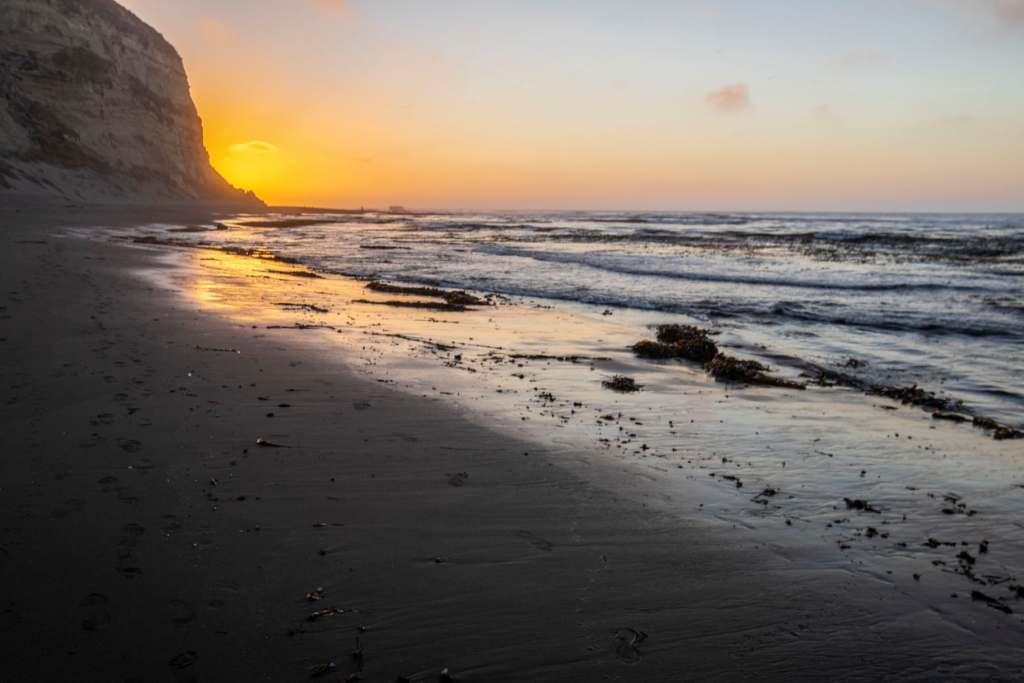
Nude beaches in Chile are not widespread, but travellers do have one well-established naturist option: Playa Luna, a secluded clothing-optional beach on the central coast near Horcón in the Valparaíso Region. Rather than expecting a choice of official naturist resorts, it is better to see Chile as a country with one recognised exception and a few remote places where nudism may be unofficial or merely tolerated.
Are there nude beaches in Chile?
Yes, but not many. The name visitors should know is Playa Luna, near Puchuncaví, between Horcón and Maitencillo. It is Chile’s established naturist beach and the only place commonly described as recognised, organised and tolerated for social nudism.
There may be isolated coves elsewhere where people occasionally sunbathe nude, but these should not be treated as official nude beaches. Undressing on a quiet beach without understanding local expectations can cause offence or attract unwanted attention.
Are nude beaches legal in Chile?
Chile does not have a simple “nudism is legal everywhere” rule for beaches. Public decency norms still matter, and naturism outside recognised settings can be sensitive. Playa Luna’s position rests on organised naturist use, local tolerance and the fact that the beach is secluded. In practical terms, it is the place where visitors can most reasonably expect clothing-optional beachgoing to be accepted.
Do not assume nudity is acceptable on mainstream urban or family beaches, even if they are quiet. Beaches in Chile are generally public spaces, but public access is not permission to practise naturism wherever you choose. When in doubt, keep swimwear on and ask locally.
Best nude beaches in Chile: why Playa Luna is the main answer
If you are searching for the best nude beaches in Chile, the honest list is short. Playa Luna is the main recommendation because it is the country’s recognised naturist gathering point. It sits below coastal cliffs, north of Concón and south of Maitencillo. Many visitors base themselves in Valparaíso, Viña del Mar, Concón, Maitencillo or Horcón and visit for the day.
Access needs planning. The older walk from Horcón along the shoreline has become unsafe in places because of coastal change and high seas, so check current local access advice rather than relying on old blogs. A closer vehicle approach with parking may be available, followed by a footpath down to the beach, but conditions and fees can change. Wear trainers or walking sandals, travel light and avoid bulky beach gear.
Facilities, safety and seasonality
Playa Luna is not a resort beach. Expect a rustic, carry-in, carry-out day rather than sun loungers, cafés and showers. Bring water, food, sun protection, a towel to sit on, and a bag for all rubbish. Local guidance has also advised against camping and bringing pets, so treat it as a daytime visit unless you have confirmed otherwise.
Chile’s central coast is warmest in the southern summer, roughly December to March, with January and February the peak holiday months. Even then, the Pacific can be cold and surf conditions can change quickly. Do not swim beyond your ability, avoid rough seas and remember that secluded beaches may have limited immediate assistance.
Nude beach etiquette in Chile
Naturism is about comfort, respect and a non-sexual relationship with the body and nature. It is not a spectacle. At Playa Luna, nudity may be accepted, but courtesy sets the tone. Give others space, keep noise low, avoid staring and sit on your own towel for hygiene.
Photography and filming require care. Never photograph, film or fly a drone near people unless everyone identifiable has given clear permission. Scenic photographs are best taken away from groups, facing the sea or cliffs.
Sexual behaviour, intrusive comments and persistent attention are unacceptable. Alcohol should be moderate, music kept quiet, and any disagreement handled calmly. Respect the environment too: stay off fragile slopes, avoid disturbing birds or vegetation, and leave the beach cleaner than you found it.
Respecting local customs
Chile is varied and modern, but public nudity is not broadly normalised. A respectful traveller does not try to “test” boundaries in local communities, fishing coves or family resorts. Cover up on approach paths, in car parks, in villages and outside the naturist area. A sarong, loose dress, shorts or light shirt is useful for the walk in and out.
Before travelling, check current local guidance for Playa Luna, access conditions, parking arrangements and any municipal or maritime authority updates. If the latest advice is unclear, choose caution. For mature, independent travellers, the reward is a peaceful coastal experience that works best when treated with discretion, preparation and respect.