


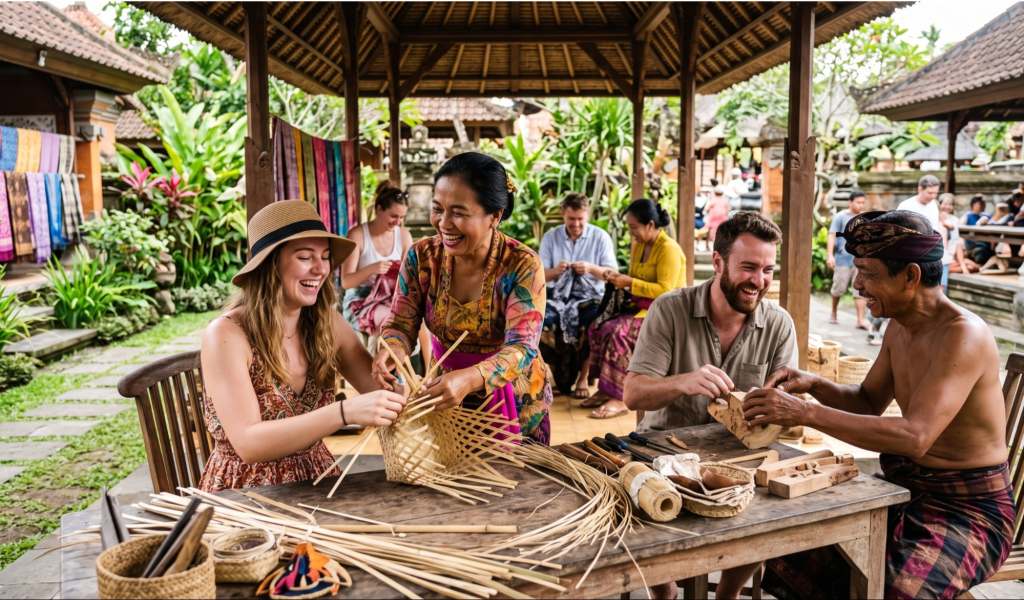
A handmade object has a story that spans generations. A woven textile may have patterns associated with a particular community, a ceramic vessel may reflect centuries-old techniques, and a piece of carved furniture can preserve methods passed down through families. Behind each of these things is an artisan whose knowledge helps keep a tradition alive.
So, why are artisans important? Their role goes far beyond making products by hand. Artisans help preserve cultural identity, pass knowledge between generations, strengthen communities and create economic opportunities. In many parts of the world, artisan-made things are a living connection between the past and the present.
UNESCO recognizes traditional craftsmanship as a major domain of intangible cultural heritage. Moreover, the organization emphasizes that safeguarding craftsmanship is about preserving old objects but also ensuring that the skills and knowledge required to make them continue to be practised and passed on.
Artisans Keep Cultural Traditions Alive
Culture is not just about monuments, museums or historic buildings. It also includes the knowledge, customs and skills that communities pass from one generation to another.
This is where artisans play an important role. Their techniques may involve weaving, pottery, metalworking, woodworking, embroidery, glassmaking, leatherwork or other forms of traditional production. While the finished products can become symbols of a culture, the real heritage often lies in the process used to create them.
Artisans were an important part of history, and they remain important today. They have historically carried practical knowledge that could not always be found in books. Instead, skills were learned through observation, practice, apprenticeship and participation.
They Pass Knowledge From One Generation to the Next
One of the most valuable things an artisan can pass on is a skill.
A young apprentice learning to shape clay, weave fabric or carve wood is also learning the history and techniques associated with that craft. The process can take years, and some traditions contain highly specialized knowledge that is difficult to replace once it disappears.
Many traditional crafts have long-established apprenticeship systems. UNESCO warns that some practices can decline when younger generations choose other forms of employment or when social and economic changes weaken relationships between experienced craftspeople and potential apprentices.
This makes artisans important cultural teachers. Their workshops, studios and homes can become informal classrooms where heritage is learned through doing.
The knowledge also does not remain frozen in time. Traditional craftsmanship can adapt to changing tastes, materials and circumstances while retaining recognizable elements of its cultural identity.
Artisan Crafts Strengthen Community Identity
Craft can also create a sense of belonging.
When people gather around a shared tradition, the activity becomes more than a way of producing goods. It can provide opportunities for people to exchange stories, teach younger generations and maintain relationships within a community.
A good example is Al Sadu, the traditional weaving practice associated with the Bedouin communities of the United Arab Emirates, according to a UNESCO report.
These weavers often work together in small groups, exchanging family news and using these gatherings to transmit knowledge and skills. The practice has also supported intergenerational exchange and community dialogue.
Examples such as this show that the social relationships built around the craft can be just as significant as the skills.
Artisans Support Local Economies
There is also an economic reason to value artisans.
Small workshops and independent makers can contribute to local employment while creating products that have cultural and commercial value. Tourism can further increase demand for locally produced crafts. Especially when visitors want to take home something connected to the place they have visited.
UN Trade and Development identifies arts and crafts as part of the wider creative economy and notes that creative industries generate both commercial and cultural value. Its Creative Economy Outlook 2024 reports that creative industries make significant contributions to economic activity and employment in different countries around the world.
Supporting an artisan therefore can mean supporting an entire network. A craft business may purchase materials from local suppliers, employ apprentices, work with other craftspeople and sell products through local markets or international platforms.
The growth of online commerce has also made it easier for some makers to reach customers beyond their immediate communities. This can give traditional crafts new audiences while allowing artisans to retain a direct connection with consumers.
Why Italian Artisans and Other Makers Matter
Across the world, different regions have developed distinctive craft traditions shaped by available materials, local history and cultural practices. Italian artisans, for example, are widely associated with traditions spanning ceramics, leather, glass, textiles, furniture and other forms of skilled production.
What makes these traditions valuable is not just the appearance of the finished product. It is the accumulated knowledge behind it. This includes the understanding of materials, tools, proportions, techniques and finishing methods that may have developed over generations.
The same principle applies to artisans everywhere. Whether a maker is producing a handwoven textile in the Gulf, pottery in Türkiye or another traditional craft elsewhere, the work can represent a relationship between people, place and history.
Artisan-Made Products Have a Story Behind Them
The growing interest in artisan-made products also reflects a broader appreciation for craftsmanship and individuality.
Mass-produced goods can be manufactured quickly and consistently, but handmade products often carry evidence of the person and process behind them. Small variations may be part of their character rather than flaws.
For consumers, buying artisan-made goods can therefore be an opportunity to learn about a craft and the community behind it. However, responsible appreciation matters. Cultural traditions should not be treated simply as aesthetic trends, and artisans should receive fair recognition and compensation for their work.
Supporting authentic craftsmanship means valuing the people who possess the knowledge—not merely collecting the objects they produce.
Preserving Artisans Means Preserving Living Heritage
The question of why artisans are important comes down to something larger than handmade products.
Artisans preserve knowledge that connects generations. They contribute to community identity, create economic opportunities and help cultural traditions remain relevant in changing societies. Their work demonstrates that heritage can remain active, adaptable and meaningful in everyday life.
At the same time, preserving craftsmanship requires more than telling people that traditional crafts are valuable. Artisans need opportunities to earn sustainable incomes, apprentices need reasons to learn, and communities need spaces where skills can continue to be practised.
In the end, every handmade object represents more than its materials. It can carry a technique, a memory, a place and a piece of cultural history. By supporting artisans and respecting the knowledge behind their work, communities have a better chance of ensuring that these traditions do not become relics of the past and continue to evolve for generations to come.