



GPTZero was one of the first AI detection tools to gain traction after ChatGPT launched. For travel bloggers over 40, it became a handy way to check whether AI-assisted destination guides or hotel reviews would raise red flags with editors and content platforms. The tool works, but it has limits. The free version caps text length, accuracy drops on shorter passages, and false positives remain a persistent issue with heavily edited content.
The AI content checker market has caught up since then. Several free alternatives now match or outperform GPTZero’s free plan, and some handle the specific challenges travel bloggers face: multilingual captions, location-heavy descriptions, and long narrative posts that blend personal experience with practical information. The seven tools below were each tested on three travel blog posts: one written entirely by hand, one generated by ChatGPT, and one that combined an AI draft with personal travel notes and edits. That third test matters most, since many travel bloggers use AI to organize research and then layer their own voice and observations on top.
GetSolved
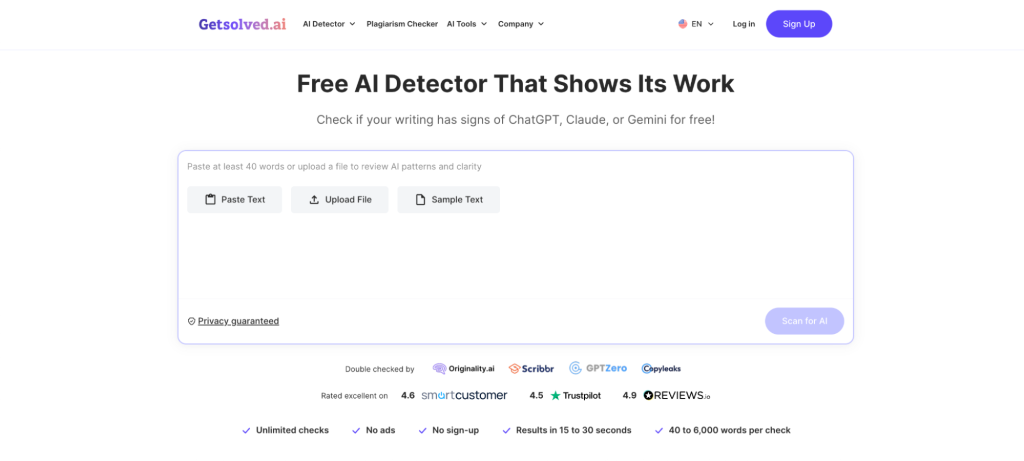

GetSolved skips registration entirely. You open the page, paste your text, and the analysis starts. No email address, no trial countdown, no payment prompt.
The tool runs a four-stage check visible on screen: text analysis, pattern matching, similarity review, and final score. A progress bar tracks each stage so you know exactly where the scan stands. For travel bloggers who batch-publish destination guides or trip recaps, the speed helps. Most scans finish in under ten seconds. The platform works as an AI detector for ChatGPT that returns an overall AI probability score with a color-coded indicator right on the results page. You can paste plain text or upload a document, and the interface stays clean enough to scan several posts back to back without friction.
- Works without an account or sign-up of any kind
- Accepts both pasted text and document uploads
- Scans complete in under ten seconds for posts up to 2,000 words
- Color-coded results make it easy to interpret scores at a glance
Originality.ai
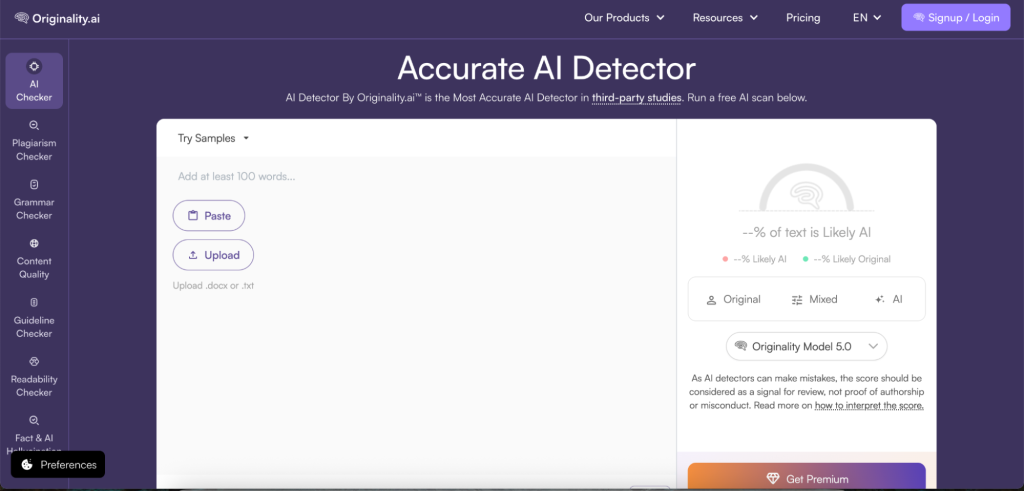

Originality.ai is built for professional publishers and content agencies. The detection engine covers GPT-4, Claude, Gemini, and Llama models, and in testing it returned the most accurate scores among all seven tools.
New accounts receive 50 free credits, with one credit covering 100 words. A 2,000-word destination guide costs about 20 credits. The tool also includes a readability score and a fact-checking module still in beta, which could be useful for travel posts that reference opening hours, visa requirements, or pricing.
| Feature | Free | Pro |
| AI detection | 50 credits | Unlimited |
| API access | No | Yes |
| Readability score | Yes | Yes |
Winston AI
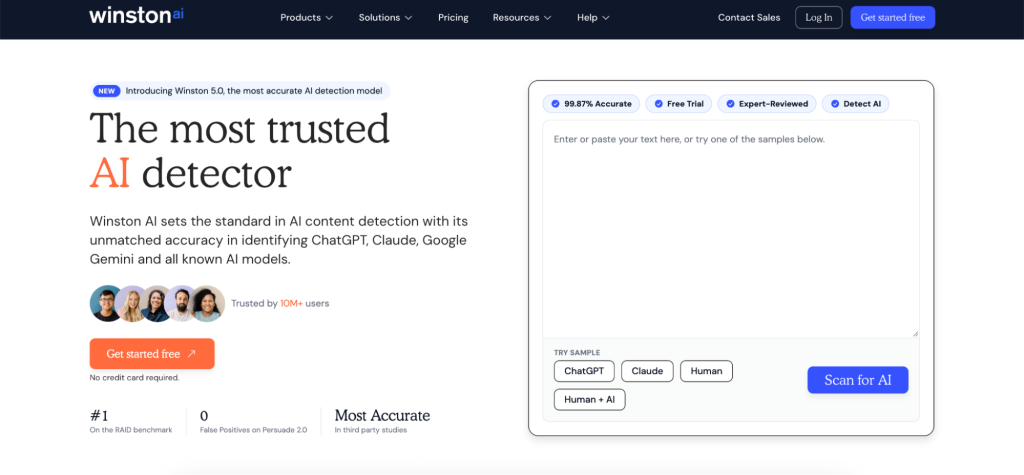

Winston AI produces the cleanest reports among the tools tested here. The interface is minimal: paste text, click scan, read the result. The AI probability score appears on a simple scale from 0 to 100 with a color indicator.
The free tier covers 2,000 words per scan. What sets Winston apart for mature travel bloggers is multilingual support. The detection model handles over 100 languages, and the results on French and Spanish content were noticeably more reliable than GPTZero on those same texts. If you write about destinations in southern Europe, Southeast Asia, or Latin America and include phrases or place names in the local language, Winston handles the mixed-language content without spiking false positives. Document uploads in .docx and .pdf formats work directly.
Copyleaks
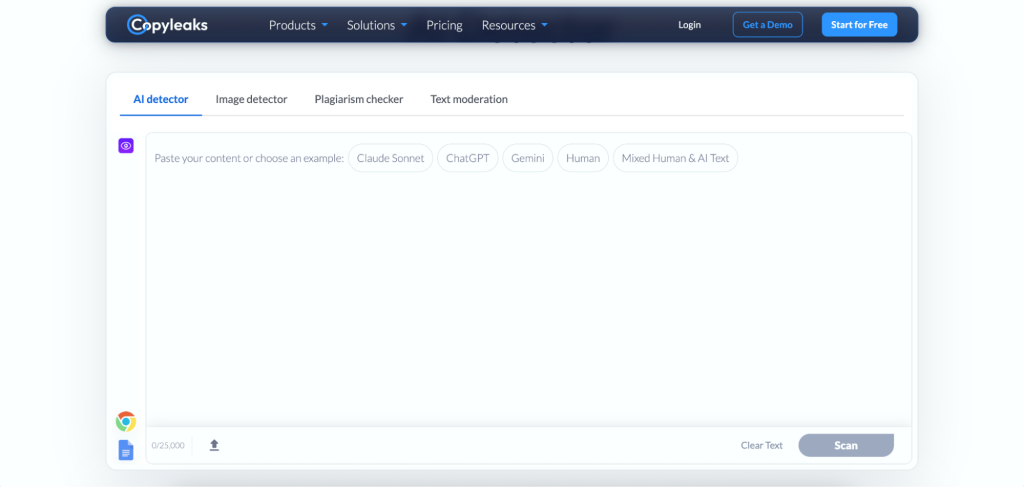

Copyleaks combines AI writing detection with content verification in a single scan. The free plan allows 10 pages per month. Each report breaks down the text sentence by sentence, with probability scores on every individual line.
Three things worth noting about Copyleaks:
- The scan takes 30 to 90 seconds, which is slower than most alternatives on this list
- Sentence-level scoring helps you pinpoint exactly which parts of a long destination guide trigger the detector
- False positive rates were moderate in testing. A fully hand-written travel post scored 12% AI probability
That sentence-level breakdown is especially practical for travel bloggers who write 3,000-word itineraries. Instead of guessing which section raised the score, you can scroll through the report and find the exact paragraph that needs a rewrite.
Scribbr
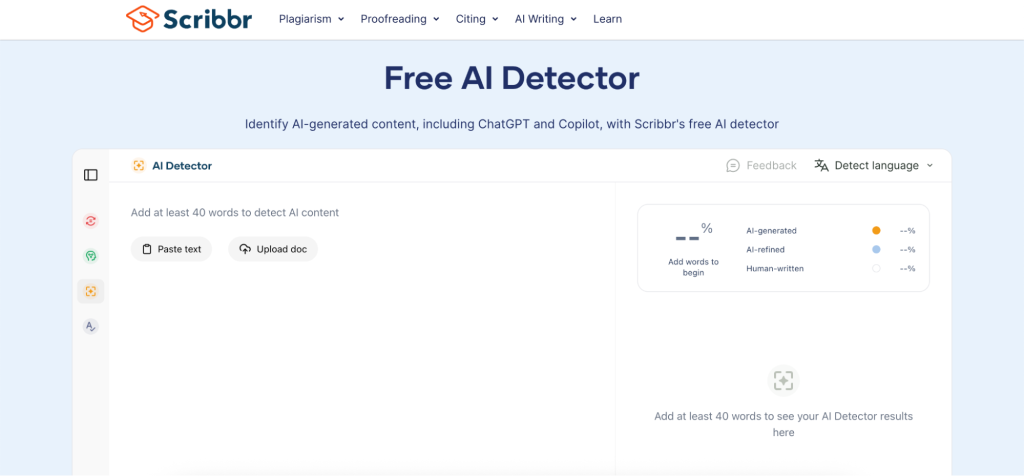

Scribbr started as a citation generator and proofreading service. The free AI detector is a newer addition, powered by the same engine as GPTZero with proprietary adjustments on top.
The free version has no word limit, which is rare among AI detection tools. Scan results show an overall percentage and highlight individual sentences flagged as AI-generated. One thing to keep in mind: the tool is optimized for academic content, so casual travel writing sometimes triggers higher false positives. Scribbr works best when your posts lean toward research-heavy formats. A well-sourced guide comparing travel insurance policies or breaking down visa application steps fits this tool better than a personal essay about street food in Bangkok.
Sapling AI Detector
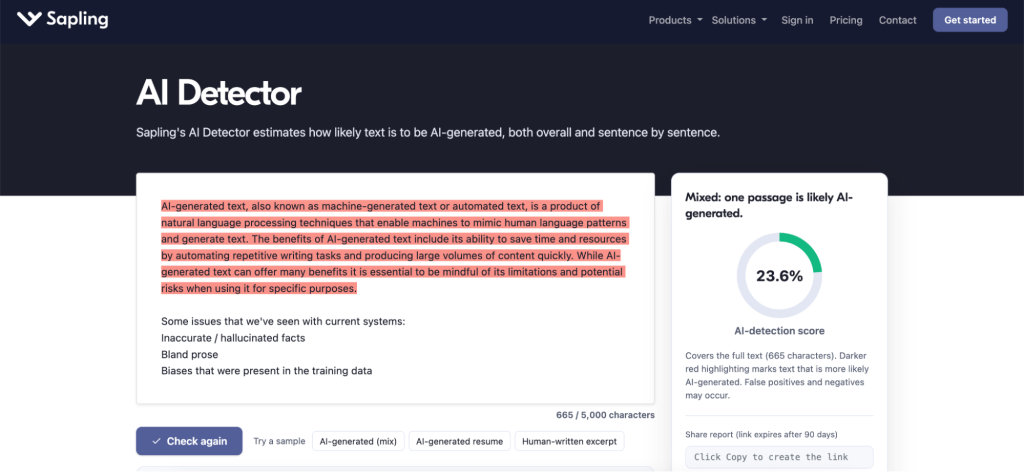

Sapling takes a different approach. Instead of a standalone scanner, the detector works as part of a broader writing assistant that includes grammar correction and autocomplete. The AI detection feature is free for texts up to 2,000 characters, which covers roughly 300 to 400 words.
The results page is straightforward: an overall score, a “fake” vs. “real” label, and sentence-level highlights. Response time was consistently under five seconds across all test posts.
- Chrome extension available for in-browser detection while you write in WordPress or Ghost
- API access on the paid plan ($25/month) for integration with CMS platforms
- Works best on English-language content. Accuracy drops noticeably on other languages
The character limit makes Sapling better suited for checking individual sections rather than full articles. Paste your introduction or a key paragraph to get a quick read before publishing.
QuillBot AI Detector
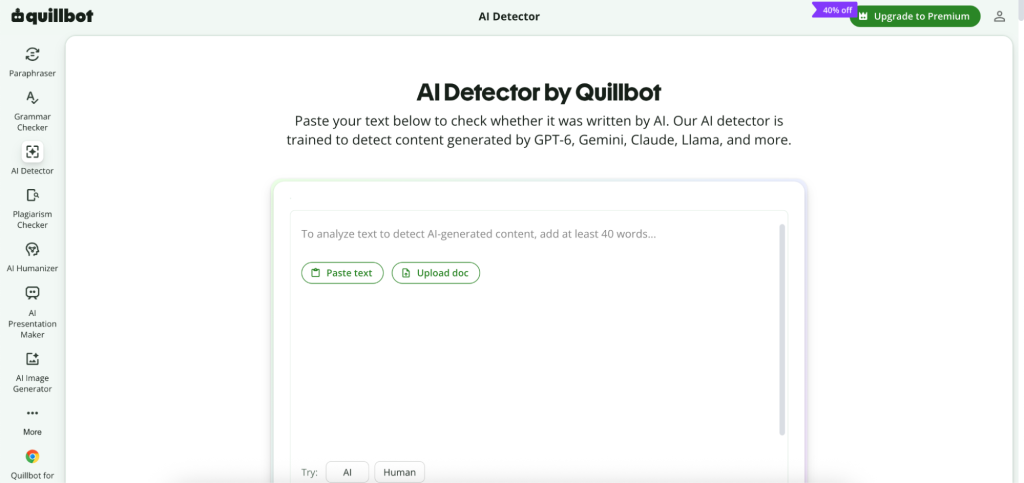

QuillBot is primarily a paraphrasing tool, but its AI detector has improved significantly over the past year. The free version accepts up to 1,200 words per scan. Results include a percentage score and color-coded sentence highlights.
One practical advantage for travel bloggers who already use QuillBot: if the detector flags a passage, you can switch to the paraphraser tab and rework that section immediately. The two tools share the same interface, so the workflow stays in one place. The detector performs well on longer posts, though its accuracy on paragraphs under 100 words is inconsistent. A short caption or a two-sentence hotel recommendation may not get a reliable score.
What to Watch for with Any AI Detector
No free AI detector is perfect. Here are the patterns that showed up across all seven tools during testing:
Short text produces unreliable scores. Every tool performed worse on passages under 200 words. If your travel post has short standalone sections like packing lists or quick tips, scan the full article rather than individual blocks.
Edited AI text confuses detectors. The blended test post (AI draft plus personal edits and travel notes) produced wildly different scores across tools, ranging from 15% to 78% on the same text. This is the reality for most travel bloggers who use ChatGPT to draft an itinerary and then add their own experiences.
Language matters. Tools optimized for English tend to over-flag content in other languages. If you write about destinations in their native language or include local terms and phrases, test your preferred tool on a known human-written sample first.
The best approach is to run your content through two different tools and compare results. A post that scores low on both is likely clean. A post that triggers one tool and passes the other needs a closer look at the flagged sections.
Conclusion
GPTZero remains a solid baseline for AI detection, but its free tier limits and English-language focus leave room for alternatives. GetSolved works best when you need a fast scan with zero setup. Originality.ai delivers the highest accuracy for professional publishers. Winston AI handles multilingual travel content well, which matters when your posts cover destinations across multiple countries and languages. For travel bloggers who already work inside QuillBot or Scribbr, those built-in detectors save time by keeping everything in one tab. Pick two from this list, test them on your own published travel posts, and use the pair that gives you the most consistent results.