Travel is often sold as an escape. Glossy ads promise empty beaches, quiet mountains and a break from everything waiting at home. And yes, getting away can feel wonderful. But treating travel only as a way to run from stress misses something more useful.
The way we travel can shape how we handle pressure long after we return. Navigating a new city, adapting to a different culture or dealing with a missed connection all ask us to stay flexible under uncertainty. Done with the right mindset, travel becomes practice for real life. It can build emotional resilience, the ability to absorb setbacks, adapt to change and recover.
This article looks at how travel supports resilience, why the benefits go beyond a temporary mood boost and how to travel in ways that make those benefits last.
What emotional resilience really means
Emotional resilience isn’t about never feeling stressed, sad or anxious. Resilient people feel those emotions like anyone else. The difference is how they respond and how quickly they find their footing again.
Resilience usually includes a few core abilities:
- Adaptability: adjusting when plans change or things go wrong
- Emotional regulation: noticing feelings without being overwhelmed by them
- Problem-solving: finding practical ways forward under pressure
- Perspective: seeing a setback as one part of a bigger picture
- Connection: reaching out to others and accepting support
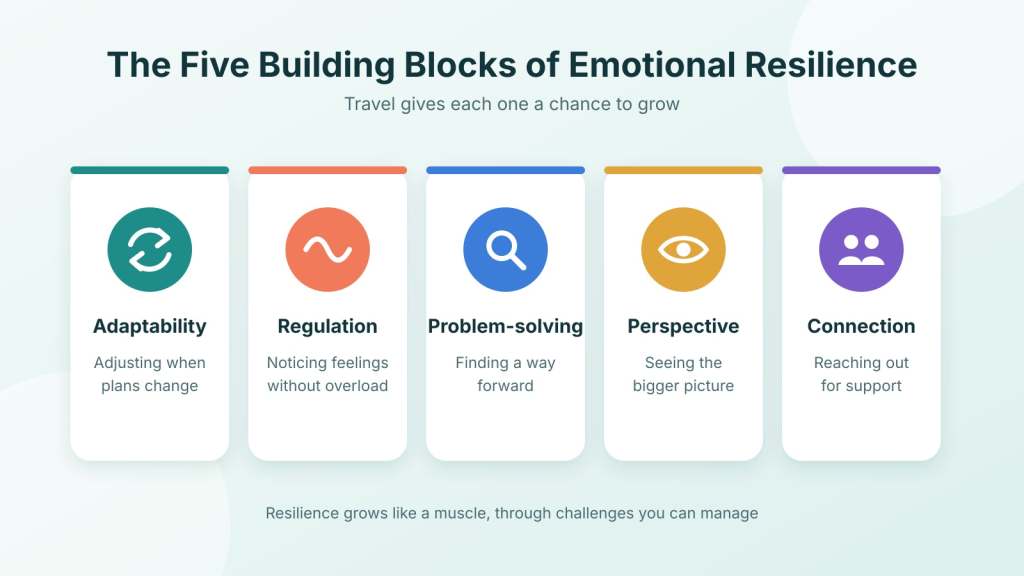
The good news is that resilience can be strengthened. Like a muscle, it grows when it is used in manageable doses. Travel happens to offer many of those doses.
Escapism versus growth
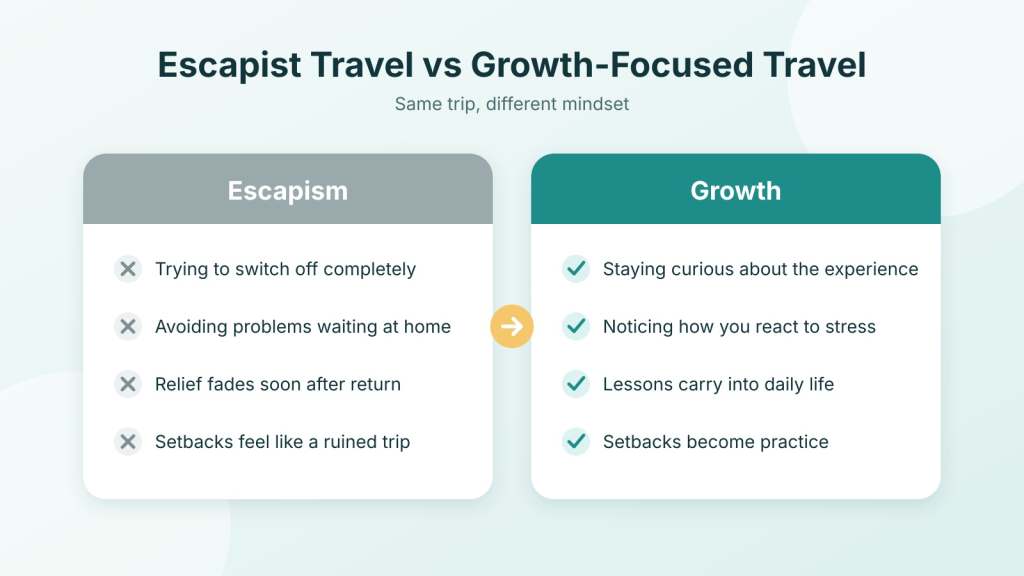
There is nothing wrong with a trip that is purely about rest. Sometimes the body and mind simply need a pause. The problem comes when travel is used only to avoid problems that are still waiting at home. The relief fades quickly, and the return can feel even harder.
Growth-focused travel works differently. Instead of trying to switch off completely, you stay curious about what the experience is teaching you. You notice how you react when the train is late, how you cope when no one speaks your language and what helps you calm down when you feel out of place.
The destination matters less than the attitude. A weekend in a nearby town can build as much resilience as a month abroad if you approach it with openness.
How travel builds resilience
It puts you in safe discomfort
Most daily routines are designed to keep discomfort low. We know where to shop, how to get to work and what to expect from the people around us. Travel removes many of those supports.
Reading unfamiliar signs, using new transport systems and trying food you can’t pronounce all create small doses of stress. Because these challenges are usually safe and temporary, they let you practice staying calm while uncertain. Each small success builds confidence that you can handle the unknown.
Anna Zhadan, Director of My Expat Mind, says this adjustment process is a key part of the experience. “Adapting to a new environment asks us to tolerate uncertainty and change our usual way of doing things. When people approach that discomfort with curiosity rather than resistance, it often strengthens their ability to cope with change in other areas of life,” says Zhadan.
It teaches flexible problem-solving
Flights get canceled. Hotels lose bookings. Weather ruins plans. Travel almost guarantees that something will go wrong, and that’s part of its value.
When plans fall apart far from home, you have to think on your feet. You look for alternatives, ask for help and make decisions with incomplete information. These are exactly the skills that help people manage setbacks at work, in relationships and during difficult life events.
Over time, travelers often notice a shift in how they react to problems. Instead of panicking, they start asking, “Okay, what are my options?” That mental habit carries over into everyday life.
It widens perspective
Seeing how other people live can change how you view your own challenges. Visiting places with different values, pace of life or living conditions often prompts reflection about what really matters.
This broader perspective doesn’t make personal problems disappear, but it can make them feel more manageable. A stressful situation at home becomes one part of a much larger world rather than the center of everything.
It builds connection
Travel often pushes people to interact with strangers. Asking for directions, sharing a table at a busy cafe or joining a group tour all require small acts of openness.
These interactions remind us that people are generally willing to help, even across language and cultural barriers. For many travelers, this experience rebuilds a sense of trust and belonging, both of which are important for emotional resilience.
Traveling with family or friends also strengthens existing relationships. Facing challenges together, from navigating a new city to dealing with delays, builds shared memories and teamwork.
It gives the mind and senses a reset
Modern life keeps most people indoors and close to screens for much of the day. Travel often reverses that. People walk more, spend time outside and look at distant landscapes instead of laptops and phones.
Dr. Samer Hamada, Founder and Medical Director of Eye Clinic London, notes that this change benefits the eyes as well as the mind. “Long periods of close screen work keep the eye’s focusing muscles working constantly. Time outdoors, natural light and looking at distant views give the visual system a chance to relax, which many people experience as feeling less fatigued overall,” says Dr. Hamada.
This physical reset supports emotional recovery. A rested body and a less tired mind are better equipped to handle stress.
Dr. Ayham Al-Ayoubi, Founder and Medical Director of London Medical & Aesthetic Clinic, points out that this recovery is often visible. “Stress and poor sleep tend to show in the skin first, through dullness, breakouts or flare-ups of existing conditions. Proper rest, hydration and sun protection while travelling give the skin a chance to recover, and that physical recovery often supports how people feel emotionally,” says Dr. Al-Ayoubi.
Travel and resilience in children
Children can benefit from travel just as much as adults, and sometimes more. New places, new foods and changes in routine teach young people that change is normal and manageable.
Of course, travel with children also needs planning. Kids feel more secure when some parts of their day stay familiar, even when everything else is new.
Parents can help children build resilience on the road by:
- Explaining plans in advance, including what might change
- Letting children make small choices, like picking an activity or a meal
- Talking calmly through problems such as delays, so children see coping in action
- Packing familiar comfort items for younger kids
- Talking about the trip afterwards, including what was hard and what went well
These habits teach children that unexpected situations can be handled, a lesson that supports them well beyond the holiday.
When travel becomes stressful
Travel isn’t automatically good for mental health. Poor planning, packed itineraries and financial pressure can turn a trip into a source of anxiety. For some people, being far from home, support networks and familiar routines can feel unsettling rather than freeing.
Common sources of travel stress include:
- Overpacked schedules with no downtime
- Unrealistic expectations of a perfect trip
- Money worries during or after travel
- Health problems or injuries in an unfamiliar place
- Feeling isolated, especially when traveling alone for long periods
The goal isn’t to avoid all stress. Some challenge is what builds resilience. The aim is to keep it at a level where you can cope and learn.
Preparation is part of resilience
One of the best ways to reduce unnecessary stress is to plan for the things that can go wrong. Preparation doesn’t take away the adventure. It gives you the confidence to enjoy it.
Sharon Amos, Director at Air Ambulance 1, says practical preparation makes a big difference when travelers face a medical problem abroad. “Travelers who know their insurance coverage, carry a list of their medications and keep emergency contacts easy to reach are in a much stronger position if something goes wrong. Planning ahead turns a potential crisis into a situation that can be managed,” says Amos.
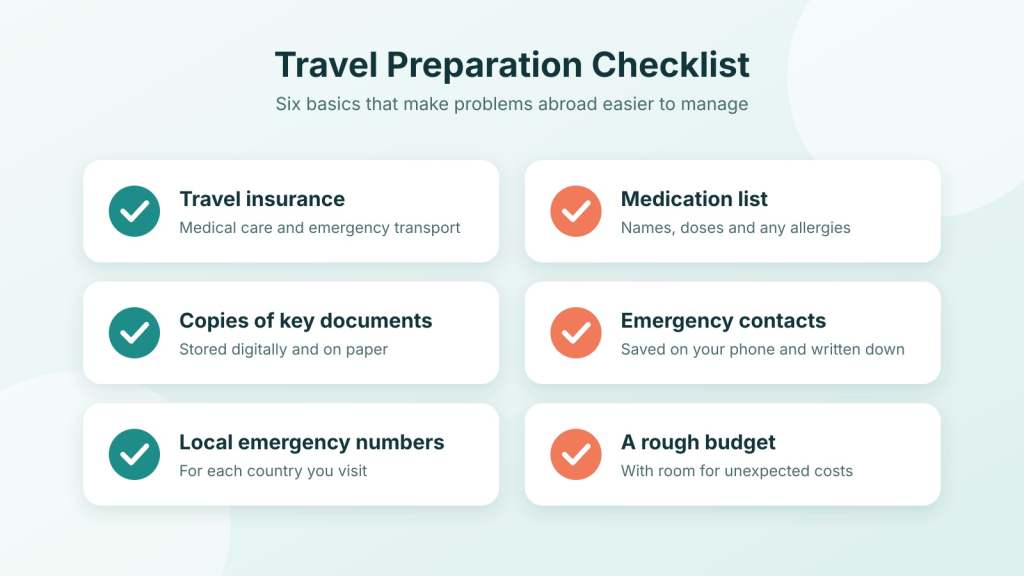
A simple travel checklist can include:
- Travel insurance that covers medical care and, where relevant, emergency transport
- A medication list with names, doses and any allergies
- Copies of key documents, stored digitally and on paper
- Emergency contacts saved on your phone and written down
- Local emergency numbers for each country you visit
- A rough budget with some room for unexpected costs
Knowing these basics are covered frees up mental energy for enjoying the trip and handling small surprises calmly.
How to travel for resilience
You don’t need a long or expensive trip to gain these benefits. What matters most is how you approach the experience. A few practical habits can make travel a stronger source of resilience.
Leave room for the unplanned
Avoid filling every hour. Free time leaves space for rest, spontaneous discoveries and recovery when something goes wrong.
Try one new thing each day
This could be a new food, a local custom or a route you haven’t taken before. Small doses of novelty stretch your comfort zone without overwhelming you.
Notice your reactions
When things go wrong, pay attention to how you respond. What helped you calm down? What made it worse? These insights are useful long after the trip.
Limit screen time
Constantly checking messages, news and social media can keep the mind tied to home stress. Set specific times to check your phone and spend the rest of the day present.
Reflect along the way
A few lines in a notebook or notes app each evening can help you process experiences, notice growth and remember lessons.
Stay connected to support
Independence is valuable, but so is connection. Keep in touch with people at home, especially during long trips or difficult moments.
Bringing the benefits home
The real test of travel’s impact on resilience is what happens after you return. Many people come home refreshed, then fall straight back into old patterns within a week.
To keep the benefits going:
- Keep one habit from your trip, such as daily walks, eating meals without screens or spending time outdoors.
- Explore your own area with a traveler’s curiosity. Visit a new neighborhood, park or restaurant.
- Remember how you coped. When stress hits at home, recall a travel problem you solved and how you handled it.
- Plan small breaks, like a day trip or weekend away, rather than waiting for one big holiday each year.
These small actions turn travel from a one-off escape into an ongoing source of growth.
Conclusion
Travel can be much more than a way to get away from everyday life. When approached with curiosity and preparation, it offers safe challenges that strengthen adaptability, problem-solving, perspective and connection. These are the building blocks of emotional resilience.
The benefits don’t depend on how far you go or how much you spend. A short trip taken with openness can teach as much as a long journey. Plan sensibly, leave room for the unexpected and pay attention to how you respond.
In the end, the most valuable thing you bring home may not be photos or souvenirs. It may be a quiet confidence that you can handle whatever comes next.
