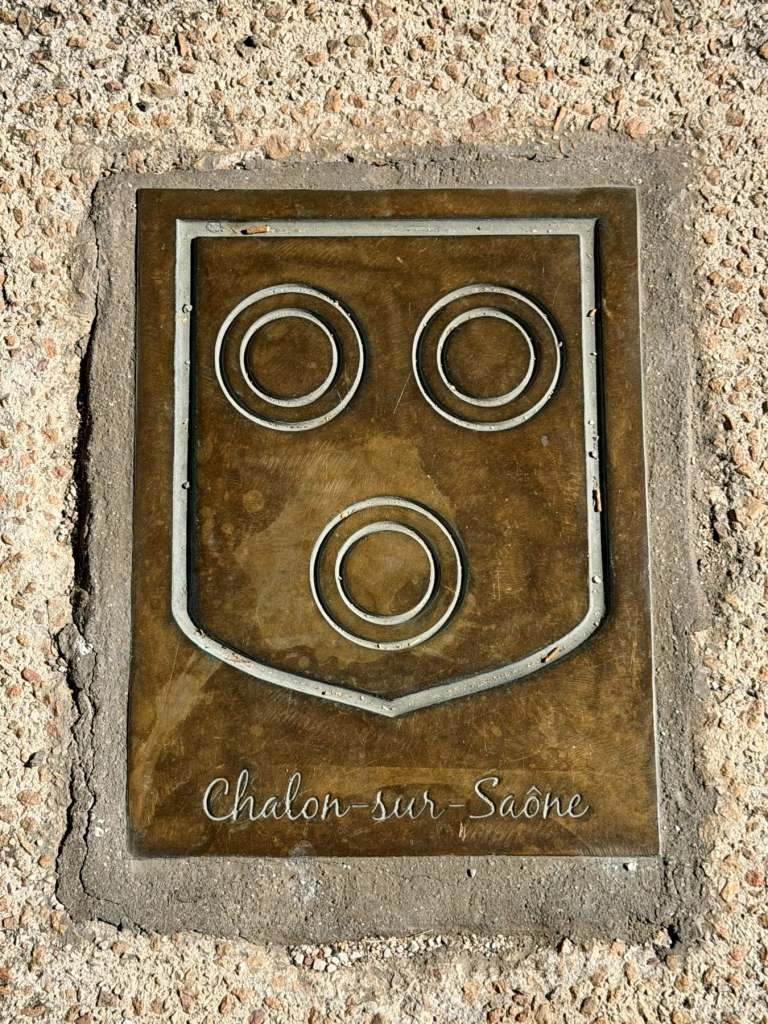

A smile creeps over my face and I realise I owe it all to Anaïs. Eight hours previously I had no idea who Anaïs was. We meet outside the tourism office at Chalon-sur-Saône. She is to be my guide for the next couple of hours.
The previous day I had arrived in this most very pleasant city in Burgundy, had an excellent lunch at the St Regis Bistrot, and then wondered around the centre down. I popped into the cathedral. Then I strolled down to the river.
Nicéphore Niépce
The one thing I knew about Chalon-sur-Saône before my arrival is that it was the birthplace of Nicéphore Niépce, who is credited with being the creator photography. Although photography was not invented by a single person, Nicéphore Niépce created the first permanent photograph in 1826.

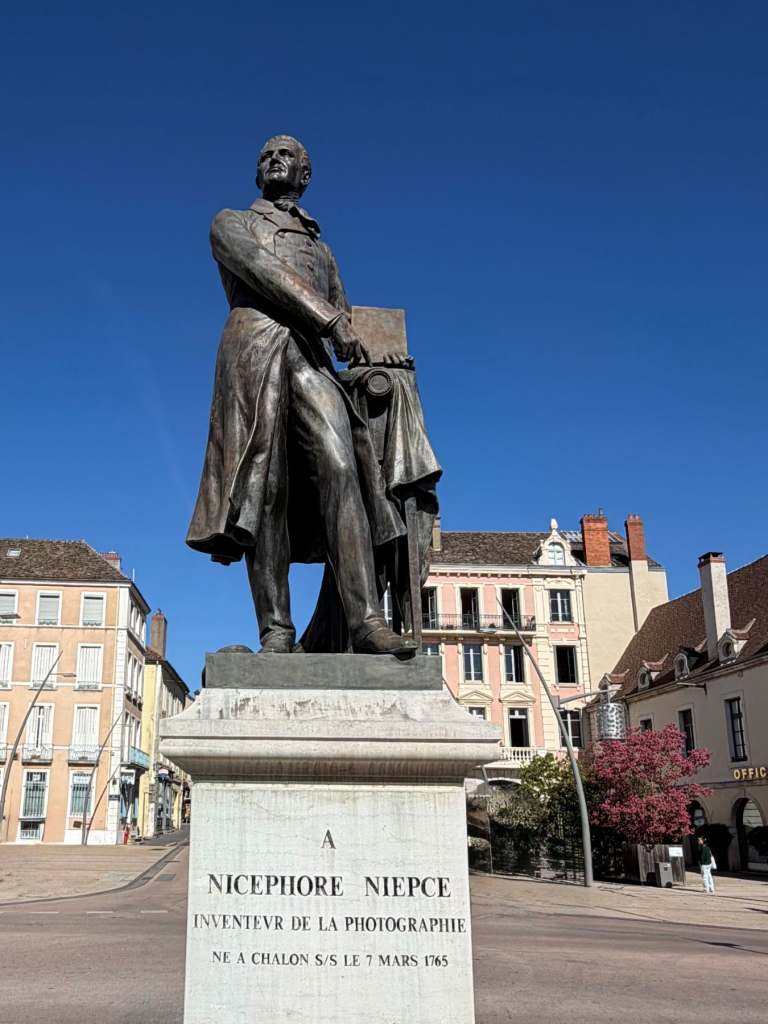
There is a statue of the inventor beside the river, next to a free-to-enter museum devoted to him. It takes you through history of photography as well as having a collection of cameras. Upstairs is an exhibition on graphics.
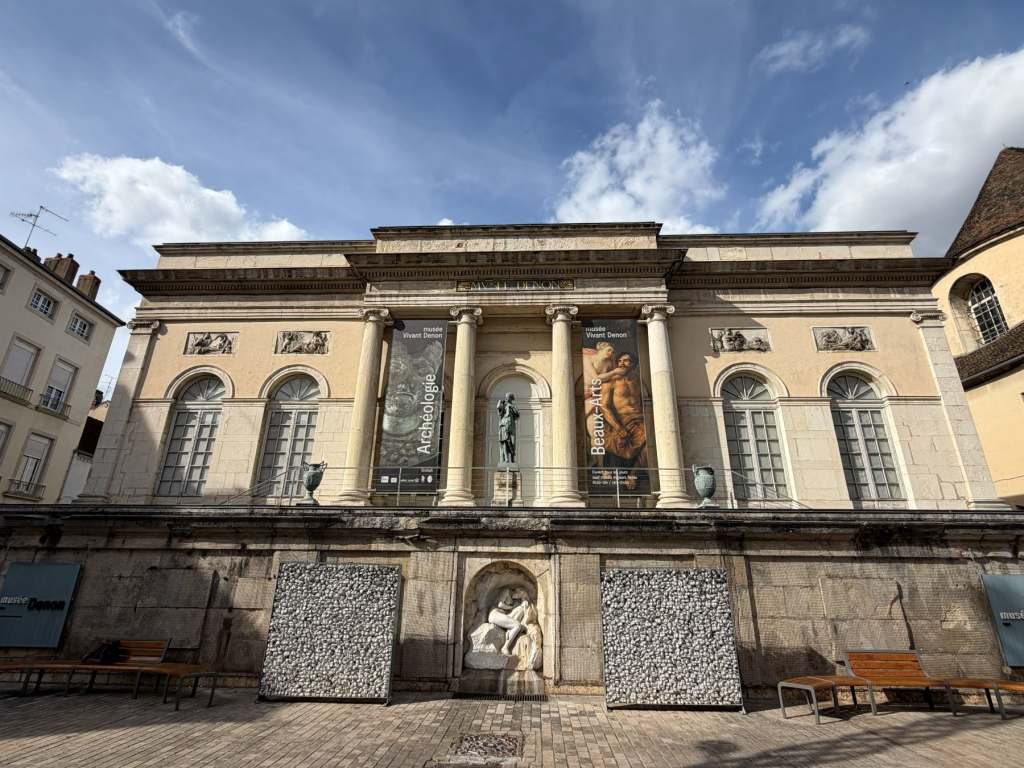
After this, I wander to the city’s impressive city square. Next to it is the church of St Peter, the only baroque church in Burgundy, and on the same street is the Museum Denton, which has a collection of fine art as well as an exhibition on the Roman archaeological remains discovered in the region. The Romans called the city Cabilonnum.
City Tour of Chalon-sur-Saône
The following day I meet Anaïs Gaufillier beside the statue to Nicéphore Niépce. We largely follow the same streets I passed along the previous day, but in a more structured manner.
Anaïs was not born here, but in a small town near Paris. What she loves about her adopted city is that it is, “not too big and not too small.”
It is also really old, settled in the third century BC, due to its location on the Saone River. It was around this time the first city was built. However, it was in the 11th century when the cathedral and now demolished castle were built that Chalon-sur-Saône expanded. More extensive city walls were built in the 15th century.
Initially, Anaïs shows me some of the houses built on the banks of the river where the wealthier merchants and traders lived.
Then we head into the centre.
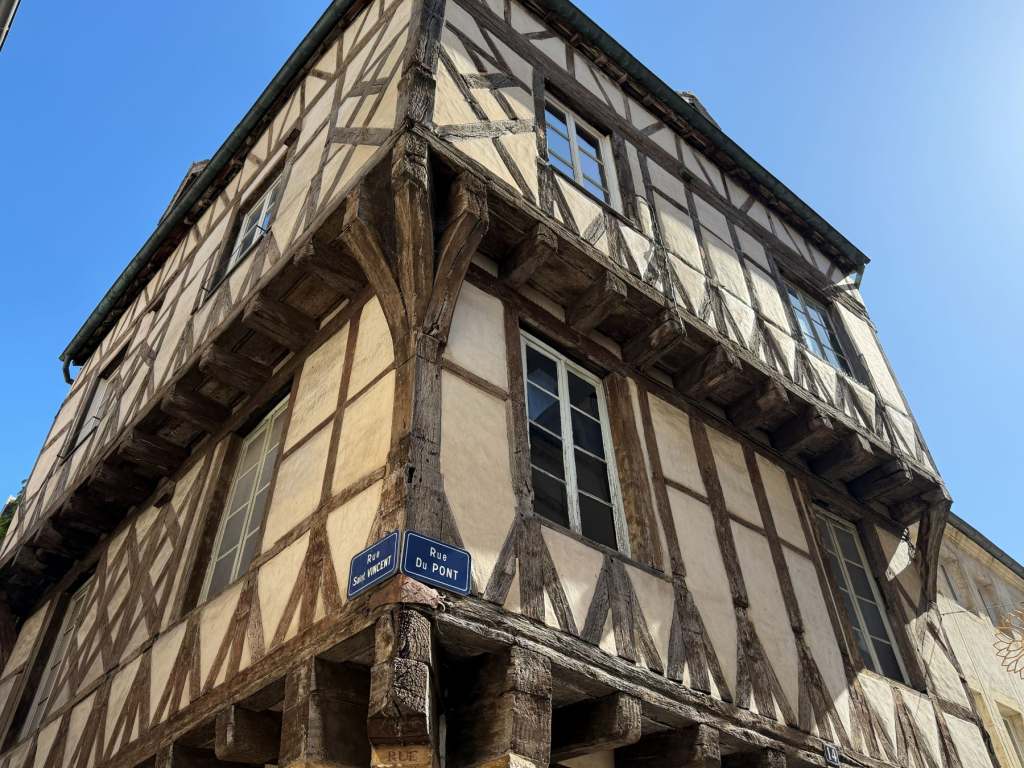
Anaïs points out Maison Perry, one of the first Italian style houses in the city built in 1614. Just along from it is a wonderful half-timber medieval house that has now become the bar, Au Lon. Apparently, it was the house of a rich merchant. Further along is the Place du Chatelet where the castle, which was destroyed in 19th century, was located. The also destroyed prison was next door. One of the most striking buildings is the House of 4 Seasons (37 rue du Chatelet). Built in 1657, the house has a beautiful façade with angels with flowers, vines and wood depicting the four seasons.
Along Rue Saint Vincent, there are lots of half-timber medieval houses, as well as large round arches which according to Anaïs, were created to allow horses to pass through to the stables.
Chalon-sur-Saône Cathedral
The previous day, I had not been that impressed with the cathedral. I had actually preferred the church of St Peter. Now, Anaïs showed me it with fresh eyes.
The cathedral dates back to the 11th century, and like many ancient religious buildings in France was rebuilt after the French Revolution.
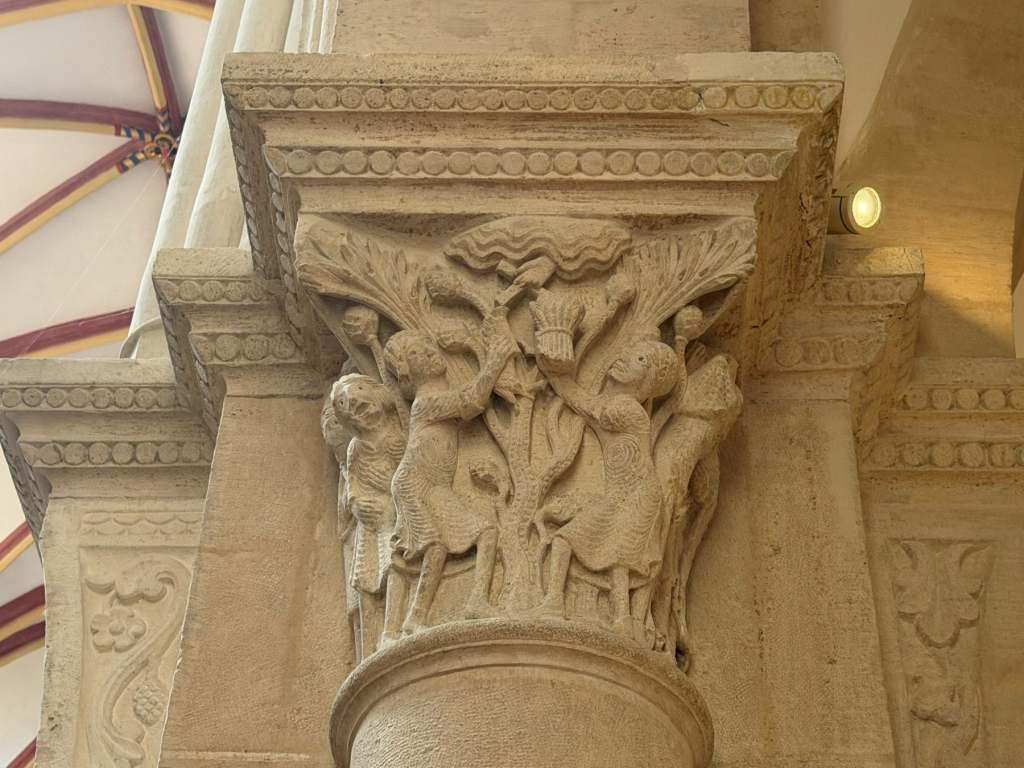
Anaïs shows me the amazing restoration work that started a couple of years ago. Pointing out one of the small chapels that has not yet been restored, she demonstrates how much darker the walls were, from centuries of candle burning. The restoration has also revealed how colourful the original walls must have been, with some of the intricate paintings now exposed. They also discovered a small statue of Saint Vincent, the patron saint of wine who is rightly revered in these parts. One of the murals of the virgin and child was only discovered a few days before my visit.
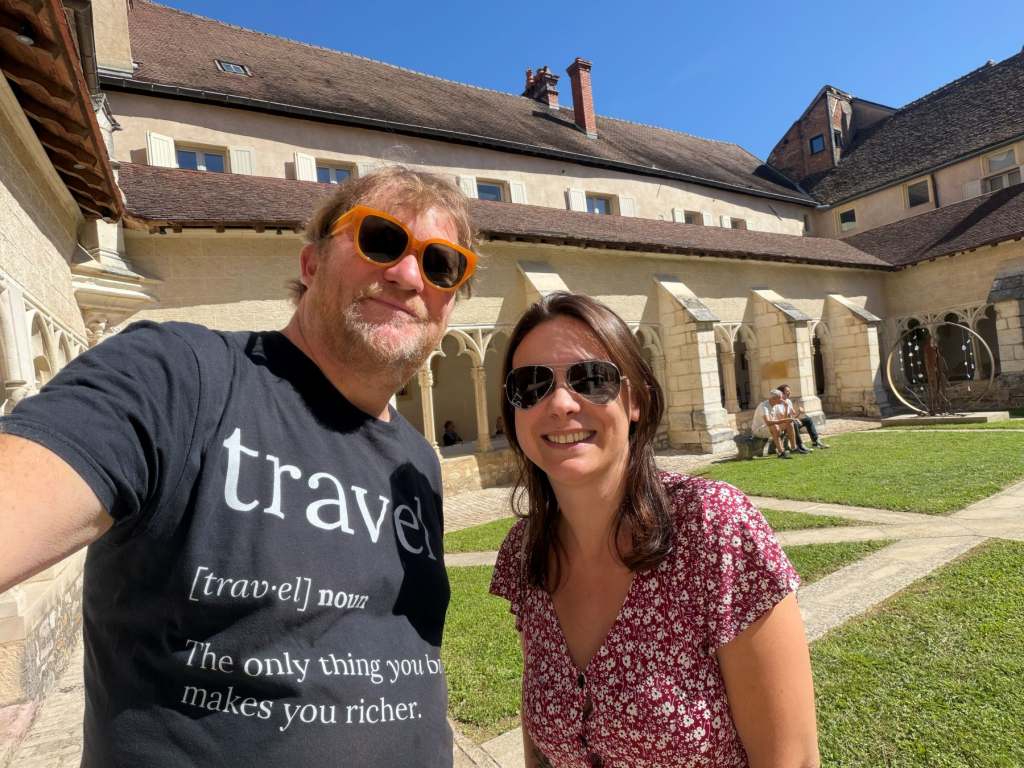
Next to the cathedral is the cloister, which was rebuilt a dozen years ago, having become a farm. The restoration work by Laëticia de Bazelaire is quite incredible. Normally, I imagine this is a very quiet spot perfect for contemplations, but today it is hosting a book fair and there is a gentle buzz.
Boat Trip along the Saône
I bid adieu to Anaïs and head to the river for my second appointment of the day.
Unlike Anaïs, Christophe is born and bred Chalon. He established Chalon Balade a few years ago.
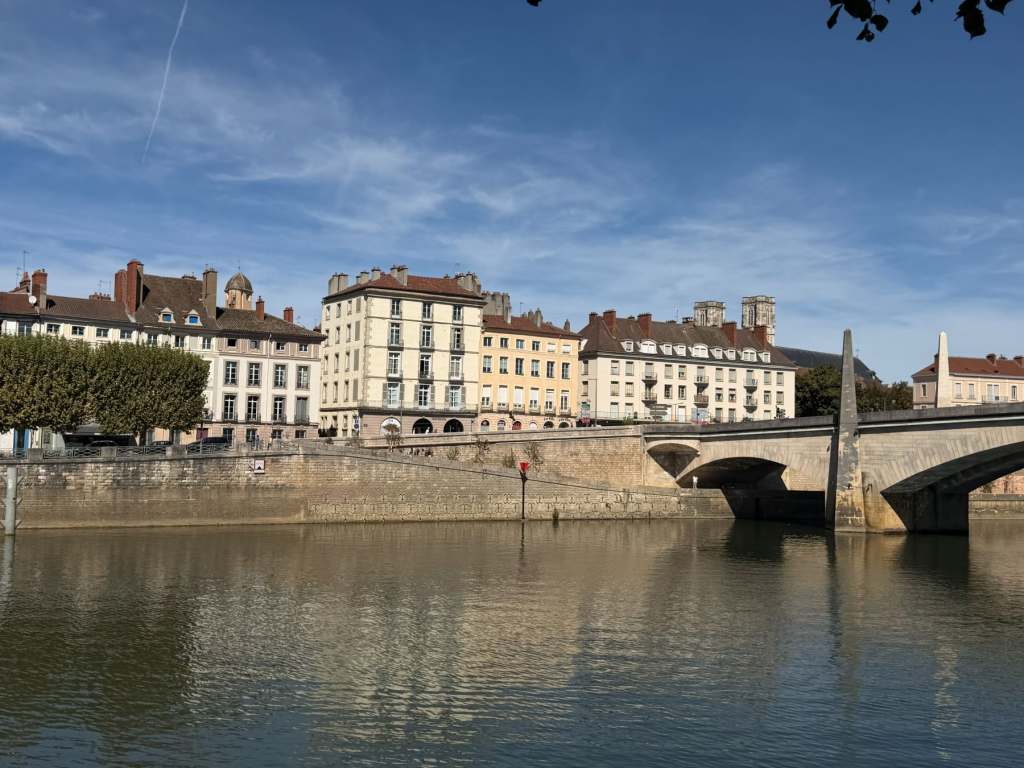
Our tour starts at the steps leading down to the river beside the statue of Nicéphore Niépce. At first, we drive around the small island in the Saône which used to be an old hospital, but now lies unattended. According to Christophe, the mayor’s office has plans to move the photographic museum there.
Christophe says Chalon is a convivial and friendly city where everyone knows each other.
He believes that tourists are good for the city. “Before everyone went to Beaune and Dijon now lots of people come here because it is nice and quiet,” he says.
The tour follows the course of the river indicating the old port and industrial buildings. Although it is given in French, Christophe is always willing to chip in with a translation. It is also the most comfortable boat for a gentle river cruise.
Sunset in the Cathedral Square
If it had not been for Anaïs and her love of the cathedral I doubt I would have returned and given it and the square another shot.
In the evening, I return to the cathedral square and drink a couple of glasses of the local Côte Chalonnaise wine that Christophe had recommended as “good but not as expensive as in Beaune”.
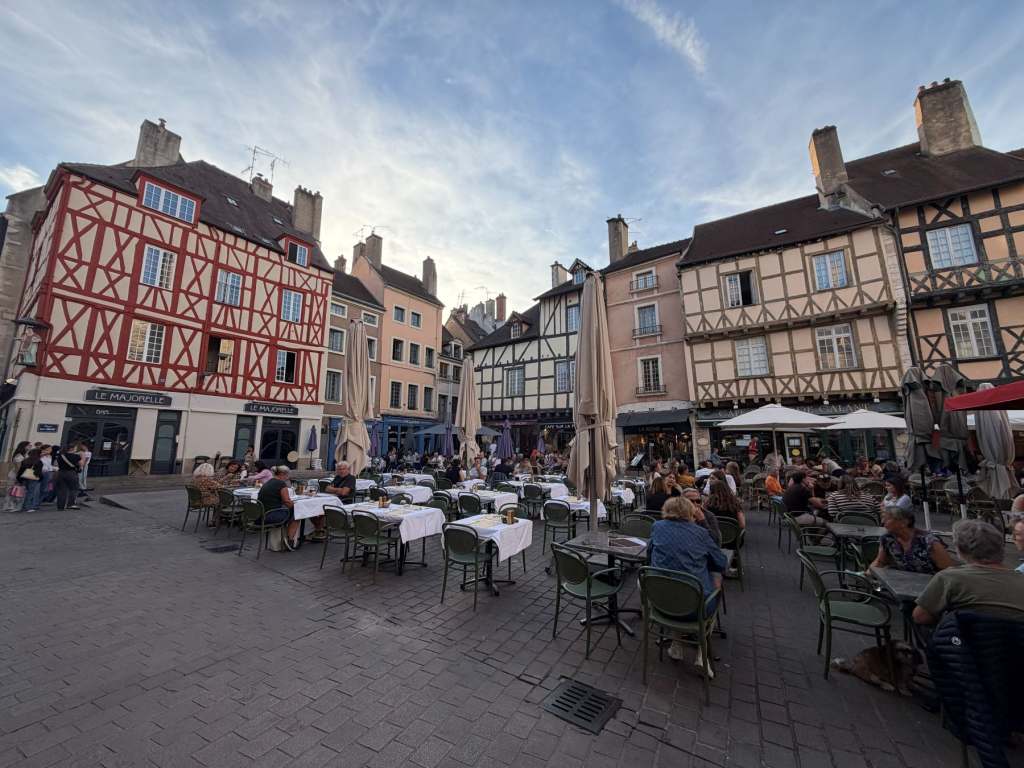
There really is a hub in the square. The vibrant chatter, all seemingly in French, the reassuring noise of the globe fountain, even the deep base from the bar next door, give the square an irresistible atmosphere.
The sun falls, its last vestige clinging onto the high steeples of the cathedral. It is totally delightful. The perfect balance. Tourism in harmony with heritage and embracing all, even a solitary travel writer typing away on his phone rather than soaking in the atmosphere. Enough I tell you. Let me soak. Merci!
Things To Do in Chalon-sur-Saône
For more information on what to do in Chalon-sur-Saône, visit the local tourism website.
If you do not have Anaïs to guide you, you can follow the golden triangle walking tour called The Orbandale Way. Maps are available from the tourist office next to the statue of Nicéphore Niépce. Orbandale is the poetic name given to Chalon-sur-Saone in the Middle Ages. Apparently orbes in old French meant golden triangles. The route is marked by golden triangles on the paving stones. Just don’t tell Toblerone.