Discover five Costa Rica wildlife encounters, from howler monkeys and iguanas to crocodiles and vultures, along the Pacific coast.
Costa Rica’s beauty comes in many shades of green. Rainforests crowd the lowlands, mist drifts through mountain cloud forests, and mangroves fringe waterways leading towards the sea.
Across its Pacific and Caribbean coasts and mountainous interior, varied microclimates support an extraordinary diversity of life. The country is home to thousands of species of plants and animals, with around a quarter of its land protected for conservation.
For travellers, that natural abundance can make even an ordinary day memorable. Encounters with wildlife in Costa Rica aren’t confined to guided tours or national parks, they can become an unexpected part of the holiday, often when you’re paying attention to something else entirely.
Guided Costa Rica wildlife excursions offer plenty of opportunities, but some encounters happen just going to the shop to buy milk. Along Costa Rica’s Pacific coast, these five wild neighbours are worth keeping your eyes and ears open for, while you go about your day.
Howler Monkeys: Heard Before They’re Seen
The first time you hear a howler monkey (main image), you could be forgiven for imagining something considerably larger lurking in the trees. Its deep, guttural roar sounds almost prehistoric, an impressive performance from an animal you might struggle to spot among the leaves.
Costa Rica’s mantled howler monkeys have dark fur with lighter hair along their sides. Their extraordinary vocal power comes partly from an enlarged hyoid bone in the throat, which helps amplify their calls. Howling is particularly associated with dawn and dusk, although disturbances can also set them off.
Once you locate the source of the noise, watching becomes a quieter pleasure. Look for a tail curled around a branch. These monkeys have prehensile tails capable of supporting their weight as they move and feed above the ground.
For visitors, the trick is to pause and look up rather than march onwards in search of the next attraction. A rustle in the canopy can reward a little patience.
Keep your distance, leave food out of the encounter and enjoy the spectacle from below. There is something wonderfully incongruous about continuing an ordinary morning beneath a soundtrack that belongs in a monster movie.
Iguanas: A Little Jurassic Park
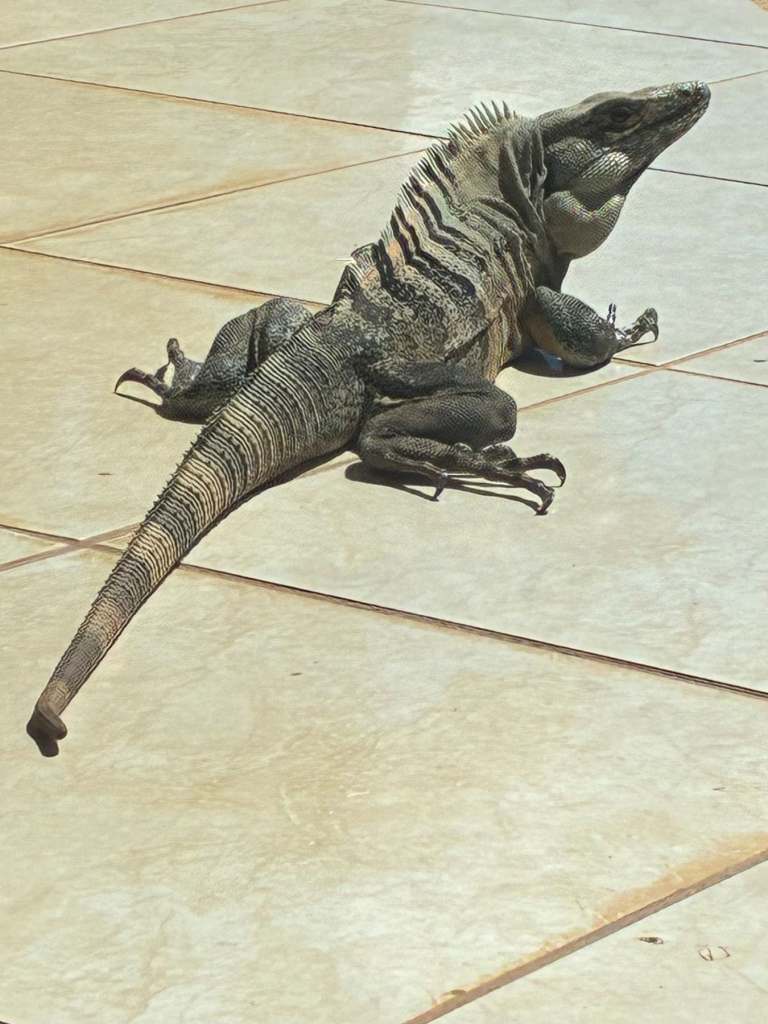
A large iguana sunning itself beside a footpath can bring a walk to an abrupt halt. With its scaly skin, crest of spines and remarkably long tail, it looks like something that wandered off a film set. Then it turns its head, assesses your presence and resumes doing very little.
Two species worth distinguishing are the green iguana and the black spiny-tailed iguana. Green iguanas are impressive climbers that spend much of their time in trees, and large males can approach two metres in length, including the tail. Their diet consists principally of plant material.
Black spiny-tailed iguanas offer another prehistoric silhouette, with conspicuously spiny tails. Their menu is more flexible: alongside plant foods, they also consume insects and other small animals.
For the visitor, spotting one is an invitation to slow down. Look carefully at sunny resting places, then check the branches overhead; an apparently empty tree may have a substantial reptile stretched along a limb.
Give it room rather than approaching for a closer photograph. A zoom lens lets you admire the details without disturbing its afternoon. The encounter might last only a minute, but it adds something unexpected to an otherwise ordinary stroll.
Geckos: The Evening’s Smallest Entertainers
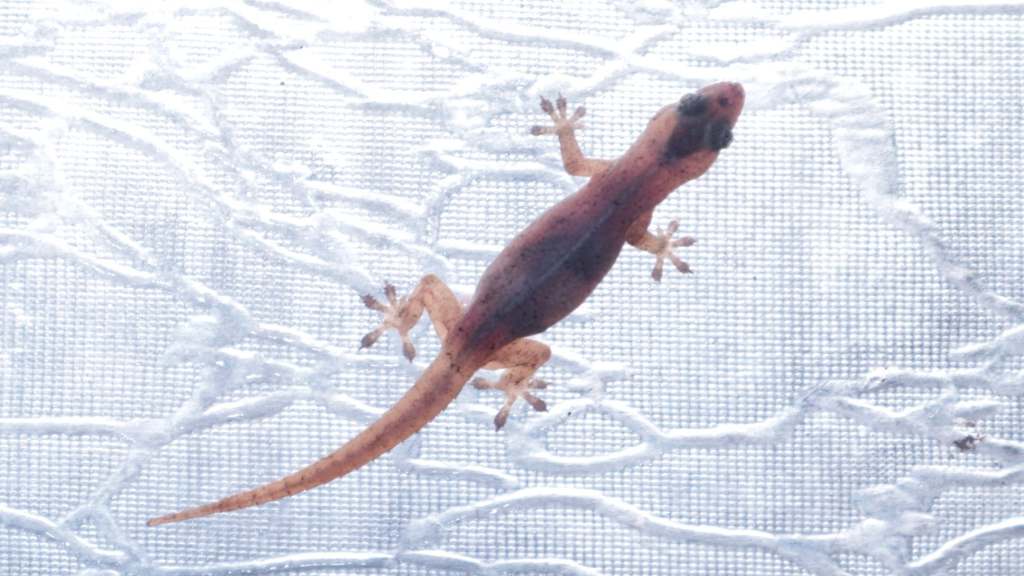
An unexpected clicking or chirping sound from somewhere above your head can turn an evening indoors into a guessing game. A bird outside? An insect behind the furniture? Look towards the wall or ceiling and you may discover a small gecko announcing its presence.
I’ll be honest, the first time I saw one when I visited Costa Rica, I quickly thought we should call a building staff member to remove it. I was pleasantly surprised to learn that not only are they harmless, they are excellent pest control.
These nocturnal lizards often gather near artificial lights, where insects provide convenient hunting opportunities. Their calls have even been studied in Costa Rica, with researchers observing a population in Punta Morales on the Pacific coast.
Watching one negotiate a vertical wall raises another question: how does it stay attached? Microscopic hair-like structures beneath the toes help climbing geckos grip surfaces, allowing feats that would leave a human reaching for a ladder.
Their stop-start movements make for surprisingly interesting viewing. One moment the animal is perfectly still and the next, it darts towards a potential meal, then disappears behind a beam before you can properly focus your camera.
Turkey Vultures: Beauty Above, Business Below
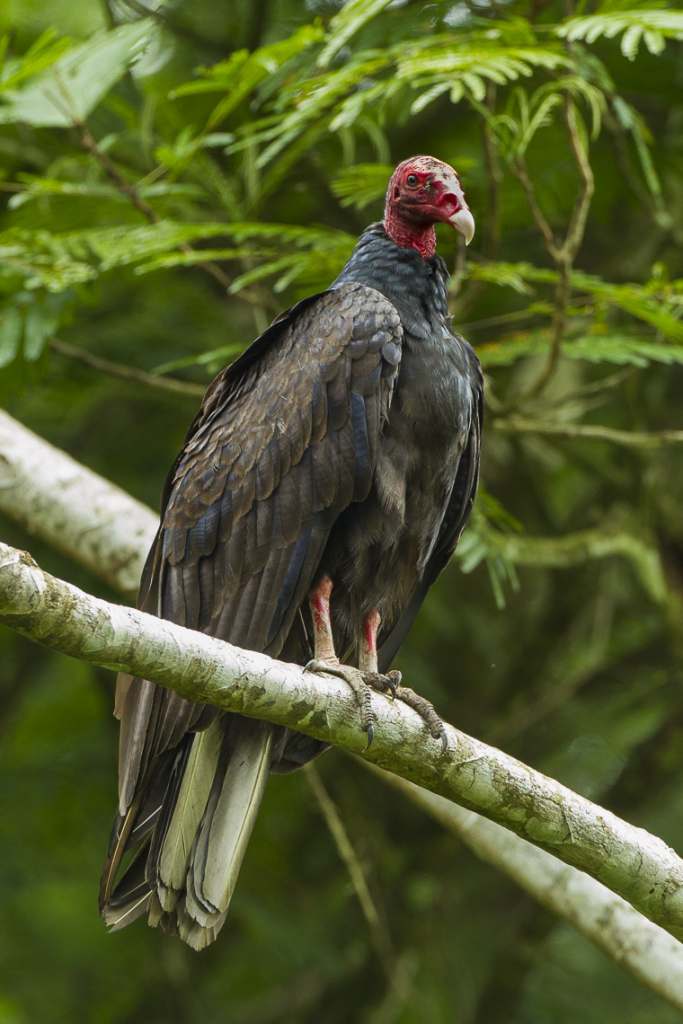
A very large bird circling above the coast can look wonderfully elegant, riding the air with barely a wingbeat. Discover that it is a vulture and the reaction may become less enthusiastic. These birds deserve a better reception.
Adult vultures have bare red heads and dark brown plumage that can appear black from a distance. In flight, look for wings held in a shallow V and a gentle rocking movement as the bird adjusts its balance. Paler flight feathers beneath the wings provide another useful identification clue.
Their feeding habits are less glamorous than their flying. Turkey vultures eat dead animals mostly, using a keen sense of smell to locate carcasses. They have also been known to frequent the garbage of many restaurants, especially the ones that don’t take the time to secure their dumpsters.
The first time I encountered them was an interesting experience. As I waited for my friends to exit a souvenir shop they were browsing, I heard four prominent thumps behind me. Not thinking anything of it, I turned around and saw four large vultures dining in a dumpster a few feet away. I had never encountered birds this big up close, with no fear or interest in humans. Nevertheless, I quickly joined my friends in the shop.
Crocodiles: Neighbours Best Admired at a Distance
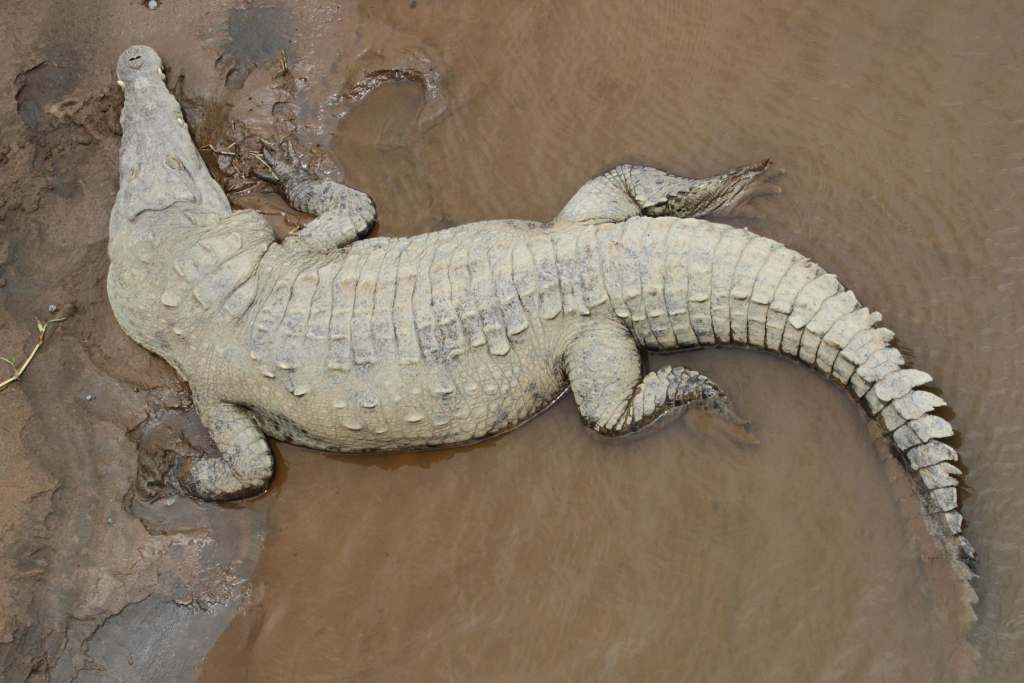
Crocodiles aren’t waiting around every corner in Costa Rica. Their presence is associated with particular habitats, including rivers, estuaries and mangrove waterways, where an encounter calls for considerably more caution than spotting a gecko.
I have seen impressively large specimens in mangroves close to the beach and in estuaries. In those places, prominent warning signs tell swimmers and surfers to stay away from the areas concerned. Seeing the animal itself makes the message much more memorable.
American crocodiles inhabit coastal waters, including creeks and mangrove swamps. Wildlife authorities describe them as generally shy and reclusive, but that is no reason to approach one or enter water where crocodiles may be present.
The practical advice is to heed warning signs, ask local authorities about unfamiliar swimming spots, and stay out of crocodile habitat. The Costa Rica Tourism Board also advises keeping a safe distance and never feeding these animals. An absence of signs should not be treated as confirmation that the water is safe.
Observed from a suitable, safe vantage point, a crocodile is an extraordinary sight. Its stillness can make it resemble a fallen log, until a movement reveals something altogether more alive. This is Costa Rica wildlife watching with boundaries worth respecting.
Getting There with Porter
My journey to Costa Rica began with Porter Airlines, flying from Toronto Pearson to Liberia in PorterReserve. The extra legroom and seating at the front of the aircraft made for a comfortable trip, while the food and drink service gave me plenty to enjoy along the way.
I was particularly impressed by the menu options, with hot food readily available, generous snacks and specialty cocktails included. It felt like a welcome opportunity to settle in and enjoy the journey.
The thoughtful touches extended beyond the cabin, as my checked bag was given priority handling for collection on arrival in Liberia. Taken together, those details made PorterReserve a thoroughly enjoyable start to the trip. It’s also less expensive than it seems, so I would recommend checking prices for the upgrade before randomly booking.
Liberia provides a convenient arrival point for exploring Guanacaste and its Pacific coastline. For travellers planning a different Costa Rican itinerary, Porter is also scheduled to launch flights between Toronto Pearson and San José on 2 December 2026, expanding the options for discovering this remarkably varied country.
Costa Rica rewards a little curiosity. Between the beach trips, restaurant meals, and excursions, there is another world unfolding in the branches overhead, along the waterways and sometimes on the wall beside you. These five animals offer just a glimpse of it.
Give Costa Rica wildlife its space, follow local advice, and leave room in your itinerary for the unexpected. Some of the encounters you remember longest may be the ones you never thought to plan.
Cover Image of Howler Monkey Paul Harrison / Wikimedia Commons / CC BY-SA 4.0
