


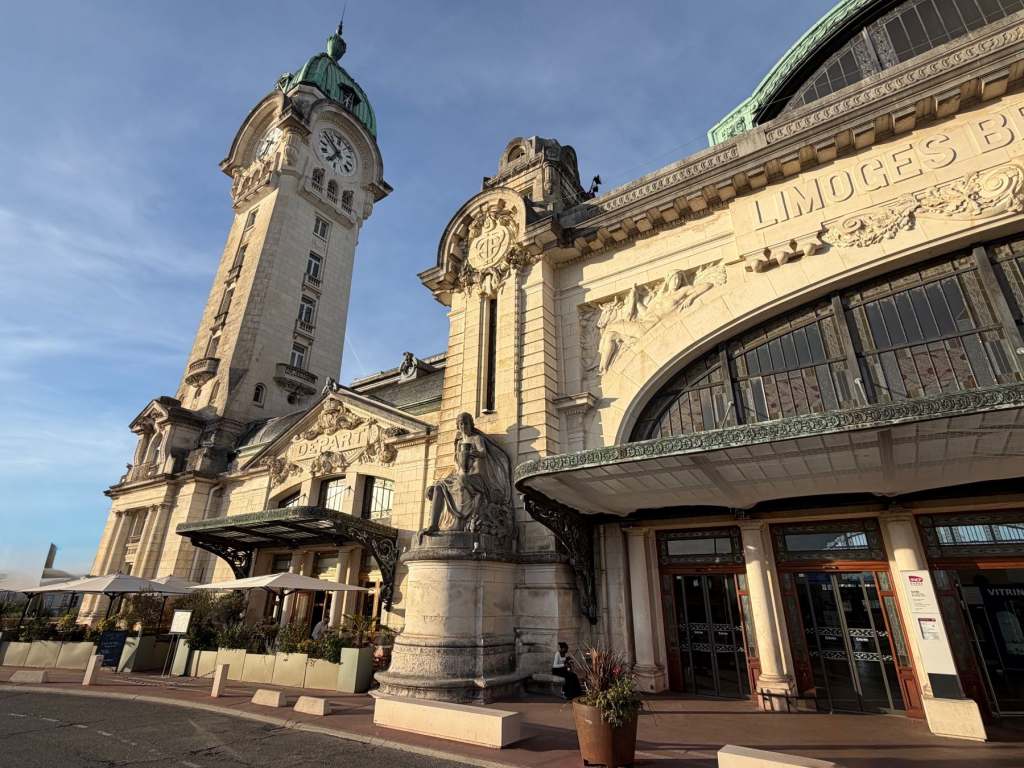
Is Limoges-Bénédictins the most beautiful railway station in France? As I sit enjoying a beer at Léo Léa Bénédictins restaurant watching the sky turn pink with the sunlight gleaming off the nearby buildings and starlings swarm in their thousands, it is easy to see why many believe so.
Designed by architect Roger Gonthier, its copper dome dominates the skyline. However, inside is even more spectacular. The Art Deco stained glass created by master glassmaker Francis Chigot, is wonderful, as are the statues depicting the various directions in which trains used to run from this glorious station, built in 1929. It is well worth a visit even if you don’t have a train to catch.
But Limoges-Bénédictins is much more that a beautiful railway station, it is a testament to the industrial growth of this proud city that has received UNESCO Creative City recognition. Of its savoir faire.
Discovering a Savoir-Faire in Limoges : Porcelain
A small market town, Limoges expanded tenfold during the 19th century, as the porcelain industry developed.
It was Marco Polo who brought porcelain to Europe from his travels in China, but it was not until the first kaolin (the raw material for porcelain) mine was discovered in 1709 near Meissen in Germany, that Europeans were able to produce their own porcelain.
That porcelain is produced in Limoges at all is largely due to chance. Apparently, Mme Darnet chanced upon it while washing her clothes in Saint Yrieix La Perche. The first porcelain factory was established in Limoges in the mid-18th century. The town had a history of creating enamel, and could adapt some of these techniques to porcelain production.
Bernardaud Porcelain
I learn this on my tour of the Bernardaud factory. The factory has stood on the same site since 1863, with ownership remaining within the same family throughout. They produce three million pieces of porcelain each year, and are regarded as the number one porcelain brand in France.
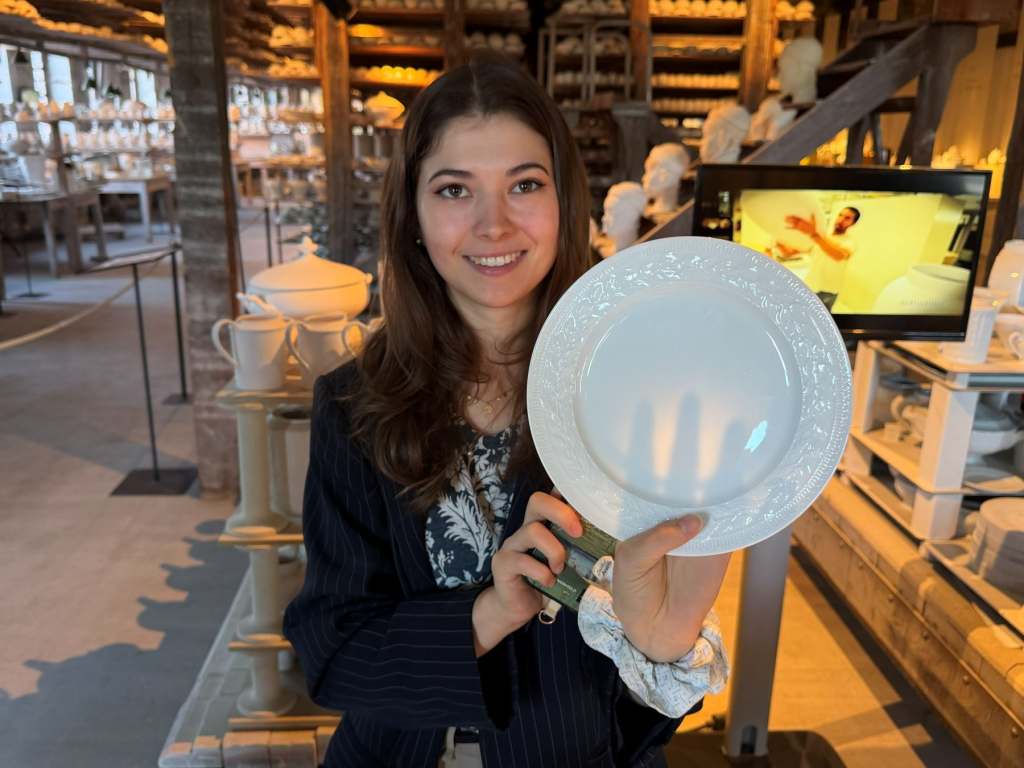
The warehouse made porcelain until the 1990s, but production has now been transferred to a separate factory outside of town. The factory now largely serves as a museum, containing more than 200,000 pieces.
On the tour, I learn how porcelain is produced, before being shown some of the more extravagant, and expensive pieces, including Jeff Koons’ lobster. There is also a rotating exhibition, which at the time of my visit, featured porcelain by young designers. If you want to book a tour (Monday, Wednesday, Friday) in English, make sure you request in advance.
Ateliers Arquié
While a lot of the work at Bernardaud has become automated which reduces waste, at Arquié everything is carried out by hand. However, the workshop has adopted a contemporary approach to Limoges porcelain. Even the warehouse has had a modern makeover from local street artists.
As at Bernardaud, I am shown the whole process of how porcelain is made. However, while at the former site, the information is recorded with the workers kept behind a glass screen, at Arquié I can walk around the factory and converse with the artisans.
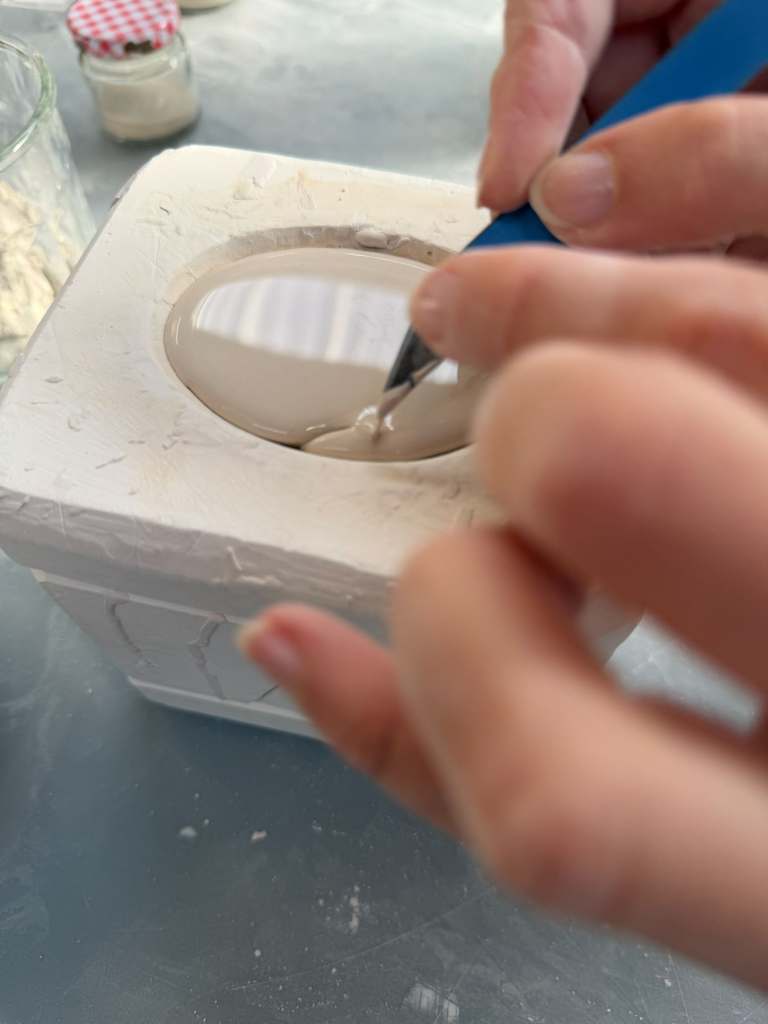
My excellent guide Valentine talks me through how they mix the porcelain, make the moulds and then fire the porcelain at least twice, once before and once after the glaze is applied, before the pieces are painted.

Four des Casseaux
I was fortunate enough to visit Stoke, which is the home of pottery in the UK. It was hard not to draw parallels between it and Limoges. Although the latter is more beautiful, perhaps where Stoke has an edge over Limoges is in its preservation of industrial architecture.
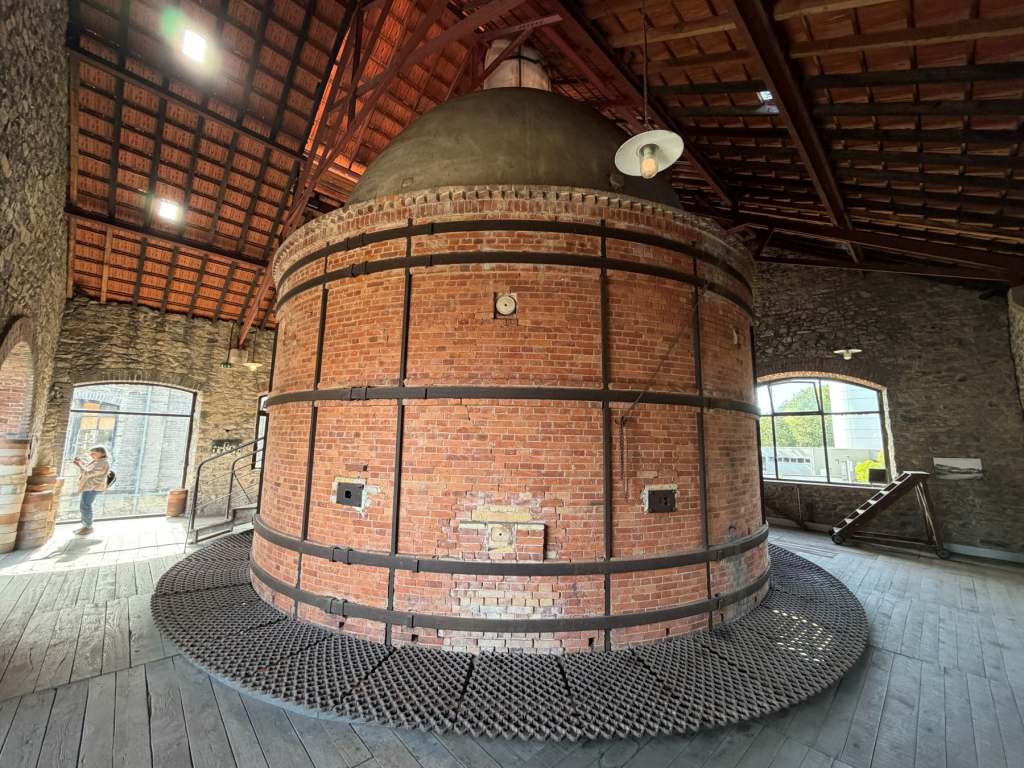
However, Thomas Hirat is doing his best to correct this. He shows me the Four des Casseaux, one of the last surviving 19th-century porcelain kilns in Limoges. The kiln used to fire pots until the 1950s. Apparently, it took up to 14 days to load the kiln, then fire and unload. It must have been a filthy job.
The kiln was due to be demolished in the 1980s, but was protected and is now part of a museum, which opened in 1992. You can step inside the kiln, and also see the wonderful photographs depicting what life was like for the workers.
According to Thomas, in 1900 there were 55 porcelain factories and 130 kilns in Limoges, employing 12,000 people. Four des Casseaux is not alone, the former Havilland Kiln is also a heritage site you can visit. Cousins of the plane manufacturers, the Havillands were responsible for transforming the porcelain industry. Now, the company has been taken over by Bernardaud, who want to bring back the “golden age of Havilland,” I am told on my tour.
There is also the excellent Musée National Adrien Dubouché in Limoges with a fine collection of porcelain including some beautiful art nouveau pieces.
City of Leather Cité du Cuir, Saint-Junien
Although Limoges is predominantly renowned for its porcelain, the surrounding countryside reveals a far greater breadth of artisanry. It is also easy to explore by car.
The town of Saint-Junien has long been known for its glove-making and leather craftsmanship. This is celebrated at the Cité du Cuir, which only opened on 21 December 2025 is fully accessible.
Leather making in Saint-Junien can be traced back to the middle ages. The Cité du Cuir is located in an old washing facility. The town still is a centre for quality glove making.
My museum visit starts watching a film on the history of leather and Saint-Junien. Then the museum is divided into thematics, such as how we produce leather, and gloves. The museum has a selection of 4,000 gloves, only a fraction of which are on display.
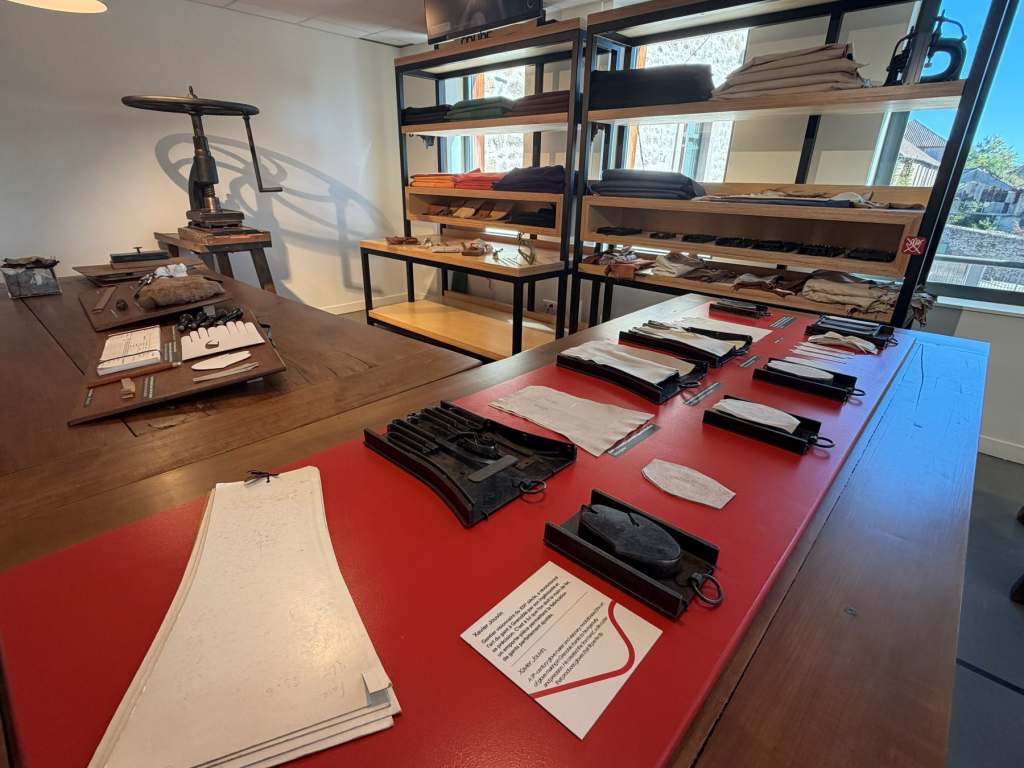
The museum is extremely interactive, with lots to entertain the kids. You are also encouraged to feel everything, which I find quire liberating.
It is also educational, and like the Four des Casseaux, does not shirk from political issues. There is a section on unions for instance. Perhaps the most interesting section is the final one where we are shown all the innovative approaches to using leather. Several days a month a cooper works inside the museum, so it us worthwhile to check ahead before you visit.
Moulin du Got Paper Mill
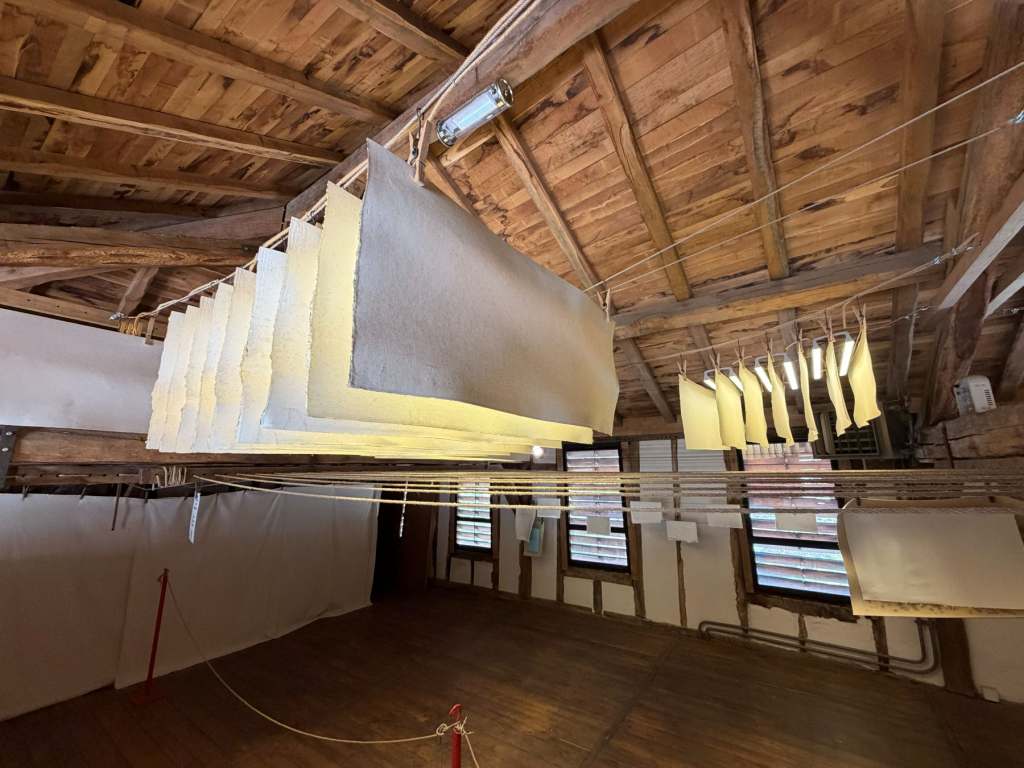
Perhaps my favourite visit in my brief trip around Limoges was to the Moulin du Got. This 15th century paper mill was closed in the 1950s, and saved from destruction towards the end of the last century. An association was formed in 2003 to create paper using ancient techniques.
In addition to being a beautiful building, the mill has various people creating paper from using linen, hemp and cotton. Some of the paper even uses vegetables.
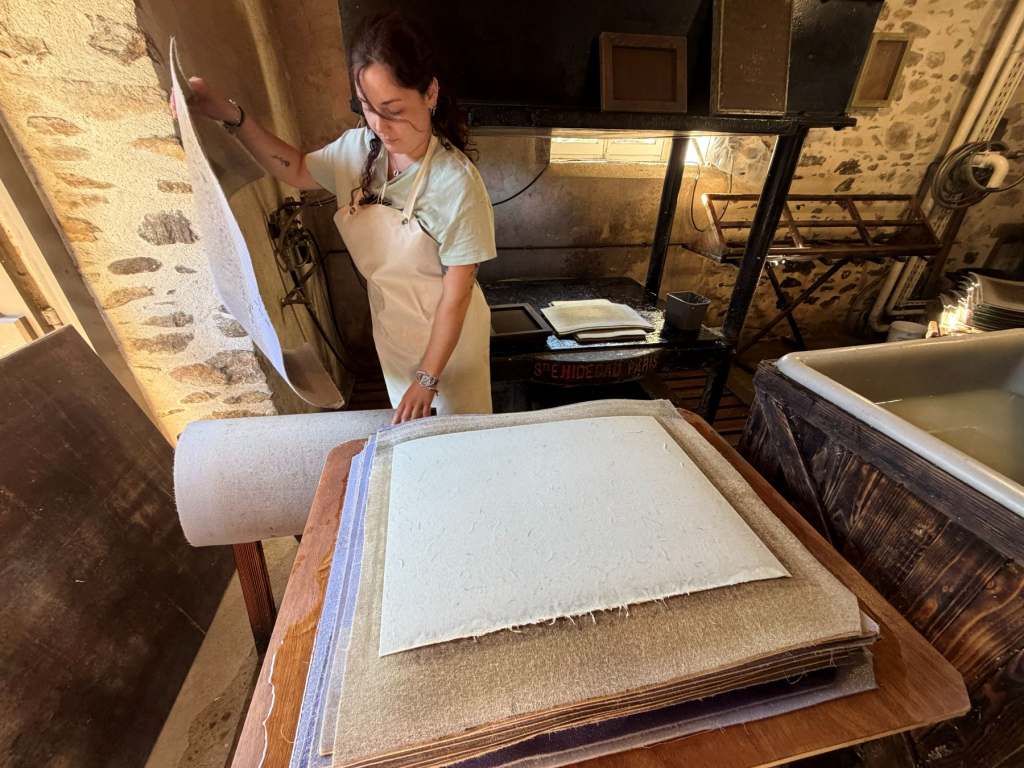
I chat with Camille who has been making paper here for six years. During my visit she was adding artichoke to the paper mix.
“I discovered I love making things with my hands,” she explains. The paper takes two to three days to dry. “The artichoke gives the paper more texture,” she adds.
Although the water mill is no longer in use, they use a 19th century machine to make the paper leaves.
Then it is my turn. The paper I am provided with is a mix of linen cotton and hemp. It is harder and stronger than the recycled paper, which is constantly being cut, because the fibres are longer.
It really is very simple to create your own paper, which I take home with me.
Cité internationale de la Tapisserie in Aubusson
My final visit is to the Cité internationale de la Tapisserie (tapestries) in Aubusson. The museum is situated within the former 19th century decorative art school and was opened in 2016.
Aubusson has a rich history of creating tapestries which the centre is helping to preserve. Each year it accepts students to train as weavers. I meet some of them.
Jules (27) is only in his third week of training, which will last two years. Brought up in a small town, when he moved to Paris he met many creative people, and decided he wanted to become an artist. His grandmother used to work in textiles, so becoming a weaver seemed a good fit.
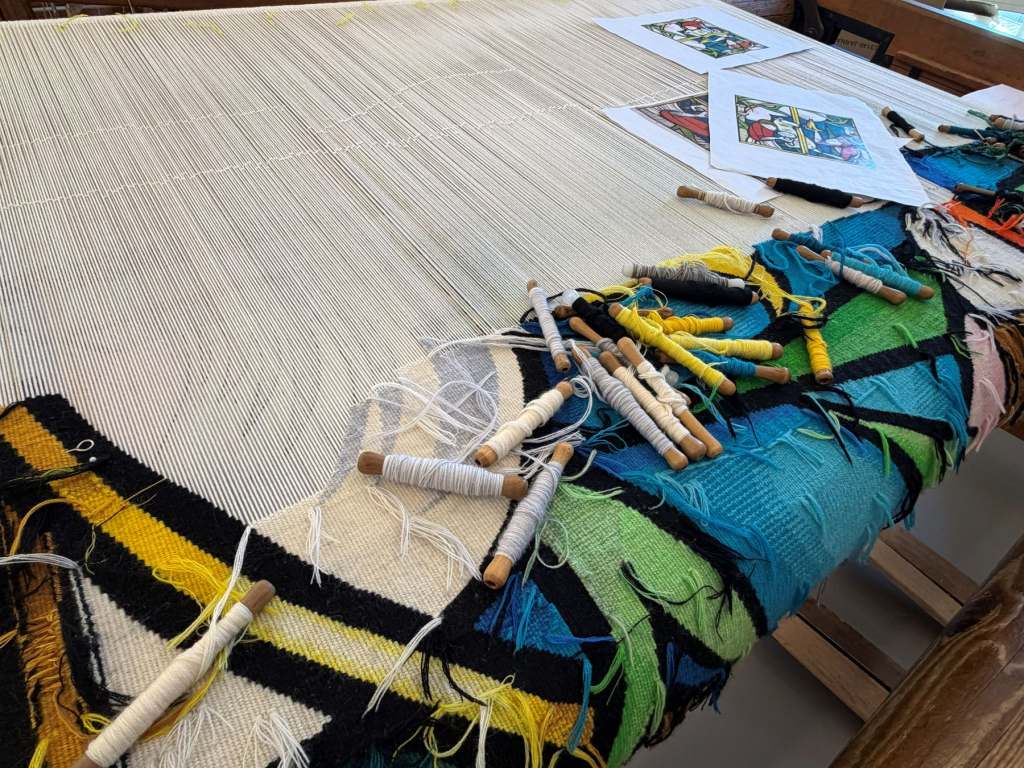
He shows me how they weave upside down, with back of the tapestry sitting on top of the loom. Apparently, this is easier and quicker. Their tapestry is copied from a cartoon. Although, he is only creating simple tapestries so far, he tells me he is very happy in his choice,
Just along from their workshop is the room where Patrick, Marie and Luc Guillot are creating the final scene in the Bayeux Tapestry. The original tapestry was damaged in the middle ages with the final scene where William I is crowned in Westminster Abbey on 25 December 2026 was destroyed.
The Guillot family won a commission to weave the final piece based on a cartoon by Hélène Delprat. Part of MILLENIUM – 2027, European Year of the Normans, an initiative led by the Normandy Region in partnership with several European territories, the tapestry will be displayed at Château de Falaise, where William was born, and subsequently the medieval Chapter House Westminster Abbey, from 1 May – 30 July 2027.
They are using the same technique as in the middle ages, although the Bayeux Tapestry itself was embroidered rather than woven.
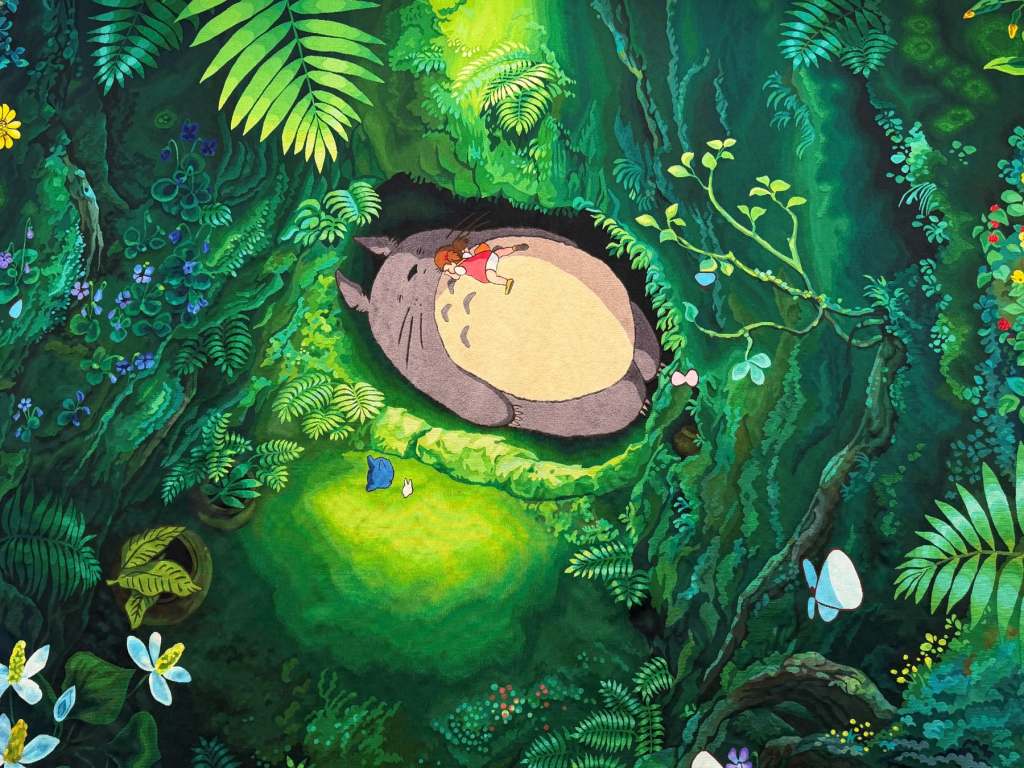
Patrick, who has been weaving for 50 years, is extremely proud of his work. Downstairs in the gallery is some of his completed work, including My Neighbor Totoro, a wonderful tapestry based on the character created by the director Hayao Miyazaki.
The museum also has some incredible pieces, the oldest of which was created in 1480, as well as some more modern tapestries, including the La Chant du Monde by Jean Lurçat.
While it takes many years to develop the skills of Patrick and his family, you can learn to weave in the nearby town of Felthum. Atelier A2 has workshops that last either one or two weeks.
Uniqua Limoges and FRAC
After Aubusson I return to Limoges, where I visit Uniqua Limoges, which has workshops in how to make trainers from leather. They also make shoes belts and key rings.
The helpful Noemie shows me around the workshop at the back of the shop where they have 90-minute tours explaining how the trainers are manufactured. Alternatively, you can arrange to make your own trainers and take them home with you.
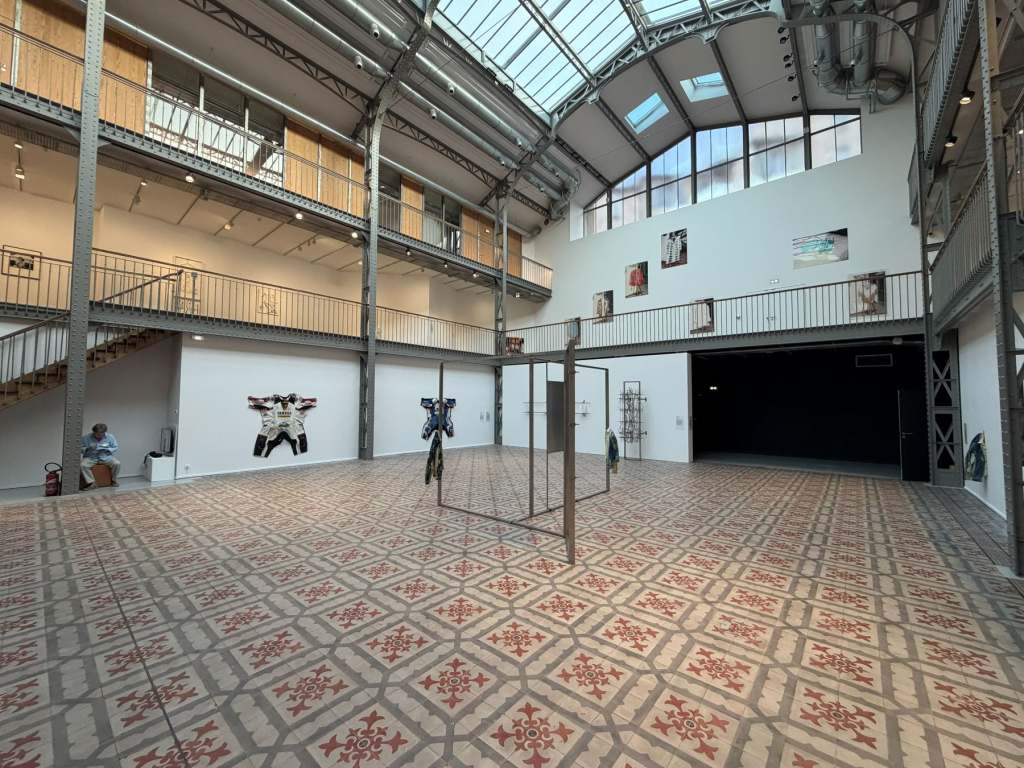
On my final evening in Limoges, I am fortunate enough to attend the opening of an exhibition at Frac-Artothèque Nouvelle-Aquitaine (FRAC).
The building used to be a printers, but has recently been converted into a contemporary art gallery. The space is vast, once more showing how former industrial buildings can be turned into creative spaces given the right know-how. The exhibition I saw demonstrates the role clothes play as a second skin, having the potential both to control and liberate bodies.
It was a most interesting way to conclude my visit discovering the savoir-faire in Limoges and the surrounding countryside. The following morning, I returned to Limoges-Bénédictins to continue my railway journey through France. Sadly, the starlings were not there to bid me adieu.
Things to Do in Limoges and Nouvelle-Aquitaine
To discover more about what to do in Limoges, go to the Destination Limoges website, and for the wider Nouvelle-Aquitaine region, click here.
Getting to Limoges
Although Mark travelled by train to Limoges. You do have the option to fly to Limoges Airport. There are multiple flights to Limoges from UK. Ryanair has direct flights from the UK to Limoges, with routes from London Stansted, Manchester, Bristol, East Midlands and Leeds Bradford.
Weather in Limoges France
You can check the latest weather in Limoges here.