Mark Bibby Jackson tours the Route of Industrial Culture Ruhr, and sees the region’s impressive preparations for the International Garden Exhibition (IGA) 2027.
“Is it beautiful yet?” I ask my young American colleague. A few days earlier I had explained how I find industrial architecture “beautiful”. Impressive she had agreed but beauty, that was a step too far. “Just wait until you reach Zeche Zollverein,” I said. And here as we stand looking at what has been described as the Metropolis of coal mines, after the Fritz Lang film, she eventually nodded back to me, “It’s cool.”
It was here my journey tracing how our industrial past can be transformed into a positive future, given the right finding and vision, commenced seven years earlier. Then I was struck not just by the enormity of this most amazing industrial site, which was granted UNESCO status in 2001, but by the way it had been transformed into both a green, with 40 hectares of nature, and a cultural space.
Our tour around it takes a couple of hours and yet there is plenty that we do not see. The immensity of the place is astounding. However, it is just one of several sites we have explored on our tour of the Route of Industrial Culture in the Ruhr.
Duisburg
It had started a few days earlier in Duisburg. Although the city can be traced back to the 5th century, it was in the mid-19th century that it developed, just like much of the Ruhrland. The town benefits from its location between the Ruhr and Rhine rivers, and even today boasts the largest inner harbour in the world.
With the decline in industry the townsfolk invited Norman Foster to create a master plan to revitalise the inner harbour. His aim was to keep wherever possible the old buildings, but to convert their purpose. Where they could not be preserved, modern buildings were built, creating a juxtaposition of old and new.
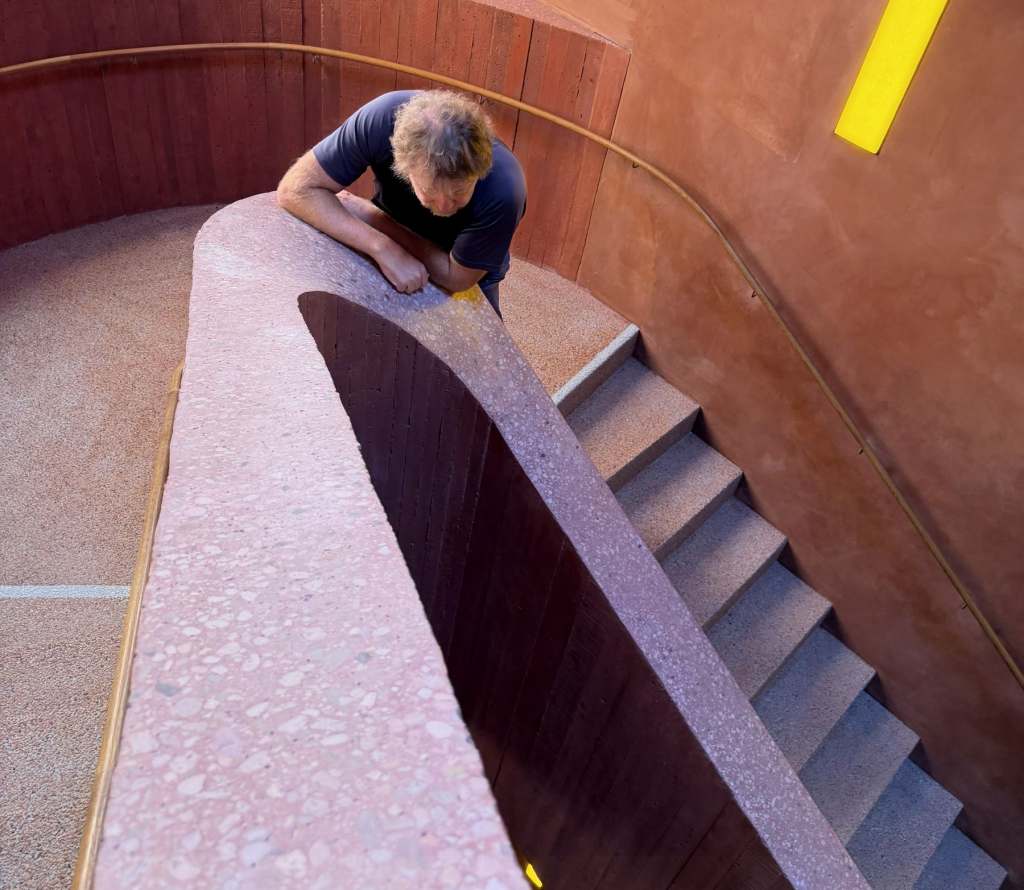
Perhaps the best example of this is the Küppersmuhle Museum of Modern Art (MKM), which was created in a former grain solo. During our visit there was an amazing exhibition of the work of Jaume Plensa, but the building and especially its incredible staircase is well worth the visit.
Route of Industrial Culture Ruhr: Duisburg-Nord Landscape Park
The main attraction of Duisburg lies just outside the city. The Duisburg-Nord Landscape Park has been created on the site of the former Meiderich ironworks created by Albert Thyssen at the start of the 20th century.
At its height some 2,000 people worked here, but by the mid-1980s it was deemed to be no longer economically viable due to the importation of steel from emerging nations such as India and China.
The question, as with so many former industrial plants across the world, was what to do with it. The solution was a creative mix of preserving the past, and creating new green and cultural spaces.
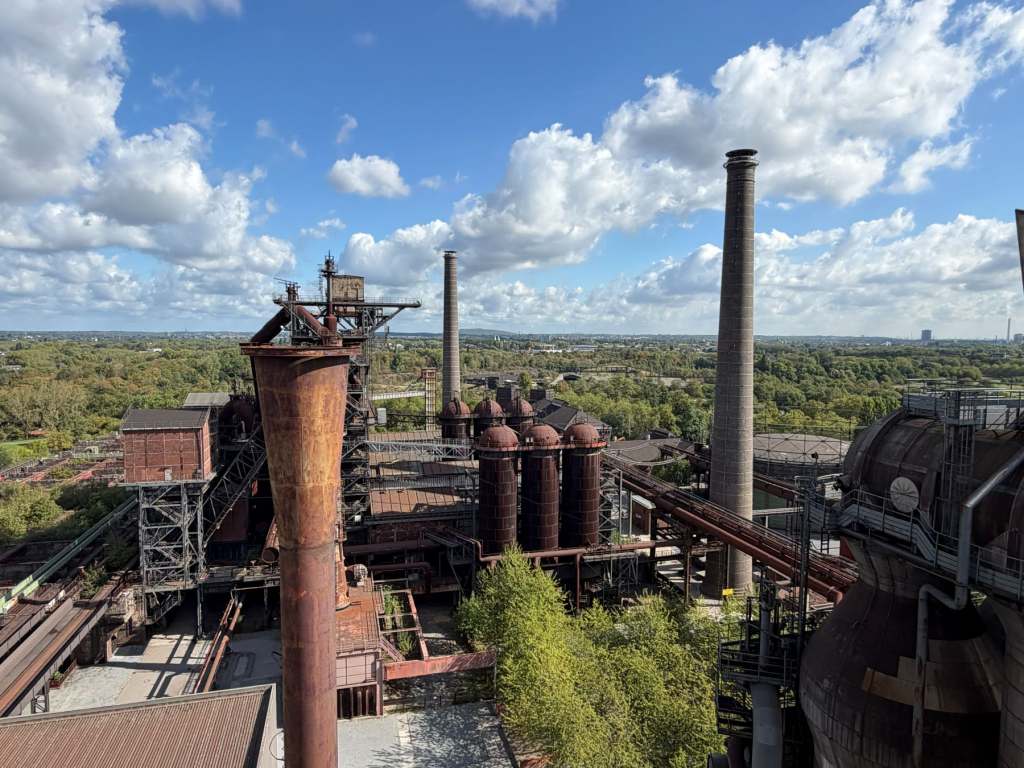
Closed in 1985, the landscape park was developed in the 90s, Now, one of the gasometers has been converted into the largest artificial diving centre in Europe, storage bunkers have been converted into climbing frames, and perhaps most importantly of all, and in keeping with the concept of Foster’s masterplan, the space is open 24-7 allowing residents to enjoy the wonderful green landscape for free. It also hosts major events including concerts by the Duisburg Philharmonic Orchestra and an open air cinema.
“When it started nobody could believe what you could make with it,” says our guide Michael Clark, who was appropriately born in Ironbridge Shropshire. “The workers had pride but now the pride has been shared with other people who have visited.”
Each year it attracts 1.2 million visitors, and is part of the Route of Industrial Heritage. We climb blast furnace 5, the most recent of the furnaces, built in 1973. The views from atop are staggering especially when you imagine just how polluted the air must have been at its peak.
As one of our group says, “a sad past but amazing present.”
IGA 2027
The main reason for our visit is to get a sneak preview of the International Garden Exhibition (IGA) 2027, which is due to open in April 2027.
The first site we visit is the Future Garden Rheinpark in Duisburg. Already converted into a park, on the site of a former steel mill and factory, its main attraction is its location on the Rhine. The concept behind the park is to show how city and landscape can be intertwined, with several exhibitions emphasising sustainability.
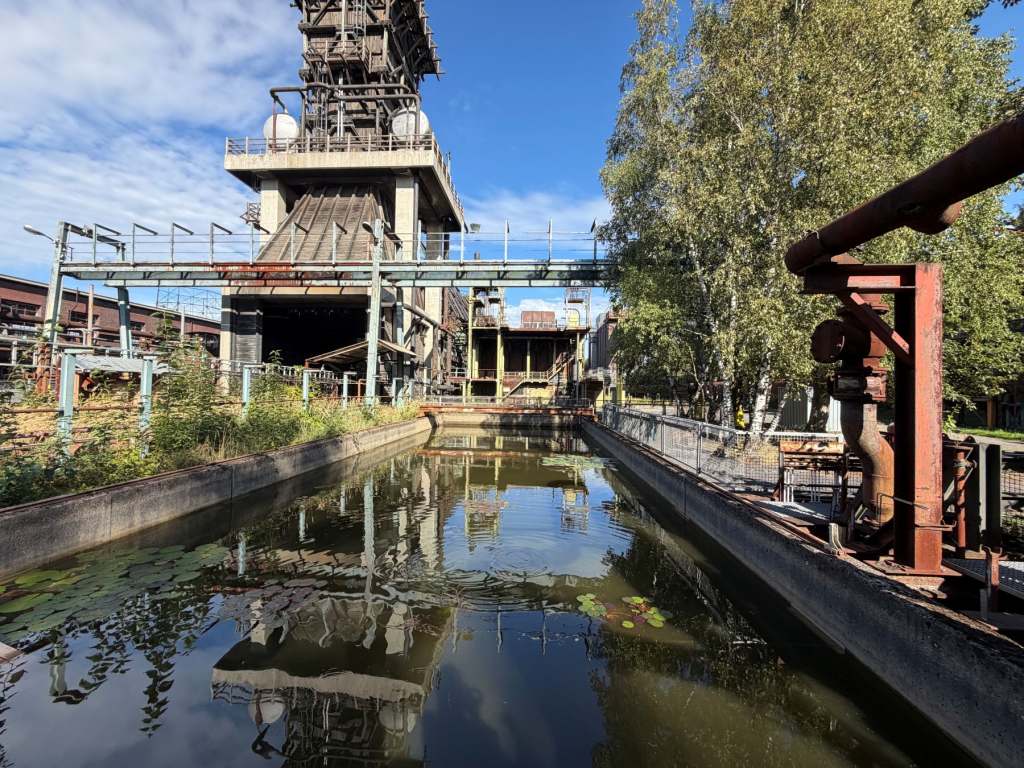
The second site is the Future Garden Dortmund, which has been created on the site of the Hansa Coking Plant. This feels much more like the Duisburg-Nord Landscape Park although on a smaller scale. Nature intertwines itself with industrial relics. It also has an impressive sculpture consisting of interlocking rings which was being constructed during our visit, and which kids will be able to climb.
One of the perks of the IGA is that once it is finished, the green spaces will be handed over to the local people. So, although the €29.50 charge to access as many sites as you wish to in a day might sound steep, you can always visit the following year and enjoy the urban green spaces for free. With Teutonic precision the organisers expect 3.1 million visitors.
In some respects, the third site the Nordsternpark – Future Garden Gelsenkirchen, was the most impressive. As we arrive revellers are assembling for a concert, presumably performed by a death metal band, judging by the omnipresence of black t-shirts and leather jackets.
The North Star was a coal mining site which like the Hansa Coking Plant was closed in the mid-90s. Now it has become regenerated and supports local businesses, including a major property company. It has helped preserve lots of green space on an island between two stretches of water. Here the emphasis is on biodiversity and climate resilience, with nature left to be nature. At the centre is a green tower that is being constructed from the former coal bunker.
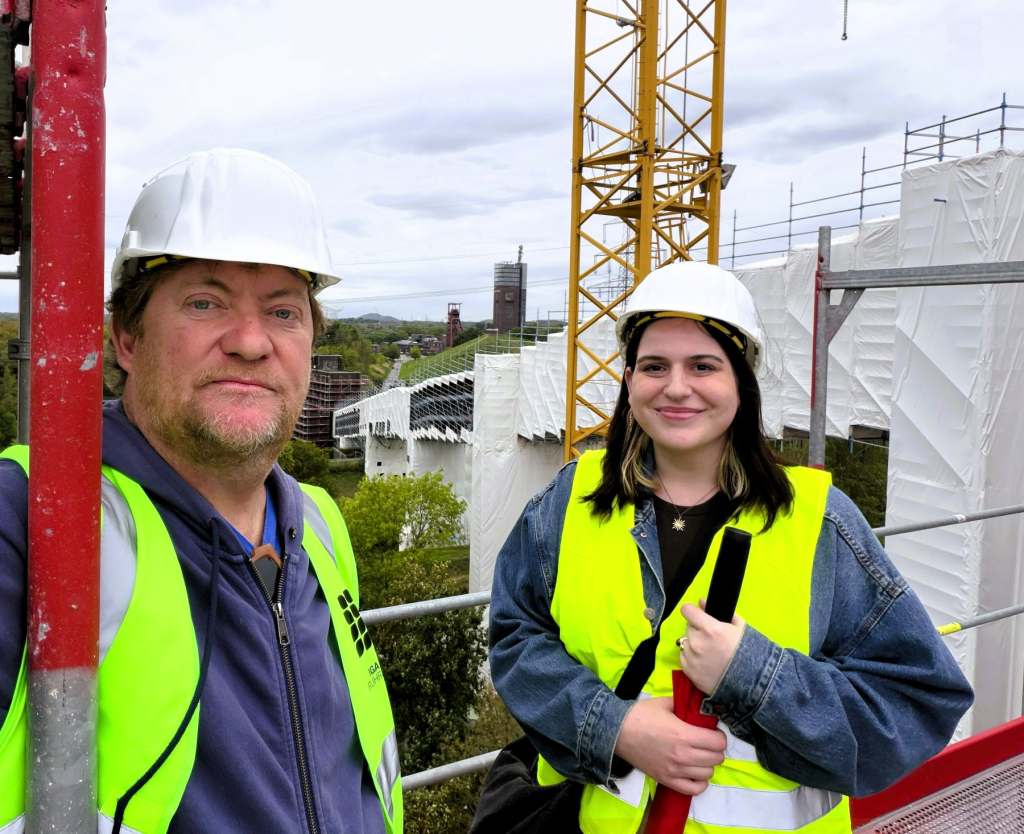
During our visit, we had to climb it via a lift on the outside of the building (not one for someone with vertigo), but I am assured there will be a restaurant serviced by an internal lift by April.
Beside the old pit head, there is a statue of Hercules, who is supposed to represent the Ruhr; once strong, but now older and greener.
Gasometer Oberhausen
In addition to the main parks, there are also smaller exhibitions at various previously industrial sites in the Ruhr.
One of these, consisting of some climate resistant trees in a Future Forest, is at the former gasometer at Oberhausen. I never thought I would say it but if anything, the Gasometer Oberhausen is more impressive than Zeche Zollverein.
Built in 1929 and measuring 117.5 metres high, the gas holder dominates the surrounding area. When closed in the 1980s, the decision was made to convert it into an exhibition hall. It is the tallest in Europe.

The first exhibition in 1994 was on the history of steel in the Ruhr. The current one is called Mythos Wald (Forest Worlds). Easily one of the most impressive exhibitions I have seen in years, it consists of a series of photographs that depict the plight and constant fight of both forest communities and the forests themselves around the world.
The exhibition shows the modern paradox, of how we cause destruction and also how we are trying to protect nature. It is really interesting and informative exhibition which is amazingly beautiful. One image of a mother gorilla clinging on to her dead baby had a deep impact on me. You can see the sadness in the mother’s eyes.
At the centre of the vast exhibition space is The Tree, a 35-metre-tall light installation created by Ars Electronica Solutions (main image), which takes you inside a tree from its roots to its branches. The lights chart how the nutrients, water and energy move within the tree in a 15-minute loop. It is astounding.
Red Dot Museum
The final leg on our tour takes us to Zeche Zollverein, where we visit the Red Dot Museum.
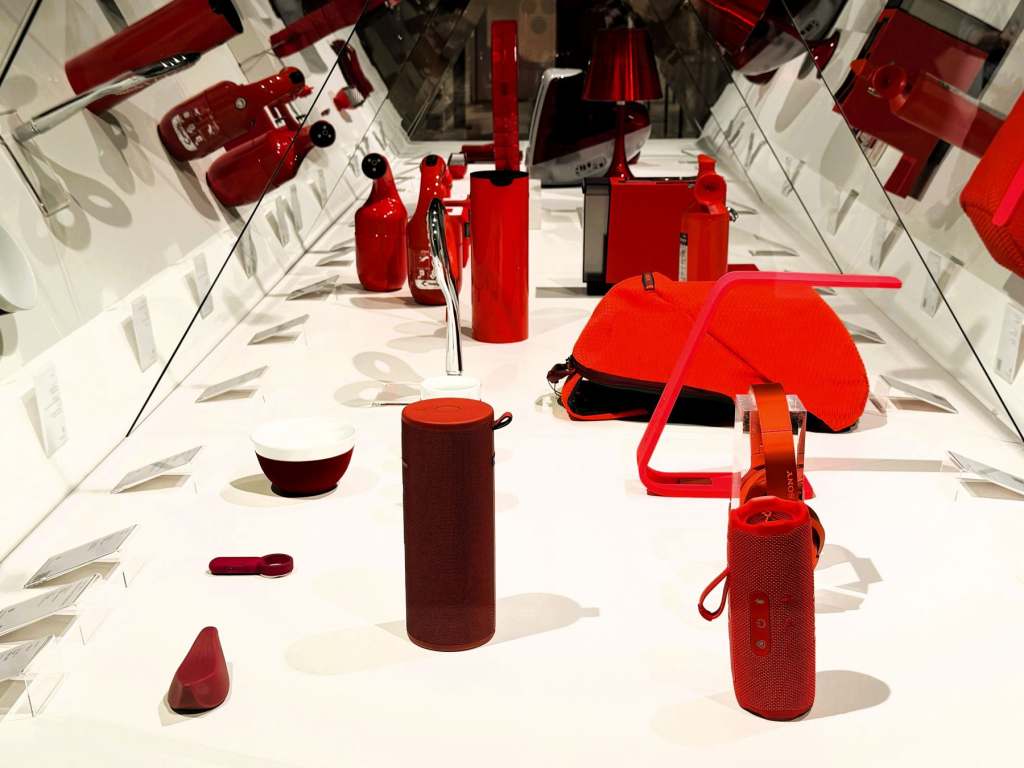
This old boiler house has been transformed into the home of the museum. On display are the various products that have received this year’s Red Dot seal of approval for their design and sustainability. The boiler house was modernised by Norman Foster so as much of the existing equipment and structure as possible was maintained.
Zeche Zollverein is the second most visited attraction in North Westphalia after Cologne Cathedral. Clearly, it is not just my American colleague who regards it as “cool”. What is undeniably cool is how a dark past is being transformed into a potentially bright future. With initiatives such as the IGA this is set to continue creating a very sustainable and green future for tourism in an area with a very dark and sad past.
Route of Industrial Culture Ruhr
The Route of Industrial Culture Ruhr includes 27 sites. For more information on the Ruhr Route of Industrial Culture, click here.
International Garden Exhibition (IGA)
To discover more about the International Garden Exhibition 2027 click here.
