A family-run guesthouse, a local cooking class or a walk with a knowledgeable guide can make a trip more memorable. But independent bookings raise practical questions: Is the property genuine? Is the deposit request legitimate? What happens if you arrive after midnight?
Here is how to verify unfamiliar providers, protect your payments and prepare for common problems without giving up the freedom of independent travel.
1. Verify the Property Before Booking
Attractive photographs do not guarantee that a guesthouse matches its description.
Start by checking the property’s address on a map and comparing its contact details across its website and booking listings. Read recent reviews from multiple sources, focusing on recurring comments rather than star ratings alone.
A reverse image search may reveal photographs used under unrelated property names, although duplicate images are not necessarily evidence of fraud.
Check whether the photos show the exact room category you are booking. Some listings feature their most attractive rooms rather than the accommodation available at your selected price.
Before confirming, ask about:
- Room facilities: Private or shared bathroom, heating, air conditioning and Wi-Fi.
- Accessibility: Stairs, lifts and step-free entrances.
- Check-in: Reception hours and arrangements for late arrivals.
- Additional charges: Local taxes, cleaning fees and other compulsory costs.
If a particular view, bed arrangement or private bathroom matters, request written confirmation.
If the room differs significantly from the agreed description on arrival, photograph the differences, save the original listing and contact the provider or booking platform promptly.
2. Protect Your Booking Information and Payments
Travellers frequently check reservations on hotel Wi-Fi or contact hosts from cafés and railway stations.
HTTPS protects information exchanged with a website, but it does not prove that the website or payment request is genuine.
A VPN can provide additional connection privacy on unfamiliar networks. Options such as X-VPN can be assessed against your device compatibility and privacy needs before you travel.
A VPN encrypts traffic between your device and the VPN server, but it cannot identify fraudulent accommodation listings or prevent payments to scammers.
Unexpected payment requests deserve scrutiny, even when they appear inside a legitimate booking platform’s messaging system. Fraudulent messages may contain genuine reservation details.
If someone asks you to verify your card or pay through a new link, open the booking platform independently and contact the property using a previously verified number.
Before sending a deposit, confirm:
- The total price, including compulsory fees.
- The deposit amount and balance payment date.
- Cancellation deadlines and refund conditions.
- The identity of the payment recipient.
- Written confirmation of the agreed services.
Where possible, choose payment methods with transaction records and dispute options.
Not every small guesthouse requesting a bank transfer is fraudulent. However, unexpected account changes or pressure to pay immediately are warning signs. If uncomfortable, ask whether card payment or payment on arrival is available.
Keep your booking confirmation, payment receipt and cancellation terms in case a dispute arises.
3. Prepare Your Devices Before Travelling
Save your accommodation address, booking confirmation, check-in instructions and emergency contacts somewhere accessible offline. Keep a secure backup in case your phone is lost.
Download destination maps before departure. Google Maps supports offline downloads, although walking and public transport directions are unavailable in offline mode.
Update essential travel applications and ensure you can access important accounts without relying entirely on SMS verification abroad.
If you plan to use a VPN while travelling, choose VPN apps compatible with the phone, tablet or laptop you will take with you.
Install and test unfamiliar software before departure rather than configuring it while rushing through an airport.
Finally, compare international roaming charges with local SIM and travel eSIM options. A reliable mobile connection is especially useful when contacting a host after a delay.
4. Confirm Arrival and Check-In Arrangements
Small guesthouses may have limited reception hours, unfamiliar entrances or complicated transport connections.
Before travelling, confirm the nearest transport stop, check-in hours, key collection arrangements and an emergency contact number.
If your flight lands after midnight, check which night’s reservation covers your arrival.
For example, arriving at 1 a.m. on Tuesday and needing immediate access generally requires a reservation covering Monday night, together with confirmed late check-in arrangements.
For self-check-in properties, verify door codes or lockbox instructions shortly before arrival. Ask what happens if the code fails or nobody answers the telephone.
Save these details offline and notify the host if your train or flight is delayed.
In rural areas, check bus schedules carefully, particularly on Sundays and public holidays. Confirm accessibility details directly if stairs or uneven entrances could be a problem.
5. Check Local Experiences Before Reserving
Locally organised activities can provide memorable experiences, but an appealing description does not guarantee that an activity is suitable or well managed.
Before booking a guided walk, workshop or outdoor excursion, confirm:
- Guide: Who leads the activity, and what relevant experience do they have?
- Inclusions: What equipment, transport or refreshments are provided?
- Requirements: Is the activity suitable for your fitness and experience level?
- Safety: What happens during severe weather or an emergency?
- Group size: Are places limited, and is advance registration required?
For higher-risk activities such as climbing or kayaking, check applicable local licensing and insurance requirements.
Even free walking tours may require reservations. Some have limited capacity or minimum participant numbers, so confirm the meeting point and departure time rather than assuming you can simply turn up.
For wildlife encounters and cultural visits, consider whether the organiser respects local communities and follows relevant conservation practices.
6. Understand Cancellation Rules and Keep a Backup Plan
Independent travel allows flexibility, but changing arrangements can become expensive without clear cancellation terms.
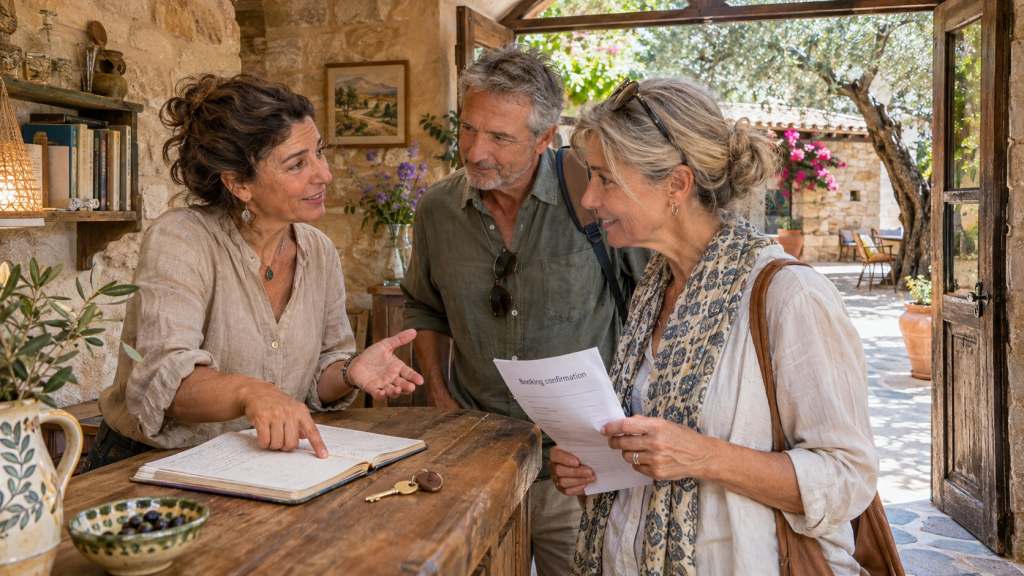
Before booking, check whether dates can be changed, when cancellation fees apply and how refunds are processed.
If you extend a guesthouse stay, confirm the revised dates and price in writing. An informal conversation does not automatically update your reservation.
If an activity is cancelled because of weather or insufficient participants, request written confirmation. Ask whether the booking terms provide a refund, alternative date or another arrangement.
If a refund is due, confirm the amount, payment method and expected processing time. Keep the original receipt and cancellation message, then check your account to verify that the money arrives.
For remote destinations or busy festival periods, identify a backup accommodation option. Save its contact details and check availability if your original booking becomes uncertain.
Conclusion
Small guesthouses and local experiences can make independent travel more rewarding, but unfamiliar providers deserve a few practical checks.
Verify the accommodation, confirm payment terms, prepare for late arrivals and ask clear questions about locally organised activities.
Keep written records and verify unexpected requests through trusted contact channels. With these precautions in place, you can spend less time resolving avoidable problems and more time enjoying your destination.
