


“Can you get him to look at us?”
Our guides hear that one a lot, usually when a lion is lying with his back to the vehicle and someone has been waiting ten minutes for the perfect shot. It’s an understandable thing to ask, but the answer is nearly always the same. Give it time, and keep quiet.
We’ve been running safaris out of Moshi since 2009, and if there’s one thing we’ve learned about wildlife photography, it’s that animals give you the best pictures once they’ve stopped paying attention to you. A relaxed lion yawns, rolls over and plays with his cubs. A nervous one gets up and leaves.
So this isn’t a post about which camera to buy. It’s about how to come home with great photos from Tanzania without changing what the animals were doing before you showed up.
Why Natural Behavior Makes Better Photographs
A lion staring into the lens because somebody whistled at him makes a nice snapshot. A lioness carrying a cub by the scruff of its neck, or two young males sparring in the grass, is the kind of photo people actually remember.
Moments like that only come when the animal has forgotten you’re there. Anything that pulls its attention toward the vehicle, whether it’s a shout or a revving engine, tends to stop the very behavior you were hoping to catch.
There’s a welfare side to this as well. Animals that are disturbed over and over can lose hunting chances and burn energy they can’t spare. A cheetah that gives up on a hunt because vehicles crowded in may go hungry that day, and so may her cubs.
Know Tanzania’s Park Rules Before You Start Shooting
A lot of good photo etiquette is already written into the park rules, so it’s worth knowing the main ones before your first drive:
- Vehicles have to stay on authorized roads and tracks. Driving off-road for a closer angle isn’t allowed in the national parks.
- You can’t get out of the vehicle near wildlife, except at designated picnic sites and viewpoints.
- The speed limit is 50 km/h in national parks and 25 km/h on the floor of the Ngorongoro Crater.
- Drones have been banned in Tanzania’s national parks since November 2014, unless you’ve secured special permits from several government bodies.
- Feeding animals or making noise to attract them isn’t allowed.
Good guides follow these without being reminded. In our experience, you’ll get better photos by working with the rules than by trying to bend them.
Learn to Read the Animal
The most useful thing you can learn on safari has nothing to do with shutter speed. It’s noticing when an animal is starting to feel uncomfortable, because by the time it walks off, it’s too late.
Our guides watch for small signs, and after a day or two most guests start spotting them too:
- An elephant flaring its ears, shaking its head or turning to face the vehicle
- Zebras or antelope that stop grazing and stare, sometimes with a snort or a stamp
- A resting lion or cheetah that sits up and keeps glancing over at the cars
- Birds that keep lifting off a nest or perch as you roll closer
When you see any of these, the animal is asking for more room. Backing off a few yards or switching off the engine usually does the trick, and quite often the animal settles down again within a few minutes.
Let the Animal Come to You
Chasing wildlife rarely gets you a good shot. You mostly end up photographing the back end of an animal that’s trying to get away from you.
A better approach is to let your guide work out where the animal is heading and park a little way ahead of it. If a lion is walking down a track, he’ll often stroll right past the vehicle, and you get a clean, head-on shot without anyone pushing him.
One of our guests, Chris from Brooklyn, wrote about exactly this on TripAdvisor. During a big herd sighting, his guide Grayson didn’t join the other vehicles. He pulled into a spot that had opened up when another car went off to chase the herd, and the group ended up with a prime view.
Patience pays off in other ways, too. Some of the best moments happen after everyone else has moved on. A pride that’s fast asleep at four in the afternoon might be up and playing by sunset, but you’ll only see it if you’re still there.
Bring Gear That Lets You Keep Your Distance
The right equipment means you don’t have to get closer. You don’t need a huge kit, just a few sensible things:
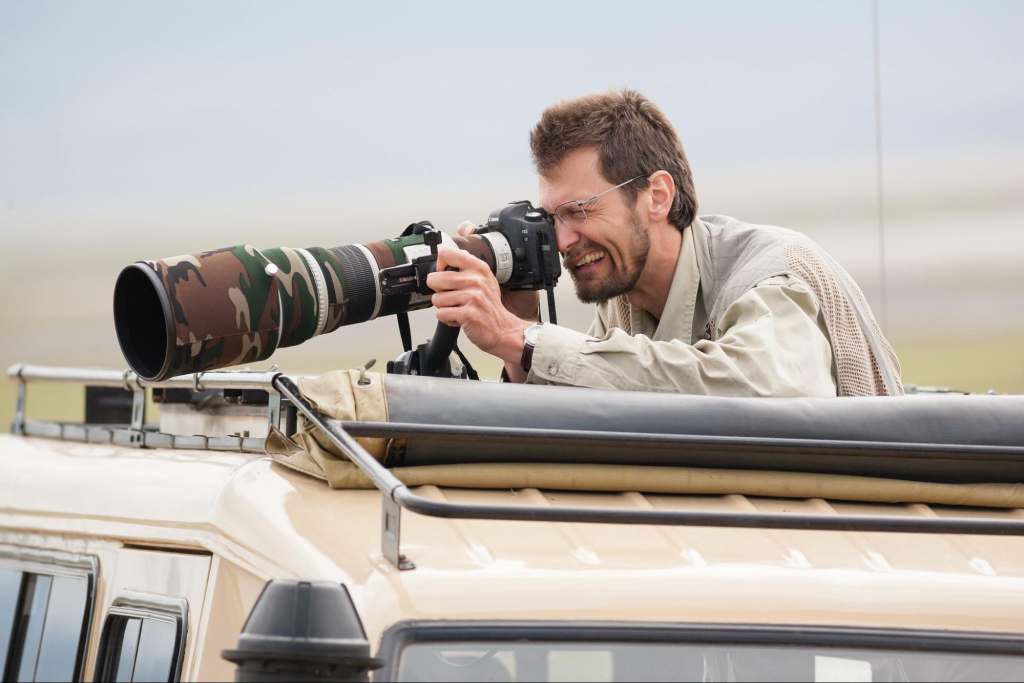
- A telephoto lens of around 100–400mm, or longer if you have one
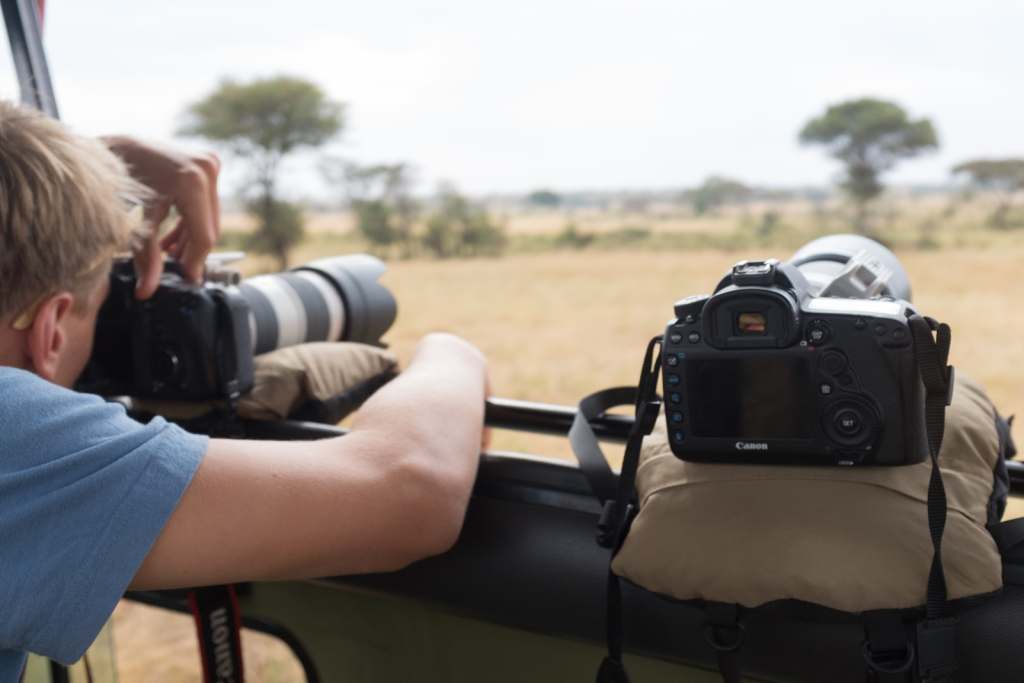
- A beanbag to rest your lens on the window frame, since tripods don’t really work in a safari vehicle
- A camera with a silent or electronic shutter, which is a big help around skittish animals and birds
- Plenty of spare batteries and memory cards, so you never feel like you have to rush a sighting
Leave the flash off. A sudden burst of light can startle animals, and after dark it can dazzle nocturnal species.
As a starting point, set a shutter speed of 1/1000 second or faster for moving animals, and turn on continuous autofocus and burst mode. Do it before the drive, so you’re not scrolling through menus while the moment slips away.
Think Before You Post
Your part doesn’t end when you leave the park. Many phones and cameras add GPS data to every photo, and posting the exact location of a rare animal, especially a black rhino, can help poachers find it.
Turn off geotagging, or strip out the location data before you share photos of endangered species. “Ngorongoro Crater” in a caption is fine, but exact coordinates are not.
Why Your Guide Makes the Biggest Difference
Honestly, the person behind the wheel will shape your photos more than any lens you own. A good guide knows how to approach slowly, where to stop and when to cut the engine. They’ll also stand firm when a guest asks for something that would stress the animal.
That’s a big reason to book with a Responsible Tour Operator if photography is high on your list. Our guides stay on the tracks, keep a sensible distance and won’t drive off-road, no matter who asks.
We’d rather let a guest tell you about it, though. Hannah from Oklahoma City wrote on TripAdvisor that when other vehicles crowded an animal or blocked a crossing for photos, her guide Jackson “gave them space and waited patiently.”
Our Toyota Land Cruisers help too. With pop-up roofs and a window seat for everyone, you can shoot over tall grass without moving any closer. You can see them on our safari fleet page and read more about how we work on our sustainable tourism page.
All of this is part of Responsible Tourism. Every visitor who gives an animal space helps keep it relaxed around vehicles, and the next group of photographers gets the benefit.
A Few Habits for Every Game Drive

Before you head out each morning, keep these in mind:
- Tell your guide what kind of shots you’re after, so they can park with the light behind you.
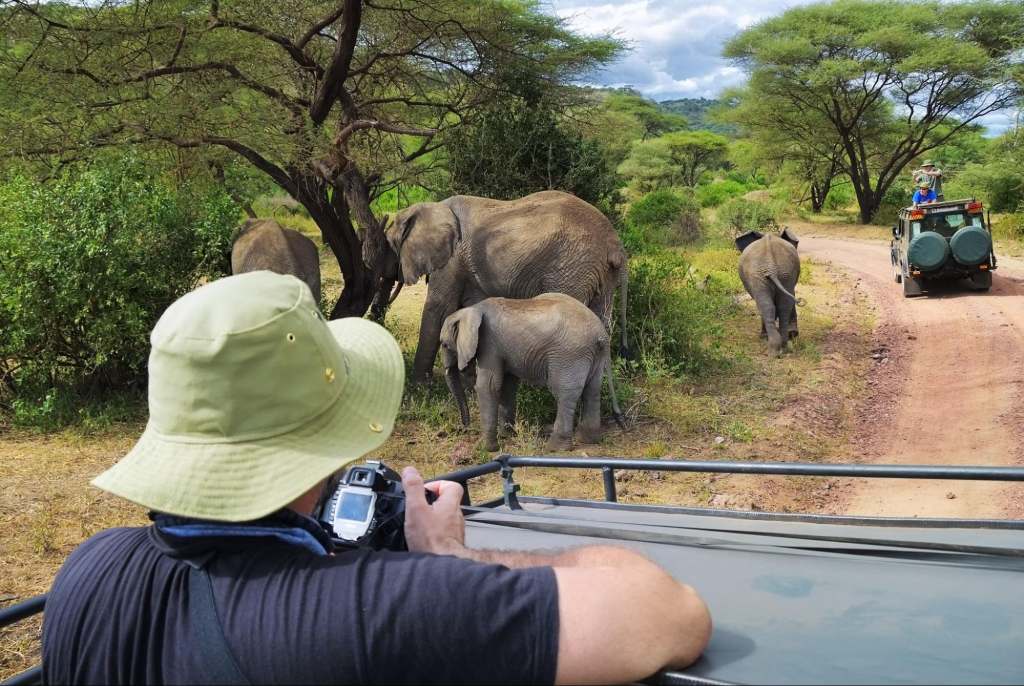
- Keep your voice down and avoid sudden movements in the vehicle.
- Ask for the engine to be switched off during long sightings, since it cuts both noise and camera shake.
- Try not to change lenses on dusty roads, and keep a cloth over your camera between stops.
- Every so often, put the camera down and just watch.
Plan a Photography-Friendly Tanzania Safari
A Tanzania safari offers some of the best wildlife photography anywhere, from the herds of the Serengeti to the rhinos of the Ngorongoro Crater. Go slowly and give the animals room, and you’ll come home with pictures that show them as they really live.
As a locally owned Tanzania Tour Operator based in Moshi, we’re happy to put together a private trip that leaves time to wait for the right moment. Get in touch with our team or request a tailor-made itinerary, and we’ll help you plan it.