A Las Vegas trip need not end at the edge of the Strip. West of the city, red-rock trails invite a walk at your own pace; farther out, the Colorado River offers a view of the desert from a kayak. Other excursions put a new activity in your hands with an instructor beside you. For travellers who would rather participate than watch, the choice is less about finding the biggest spectacle and more about deciding how they want to spend a day outdoors.
The desert is an active part of a Las Vegas trip
Red Rock Canyon National Conservation Area makes the change of setting clear. Around 17 miles west of the Las Vegas Strip, it brings visitors into a landscape of sandstone formations, desert vegetation and trails with different demands on their time and energy. The Bureau of Land Management lists hiking, climbing, horseback riding, mountain biking and road biking among the ways to explore the area. Its 13-mile Scenic Drive is a useful introduction, but stepping out for a walk changes the experience: the terrain becomes something to navigate rather than scenery passing a car window.
That distinction matters when planning a short stay. A drive can show the scale of Red Rock, while an activity gives the visit a rhythm of its own, whether that means following a trail or concentrating on a climb. The Bureau of Land Management’s Red Rock Canyon visitor information is a sensible starting point for matching an outing to available time and the way you intend to travel. Even an accessible excursion deserves more thought than simply leaving the Strip and heading west.
Choose a way to take part, not just look
Travellers who enjoy setting their own pace might begin on land. At Red Rock, a shorter hike leaves room for an unhurried return to Las Vegas, while a longer route asks for more of the day and more attention to conditions underfoot. Cycling offers a different relationship with the landscape: distance becomes part of the experience, and choosing an appropriate route matters as much as reaching a viewpoint. These are appealing options for independent travellers because the activity itself, rather than a scheduled performance, shapes the outing.
Water offers a quieter form of participation. Lake Mead National Recreation Area has kayaking and canoeing opportunities on Lake Mead and Lake Mohave, while the Black Canyon National Water Trail follows the Colorado River below Hoover Dam. From a small craft, progress depends on each stroke, and the pace leaves space to notice the canyon walls and changes in the shoreline. It is a markedly different day from hiking among the rocks, yet it asks for the same active attention to place.
A guided paddle can suit someone keen to try the water without organising every part of the excursion independently. The National Park Service lists authorised businesses offering rentals and guided experiences in the recreation area, so visitors can weigh the freedom of a self-directed outing against the structure of a trip led by an outfitter. Neither approach is inherently more adventurous. The better choice depends on experience, confidence on the water and how much responsibility a traveller wants to take for the day’s arrangements.
A guided outdoor experience in the Nevada desert
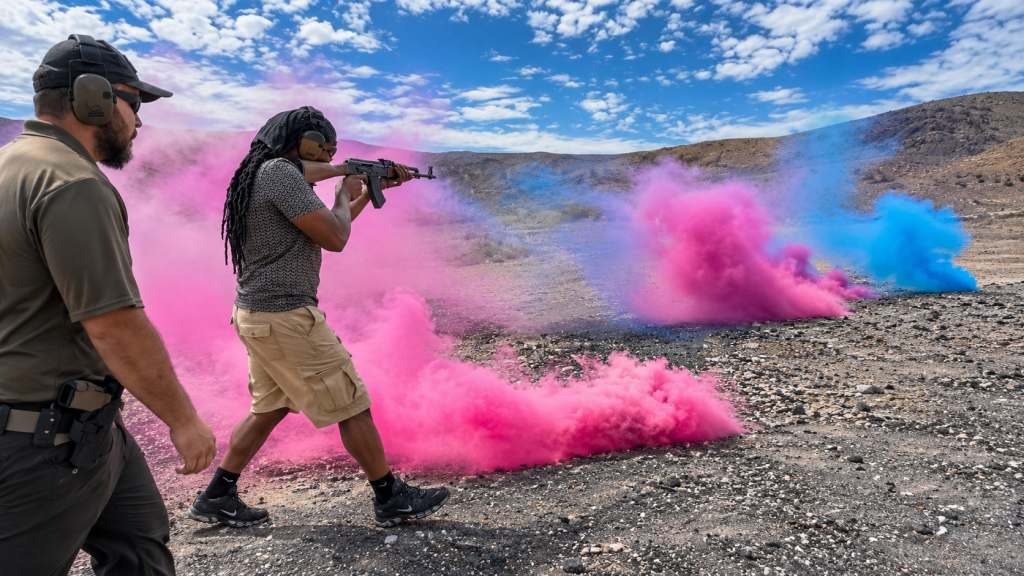
Some hands-on activities are best approached with close instruction, particularly when the experience is entirely new. Gun Blast Vegas runs a reservation-only shooting experience at a private outdoor range in the Nevada desert near Las Vegas. No prior shooting experience is required: a certified instructor gives a safety briefing and coaches guests throughout the session. It is a recreational outing, not military or tactical training, and its guided format makes the activity approachable for a first-time participant.
The outdoor setting also allows for an optional smoke-bomb walk-and-shoot experience. In this controlled walk-and-shoot setup, a guest moves through a designated course while engaging targets under direct instructor supervision, rather than remaining in one position for the entire session. The point is the combination of movement, concentration and hands-on coaching in an open desert environment, not a claim that visitors are undertaking combat training. Anyone interested in the option should treat the instructor’s directions and the range’s safety procedures as central to the experience.
Practical arrangements form part of its appeal to visitors staying in the city. Round-trip transport from a designated Las Vegas Strip meeting point is included, so participants do not have to find their own way to the private desert range. A reservation is required before travelling to the meeting point. That makes this a different proposition from choosing a trail and setting off independently: the activity, instruction and journey to the range are organised together, leaving guests free to concentrate on learning something unfamiliar.
Make the logistics part of the adventure plan
These outings differ as much in preparation as they do in atmosphere. Red Rock is close enough to consider for part of a day, but the Bureau of Land Management says public transportation does not extend to the conservation area. Visitors planning to drive the Scenic Drive should also account for its timed-entry reservation requirement from October 1 through May 31 for entry between 8 a.m. and 5 p.m. Checking the current entry arrangements before departure is more useful than discovering a reservation requirement after arriving at the gate.
Planning a paddling day calls for a different set of decisions: where to launch, whether to rent equipment or join a guide, and what conditions to expect on the water. The National Park Service’s canoeing and kayaking guidance covers Lake Mead-area paddling and states that a life jacket must be aboard for every person in a paddle craft. Visitors should check current park notices and access information while planning, rather than assuming that a route or launch point will suit every trip.
Desert weather and the demands of an activity also deserve attention. A traveller comfortable with a gentle walk may prefer a guided introduction before attempting a longer hike, just as someone new to paddling may value an organised outing over a rental alone. Build in time for the journey out and back, and consider how much physical effort you want before or after other plans in Las Vegas. A good itinerary leaves room to enjoy the setting instead of treating it as another stop to fit between appointments.
Leave room for the landscape
Choosing one activity well can be more rewarding than trying to sample every corner of the desert in a single visit. A self-directed hike suits the traveller who wants to linger and change pace; a paddle shifts attention to the river and the work of moving through it. An instructor-led session offers the chance to try something unfamiliar within a structured experience. Each puts the visitor in a different relationship with the landscape, rather than simply offering another view of it.
Start with the part that genuinely interests you, then work backwards through transport, reservations, conditions and the effort involved. That approach leaves space for the quiet details that make a day beyond Las Vegas memorable: the feel of a trail beneath your feet, the measured progress of a kayak or the concentration of learning a new skill outdoors. The desert is more than a backdrop to the city. Given enough time and the right preparation, it becomes an active part of the journey.
