


Pilgrims, Panforte, Palio – three words I was told to get cosy with before visiting Siena Italy for the first time. Although I’d done plenty of homework before my trip, nothing could prepare me for the importance of these words in real time. What a joy it’s been to find out.
The adventure begins the moment my taxi leaves Siena’s train station. Zooming up a steep ring of hills and zipping round hairpin bends and narrow winding streets into the city’s medieval centre, it is a thrilling, slightly terrifying welcome.
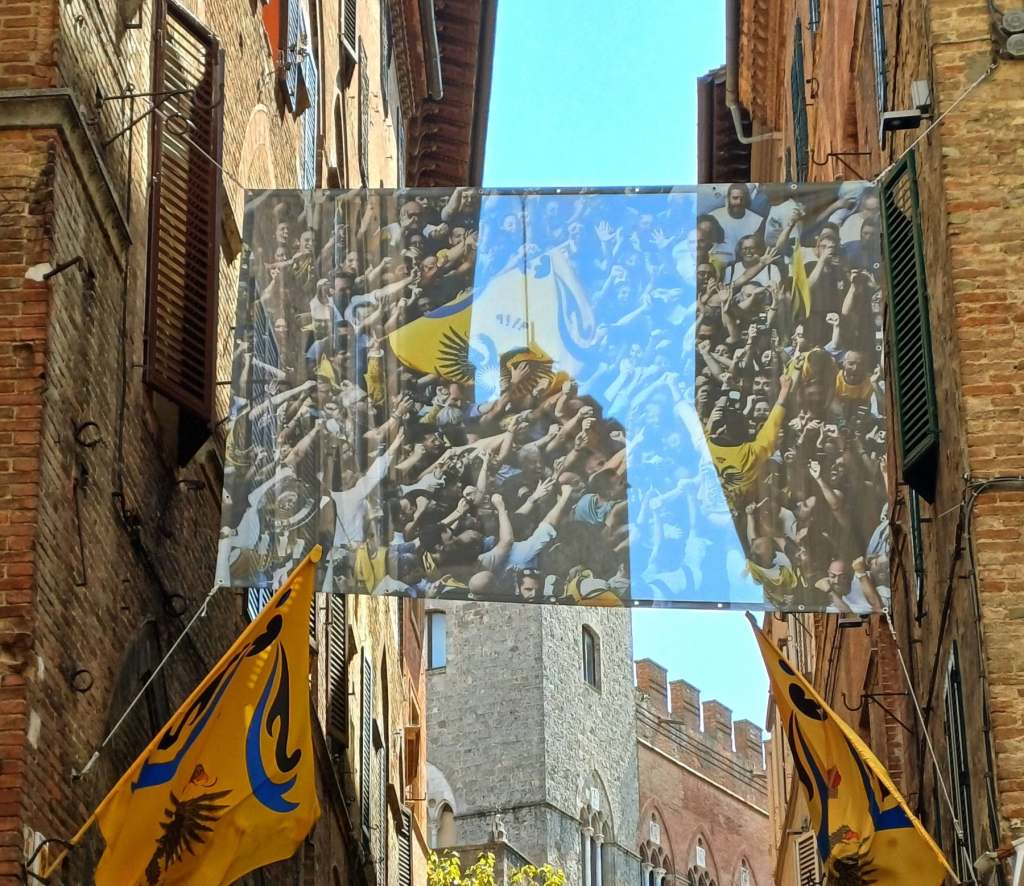
Bright flags emblazoned with flying dragons, prickly porcupines and two-headed eagles flutter from stone buildings, so close I can almost touch them. From passing shops and cafés, the pungent aroma of garlic, onions and simmering tomatoes wafts through the warm autumn breeze.
It doesn’t take me long to see that this ancient city, balanced on three hills and fortified by miles of Gothic walls, gates and arches, is an astonishing living museum and that every passageway, stair and terracotta brick has a story to tell.
A Little History, a Lot of Splendour

Legend says Siena was founded around 853 AD by Senius and Aschius, twin sons of Remus. Long story short, it quickly grew into a fat and prosperous trading hub fuelled by banking and the wool trade. It was home to the world’s oldest bank, one of Europe’s first universities and a vital stop for Christian pilgrims travelling the holy Via Francigena, the epic 2,000-kilometre highway connecting Canterbury to Rome. Siena was locked in fierce rivalry with nearby Florence, until 1348’s Black Death abruptly halted its prosperity by killing over half the population. Without money or manpower, Siena’s progress stopped. The city was virtually frozen in time, which may explain why its medieval heart is so well-preserved today. For modern travellers, that means countless historic treasures to savour and explore.
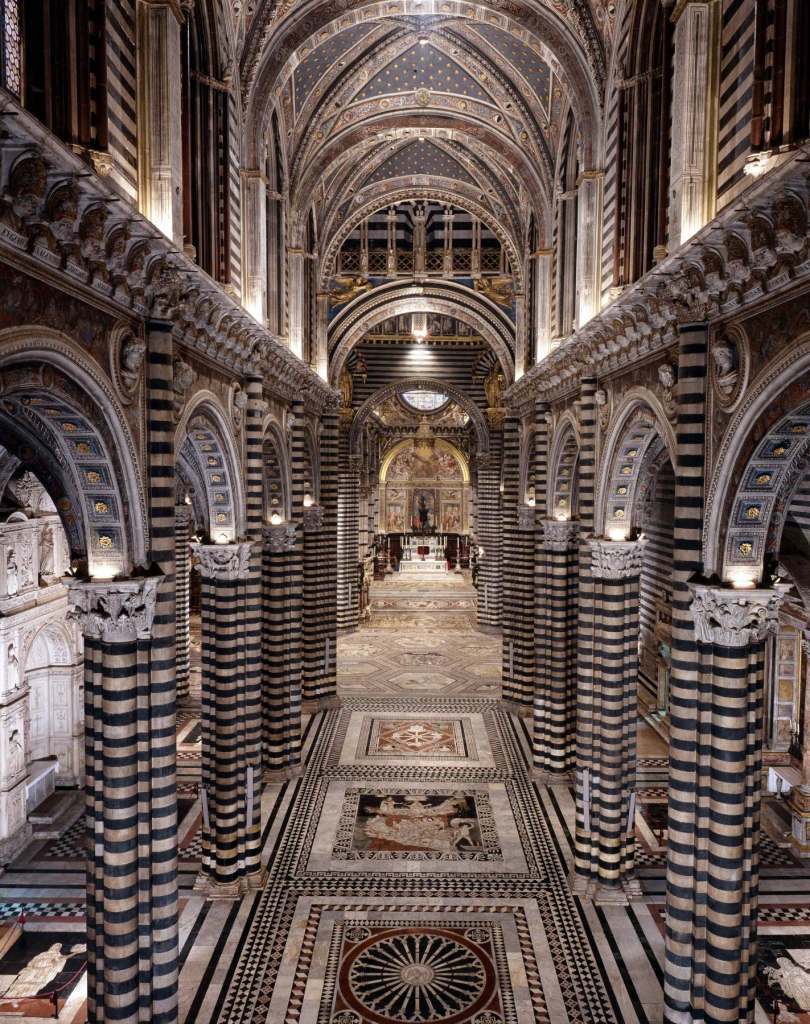
If, like me, you want to see them all, the bargain-busting line-skipping three-day Siena Pass+OPA Si will be your best friend. An unmissable handful includes Palazzo Pubblico, for its outstanding early art and architecture; Palazzo Papesse and its eye-popping panoramic views; and Il Duomo, the magnificent black-and-white-striped Cathedral complex bursting with frescoes, sculpture and stained glass by the cream of Renaissance artists, intricate inlaid mosaic floors and stone heads of 172 popes peering down from cornices.

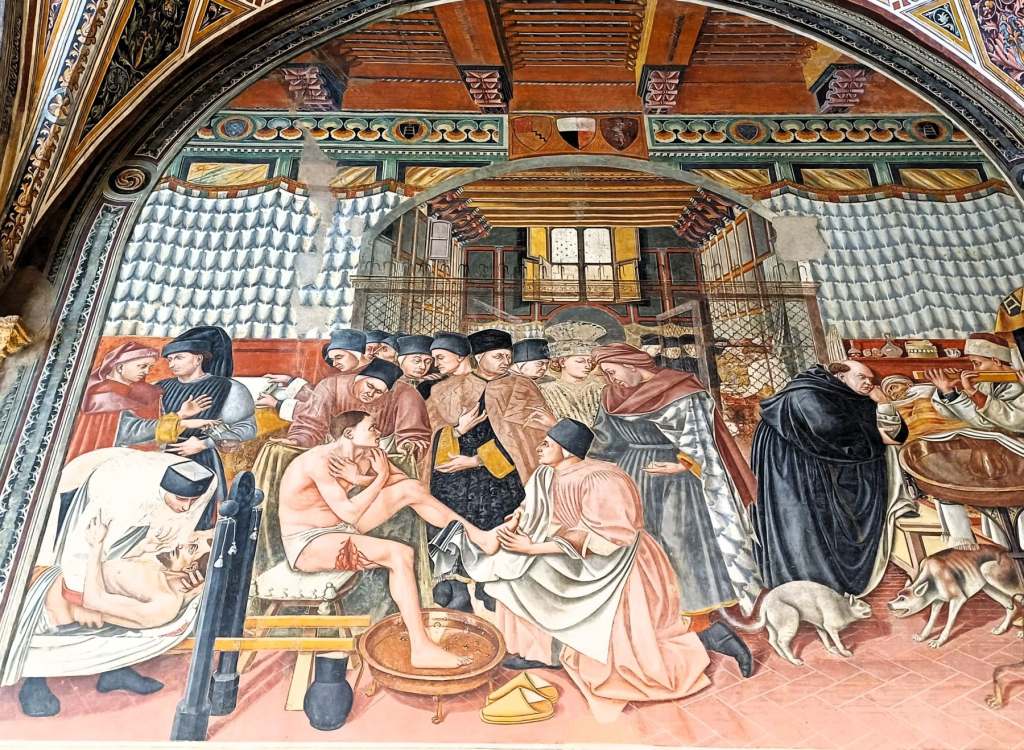
Far less tourist-trammelled but no less extraordinary is Santa Maria Della Scala. Tucked away in a corner of Il Duomo’s courtyard, it’s all too easy to miss— my advice is, don’t. This grand, four-level deep complex, smack in the middle of the pilgrimage route, was the medieval hospital for pilgrims. Only recently did it cease to be a working hospital; in 1995 it was upcycled and re-purposed into a stunning museum space.
Monumental rooms filled with splendid frescoes and relics tell stories of those who had need to come here. You’ll find remains of the ancient pharmacy, eye clinic, orphaned children’s wards and slaughterhouse. The spectacular Pilgrim’s Hall is painted floor-to-ceiling with tales of grisly hospital goings-on circa 1378, including operations, bloodletting and last rites.
If those aren’t wonders enough, head for the tiny elevator and emerge three floors down in the subterranean caves and sandstone tunnels of the National Archaeological Museum, entry included in your ticket. Almost empty the afternoon I visited, I enjoyed a cool, silent wander through these deep foundations of the city.
Sustainable Siena
The city of Siena may be tiny— housing some 50,000 residents in its compact centre— but it packs a powerful punch. For many years it’s been a UNESCO World Heritage Site and one of the top visitor destinations in Europe. What’s astonishing is how alongside these accolades is a major commitment to balance Siena’s tourism with sustainability. Across its historic centre, where almost all cars are banned, you’ll find numerous clean, green and public spaces, bike share and recycling schemes, still and sparkling water stations. Siena’s 25-kilometre medieval underground aqueduct network, the Bottini, still supplies much of its public water. Not a Big Mac or Frappuccino in sight: instead the city actively promotes independent shops and restaurants, artists and artisans.
Siena was the world’s first art city in to be awarded the prestigious International Certificate for Sustainable Tourism. Its province has been carbon-neutral since 2011, first in Europe to be so; more recently it’s won the European Green Leaf Award 2027.
Lorenzo the Magnificent

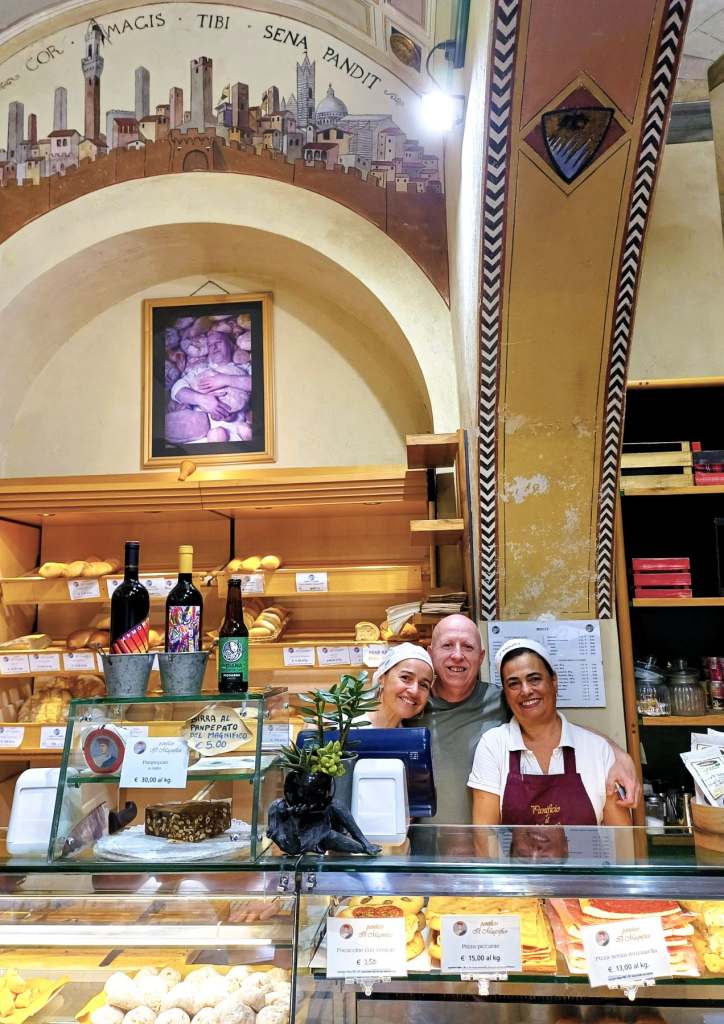
Siena reminds us that real beauty isn’t about building the next big thing, but about keeping what is old, useful and made by hand alive. I find the perfect embodiment of this a short stroll down Via dei Pellegrini (‘Pilgrims Way’) and a mere angel’s breath from Il Duomo, at Panificio Il Magnifico, the celebrated bakery. I’ve been invited to spend a morning with Lorenzo Rossi, Il Magnifico himself.
The original Il Magnifico — Lorenzo the Magnificent— was a 15th century Italian statesman, ruler and a Medici, those powerful patrons of Renaissance culture. Lorenzo, master baker, is of course none of these, though equally magnificent in his own way.
As any passerby can see from the glorious display fronting his shop, Lorenzo’s bakes come in many shapes, sizes and flavours: large domes of Pane Toscano, dimpled ciaccini flatbread, mouthwatering mounds of cantuccini, cavallucci and fluffy ciambellone. But it’s his ricciarelli—traditional oval Sienese almond cakes covered in crackled icing sugar— with which I’ve fallen deeply in love. From their deceptively crisp coating, it’s but a gentle chomp to reach a melt-in-the-mouth underbelly of ground almonds and sugar. I can only imagine how many calories and carbs are in each little bite of this deliciousness, but who cares? Since arriving in Siena I’ve become a three-a-day devotee.
Lorenzo welcomes me with a huge hug, enormous grin and bundles of energy. Serving faithfully behind the counter, as she has for the past 19 years, is Sabrina, along with the charming Diana, my interpreter today. Towering above them are gaily frescoed images of the city, inscribed with the Latin motto, cor magis tibi Sena pandit— “Siena opens her heart to you larger than its gates”— and a giant photograph of Lorenzo nestled in a bed of bread, literally rolling in dough.
He leads me to the rear of the shop, his backstage universe, eager to tell his story. As a third generation panettiere artigiano (artisan baker), Lorenzo was literally born to bake. He’s been playing with flour since childhood, carefully watching his Babbo Giorgio and Uncle Silvio as they worked late into the night, like they had every night since opening the shop in 1952. To honour his birth, Lorenzo’s parents gave him a handmade breadmaking wedge, a ceppo, a tool he uses to this day. As he works, childhood memories flood in, especially of his father and uncle and all they taught him. “Babbo would say, ‘money is not the most important—it’s not happiness. The only thing is to work hard and enjoy life.’” His daily breads are still made with a traditional mixer and inherited Lievito Madre (sourdough mother yeast), then rolled by hand and baked using a wooden stick.
I ask Lorenzo what he loves most about his work. “Everything!” he replies. While his bests include baking cakes for Madonna’s recent birthday visit, his true moment of happiness is making Pan co’ Santi. Made with olive oil, walnuts, raisins and black pepper, it’s the traditional Sienese cake for All Saints Day, but due to demand he makes it year round. No, he won’t share his secret recipe, but why don’t I come back this afternoon when he’s baking some?
The Palio

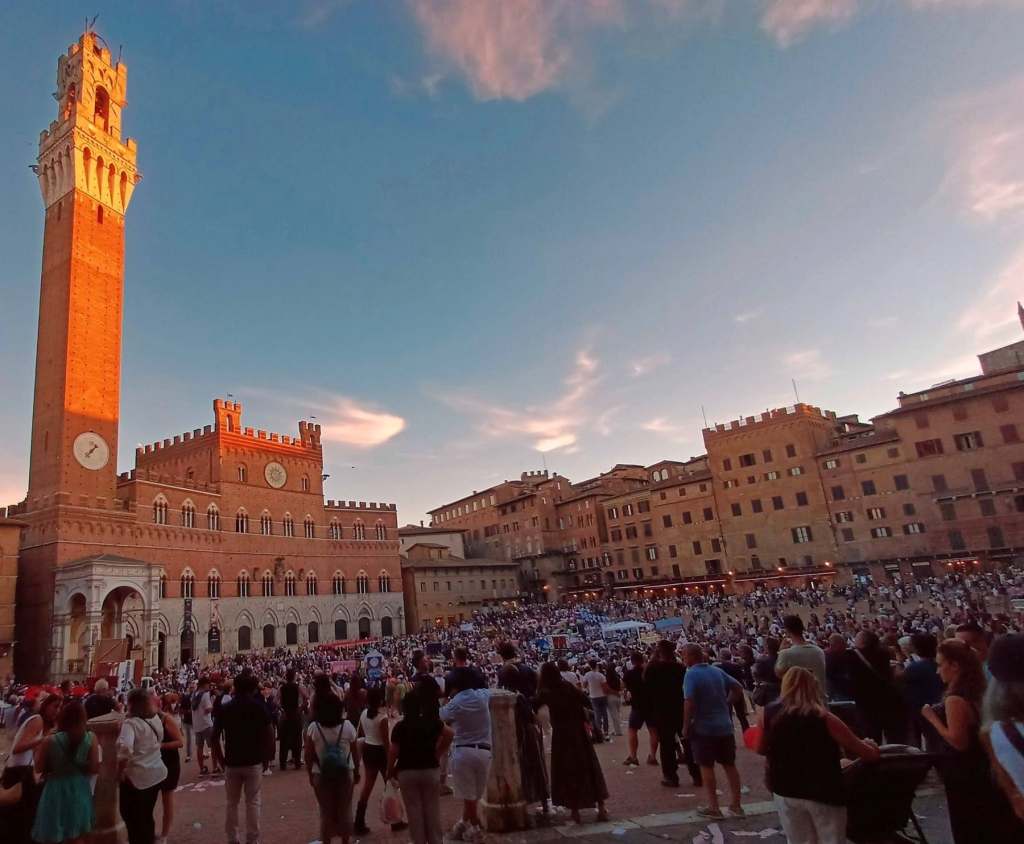
To see how Siena’s deep history resonates, you only have to look to the Palio, Siena’s renowned horse race, originating in medieval times but still vital today.
Each summer, hundreds of thousands of visitors from around the world descend on Siena for its annual Palio season. The Palio is as old as Siena itself, its ancient military and religious roots embedded in the city and its 17 historic neighbourhoods– the Contrade. Each Contrada has its own territory, customs and local government, symbols and flags, saints and churches, social life and a profound drive to win the Palio each year.
Although this famous contest dates back more than 400 years, it’s no less competitive today. Taking place twice a year, on 2 July and 16 August, winning the Palio brings a year of wild glory and unabashed celebration for two triumphant neighbourhoods.
Each race morning begins with an open air ’jockey mass’, final race trials, blessing of horses and sacred rituals. Then, hundreds of costumed, flag-waving locals parade, slowly, to Siena’s glorious horseshoe-shaped plaza– Il Campo. Here 25,000 free onlookers await, packed like standing sardines, while a further 15,000 or so have a paid toehold on surrounding balconies and viewing stages. Evening, at long last, brings an intensely thrilling 90 seconds when 10 finalist horses and jockeys race bareback three thunderous laps around Il Campo’s ring.
As famous a tourist magnet as the Palio is, it’s not really staged for outsiders. Instead, it’s deeply, passionately, entrenched in local life. Once weary day-trippers retreat to their tour buses and leave the city, Siena’s streets come alive. Out come long wooden tables, colourful banners and hundreds of Contradaioli, followed by street roasts, giant slabs of pizza and mounds of gelato, live music and raucous celebration late into the night. Although the actual race lasts less than two minutes, post-Palio parades, parties and joyful carousing go on for months afterwards, while re-runs of the race play non-stop on screens across the winning neighbourhoods.
Eating with History
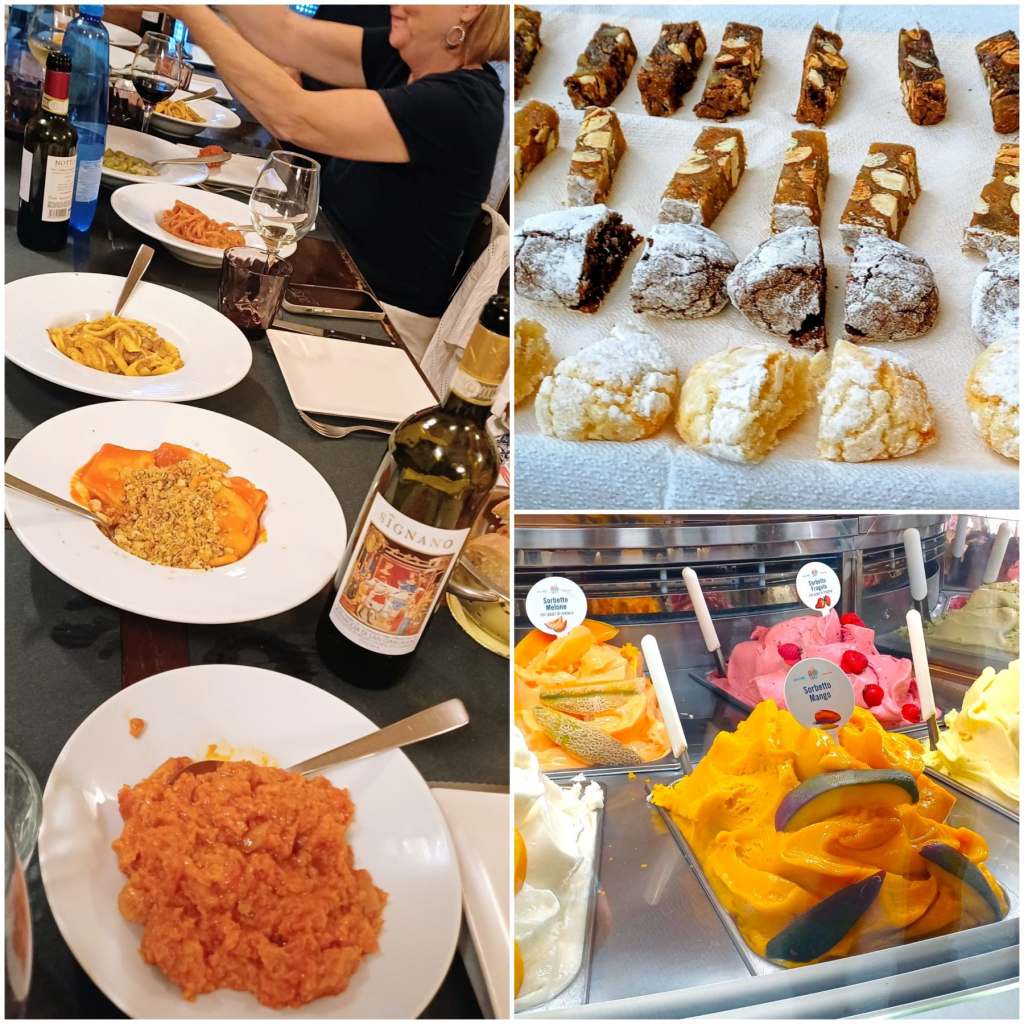

Given Tuscany’s reputation for topnotch cuisine, it’s no surprise that food and wine tours are popular here. The meeting point for ours— an enticing five-course evening walk organised by Do Eat Better— is the renowned Piazza Salimbeni.
Led by enthusiastic guide Alexandra, we head straight to Dolce Siena on Il Campo to whet our appetites on medieval sweet treats, particularly Panforte di Siena. An intense blend of honey, dried fruit, nuts and spices, Panforte is the 14th century equivalent of trail mix, famously sustaining Siena’s pilgrim hordes on their arduous trek to the Vatican.
Our next stop, several narrow lanes and hidden passageways later, is the tiny enoteca Rombo e Vas, where an inviting aperitivo spread awaits us. R&V’s menu is built on close partnerships with local bakers, breeders and cheesemakers. The vibrant olive oil and seductive Chianti Superiore are from their own vineyard, Villa a Sesta, the perfect accompaniment to slices of spicy, fennel-laced finocchiona salami and a memorable Pecorino Senese. This is the very cheese which inspired 15th century gourmet Pope Pius II to exclaim: “It is particularly delicate and good!”
Then, a beautifully woozy walk and bonding group chat in the warm night air, up atmospheric Via di Città and around a silent, stunningly lit Piazza del Duomo to reach cosy, intimate Osteria da Cice. Our table is soon crowded with a buffet of traditional dishes, five kinds of pasta, and another round of Tuscan red.
We work our way through this masterclass in honest, slow food— wonderfully chewy strands of hand-rolled pici pasta with cinghiale (wild boar) sauce, thick vegetable ribollita and a deeply savoury cinta senese pork ragù. But it’s the pappa al pomodoro that truly captures the spirit of this city. Made from a fragrant blend of fresh tomatoes, olive oil, garlic, basil and leftover stale bread, it seems that in Siena’s kitchens nothing is ever wasted. Our feast concludes with shots of dark espresso before we heave ourselves, thoroughly content and very well fed, next door for the grand finale— double scoops of gelato and farewell hugs with our fellow diners.
Rooms with a (Spectacular) View

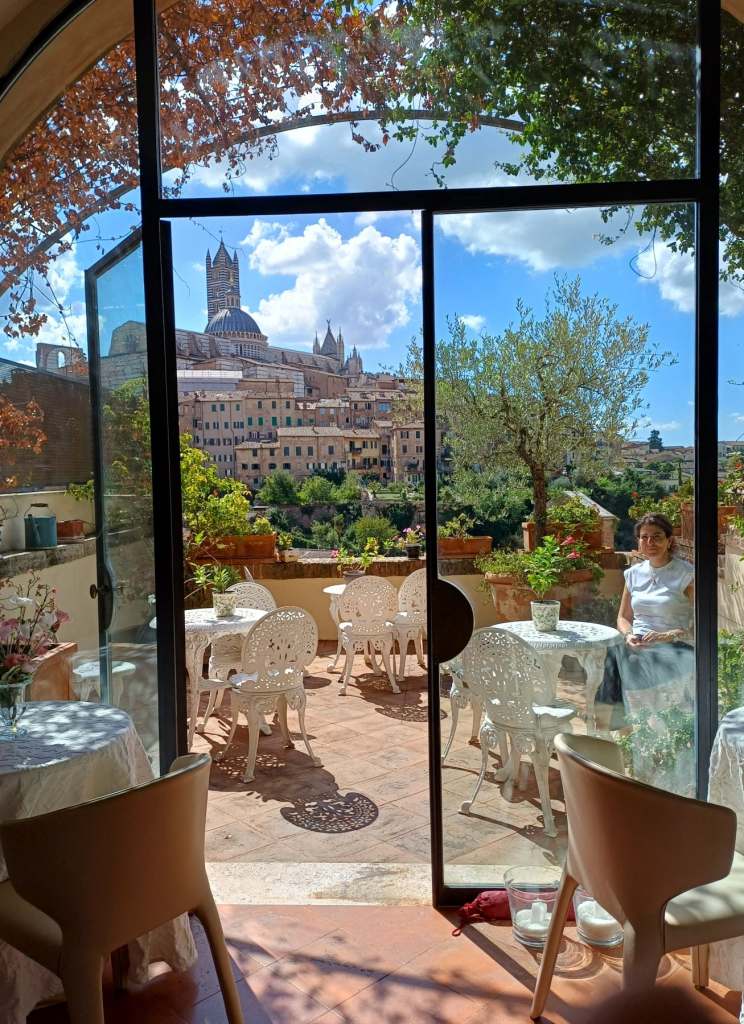
When it comes to a place to rest your head, Siena offers a perfect lesson in how to recycle the past beautifully. A short stroll offside and downhill from Siena’s main drag, in the Contrada of the Dragon, is Campo Regio Relais. Originally a 16th century Palazzo, its name recalls the royal military camps of the powerful Holy Roman Emperor Charles V which stood nearby. More recently it’s been restored and re-designed as a small, family-owned hotel, its gorgeous interiors filled with antiques, frescoes and fresh flowers— all carefully selected with love by the owners, who live upstairs.
So far, so lovely, but the real magic happens when you reach the top floor. This is the Salon, a long, elegant room and the ultimate in slow hospitality. Every detail of this space is exquisite, from the plush red sofa, polished fortepiano and hurricane lamps to the white leather chairs and thick white tablecloths embossed with birds and flowers. The room opens onto a sunlit terrace lined with potted olive trees and fragrant jasmine, and breathtaking, unobstructed views over Siena’s medieval skyline and the Tuscan Hills beyond.
It’s here I sit down for succo d’arancia and a chat with the gracious Maria Luisa, who’s been welcoming guests to Campo Regio for over 15 years. This is where guests can enjoy a leisurely breakfast, linger through the afternoon or watch the evening sunset while sipping a glass of Chianti from the honesty bar.
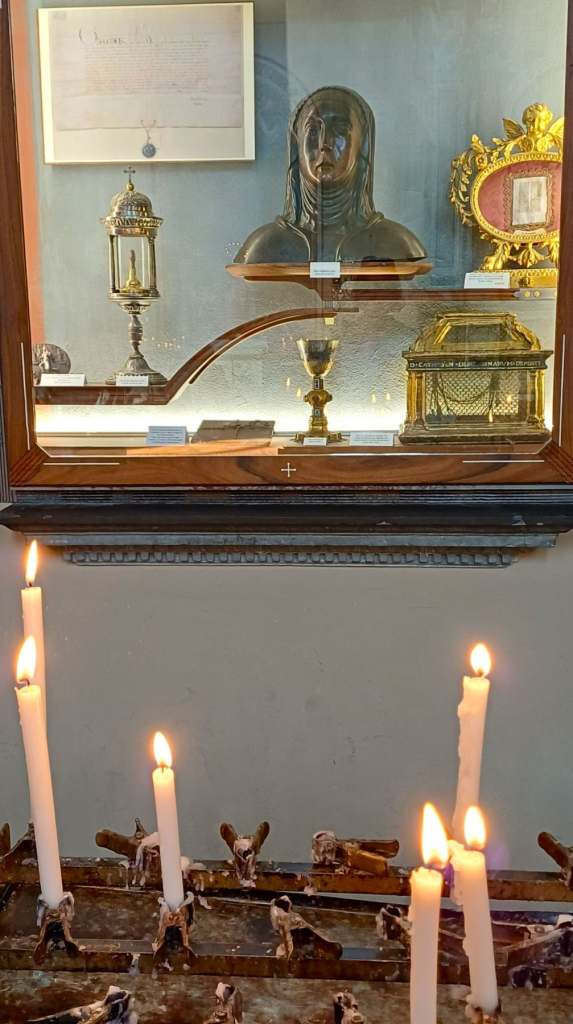
From this remarkable spot, I can see ant-sized tourists wandering Il Facciatone, the famous unfinished walkway of Il Duomo Cathedral, on the far side of the valley opposite, and hear the chimes of St Catherine’s Basilica next door. It’s another striking reminder of Siena’s living history, as that very church houses the mummified head and right thumb of Saint Catherine herself.
Secret Gardens, a Donkey and a Homegrown Feast

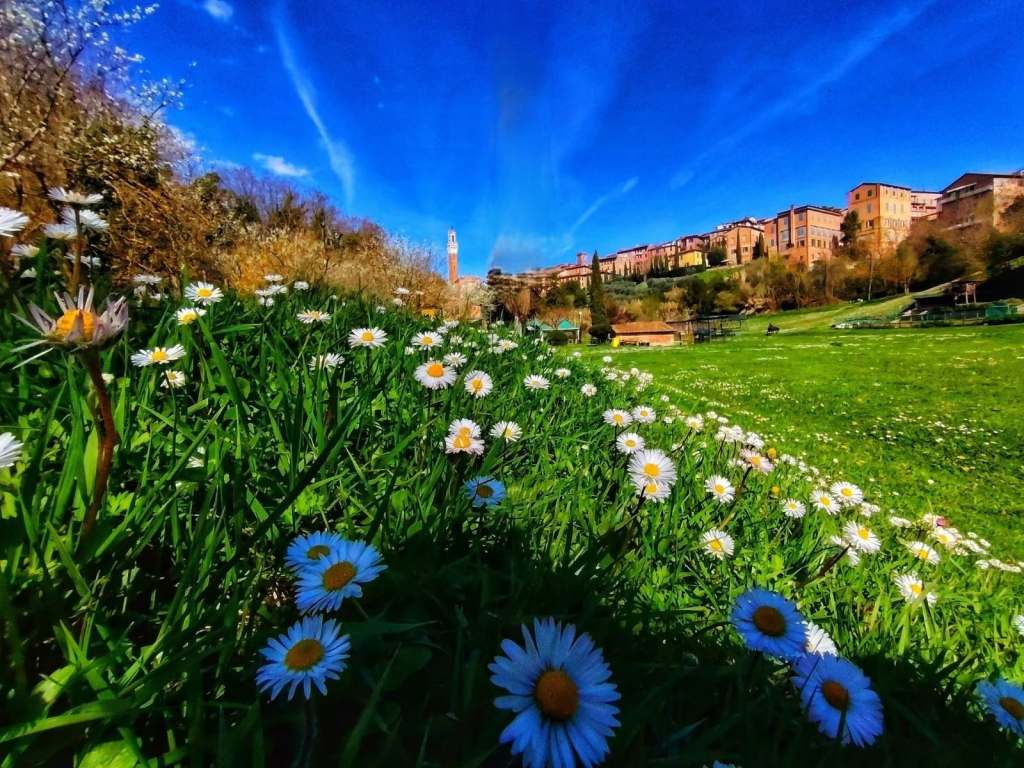
Google ‘sustainable Siena’ and the first image you’re likely to see is a long, sandy path winding down from the city heights to a vast expanse of green. This hidden valley, dotted with lush gardens, farm animals and a huge steel skull resting quietly in the grass, is All’Orto de’ Pecci.
Back in the Middle Ages, this very path— the Via di Porta Giustizia (Gate of Justice)— carried a much darker history. It was the solemn road taken by condemned prisoners as they were led out of the city toward the gallows. Over 600 years later, and my final night in Siena, I’m following that same path. My guide is the charismatic and English-fluent Paolo, and it’s the beginning of a deeply memorable evening with the Orto de’ Pecci community.
Paolo has worked here for years, and proudly introduces me to cooks, gardeners, resident animals. Among them is Pippo, the farm’s beloved donkey, famed for a long, talented tongue and his personal, very vocal, gaggle of geese. Pippo thrives on the attention from visiting children and life alongside his colourful extended family of peacocks, mallards, goats, sheep and feral cats.
For the past forty years, this park and nature reserve has been home to a sustainable, community-run restaurant, the beating heart of La Proposta social cooperative. Founded in 1983 by healthcare professionals from the nearby psychiatric hospital, its restaurant and other projects provide vital work opportunities for recovering patients, addicts and former inmates. This beautiful space is also a cherished ‘green lung’ for local youth and visiting school groups from all overs Italy.
The bustling restaurant uses natural ingredients from its own gardens and surrounding farms. The eve of my visit, the outdoor terrace is fully booked and buzzing. Under a table shaded by bay trees, Paolo and I share wonderful conversation over a slow, flavoursome feast of fresh pizza, local cheese and Tuscan wine in the finest green space in Siena. Paolo notices some resident mosquitoes having a good time too, playing on my naked forearms. He offers me a spritz of biodegradable bug repellent, then laughs, “we like to say the place belongs to the animals, and we’re just the guests—and that includes the insects.”

Getting to Siena
To reach Siena, you’ll find a choice of direct flights to Pisa from the UK and major European cities. From Pisa Airport it’s a 5-minute ride on the ubercool PisaMover to Pisa’s main railway station, where there are frequent trains and buses to Siena.
More Information on Siena
For more information on Siena click here or here. Like to try some traditional Sienese recipes? Click here.
All images by Judith Schrut unless noted otherwise.