



Travel should feel like a break from your everyday routine, not another reason to stare at your phone. Yet between checking maps, booking tickets, and searching for recommendations, it’s easy to spend more time scrolling than exploring.
Slow travel offers a different approach. Instead of rushing between attractions, it encourages you to take your time, experience local culture, and enjoy the little moments. The good news? You don’t have to ditch technology to make that happen.
With a few smart digital tools and better screen habits, you can stay organized, connected, and prepared while giving yourself more freedom to enjoy the journey.
Build a Simple Digital Toolkit Before You Travel
The trick to using technology well on a slower trip is not finding an app for every possible problem. It’s choosing a handful that solve the problems you’re actually likely to face. Think of your phone as a compact travel kit: useful when you reach for it, easy to put away when you don’t.
Start with navigation. Save an offline map of the town or region you’re visiting, along with your accommodation and a few important landmarks. That way, you can find your way back after an evening walk without hunting for a signal. In a city, saving the nearest train station can be more valuable than bookmarking twenty restaurants. In a rural area, knowing where the last reliable bus stops may matter more than having a perfectly planned route.
A translation app with offline language packs can help with menus, signs, and practical questions. Still, try learning a few local phrases before you arrive. Technology works best as a bridge to a conversation, not a substitute for one. Keep booking confirmations in one easy-to-find place, too. A saved PDF can be far more reassuring than searching your inbox while a queue forms behind you.
It’s also worth thinking about how you’ll connect when you do need the internet. Hotel and café Wi-Fi can be convenient, but you may not know who operates a network or how it is configured. A free VPN can be a useful addition to your travel toolkit: it encrypts traffic between your device and the VPN server, adding a layer of privacy on unfamiliar connections. Choose a reputable provider, check its privacy practices, and remember that a VPN won’t protect you from phishing sites or every online scam.
None of these tools needs to become a daily ritual. Set them up once, learn the basics, and resist the urge to keep adding more. If you can check a route, retrieve a ticket, or send a message in seconds, you’ve left more of the day available for the reason you traveled in the first place.
Plan the Essentials, but Leave Room for Discovery
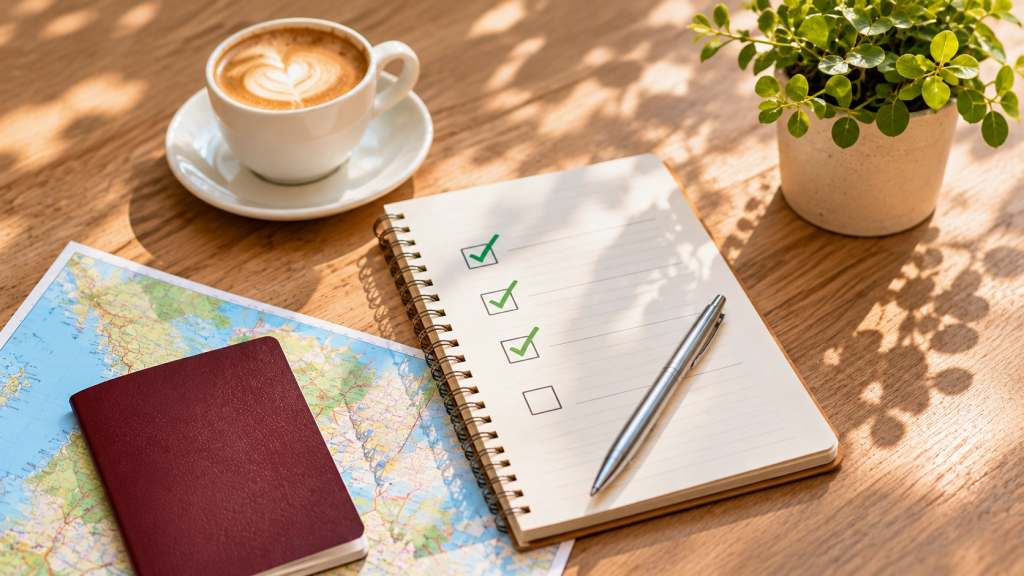
Slow travel doesn’t mean arriving without a plan. It means being selective about what deserves a fixed place in your schedule. Sort out the essentials before you go: how you’ll get from the airport, where you’re staying, and whether a popular museum or train journey genuinely needs an advance reservation. Then leave some unclaimed space.
It’s tempting to build an itinerary around everything a search engine recommends. One attraction leads to another, and before long you’ve mapped a holiday that runs like a meeting calendar. But a memorable afternoon often begins when you have nowhere specific to be. You might follow the sound of a street musician, step into a neighborhood bakery, or take a longer route simply because the streets look interesting.
Digital travel planning tools are most helpful when they remove uncertainty rather than create expectations. Save a short list of places that appeal to you, but treat it as a menu, not a contract. If a market is unexpectedly lively, stay. If it rains, choose a small gallery or a long lunch instead of racing across town to complete the next item.
For multi-stop trips, keep transfers realistic. A train that arrives at lunchtime doesn’t leave much room for a leisurely morning in the place you’re departing. Consider spending an extra night in one town rather than squeezing in another destination just because the connection is possible. You’ll spend less time moving luggage and more time getting to know where you are.
If you are traveling with a partner or friends, leave room for different energy levels as well. One person may want an early start, while another prefers a late breakfast and a walk after lunch. Agree on one shared priority, then keep the rest flexible. A relaxed pace is easier to enjoy when nobody feels rushed.
The same principle applies to recommendations. Reviews are useful for checking opening hours, accessibility, or whether reservations are necessary. They are less useful when they persuade you that every good meal or scenic view has already been ranked for you. Ask a local shopkeeper where they like to have coffee. Walk one street beyond the busiest square. Let the place have a say in your itinerary.
Stay Connected Without Being Constantly Online
A phone can make independent travel feel easier. It can help you contact someone, look up a delayed train, or find a pharmacy in an unfamiliar town. The challenge isn’t connectivity itself. It’s the habit of checking a screen even when nothing needs checking.
Try giving your phone specific jobs rather than unlimited access to your attention. You might review the next day’s transport after breakfast, check messages once in the afternoon, and look up a dinner address before leaving your accommodation. Between those moments, let the phone stay in a pocket or bag. This small change creates room to notice details that rarely appear on a travel app: conversations in a market, the rhythm of a neighborhood, or which café the locals visit after work.
Notifications can quietly pull you away from those experiences. Turn off nonessential alerts before your trip, particularly shopping apps, news updates, and social media prompts. You don’t need to disappear completely. Decide which people should be able to reach you quickly and keep those channels available. A short message to family in the evening can be more reassuring than posting a continuous stream of location updates.
Offline tools help here as well. If your map, address, and train ticket are saved, you don’t need to keep reconnecting just to confirm that you’re on the right track. And when an unfamiliar street sparks your curiosity, there’s no rule that says you have to research it immediately. You can look around, read a sign, or ask someone a question. Sometimes the slower answer is also the more interesting one.
Be thoughtful about what you share while you’re away. Posting a beautiful photo is part of the fun for many travelers, but broadcasting your exact location in real time isn’t always necessary. Share the moment later, when you’ve moved on or returned to your accommodation. That approach protects a little privacy and keeps the experience from turning into a performance.
A useful test is simple: does opening this app help me do something I came here to do? If the answer is no, give yourself permission to close it. Digital wellbeing on the road isn’t about strict rules or guilt. It’s about choosing where your attention goes.
Prepare Your Devices for a Smoother Journey

The best time to solve a digital problem is usually before your suitcase is zipped. A little preparation at home can prevent small inconveniences from taking over a morning abroad. Start by updating your phone’s operating system and the apps you’re actually going to use, then check that your preferred map and translation tools work without mobile data.
Next, think through your connection options. Will you use roaming, a local SIM, or an eSIM? What happens if your accommodation’s Wi-Fi stops working? You don’t need an elaborate backup plan, but it helps to know how you’ll reach an important booking or contact someone when you’re offline. If privacy tools are part of your setup, download the VPN from its official source before you leave and test the connection on your own network. This is easier than troubleshooting an unfamiliar app in an airport lounge.
Set up practical safeguards while you have time. Use a screen lock, enable device-finding features where available, and make sure essential accounts use strong, unique passwords. Check that photos and important documents are backed up. If your phone is lost or damaged, knowing your information can be recovered makes a stressful situation much easier to manage.
Keep the details you might need urgently somewhere accessible: your accommodation address, travel insurance contact, passport information stored securely, and confirmation numbers for upcoming journeys. Not every document should sit in an unprotected photo album. Use secure storage for sensitive records, and keep only the information you truly need on the device. It’s also sensible to carry a small paper note with an emergency phone number and the address of where you’re staying.
Before leaving each new destination, check the simple things: battery level, charging cable, tickets, and the route to your next stop. A compact power bank can be worthwhile on long travel days, particularly when navigation and photography share the same device. Just make sure any battery you bring complies with the rules for your airline and baggage.
Preparation isn’t about anticipating every mishap. It’s about turning common problems into minor interruptions rather than trip-defining dramas. When your travel essentials are easy to find and your devices are ready, you can spend less energy worrying about what might go wrong and more energy enjoying what’s happening now.
Let Technology Enhance the Experience, Not Replace It
It’s easy to assume that a better trip requires better apps, a more detailed itinerary, or a constant stream of personalized suggestions. Often, the opposite is true. The most useful technology is the kind that fades into the background once it has done its job.
Consider a morning in a small coastal town. You use a map to locate a walking trail, check whether the return bus is running, and put your phone away. The rest of the morning belongs to the view, the weather, and whatever catches your attention. Without a screen telling you what comes next, you’re free to stop at a quiet beach or follow a path that looks inviting. You haven’t rejected technology. You’ve used it well.
That balance can change from day to day. On a travel day, you may need your phone frequently for directions and tickets. Once you’ve settled into a place for a week, you might hardly need it at all. The point isn’t to hit a screen-time target. It’s to match the tool to the moment, without letting the tool dictate the moment.
This matters particularly when you have the luxury of staying longer. Returning to the same bakery, recognizing the shopkeeper, or learning the rhythm of a local market can make a destination feel less like a collection of sights and more like somewhere you’ve briefly belonged. Those experiences are difficult to schedule and impossible to download. They emerge when you leave space for them.
A slower journey also invites a different kind of record-keeping. Take a photograph when something genuinely moves you, write down a small detail you don’t want to forget, or send a note to someone back home. Then let the moment continue without an audience. Years later, you may remember the conversation that followed a wrong turn more vividly than the perfectly framed photograph you planned.