The newish (2022) village sign in the pretty Suffolk village of Bildeston is a joy to behold. It depicts vital moments and characters in the village’s rich history – the head of the Danish warrior Bildr who gives his name to the place, a scene from the wool cloth industry that made the village rich in medieval times, the Victorian clock tower, and St Mary Magdalene, the 14th century church on the hill outside the village. There’s also a nod towards the King’s Pightie Nature Reserve and the local farming community.
The Mystery of Bildeston Suffolk
We came to Bildeston for an early autumn staycation at the award-winning The Crown pub and restaurant. But before we took our fill of the excellent amenities that establishment had to offer, we set out to tackle the historical conundrum at the heart of the village’s history – which is only partly reflected in the village sign.
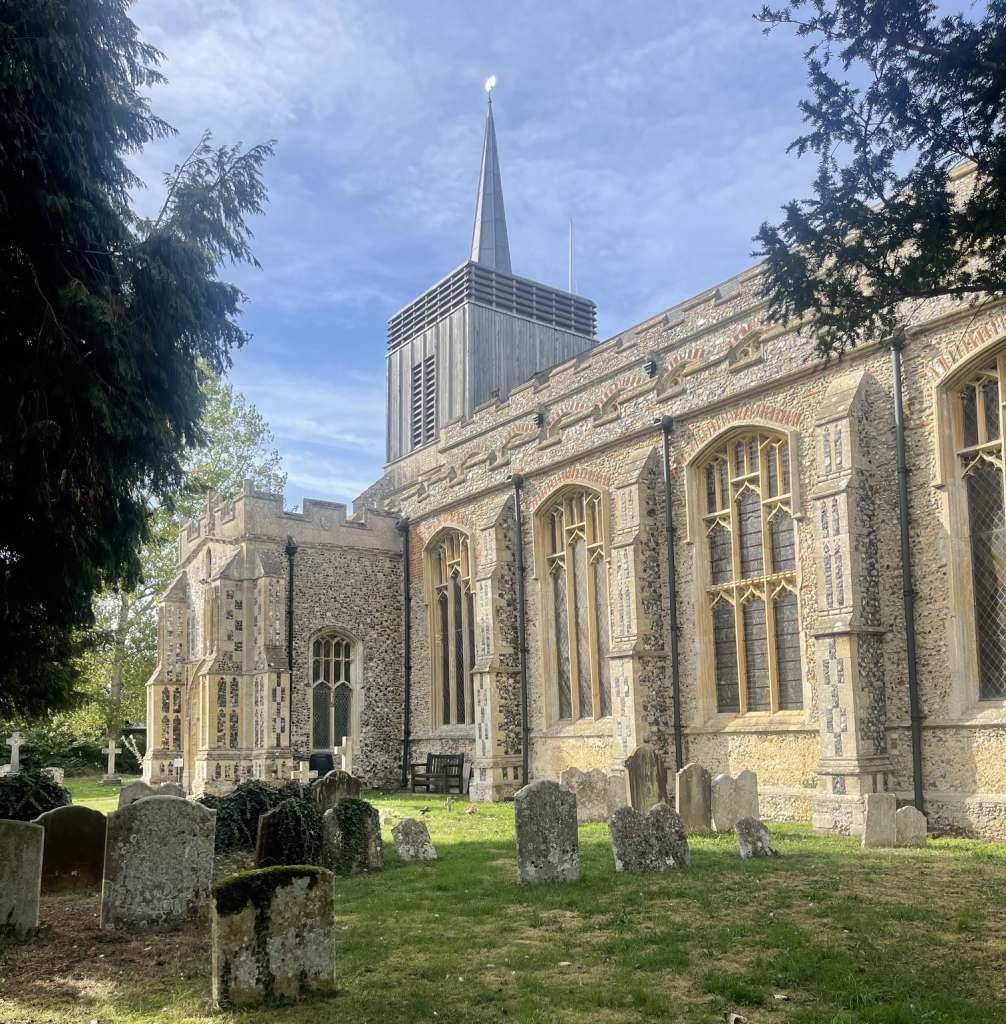
We strolled out of the village on Church Lane on a scenic but steep half-mile walk to St Mary Magdalene, an impressive building (despite the loss of its tower in 1975) which retains much of its 14th century Gothic architecture and commands stunning views down over the Brett Valley. But the question ringing down the ages is why this isolated church on the hill, the heart of the community in medieval times, is so far removed from its villagers?
For historians of a certain persuasion a vital part of the evidence lies here in the church, staring out at them from the dark wood of the ecclesiastical honours board listing all the rectors from 1304 to the present day. For look at the fourth, fifth and sixth names on the board – 1348 Richard de Pickyering, 1348 John de Notyngham, and 1350 Alexander Flemmyng.
Three rectors in three years, an unprecedented turnover – explained surely by the Black Death, which ravaged Suffolk as badly as any county in the land. Of course, the priests ministering to scores of the dying in their flock would have been more vulnerable than most.
So, one theory has been that the plague all but wiped out Bildeston, and any survivors fled the disease-ridden settlement and travelled the half-mile to the valley below to establish the village as it is now. Is this the likely explanation for the disconnect of church and village?
Unfortunately for those of that romantic historical view, most local historians believe the evidence doesn’t stack up (although documentation of Bildeston’s fate in the Black Death still remains sparse compared to some Suffolk villages). Instead, they believe the granting of a market charter a century before to the manorial lord Matthew de Loveyne, in 1264, is the answer.
Realising that their new market was unlikely to attract passing trade stuck on the hill, the villagers moved down to make and sell their wares on the new highway connecting Stowmarket and Hadleigh – and the village as we know it now grew up around the businesses. But history evolves, and who knows what evidence might emerge in the future to shed light on Bildeston’s past.
The Bildeston Crown
As for the present, there is much to admire, and The Crown (just voted Best Pub/Bar in the region by the Norfolk and Suffolk magazine) in the High Street is at the very heart of the community. It’s the flagship pub of the successful Nedging Hall Estate business, which also includes Nedging Hall country house, Mauldons Brewery, The Red Rose pub in Lindsey and – the very latest acquisition – The Angel pub in Lavenham.
The mustard-coloured, timber-framed pub is a former 15th century coaching inn which retains its historical feel with exposed beams, open fires, sporting prints and intimate, welcoming rooms and bars.
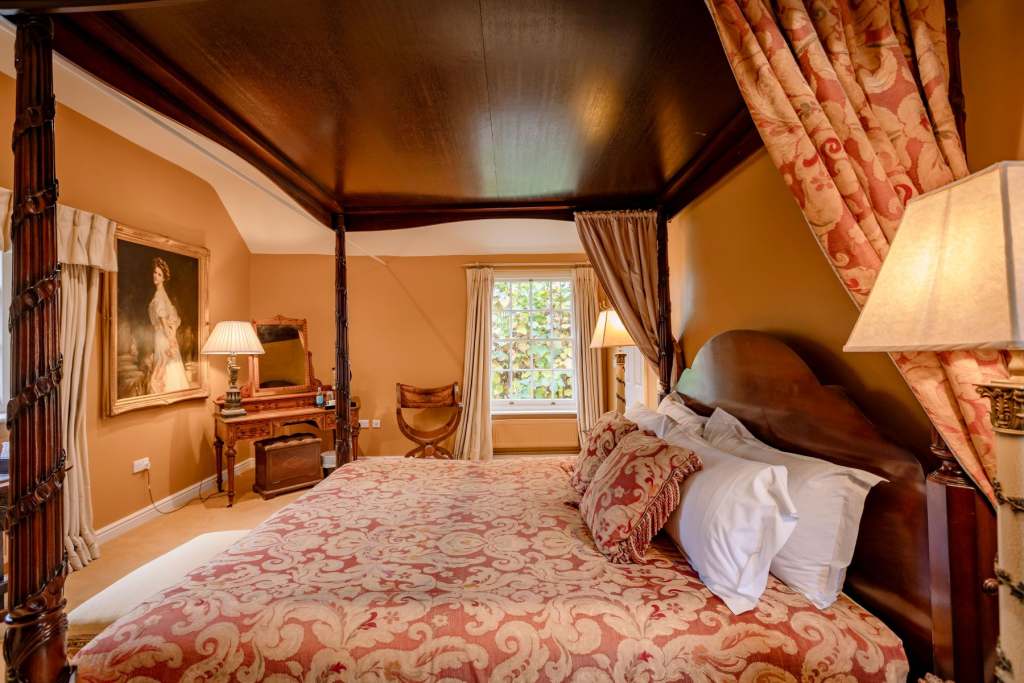
It now offers 13 suites – we stayed in Quince, one of the Orchard rooms (Plum, Pear and Damson being the others), an elegant and spacious room with a supremely comfortable super king-sized antique four-poster bed. Triple aspect windows provided plenty of light, and the prints on the wall – an elegiac country landscape and a portrait of a winsome society lady – enhanced the atmosphere.
The Crown prides itself on the excellence of its food – an ‘estate to plate’ ethos, with vegetables, fruits, herbs and wild game coming direct from the Nedging Hall grounds. It has regular themed foodie evenings, and when we were there, it was Steak Night. Not being huge meat-eaters we opted for a selection of tasty starters, including cured salmon, jalapeno, yoghurt and gooseberries, although Roger did also enjoy the venison haunch with rosti and greens from the garden. Breakfast the following morning didn’t disappoint either, with delicious home-made granola and a superb Eggs Benedict.
The Buckle family, which owns the Nedging Estate, are great horse lovers and the cosy Paddock Bar is a showcase for all their triumphs, while prints of hunting scenes adorn the walls.
Poignant Reminders
Bildeston has had its fair share of famous – and infamous – residents. The first tomb you encounter in St Mary’s churchyard is that of Captain Edward Rotheram, who was the commander of HMS Royal Sovereign, the ship that led Nelson’s fleet into battle with the French at Trafalgar.
Fast forward to the 1960s, and two unlikely characters took a liking to the village – East End gangsters Ronnie and Reggie Kray, who first got to know Suffolk when evacuated to nearby Hadleigh in the war. They bought a large property off the High Street in Bildeston, which had a cottage attached to it where they housed their parents Charlie and Violet. Legend has it that they enjoyed a quiet pint in The Crown where they were no trouble at all in their very short stay before incarceration.
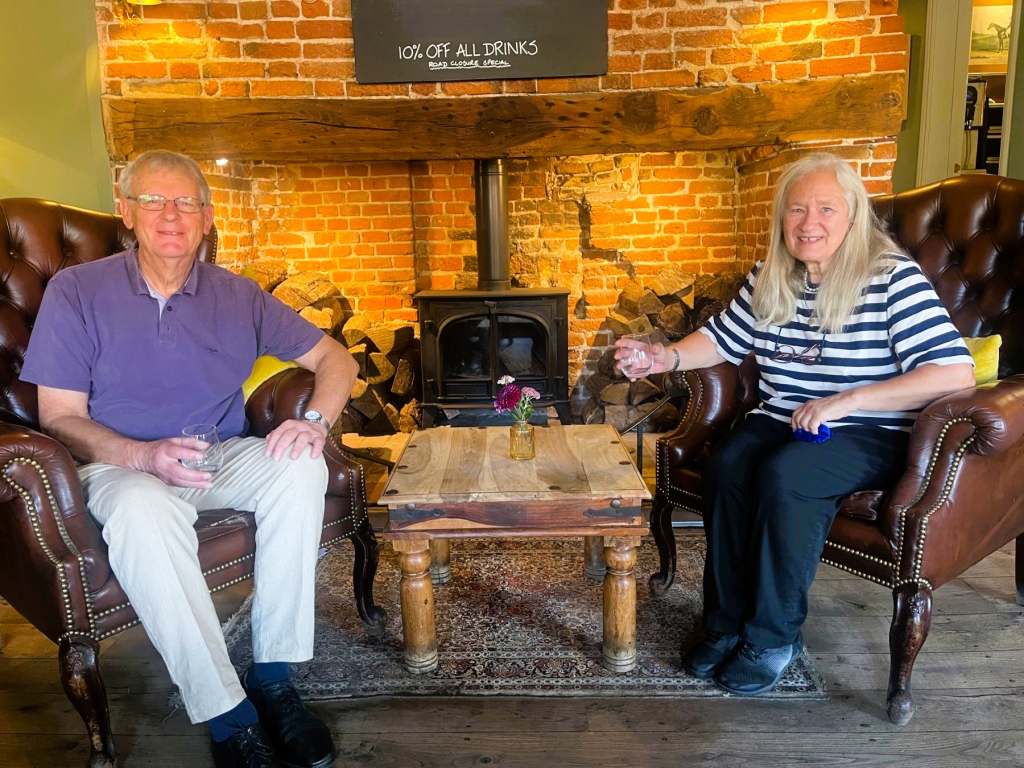
You can take a lovely three-mile countryside walk between The Crown and the Red Rose, via the village of Chelsworth. Instead, with time of the essence, we took the car to Lindsey, where, under the guidance of knowledgeable manager Callum, we enjoyed another excellent food experience – crispy spiced whitebait and tomato arancini for her, fish finger sandwich, pea and mint mayo for him, washed down with a pint of Mauldons.
The medieval world had been the theme of our 24-hour stay in the Brett Valley, but the poignant silhouette soldier (Tommy) by the tree on the lawn outside The Red Rose is a reminder of more recent, painful history.
