Mark Bibby Jackson takes time off on his rail journey around Europe to discover the best things to do in Mannheim Germany in a day.
On rainy days I find it best to head indoors when visiting unfamiliar cities. Thus, arriving at Mannheim with the clouds heavy and the weather app threatening I do the natural thing and head straight for the city’s Baroque palace.
Mannheim Palace
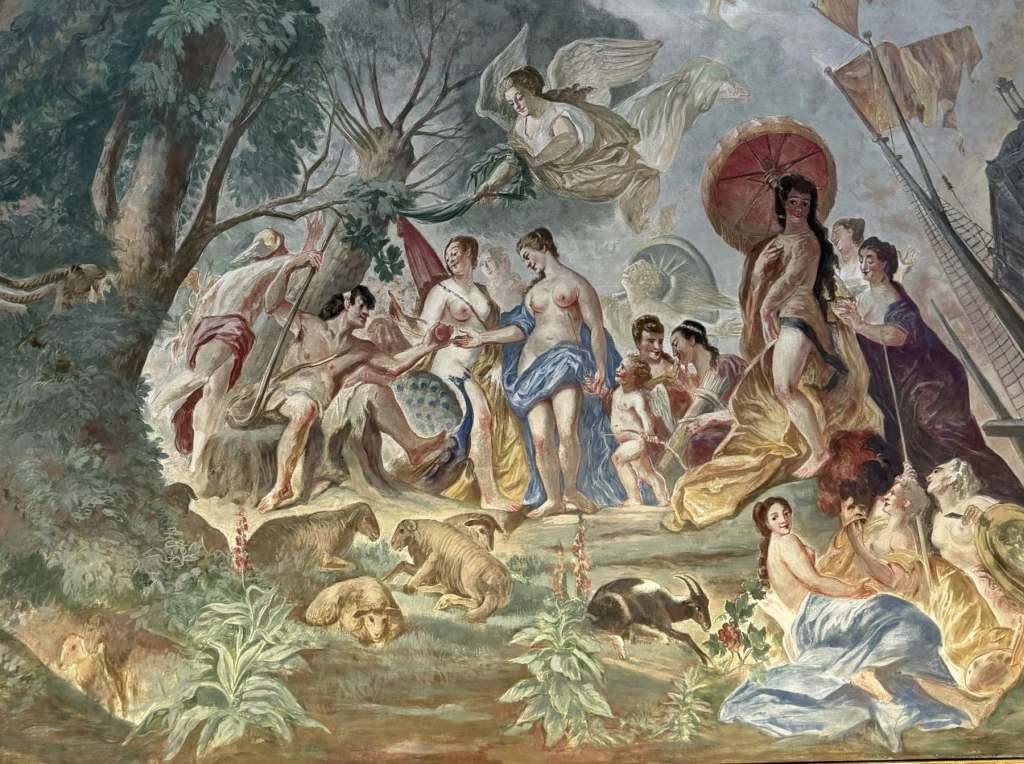
Built in the 18th century when Karl III Philip moved his capital here from Heidelberg, Mannheim Palace is the second largest Baroque Palace in Europe, after Versailles. It is most impressive from the city not railway side. From here you can see the full extent of its 450-metre frontage. Although most of the building is occupied by the University of Mannheim, the square is still most impressive.
Inside there are some amazing tapestries, including one of Mark Antony entering Ephesus that caught my eye, as well as a section on music. The Mannheim school is deemed to be important in the evolution of the classical symphony in the 18th century. Sadly, all the information is in English, but I did have an enjoyable go on a sound mixer, performing the role of a conductor on a symphony by Holzbauer.
Open Urban Art Museum
Fortunately, the rains relented sufficiently for me to explore the city. Mannheim has a vibrant music and art scene. Part of this is reflected in the Open Urban Art Museum Mannheim, City Wall Art or Stadt Wund Kunst. The project started in 2013 with a mural by street artist Herakut called ‘My Superhero Power is Forgiveness’’, and continues with other works such as ‘Modern Thinker’ by Dimitri ASKE, which is a play on Rodin’s famous sculpture.
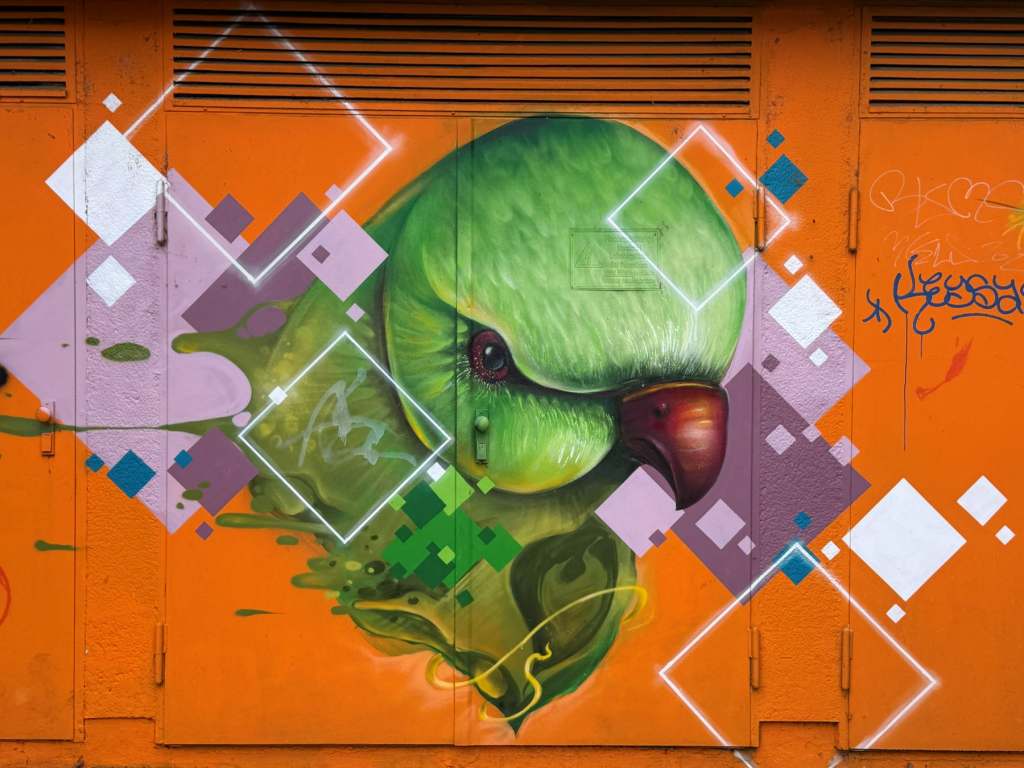
There are some 50 or so murals around Mannheim, which you can trace on this map. Alternatively, just follow your nose. My favourite one was that of a bird on an electrical transformer, seemingly untitled, which for me suggested the wonderful way that boring elements of industrial infrastructure can be transformed into works of art given the right imagination.
City of Squares and Planks
Mannheim was established as a city of squares or blocks in the 17th century. This pattern still remains today, although the city itself is in a horseshoe shape. Originally marked in Roman numerals, the current letters were adopted in the 1730s. This makes it incredibly easy to make your way around the city, so long as you know alphabet that is.
One exception is the Planken, loosely translated as planks. This runs along the east-west axis of the city to Mannheim’s most famous feature the Watertower.
The Planken are filled with shops and cafés inviting you to break up your journey across town.
Mannheim Watertower
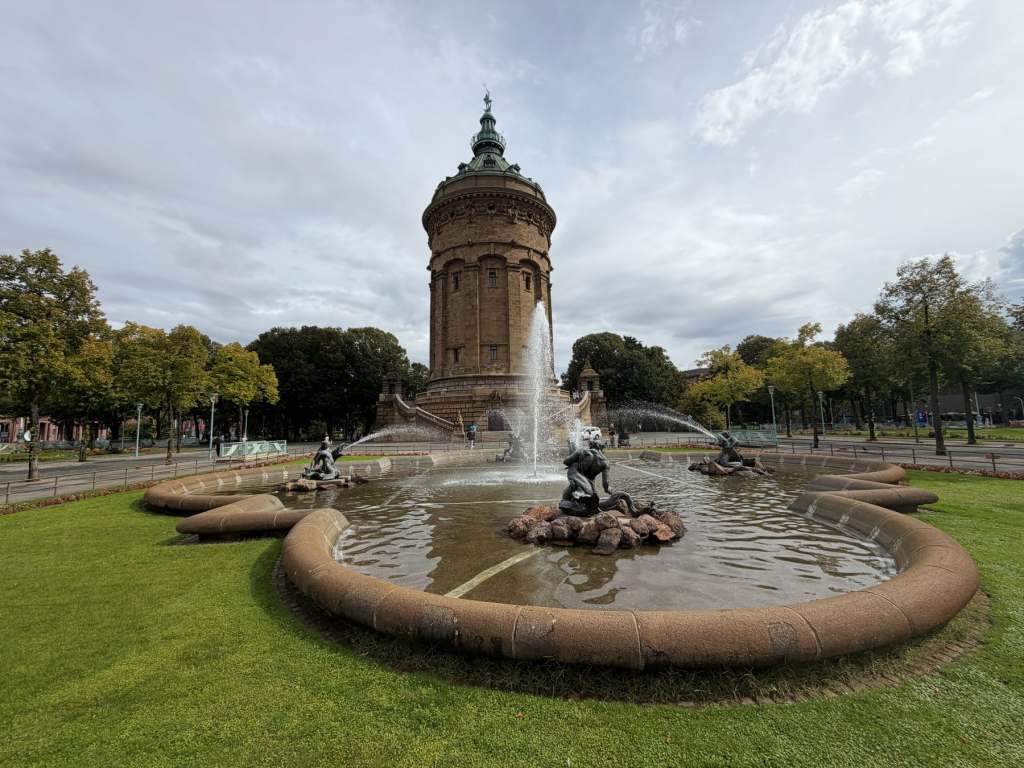
The Planken lead directly to the Mannheim Watertower. Built between 1886 and 1889, it is the main landmark in the city. During my visit the queues deterred me from entering the tower, so make sure you book in advance. However, the surrounding Friedrichsplatz gardens which were built at the same time make for a very pleasant spot to while away some time.
With that running short before my final destination the Technoseum closed, I had to decide whether to jump on the tram or continue my walk eastwards. I opted for the latter, and was rewarded for my labours with two unexpected gems.
Walking along Augustaanlage
Augustaanlage is a most beautiful tree-lined street which is in effect a continuation of The Planks after the Watertower. If like me, you love art nouveau, you will adore Augustaanlge and the streets that spread out from it.
The contrast to the compact and crowded squares on the other side of town could not be more marked.
In the middle of Augustaanlage is the Eisenspiel für Mannheim by German artist Robert Schad, created in 1993, and part of Mannheim’s Sculpture Mile, a series of some 60 or so sculptures across the city.

Further along Augustaanlage is the MKV Gallery. Free to enter, this is a wonderful creative space, which is running an exhibition Hartmut Kiewert, called the Coming Together of the Species until 8 November. In this animals and humans live on an equal footing in what appears to be a post-apocalyptic landscape. All seems calm as if we are entering a new Garden of Eden following climate catastrophe. It is an intriguing and questioning exhibition, and well recommended.
Technoseum
Questions lie at the heart of my final destination, the Technoseum, which lies at the end of Augustaanlage.
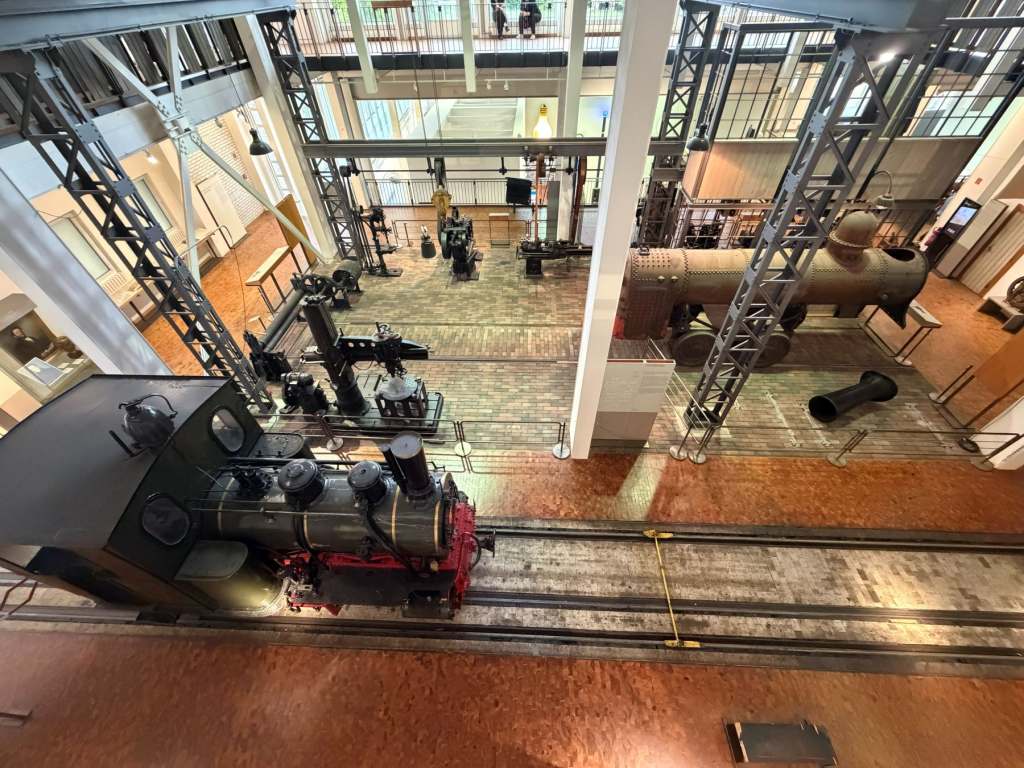
One of the largest technology museums in Germany, it traces scientific discovery across more than 200 years from printing presses to aerodynamics. This is the ideal place to bring the kids on a wet day. Perhaps they can crack the Enigma code? As for adults, head for the lower reaches and check out the automobiles, after all this is Germany.
The witching hour arrived; I took the tram back into the town. Checking into the Intercity Hotel Mannheim earlier, I found a city pass that allowed me free rides on the trams and buses awaiting me. This was the only time I used it, but it is a great way to enjoy the city.
Sylt Matjes
Earlier in the day I had noticed a restaurant close to the Market Square called Kurfürst am Markt. It specialised in local German dishes. So, I decided to give it a whirl. I tried the Sylt matjes, young pickled herrings from the island of Sylt in northern Germany. These were served in a yoghurt cream sauce, and dished with boiled potatoes. Perhaps not to everyone’s taste but I loved them, especially when washed down with a draught hefeweizen beer.
The end of a great day in Mannheim, and I had not even visited the Jungbusch area of town, which is supposed to be its coolest part, or tried the spaghetti ice cream, invented here in 1969 by Dario Fontanella. Still, I always feel it’s best to leave something left to visit for the next time. Mannheim, a compact city, based on a grid system with a strong cultural and creative hub, is a most unexpected treat – much like the Sylt Matjes.
Things to Do in Mannheim
For more fun things to do in Mannheim Germany, go to the Visit Mannheim website.
