


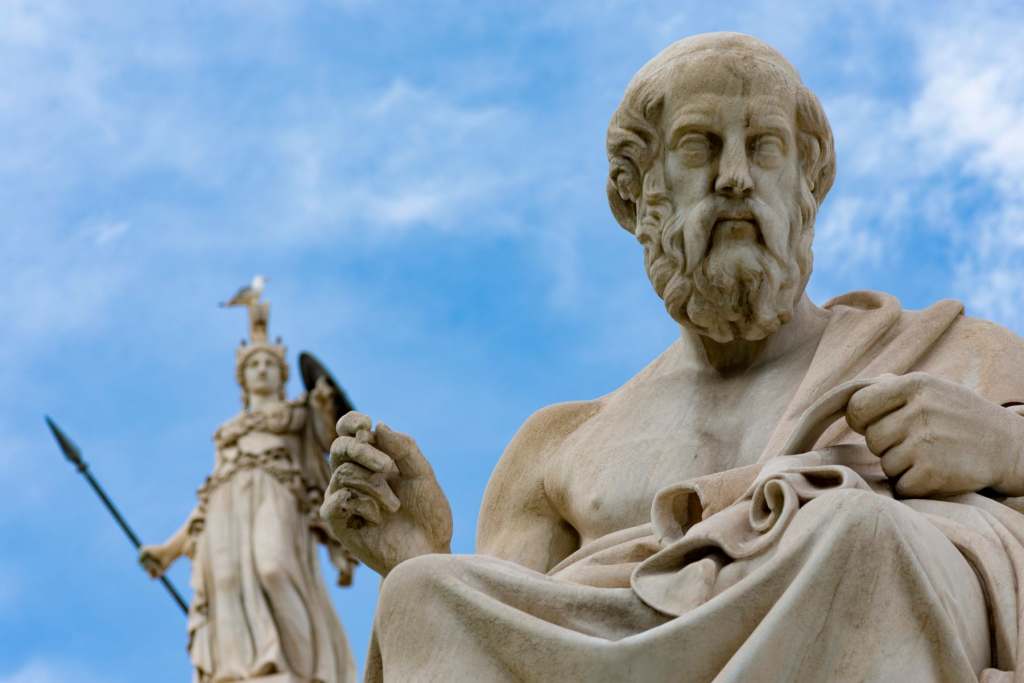
What if some of the answers to modern life’s stresses could be found in an ancient philosophy? That is the thinking behind Stoic Week 2026, which takes place from 26 October to 1 November 2026.
The annual event invites people around the world to explore Stoicism and, more importantly, try putting its principles into practice for a week. Run online by Modern Stoicism, Stoic Week is free to join, making it an accessible introduction to a philosophy that dates back more than 2,000 years.
Rather than being an exercise in dusty philosophy, Stoic Week is about putting Stoic principles into practice. It offers an opportunity to pause, reflect on what really matters and think about how we respond to the things that happen to us.
For travellers, and particularly those of us who have reached the stage of life when time feels increasingly precious, there is something appealing about a philosophy that encourages us to concentrate on what we can control and worry less about what we cannot.
What is Stoicism?
So, what is Stoicism? In simple terms, it is an ancient Greek philosophy that teaches that a good life comes from developing wisdom, self-control, courage and justice rather than chasing wealth, status or pleasure.
The Stoicism meaning is often misunderstood. Being stoic is sometimes taken to mean suppressing emotions or showing no feelings. Ancient Stoicism was rather more nuanced. It encouraged people to recognise their emotions, examine their reactions and avoid allowing destructive emotions to dictate their behaviour.
The central idea is that we cannot control everything that happens to us, but we can exercise some control over how we respond.
That distinction can be surprisingly useful.
What was Stoicism?
If you’re wondering what was Stoicism, its roots lie in Athens in the early third century BC. The philosophy was founded by Zeno of Citium and subsequently developed by thinkers including Seneca, Epictetus and the Roman emperor Marcus Aurelius.
The Stoicism definition has evolved over time, but its fundamental concern remains remarkably relevant: how should we live a good life in a world we cannot completely control?
Stoic philosophers encouraged people to distinguish between things within their control and those outside it. Our choices, judgements and actions are generally ours to influence. Other people’s opinions, the weather, political events, illness, accidents and many other circumstances are not.
That does not mean we should become passive. Quite the opposite. Stoicism asks us to act where we can make a difference, while accepting what lies beyond our power.
Stoicism philosophy for modern life
The appeal of Stoicism philosophy today may partly come from its practicality. You don’t have to retreat from the world, meditate on a mountain or abandon your possessions to explore it.
Instead, Stoicism can be treated as a set of ideas to test in everyday life.
A difficult journey goes wrong. Someone is rude to you. Your plans change. You receive disappointing news. You become frustrated by something you cannot alter.
The Stoic response isn’t necessarily to shrug and say everything is fine. It is to ask what you can actually do about the situation, what is outside your control and how you want to behave.
That can be particularly valuable as we get older. Life inevitably brings change, from careers and relationships to family responsibilities, health, retirement and the simple realisation that we have fewer years ahead than behind us.
Why Stoicism in today’s world?
We live in an age of constant notifications, social media arguments, political uncertainty, bad news and an almost limitless supply of things to worry about.
Stoicism offers an antidote to some of that noise.
Its emphasis on separating what we can control from what we cannot is particularly relevant when so much of modern life encourages us to react instantly to events happening thousands of miles away.
Social media, for example, makes it remarkably easy to become angry about something we have no ability to change. Stoicism suggests a more useful question: what can I actually do?
There is also a strong connection between Stoicism and living deliberately. Instead of endlessly comparing ourselves with other people, the philosophy encourages us to consider our own values and actions.
For a generation that has accumulated experience, responsibilities and perhaps a few regrets along the way, that can be a powerful idea. We cannot rewrite the past, but we can decide what to do next.
How Stoicism might help with problems
Stoicism isn’t a magic cure for life’s problems, nor does it suggest that difficult circumstances don’t matter. Its usefulness lies in changing how we approach them.
Facing a difficult decision? A Stoic approach might involve separating facts from fears and considering which parts of the decision are actually within your control.
Worried about something that might happen? Stoicism encourages us to distinguish between what has happened and what we imagine might happen.
Dealing with someone else’s behaviour? Rather than trying to control another person’s actions, the focus shifts towards our own response.
And when something genuinely painful happens, Stoicism does not require us to pretend that it isn’t painful. The philosophy recognises that loss, grief and disappointment are part of being human. The challenge is to meet those experiences with courage and reason rather than allowing them to completely overwhelm us.
For anyone who travels, there is an obvious practical application. Flights get cancelled. Trains are late. Hotels disappoint. The weather turns. Fellow passengers behave badly.
You can’t control the delay. You can control whether you spend three hours becoming increasingly furious about it.
Stoicism quotes worth remembering
Some of the best-known Stoicism quotes come from Marcus Aurelius, Epictetus and Seneca.
Marcus Aurelius repeatedly returned to the idea that our thoughts and responses are within our sphere of influence. Epictetus famously taught the importance of distinguishing between what is and isn’t up to us.
Perhaps the most useful Stoic principle is also the simplest: focus your energy on what you can control.
It sounds obvious. Putting it into practice is considerably harder.
That is where an event such as Stoic Week can be useful. Rather than simply reading about ancient philosophers, participants are encouraged to experiment with their ideas and see whether they make a practical difference.
Stoicism books to start with
If Stoic Week leaves you wanting to explore further, there is plenty to read.
Meditations by Marcus Aurelius is probably the best-known introduction, although it was never intended as a conventional philosophical textbook. It is essentially a collection of private reflections from a Roman emperor trying to remind himself how to live well.
Letters from a Stoic by Seneca offers another accessible entry point, exploring subjects including friendship, wealth, grief, anger and how to use our limited time.
For a more direct introduction to Stoic principles, Epictetus’ Enchiridion, or Handbook, is another classic.
These books may be almost 2,000 years old, but their concerns remain familiar. How should we deal with disappointment? How much should we care about what other people think? What makes a good life? And how do we make the best use of the time we have?
Not bad questions to ponder during Stoic Week.
Stoic Week and the art of living well
The enduring attraction of Stoicism is perhaps that it doesn’t promise an easier life. Instead, it offers ways of thinking that might help us navigate the difficult bits with greater perspective.
That makes Stoic Week particularly interesting for anyone entering a new phase of life. We may not be able to control everything that happens next, but we can still decide how we respond.
And perhaps that is the most useful lesson of all: don’t waste your limited time worrying about things you cannot change. Concentrate instead on the things you can influence, the people you care about and the kind of person you want to be.
For a philosophy that began in ancient Athens, Stoicism still has plenty to say to the modern traveller.
Stoic Week 2026 essential information
What: Stoic Week 2026
When: Monday 26 October to Sunday 1 November 2026
Where: Online
Cost: Free
Organiser: Modern Stoicism
Stoic Week is designed as a global online experiment, encouraging participants to live according to Stoic principles for seven days. Since its launch in 2012, tens of thousands of people have taken part.
Enrolment for Stoic Week 2026 will open in due course. Check the Modern Stoicism website (see below) for registration details and the programme as they are announced.